From our previous website’s article collection. Dates, prices and treatment information reflect the original publication period.
Quick Answer
Is skin aging inevitable? Chronological aging cannot be stopped; however, photoaging (sun damage) and lifestyle-induced aging can be largely controlled. Protective measures taken in your 20s can delay the appearance of skin in your 40s and 50s by 5–10 years. What needs to be done differs for each decade; no single protocol suits all age groups.
Skin Aging: The Basic Biology
Aging progresses through two main mechanisms:
- Intrinsic aging: A product of the genetic program. Collagen synthesis decreases by approximately 1% per year starting from age 25. Hyaluronic acid production declines; fibroblast activity slows.
- Extrinsic aging: UV radiation, smoking, air pollution, high-glycaemic diet, and chronic stress fall into this group. Research shows that 80–90% of visible aging is caused by sun damage (Flament et al., 2013).
Glycation (cross-linking of sugar molecules to collagen proteins) and oxidative stress are the common ground that accelerates both mechanisms.
Decade-by-Decade Skin Changes
| Age Range | Main Skin Changes | Triggering Mechanism |
|---|---|---|
| 20s | First fine lines (forehead, around the eyes); enlarged pores; tendency for post-acne marks; slight drop in skin turgor | Initial decline in collagen production; UV accumulation begins |
| 30s | Collagen loss becomes more apparent; nasolabial folds form; first sun spots; uneven skin tone; deepening under-eye circles | Fibroblast slowdown; melanocyte activation; microvascular reduction |
| 40s | Volume loss in cheeks and mid-face; jowling begins; deep forehead and glabellar wrinkles; pronounced pigmentation | Fat pad atrophy and descent; elastin cross-linking; oedematous facial morphology |
| 50+ | Deep dynamic wrinkles become permanent; significant laxity (neck, jowls); post-menopausal skin thinning; intense pigmentation; dryness and sensitivity | Oestrogen decline; ceramide reduction; increased transepidermal water loss (TEWL); fat pad descent over bone |
Your 20s: Prevention and Collagen Banking
This period is the time to "invest in the collagen bank." Measures taken before any visible problem appears make a dramatic difference in later years.
Main changes seen during this period:
- Dynamic crow's feet around the eyes that appear with exercise or smiling
- Slight increase in freckles (ephelides) with sun exposure
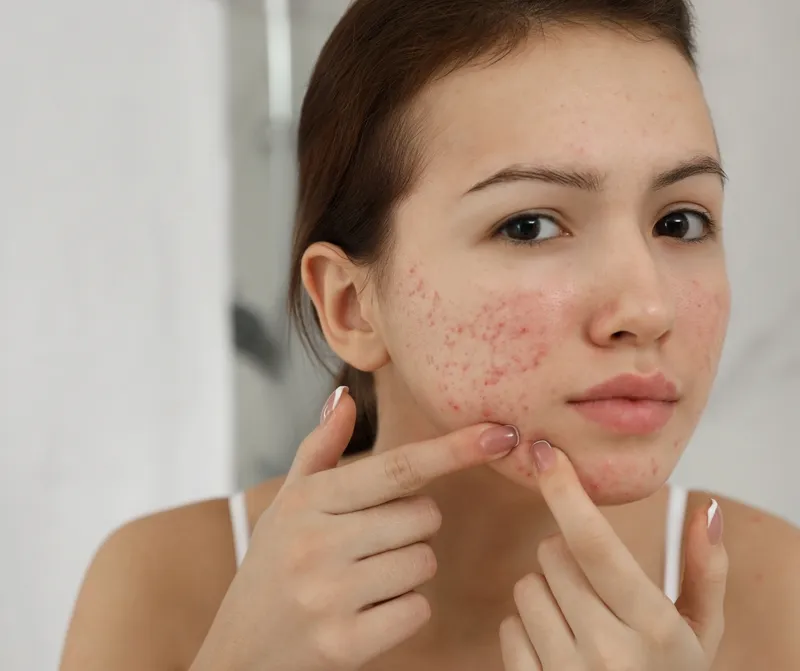
- Post-inflammatory hyperpigmentation during acne breakouts
- Increased pore visibility (sebum production is near its peak during this time)
Recommended treatment protocol (20s):
- Daily SPF 30–50: The most critical measure. Up to 80% of UV damage accumulates before age 18; adopting an SPF habit in your 20s means stopping that accumulation.
- Starting retinol: 0.025–0.05% retinol, 2–3 nights per week — the gold standard for collagen stimulation.
- Vitamin C serum: Morning antioxidant protection; cofactor for collagen synthesis.
- Clinical option: One annual session of a light chemical peel (lactic acid) or mesotherapy is sufficient.
Your 30s: Active Care and Early Intervention
Your 30s are when skin care "gets serious." Starting at this age is both effective and economical; it reduces the cost of more intensive treatments required later.
Prominent changes during this period:
- Nasolabial (smile) lines beginning to become permanent
- First spots (early solar lentigo) that fade in the sun but leave a trace
- Morning facial puffiness may become more noticeable (microvascular weakening)
- Uneven skin tone and dullness
Recommended treatment protocol (30s):
| Treatment | Target | Frequency |
|---|---|---|
| Botox (preventive dose) | Prevents dynamic wrinkles from becoming permanent | 2–3 sessions per year |
| Skinbooster / Profhilo | Hyaluronic acid replenishment, radiant skin | 2 sessions per year |
| Chemical peel (medium depth) | Pigmentation, pores, skin tone evening | Seasonal (autumn/winter) |
| PRP facial rejuvenation | Collagen stimulation with growth factors | 3–4 sessions per year |
Your 40s: Volume Restoration and Tightening
In your 40s, the core concern is volume loss and gravitational laxity. Treatments that focus solely on wrinkles at this stage are insufficient; the three-dimensional change in facial morphology must be taken into account.
Key changes:
- The temporal (temple) region thins; the facial "triangle" silhouette is lost.
- Cheek fat compartments descend; the mid-face hollows, jowls become prominent.
- Tear trough deepens under the eyes.
- Neck bands (platysma muscle) become visible.
Recommended treatment protocol (40s):
- Volumising filler (hyaluronic acid / Sculptra): Temples, cheeks, jawline — for structural support.
- HIFU or RF microneedling: Heat-induced collagen contraction and tightening of subcutaneous tissue.
- Botox (therapeutic dose): Static wrinkles may now require higher doses and more frequent sessions.
- Thread lift (preliminary assessment): Mono or COG threads for early jowl cases.
50 and Over: Comprehensive Rejuvenation
The defining feature of this period is the impact of menopause on the skin. With the decline in oestrogen:
- Skin thickness decreases by approximately 30% over 5 years.
- Collagen content falls by 30% in the first 5 years after menopause (Brincat et al., 1987).
- Ceramides and natural moisturising factors (NMF) decrease markedly.
- Pigmentation problems both increase and become more resistant to treatment.
Recommended treatment protocol (50+):
| Treatment | Priority | Notes |
|---|---|---|
| Biostimulator (Sculptra, Radiesse) | High | Long-term solution for collagen production |
| COG thread lift | High | Surgical alternative for significant laxity |
| Fractional laser | Medium–high | Effective for deep wrinkles and pigmentation |
| Profhilo / Skinbooster | High | Essential for menopausal dryness and skin quality |
| Exosome therapy | Medium | Supports cell renewal; still under investigation |
Hormonal Aging: Oestrogen Loss and the Skin
Oestrogen is a critical hormone for fibroblast activation, collagen and elastin synthesis, and the epidermal moisture-retention capacity. With menopause:
- Skin vascularisation decreases → the skin appears pale and dull.
- Sebum production falls → dry skin (xerosis) becomes very common in post-menopausal women.
- Facial contours "soften" and hollowing increases.
- Diffuse hair thinning can be seen across the body, including the scalp.
Topical oestrogen or hormone replacement therapy (HRT) may improve skin quality from a dermatological perspective; however, this decision should be made together with a gynaecology specialist.
Male vs Female Skin Aging: Key Differences
| Parameter | Female | Male |
|---|---|---|
| Skin thickness | Thinner → wrinkles appear earlier | 20–25% thicker → later onset of lines |
| Sebum production | Dramatic drop at menopause | Gradual decline with age; oiliness persists longer |
| Collagen loss | Sudden acceleration at menopause | Linear, slow decline |
| Photoaging | Better UV protection habits | Greater UV exposure → deeper lines |
| Preferred treatments | Filler, Botox, laser | Botox (higher dose), HIFU, tightening |
The Preventive Approach: Why Starting in Your 20s Matters
The concept of "anti-aging" is now giving way to "pro-aging" (at peace with aging, yet slowing the process) and "preventive aesthetics." The concrete advantages of starting early:
- Fewer products, lower cost: One or two simple annual procedures at age 25 is far more economical than intensive treatment packages needed at 45.
- Natural appearance is preserved: Continuing with small corrections avoids the need for major interventions later.
- Collagen banking: Early use of retinol and SPF keeps the collagen foundation strong; treatments in later years produce results more quickly.
Frequently Asked Questions
When should I start Botox?
When dynamic wrinkles (those formed during facial expressions) begin to set slightly — typically between the ages of 28 and 32. Starting too early is unnecessary; starting too late means Botox will only partially address static wrinkles.
Should I choose filler or a thread lift in my 40s?
These two treatments are not competitors — they complement each other. If volume loss is dominant, filler is planned first; if laxity is dominant, a thread lift is prioritised. In most clinical cases both are applied in separate sessions.
This article is for informational purposes only. Please consult a qualified physician for treatment decisions.