From our previous website’s article collection. Dates, prices and treatment information reflect the original publication period.
Quick Answer: IPL (Intense Pulsed Light) is not a laser but a broad-spectrum light source (515–1200 nm). Filters target pigment, vessels or hair follicles. It is ideal for Fitzpatrick Types I–III and is contraindicated for darker skin types. 3–5 sessions are recommended for pigmentation, rosacea and telangiectasia, and mild hair removal. IPL is less specific than laser but has advantages in wide-area combination treatments.IPL Technology: Why Is It Different from Laser?
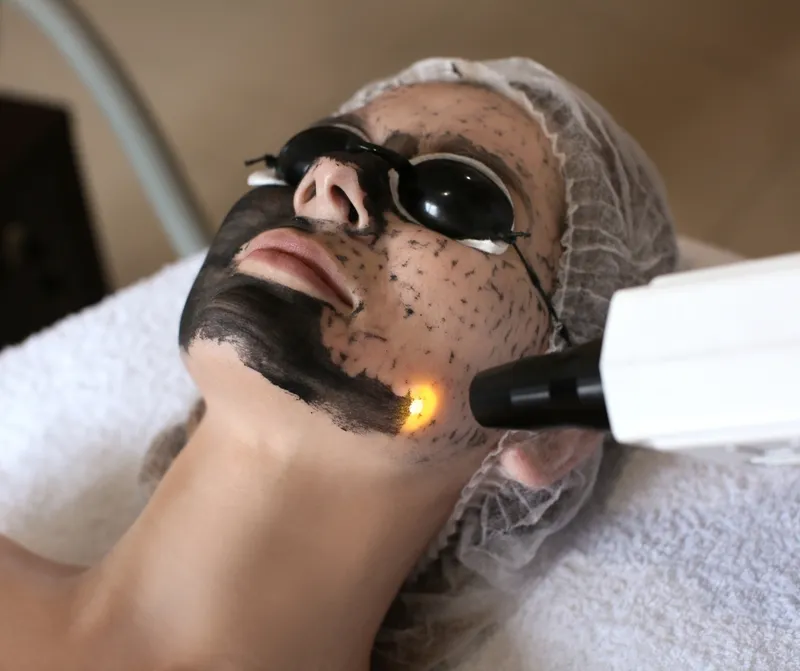
IPL devices emit energy not from a single wavelength but from a broad light spectrum ranging from 515 to 1200 nm. For this reason, it is technically not a laser but a flash-lamp-based light source. Lasers deliver highly focused energy at a single wavelength, while IPL delivers a broad spectrum and targeting is achieved through specific filters.
This difference creates both advantages and disadvantages:
- Advantage: It can treat multiple targets (both pigmentation and vascular lesions) in a single session over a wide area.
- Disadvantage: Targeting is not as precise as a laser; the risk of side effects increases in darker skin types.
IPL vs Laser: Detailed Comparison
| Criterion | IPL | Laser (e.g. Nd:YAG, Alexandrite) |
|---|---|---|
| Light type | Broad spectrum (515–1200 nm) | Single wavelength (monochromatic) |
| Targeting precision | Moderate (with filter) | High |
| Wide-area efficacy | High | Moderate |
| Darker skin suitability | Low (Type I–III) | Type-dependent (Nd:YAG broader) |
| Pain | Moderate (rubber band sensation) | Moderate–high |
| Session duration | 20–40 min (full face) | 30–60 min |
| Cost (relative) | Moderate | Higher |
IPL Indications: What Is It Used For?
| Indication | Mechanism of Action | Expected Efficacy |
|---|---|---|
| Pigmented spots (solar lentigo, ephelides) | Thermal destruction of melanin | Good–very good |
| Rosacea redness | Oxyhemoglobin targeting, vessel destruction | Good |
| Telangiectasia (capillary vessels) | Haemoglobin targeting | Good–very good |
| Mild hair removal | Melanin-mediated follicle damage | Moderate (laser more effective) |
| Mild wrinkles / skin rejuvenation | Heat-mediated collagen stimulation | Mild–moderate |
| Acne (inflammatory) | Porphyrin-mediated bacterial destruction | Mild–moderate |
Fitzpatrick Skin Type Compatibility: Who Can Have It?
The most critical safety parameter of IPL is the Fitzpatrick skin type. The darker the skin type, the greater the melanin absorption; this both reduces efficacy and increases the risk of burns and PIH.
- Fitzpatrick Type I–II (very fair, fair skin): Ideal candidate. Best results, lowest side effects.
- Fitzpatrick Type III (light–medium skin): Suitable candidate. Dose must be carefully adjusted.
- Fitzpatrick Type IV (olive skin): Requires careful approach. Low-energy protocol and test dose are mandatory.
- Fitzpatrick Type V–VI (dark–very dark skin): Contraindicated. Serious risk of hyperpigmentation and burns.
Session Count and Interval
IPL treatment does not deliver full results in a single session. General protocol:
- Pigmented spot and vascular treatment: 3–5 sessions, 3–4 weeks apart.
- Rosacea: 3–4 sessions, 4 weeks apart; followed by annual maintenance.
- Mild hair removal: 6–8 sessions (may require more than laser).
- Skin rejuvenation (photorejuvenation): 3–5 sessions, then 1–2 maintenance sessions per year.
Post-IPL Care
- First 24–48 hours: Pigmented spots may darken (crusting is normal); warm/cold compresses are not recommended.
- SPF 50+ use is mandatory for at least 4 weeks.
- Make-up: Wait 24 hours.
- Sauna, intense exercise: Restricted for 48 hours.
- Active retinol use: Should be discontinued 1 week before.
When Should IPL Be Preferred Over Laser?
As both methods have their advantages, correct indication selection is important. IPL is superior to laser in the following situations:
- Both pigmentation and vascular problems are present together over a wide area (combined photorejuvenation).
- The patient is looking for a more economical alternative to laser.
- Multiple targets need to be treated in a single session.
- Healing time needs to be kept to a minimum.
This article is for informational purposes only. Please consult a qualified physician for treatment decisions.