From our previous website’s article collection. Dates, prices and treatment information reflect the original publication period.
Quick Answer: Keratosis pilaris is a chronic skin condition caused by keratin plugs at the follicular opening; it cannot be permanently cured but can be successfully managed. Urea (10–40%), lactic acid (AHA), and salicylic acid (BHA) provide keratolysis; retinoids support long-term management. Pulsed dye laser is effective in erythema-dominant types. Squeezing is strongly discouraged as it increases the risk of post-inflammatory hyperpigmentation (PIH)."I have millions of tiny bumps on my arms that won't go away" — this is the most common complaint from patients with keratosis pilaris. While the condition poses no medical danger, it causes significant concern regarding appearance and texture. The good news is that with the right products and treatments, symptoms can be largely brought under control.
The Anatomy of Keratosis Pilaris: Why Does It Occur?
Keratosis pilaris is characterised by small, hard bumps formed by the accumulation of keratin protein at the follicular opening. The underlying mechanism is as follows:
- Insufficient expression of filaggrin, a skin barrier protein, disrupts keratinocyte differentiation.
- Impaired differentiation causes keratin plugs to become trapped within the follicular canal.
- Mild perifollicular inflammation develops around the plug, producing redness and roughness.
- Filaggrin gene mutations are recognised as common ground between atopic dermatitis and keratosis pilaris.
Keratosis pilaris affects approximately 40% of the general population; it peaks during childhood and adolescence and tends to improve with age, though it continues to be seen in adults.
Classification of Keratosis Pilaris
| Type | Appearance | Location | Characteristic |
|---|---|---|---|
| KP Rubra | Reddish, inflamed bumps | Upper arms, thighs, cheeks | Prominent perifollicular erythema |
| KP Alba | Pale grey-white, rough | Outer upper arms, legs | No erythema, less noticeable |
| KPAF (KP with Atrophy) | Perifollicular atrophy, depression | Temples, hairline margin | May be associated with eyebrow loss |
Can Keratosis Pilaris Be Permanently Cured?
The short and honest answer is: No — it is a chronic condition; it cannot be completely eliminated, but it can be managed very successfully. Symptoms generally return once treatment is stopped. For this reason, a daily skincare routine is far more decisive than a single in-clinic treatment. It may improve spontaneously after puberty and during pregnancy; its appearance may also diminish in older age.
Treatment Options Comparison Table
| Treatment | Effect | Usage | Best Suited For |
|---|---|---|---|
| Urea 10–20% | Keratolysis + deep moisturisation | Once or twice daily | KP Alba, initial treatment |
| Urea 40% | Strong keratolysis | 2–3 times per week | Thick, resistant KP |
| Lactic Acid (12% lotion) | AHA exfoliation + moisturisation | Once or twice daily | KP Rubra + KP Alba |
| Salicylic Acid (2%) | BHA, follicular keratin dissolution | 2–3 times per week | Plug-dominant type |
| Tretinoin (0.025–0.05%) | Normalises keratinocyte differentiation | Evenings, 2–3 times per week | Resistant KP, KPAF |
| Topical corticosteroid (low potency) | Suppresses perifollicular inflammation | Short-term (2–4 weeks) | KP Rubra (for redness) |
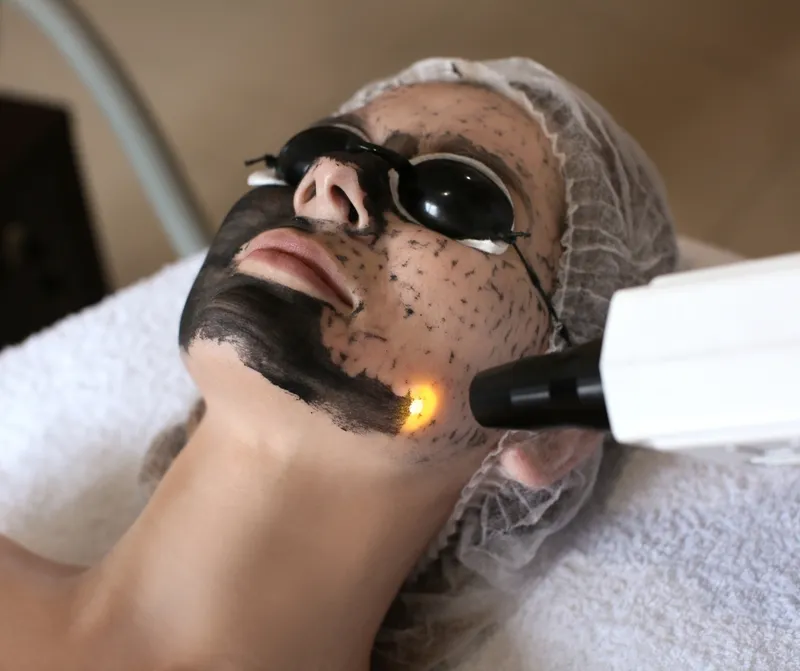
| Pulsed dye laser / diode laser | Vascular targeting, erythema reduction | 3–5 sessions (every 4–6 weeks) | KP Rubra (erythema-dominant) |
Home Care Routine: Daily Steps
Sustainable skincare is far more important than in-clinic treatment alone. Recommended morning and evening routine:
- Shower: Use lukewarm water (hot water increases barrier damage). Choose a gentle, gel-based, fragrance-free cleanser.
- During the shower: Gentle mechanical exfoliation with a soft loofah or exfoliating mitt (twice a week, not daily).
- Immediately after showering (while skin is still slightly damp): Apply urea 10–20% or lactic acid lotion — this is the critical window for locking in moisture.
- Evening: Tretinoin or adapalene (if prescribed), 2–3 times per week.
- Morning: Light moisturiser + SPF 30 (for areas exposed to sunlight).
Why Is It So Important Not to Squeeze?
Squeezing or trying to extract bumps with a fingernail is an extremely common but harmful habit. Its consequences include:
- Microtrauma → post-inflammatory hyperpigmentation (PIH) → dark marks remain
- Increased perifollicular inflammation, worsening redness
- Risk of secondary bacterial superinfection
- Scar formation (rare but possible)
The risk of PIH is considerably higher in individuals with darker skin tones (Fitzpatrick IV–VI). The habit of squeezing significantly prolongs the treatment process.
Triggers: What Should You Avoid?
- Winter months and low humidity: Increased transepidermal water loss (TEWL) weakens the skin barrier, exacerbating keratosis pilaris.
- Prolonged hot showers or baths: Strip the skin of its natural oils.
- Harsh detergents and fragranced soaps: Cause irritant contact reactions.
- Nylon and synthetic fabrics: Trap friction and heat.
- Heavy winter clothing (wool): Mechanical irritation.
Association with Atopic Dermatitis
Keratosis pilaris is strongly associated with atopic dermatitis (eczema): approximately 50–60% of children with atopic dermatitis also have keratosis pilaris. Filaggrin gene mutation underlies both conditions. Therefore, patients with keratosis pilaris should also avoid atopic dermatitis triggers (harsh soaps, excessive washing, allergenic textiles).
Keratosis Pilaris Treatment at Abel Beauty: Izmit/Kocaeli
At Abel Beauty, the management of keratosis pilaris begins with determining skin type and KP subtype, followed by the preparation of a personalised, written daily skincare protocol. In-clinic procedures include lactic acid/mandelic acid peel sessions and, in appropriate cases, pulsed dye laser (PDL). Appointments are available six days a week for patients from different districts of Kocaeli (Izmit, Gebze, Darica, Körfez).
Frequently Asked Questions
Is keratosis pilaris contagious? Absolutely not. It is a chronic, non-infectious skin condition with a genetic basis.
Does it improve in summer? Yes. Increased humidity and vitamin D synthesis from sun exposure can alleviate keratosis pilaris symptoms. However, excessive UV exposure should still be avoided.
Can it occur in infants? It can begin from infancy. Topical retinoids are not used in infants and young children; management relies on low-concentration urea and gentle moisturisers.
This article is for informational purposes only. Please consult a qualified physician for treatment decisions.