From our previous website’s article collection. Dates, prices and treatment information reflect the original publication period.
Quick Answer
Post-laser skin care is the most critical process that directly determines treatment success. SPF 50+ sunscreen use is mandatory during the first 7 days; wetting, rubbing, and makeup are prohibited. After fractional CO2 laser, a significant healing process of 5–7 days is experienced, while after Nd:YAG Q-Switch only 1–2 days of mild redness is expected. Clinical studies consistently show that the correct care protocol improves treatment outcomes by 40–60%, and neglected sun protection increases the risk of post-inflammatory hyperpigmentation (PIH) by 3–5 times.
The Effect of Laser Treatment on the Skin: The Physiological Healing Process
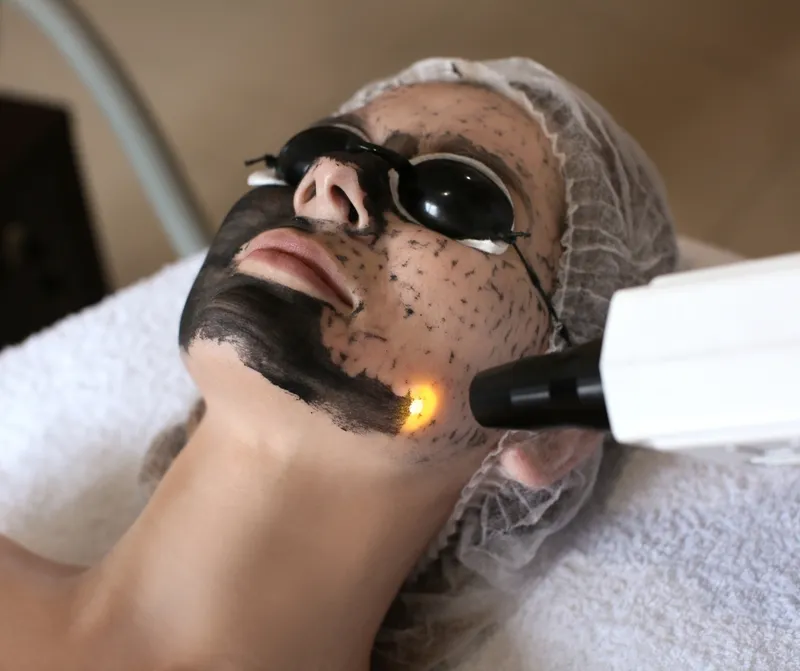
When laser energy is applied to skin tissue, the targeted chromophore (melanin, hemoglobin, or water) absorbs the thermal energy, creating controlled tissue damage. This controlled micro-damage triggers the body's natural cascade repair mechanisms: within the first 72 hours, an inflammatory response and fibroblast activation begin; between days 3–21, intensive collagen synthesis occurs; and between months 1–6, the collagen remodeling process continues. In the clinical protocols we apply to our patients in Izmit and Kocaeli at Abel Beauty, we repeatedly observe that the care steps supporting this physiological process directly determine treatment outcomes.
The speed and quality of the healing process depend on the type of laser used, the applied energy density (fluence), pulse duration, the patient's Fitzpatrick skin type (I–VI scale), and most importantly, compliance with the post-procedure care protocol. Even mild neglect can jeopardize the early collagen synthesis period that lasts for weeks.
| Laser Type | Redness Duration | Peeling Duration | Full Recovery | Sun Avoidance |
|---|---|---|---|---|
| Fractional CO2 | 5–7 days | 5–10 days | 2–4 weeks | 6 months |
| Er:YAG (Ablative) | 3–5 days | 4–7 days | 1–2 weeks | 3–6 months |
| Nd:YAG (Q-Switch) | 1–2 days | Minimal | 3–5 days | 4–6 weeks |
| Alexandrite (755nm) | 1–3 days | Minimal | 5–7 days | 4–8 weeks |
| IPL (Broad Spectrum) | 1–2 days | Minimal | 3–5 days | 4–6 weeks |
First 24 Hours: The Critical Period That Determines Treatment Course
The first 24 hours immediately following laser application are the most critical period for treatment success. During this period, transepidermal water loss (TEWL) from the skin can increase to 3–4 times the normal value; barrier function is temporarily disrupted and the inflammatory response is reaching its clinical peak. The standard first-day protocol we apply at Abel Beauty includes:
- Cold compress: Applied immediately after the procedure and at 10–15 minute intervals for the first 4–6 hours. Cold application with a clean wet cloth or a non-gelled ice pack (no direct skin contact) significantly reduces edema and burning sensation.
- Rest in a cool, enclosed environment: On the day of the procedure, it is critical to avoid exposure to sun, wind, and the dust/germs of crowded environments. Resting in an air-conditioned or naturally ventilated, cool room is advised.
- Medical moisturizer application: The medical-grade moisturizer containing panthenol or petrolatum prescribed by the physician is applied gently in a thin layer 4–6 times on the first day. Rubbing or massaging is prohibited.
- Adequate fluid intake: Drinking at least 2.5 liters of water per day supports skin repair through systemic hydration. Caffeine and alcohol should be restricted for the first 48 hours.
Absolute avoidances during the first 24 hours: hot shower or bath, any makeup product, use of soap or cleanser to wash the face, and any sun exposure.
Sun Protection: The Non-Negotiable Rule After Laser
Sun protection after laser is the most important factor that directly determines treatment efficacy and cannot be skipped under any circumstances. Comprehensive studies in dermatology literature consistently show that the risk of post-inflammatory hyperpigmentation (PIH) increases 3 to 5 times in patients who do not use sun protection after laser treatment. For patients with Fitzpatrick III–VI skin tones — considering that the majority of the Turkish population falls into this group — this risk carries even greater critical importance.
UV rays rapidly activate newly formed and not yet stabilized melanocytes. This activation can reverse the depigmentation and rejuvenation gains achieved from laser sessions within weeks. Sun protection is necessary not only when going outdoors, but also during time spent indoors near windows or in vehicles; as UVA rays penetrate glass.
| SPF Value | UVB Filter | Post-Laser Suitability | Reapplication Frequency |
|---|---|---|---|
| SPF 15–30 | 93–97% | Insufficient — not recommended | Every 2–3 hours |
| SPF 50 | 98% | Acceptable minimum | Every 2 hours |
| SPF 50+ (PA++++) | >98% | Recommended standard | Every 90–120 minutes |
Physical filters (zinc oxide, titanium dioxide) should be prioritized in sunscreen selection; these filters work by reflecting UV rays and cause far less irritation on sensitized post-laser skin compared to chemical filters. Look for "PA++++" or "Broad Spectrum" on the product label; this notation indicates that UVA protection is also at an adequate level.
Moisturization Protocol: The Right Product, the Right Timing
Systematic skin moisturization after laser accelerates epidermal barrier repair and shortens the healing process by an average of 25–35%. Clinical studies show that moisturizers containing panthenol (D-provitamin B5) stimulate keratinocyte proliferation and migration after laser treatment. Product selection and application timing should vary according to the healing phase:
- Days 1–3 — Acute Inflammation Phase: Petrolatum (vaseline)-based occlusive moisturizers or medical creams containing panthenol are gently applied in thin layers 4–6 times per day. There is no place for large-molecule active ingredients in this phase; only barrier-supporting and soothing formulas are used.
- Days 5–14 — Repair and Peeling Phase: Creams containing ceramide, hyaluronic acid (low molecular weight), or aloe vera are ideal. Fragrance-free, alcohol-free, and acid-free formulas should be preferred; if changing products, a tolerance test should first be performed on a small area.
- After Day 14 — Integration Phase: Normal skincare routine can be gradually restarted. However, at least 4 weeks should be waited for retinol, AHA/BHA (glycolic, salicylic acid), and intensive active serums; active redness and peeling must have completely resolved.
Products and Behaviors to Absolutely Avoid
Certain products and habits after laser treatment can seriously disrupt healing or create the basis for permanent complications. The list of items to avoid, prepared at Abel Beauty based on our clinical experience and current dermatology guidelines, is as follows:
- Acid-containing skincare products: AHA (glycolic acid, lactic acid, mandelic acid), BHA (salicylic acid), and retinol/retinoids should not be used for at least 3–4 weeks. The newly regenerated epidermis is excessively sensitive to these irritants.
- Chemical sunscreen filters: Sunscreens with chemical UV filters such as avobenzone, octocrylene, and benzophenone can cause contact dermatitis on sensitized post-laser skin. Physical filter products should always be preferred during this period.
- Makeup and powder products: Foundation, powder, blush, or contour products should not be applied for the first 5–7 days. Micronized particles can clog skin pores, creating an environment for anaerobic bacterial growth and infection.
- Hot showers, steam baths, and saunas: Heat increases vasodilation, intensifying inflammation and redness. Only lukewarm-cool water should be used for the first 7–10 days.
- Pools and the sea: Chlorine, freshwater containing bacteria, and salt water are serious sources of infection and irritation for skin with a disrupted barrier function. Avoid for at least 2 weeks.
- Picking at crusts or peeling skin: Mechanical intervention in the natural desquamation process exposes the new epithelium beneath; dramatically increases the risk of scarring and permanent pigmentation. Be patient and let the peeling tissue fall off naturally.
- Intense exercise (first 48–72 hours): Excessive sweating moistens the skin and creates an environment for microbial growth; heat increase also triggers inflammation.
Daily Care Schedule: 7-Day Clinical Guide
The following table is the standard post-fractional CO2 laser care schedule applied at Abel Beauty. For other laser types (Er:YAG, Nd:YAG), the acute phase is shorter; the intensity of the protocol is reduced accordingly.
| Day | Morning Routine | Evening Routine | Expected Clinical Condition |
|---|---|---|---|
| Day 1 | Cold compress + panthenol cream (morning) | Gentle serum cleansing + medical moisturizer | Significant redness, edema, burning sensation |
| Days 2–3 | Medical moisturizer + SPF 50+ (when leaving home) | Light micellar cleansing + panthenol cream | Bronzing, tightness, fine peeling begins |
| Days 4–5 | Moisturizer + SPF 50+ (mandatory) | Gentle gel cleanser + ceramide cream | Heavy peeling, pink new skin |
| Days 6–7 | Light foaming cleanser + moisturizer + SPF | Normal cleansing + care cream | Peeling decreases, fresh skin becomes more visible |
Skin Cleansing: Technique, Product, and Frequency
Post-laser skin cleansing is a step that is both necessary and requires sensitivity. If dead epidermal residues, applied cream remnants, and serum that accumulate in the treatment area are not regularly cleaned at intervals, the risk of anaerobic bacterial growth and infection increases. However, aggressive or acidic cleansers can seriously disrupt the healing process.
The cleansing protocol recommended by Abel Beauty: Cleanse at most twice a day with lukewarm (definitely not hot) water. Use a pH-balanced (between 5–6), non-foaming and fragrance-free micellar water or gel formula. During cleansing, use very gentle circular movements with clean fingers — do not use a sponge, cotton, or cloth. To dry, press the towel against the skin gently — never rub or scrub.
Complication Warning Signs: When to See a Doctor Immediately
Laser treatment is an extremely safe procedure in experienced hands; however, complications related to individual factors and care non-compliance can rarely develop. The following symptoms are warning signals requiring urgent physician evaluation:
- Infection: Increasing warmth in the area, purulent (yellow-green) discharge, significant increase in odor, or spreading redness — reach the clinic within 24 hours.
- Herpes reactivation: Characteristic vesicular eruption; especially in patients with a history of herpes labialis, oral antiviral prophylaxis before and after laser should be evaluated.
- Abnormal hyperpigmentation: Darkening that continues to increase rather than decrease 4–6 weeks after the procedure is an early harbinger of PIH; early depigmentation protocol needs to be initiated.
- Hypertrophic or keloid scar: Tissue that swells and hardens instead of receding after the healing period; may require silicone gel, intralesional corticosteroid, or laser treatment.
- Contact or allergic dermatitis: Itching, swelling, and eruption developing against the applied product; the product being used must be immediately discontinued and dermatological evaluation must be performed.
Long-Term Protection: Preserving Your Laser Investment
It is essential to develop a long-term, disciplined sun protection habit to preserve the results obtained from laser treatment. In the geography of Turkey, particularly in Izmit and Kocaeli's location at the Marmara climate boundary, the UV index can reach very high values of 8–10 in summer months. These conditions can quickly reverse treatment gains.
A long-term protection strategy should include: year-round use of SPF 50+ (even on cloudy days, UVA rays pass through clouds 80% of the time and affect melanocytes), physical protection with a hat and wide-brimmed sunglasses, consciously limiting time spent outdoors during midday hours (10:00–16:00), use of UV-filtering window film in vehicles and office windows, and dermatological check-ups every 3–6 months.
Abel Beauty Post-Laser Follow-Up Protocol
At Abel Beauty in Izmit, we offer each laser-treated patient a personalized and comprehensive post-procedure follow-up program. In addition to the written care guide provided on the treatment day, proactive check-up calls are made on days 1 and 4; face-to-face evaluations are conducted at the clinic on days 7 and 21. In our patient group where this standardized protocol is applied, the complication rate is significantly below the average reported in international literature.
Our clinic unit is accessible 24/7 for any emergency, reachable from all districts of Kocaeli, from Gebze to Izmit, from Derince to Körfez. Correct information, clinical-quality product selection, and patient adherence to care are the true keys to achieving and preserving for years the results that laser treatment promises.
This article is for informational purposes only. Please consult a qualified physician for treatment decisions.