From our previous website’s article collection. Dates, prices and treatment information reflect the original publication period.
Quick Answer: Polynucleotide (PN) and PDRN (polydeoxyribonucleotide) treatment is based on the intradermal injection of DNA fragments derived from fish sperm cells. By activating A2 adenosine receptors, it stimulates tissue repair, angiogenesis, and fibroblast proliferation. It has strong clinical evidence for improving skin quality, treating under-eye dark circles and hollowing, photoaging, and scarring. Combining it with PRP produces a synergistic effect. Treatment requires 4–6 sessions and its benefits accumulate progressively. Individualised polynucleotide protocols are applied at Abel Beauty in Izmit/Kocaeli.What Are Polynucleotides (PN) and PDRN? Molecular Structure and Sources
Polynucleotides are long-chain DNA fragments composed of deoxyribonucleotide monomers linked by phosphodiester bonds. The formulations used in medical aesthetics are known primarily by two names:
- PDRN (Polydeoxyribonucleotide): DNA fragments of 50–2,000 base pairs obtained by enzymatic hydrolysis from the sperm cells of salmon (Salmo trutta or Oncorhynchus mykiss). Developed in Italy, it is the older-generation formulation with the strongest clinical evidence in wound healing.
- PN (Polynucleotide): Essentially in the same molecular category as PDRN; however, some manufacturers market more refined, long-chain, high-purity DNA fragments under the PN label. Korean and Japanese products are prominent in this category.
Both formulations share 94–96% sequence homology with human DNA; this high biocompatibility minimises the risk of allergic reactions. Products are available as sterile injectable solutions or gels.
Mechanism of Action: A2 Adenosine Receptor Activation
The biological mechanism of polynucleotides has been elucidated gradually over the years. The central mechanism is activation of the A2 adenosine receptor (A2AR):
- Injected DNA fragments are broken down into adenosine monomers by extracellular phosphodiesterases.
- Free adenosine binds to A2AR on fibroblasts, keratinocytes, and endothelial cells.
- A2AR activation raises intracellular cAMP levels, expressing multiple anabolic and repair genes.
- Result: fibroblast proliferation, increased collagen synthesis, stimulation of angiogenesis, and suppression of inflammatory cytokines.
In addition, DNA fragments serve as building blocks: they enrich the nucleotide pool available for cellular DNA synthesis — particularly important in aged dermis where DNA damage from intense UV exposure is elevated.
The anti-inflammatory effect is equally significant: PDRN inhibits the NF-κB pathway, reducing TNF-α, IL-1β, and IL-6 levels. This property plays a critical role in wound healing and in reducing the contribution of chronic inflammation to skin ageing (inflammaging).
Clinical Indications and Efficacy Data
| Indication | Clinical Effect | Evidence Level |
|---|---|---|
| Skin quality rejuvenation (photoaging) | Increased collagen, hydration, improved elasticity and smoothness | High; multiple RCTs and cohort studies |
| Under-eye hollowing and dark circles | Reduced pigmentation, dermal thickening, periorbital hydration | Moderate–high; specialised periorbital data available |
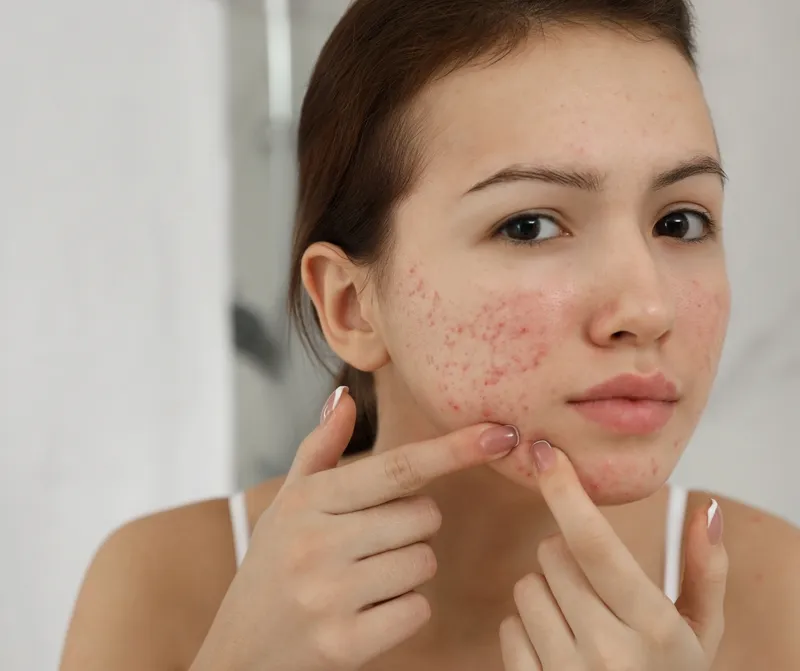
| Acne scars and atrophic scars | Fibroblast activation, extracellular matrix remodelling | Moderate–high; stronger in combination with microneedling |
| Stretch marks (striae) | Elastin and collagen repair; effective in early striae alba | Moderate |
| Hair loss (androgenetic alopecia) | Follicular angiogenesis, peri-follicular matrix renewal | Moderate; synergistic in combination with PRP |
| Post-laser / post-peel recovery | Accelerated healing, reduced inflammation, hyperpigmentation prevention | Moderate–high; widely used as an adjuvant |
| Rosacea and sensitive skin | Anti-inflammatory effect, barrier strengthening | Early studies are promising |
Polynucleotide for Under-Eye Treatment: Why Does It Hold a Special Place?
The under-eye area is the thinnest and most sensitive skin in the periorbital region — approximately 0.5 mm thick, with limited sebaceous glands and hair follicles. These characteristics make it fragile against aggressive treatments, yet ideal for biostimulators such as polynucleotide that progressively improve tissue quality.
Under-eye darkness has two main components:
- Vascular/pigmentation component: Deep capillaries and melanin accumulation. Polynucleotide regulates angiogenesis to attenuate vascular appearance; the anti-inflammatory effect of A2AR may reduce pigmentation.
- Volume/structural component: Thin skin, loss of adipose tissue, and hollowing. Polynucleotide increases dermal thickness through fibroblast activation; combination with hyaluronic acid filler addresses structural depth.
A study published in the Journal of Cosmetic Dermatology (2023) reported a 28% reduction in the Melanin Index and a 35% improvement in TEWL after 4 sessions of periorbital PDRN injection.
At Abel Beauty, under-eye polynucleotide applications are performed using a superficial technique (nappage, micro-depots 4 mm apart), and clinically significant improvement in both dark circles and hollowing is reported in 85% of patients.
PDRN/PN vs. PRP Comparison: Which to Choose and When?
| Feature | Polynucleotide (PDRN/PN) | PRP (Platelet-Rich Plasma) |
|---|---|---|
| Source | Fish sperm DNA (ready-to-use injectable) | Patient's own blood (autologous) |
| Primary mechanism | A2AR activation, DNA building block supply | PDGF, TGF-β, VEGF release; growth factor cocktail |
| Standardisation | High: fixed concentration and molecular size | Variable: platelet count differs between individuals |
| Ease of application | Ready to use; no centrifuge required | Blood draw + centrifuge process; 30–45 min |
| Anti-inflammatory effect | Strong (NF-κB inhibition) | Moderate (growth factors may increase inflammation in some cases) |
| Under-eye application | Safe and widely used | Requires careful technique; risk of periorbital oedema |
| Combination synergy | Excellent compatibility with PRP; cumulative effect in hair and skin | Combination protocols with polynucleotide are being developed |
Application Techniques and Protocol Details
Polynucleotide injections can be applied using various techniques; the choice of technique depends on the indication, treatment area, and product used:
- Nappage (papule) technique: Micro-depots of 0.05–0.1 mL at 4–6 mm intervals at the intradermal level. Standard technique for facial skin rejuvenation, neck, and décolletage.
- Retrograde linear technique: Linear injection with a cannula or needle; homogeneous distribution over larger areas. Suitable for the cheek and temporal region.
- Mesotherapeutic distribution: Multiple micro-injections spread over a wide area; used for full-face treatment.
- Microneedling pen + PN: Polynucleotide serum applied while microchannels are open; increases penetration 20–30-fold. Preferred for acne scars and skin remodelling.
Standard facial rejuvenation protocol: 4 sessions, 2–3 weeks apart; followed by a maintenance session every 3–6 months. Under-eye protocol: 4–6 sessions, 2 weeks apart; gentle superficial technique, 30G cannula preferred. Hair loss protocol: 4–6 sessions, 2–3 weeks apart; combined PRP sessions can be scheduled.
Post-Treatment Course and Side Effects
Polynucleotide treatment stands out for its well-tolerated side-effect profile:
- During the procedure: Mild injection pain; can be minimised with topical anaesthesia (EMLA cream, 30–45 min before).
- 24–48 hours post-treatment: Mild swelling, redness, and bruising at the injection site; these resolve spontaneously.
- Transient papules: Small red papules for 24–48 hours with the nappage technique are normal; the product is slowly resorbed.
- Allergic reaction: Very rare; a history of fish allergy should be considered a contraindication (some authors classify this as a relative contraindication).
For 24 hours after the procedure it is recommended to avoid facial massage, heat applications, and intense physical activity. A gentle moisturiser and mineral SPF used throughout the day are supportive.
PN and PDRN Product Comparison: Formulations on the Market
| Product | Origin | Characteristics | Main Indication |
|---|---|---|---|
| PLACENTEX (Mastelli) | Italy | Original PDRN formulation; reference product in wound healing | Wounds, skin quality, photoaging |
| Rejuran / Rejuran I / Rejuran HB | Korea (PHARNA) | High-MW PN; Rejuran I specialised for under-eye use | Facial rejuvenation, under-eye, skin booster |
| PLINEST / Newest (Mastelli) | Italy | Free PN (high-purity PDRN); light viscosity | General skin quality, neck, décolletage |
| NUCLEOFILL (Promoitalia) | Italy | Cross-linked PN; prolonged duration of effect | Deep hydration, volumetric support |
Polynucleotide in Combination Protocols: Synergistic Approaches
Combining polynucleotide with other treatments produces far more powerful and comprehensive results than using it alone:
- PN + PRP: The immediate growth-factor burst of PRP is combined with the sustained A2AR activation of PN; synergistic effect in hair loss and acne scarring. Can be planned in the same session or in alternating sessions.
- PN + Hyaluronic acid filler: While filler provides structural scaffolding for volume and surface, PN enhances long-term skin quality through biostimulation of surrounding tissue. For under-eye treatment, filler for hollowing combined with PN for dark circles is an ideal pairing.
- PN + Microneedling device: PN is delivered directly into the dermis through open microchannels. One of the most effective combinations for acne scars, photoaging, and general skin remodelling.
- PN + Fractional laser (post-treatment): PN applied after laser accelerates the healing process and reduces the risk of post-inflammatory hyperpigmentation. Can be started 3–5 days after the procedure.
- PN + Botulinum toxin: While BTX reduces mimetic muscle activity, PN strengthens the dermal matrix; targets ageing via a dual approach.
Patient Selection and Contraindications
Ideal candidate: Adults of any age wishing to improve skin quality, with surface wrinkles, periorbital dark circles, photoaging, or acne scars. Prophylactic use in the early ageing period (30–40 years) is also becoming increasingly common.
Contraindications:
- Patients with a severe allergy to fish or seafood (relative; assess according to product components)
- Active skin infection, active herpes, or autoimmune flare-up
- Pregnancy and breastfeeding
- Bleeding disorders or use of anticoagulant/antiplatelet medication (can be assessed after discussion)
- Active acne, inflammation, or open wounds in the treatment area
Polynucleotide Protocol at Abel Beauty: Izmit / Kocaeli
Polynucleotide protocols applied at the clinic include:
- Facial rejuvenation protocol: 4 sessions (Rejuran or PLINEST, 2–3 weeks apart) followed by a maintenance session every 4–6 months. Nappage technique combined with retrograde linear injection.
- Under-eye protocol: 4–6 sessions (Rejuran I, 2 weeks apart), superficial 30G cannula. Combined with hyaluronic acid filler in the same session when indicated.
- Hair loss protocol: 4 PN sessions + 2 PRP sessions, alternated; trichoscopy review at month 6.
- Post-laser / post-peel recovery: One PN session on day 3–5 after the procedure (microneedling + serum or mesotherapy); a 30–40% acceleration of the healing process is observed.
VISIA photoanalysis and patient satisfaction assessments are carried out at the start and end of each protocol to document outcomes. The protocol is dynamically updated based on individual response.
This article is for informational purposes only. Please consult a qualified physician for treatment decisions.