ABEL BEAUTY / VIDEOS

Stay curious.
Look closer.

What happens beneath the skin?
How does a treatment work?

Short explanations, moving visuals.
Take a minute for a question that matters to you.

Start watching
210 VIDEOSENGLISH NARRATIONENGLISH CAPTIONS

Choose a topic.

210 videos

Facial Anatomy01

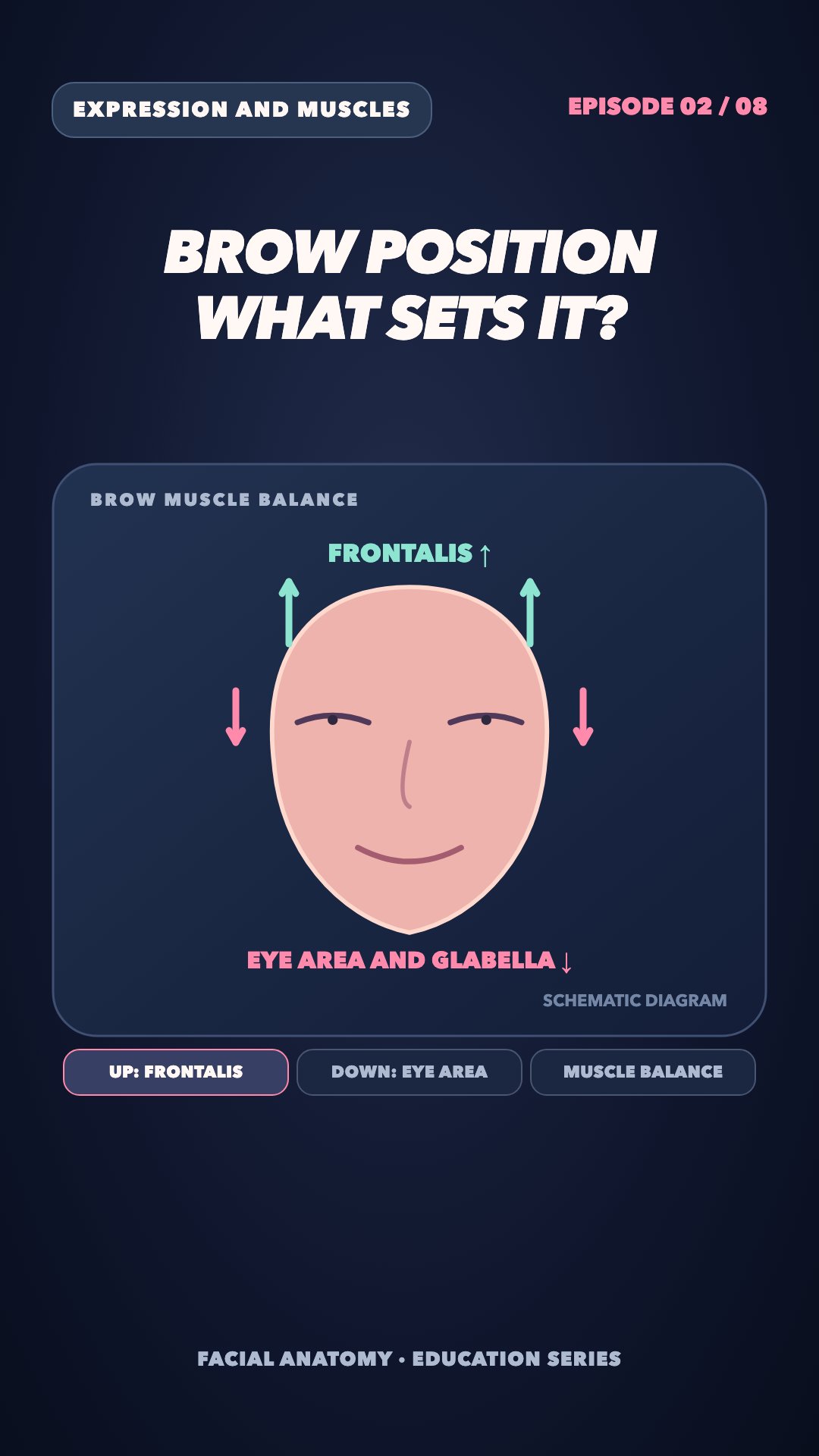
How does an expression line become permanent?

Expression and Muscles

English narration and captions

English transcript and sources

Why might a line that appears when you smile remain visible when your face relaxes? Facial muscles fold the skin at the same places as we make expressions. Younger skin smooths out more readily afterward. Over time, collagen and elastic support decline, and sunlight may speed this change. When the same line forms repeatedly, it may become visible at rest as well as during expression. This is called a static line. It is the combination of repeated movement and changes in skin structure, not a single smile, that matters.
Facial Anatomy02

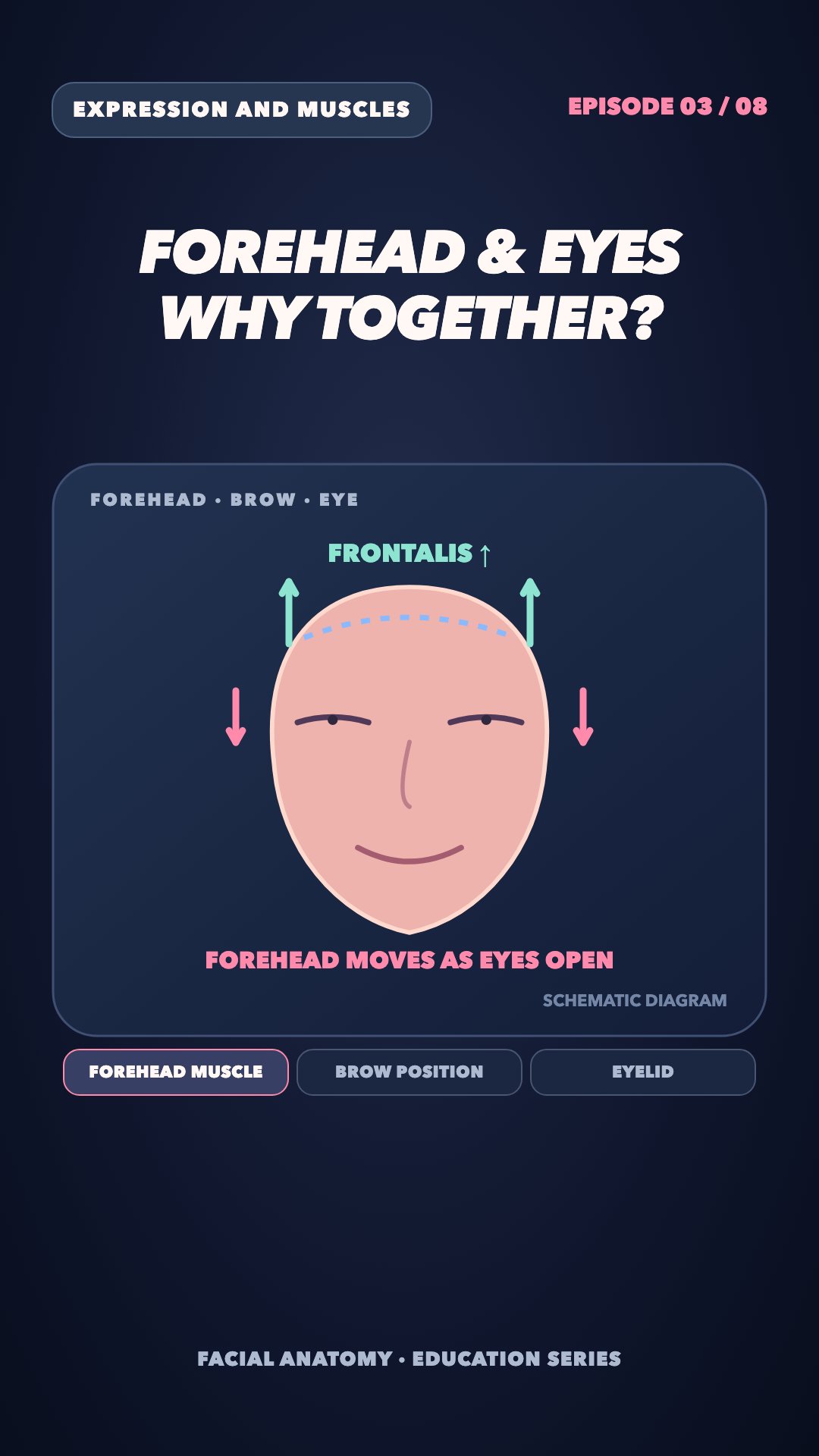
Which muscles determine brow position?

Expression and Muscles

English narration and captions

English transcript and sources

No single muscle controls the eyebrow. The frontalis muscle in the forehead pulls it upward, while the orbicularis around the eye and muscles between the brows exert downward and inward force. Brow position reflects the balance of these forces. The muscles on the two sides do not always work with the same strength, either. That is why brow shape and movement during expression differ between people. Viewing the brow as just one line can miss this balance.

Facial Anatomy03

Why assess the forehead and eye area together?

Expression and Muscles

English narration and captions

English transcript and sources

Raising your forehead does more than create forehead lines; it also changes brow position. The frontalis muscle lifts the brow, while muscles around the eye work in opposition. When the upper eyelid feels heavy, some people raise their brows more often to help keep their eyes open. This can make forehead lines more prominent. The forehead, brows and eye area are parts of the same chain of movement rather than independent pieces.

Facial Anatomy04

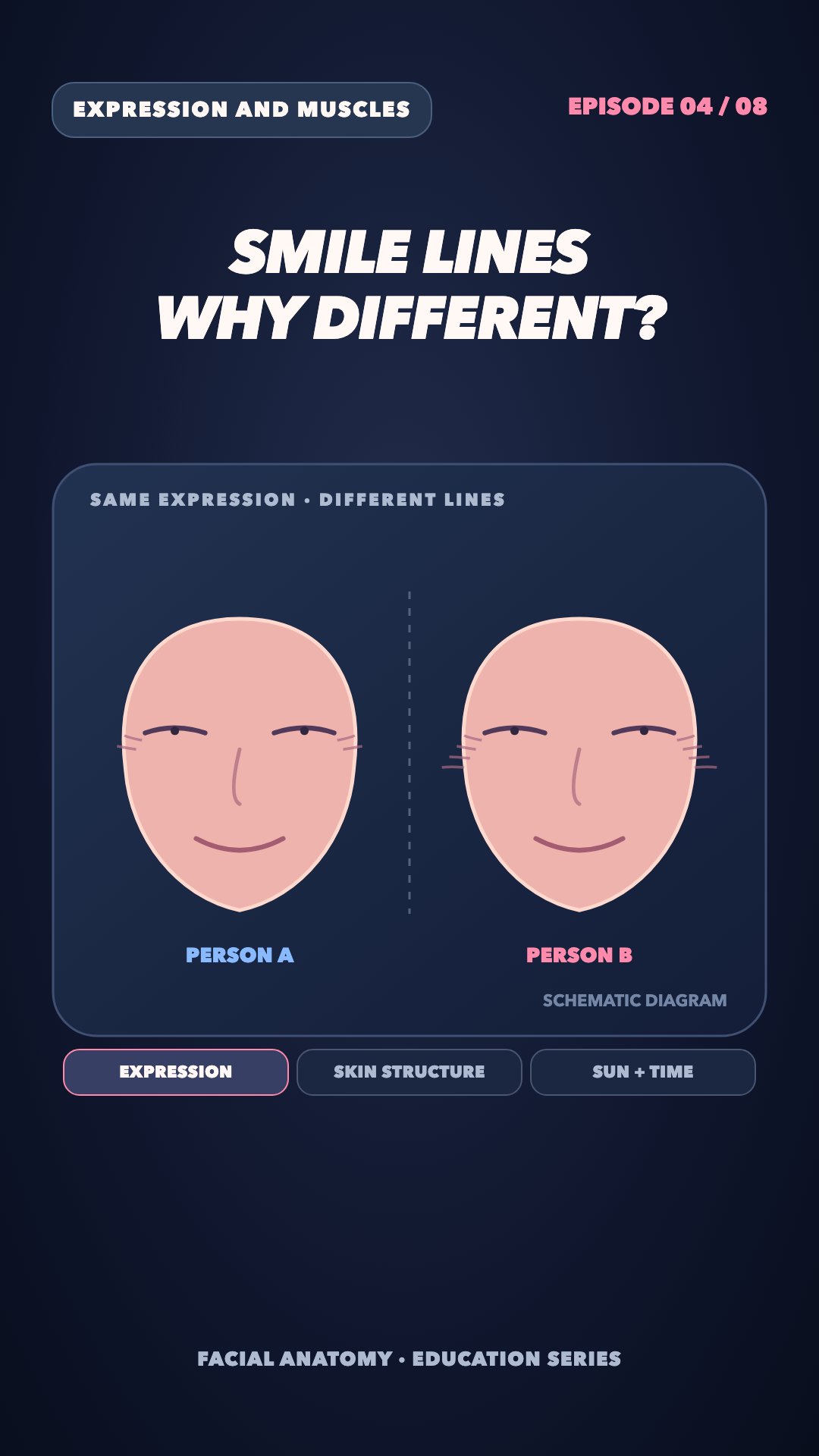
Why do smile lines vary from person to person?

Expression and Muscles

English narration and captions

English transcript and sources

When you smile, muscles around the eyes contract and the skin folds at the outer corners. But the number and depth of these lines are not the same for everyone. Expression patterns, skin structure, sun exposure and age-related changes in elasticity all play a part. A line may appear only during a smile for one person and remain visible at rest for another. This difference shows that faces move differently; it is not, by itself, a sign of disease.

Facial Anatomy05

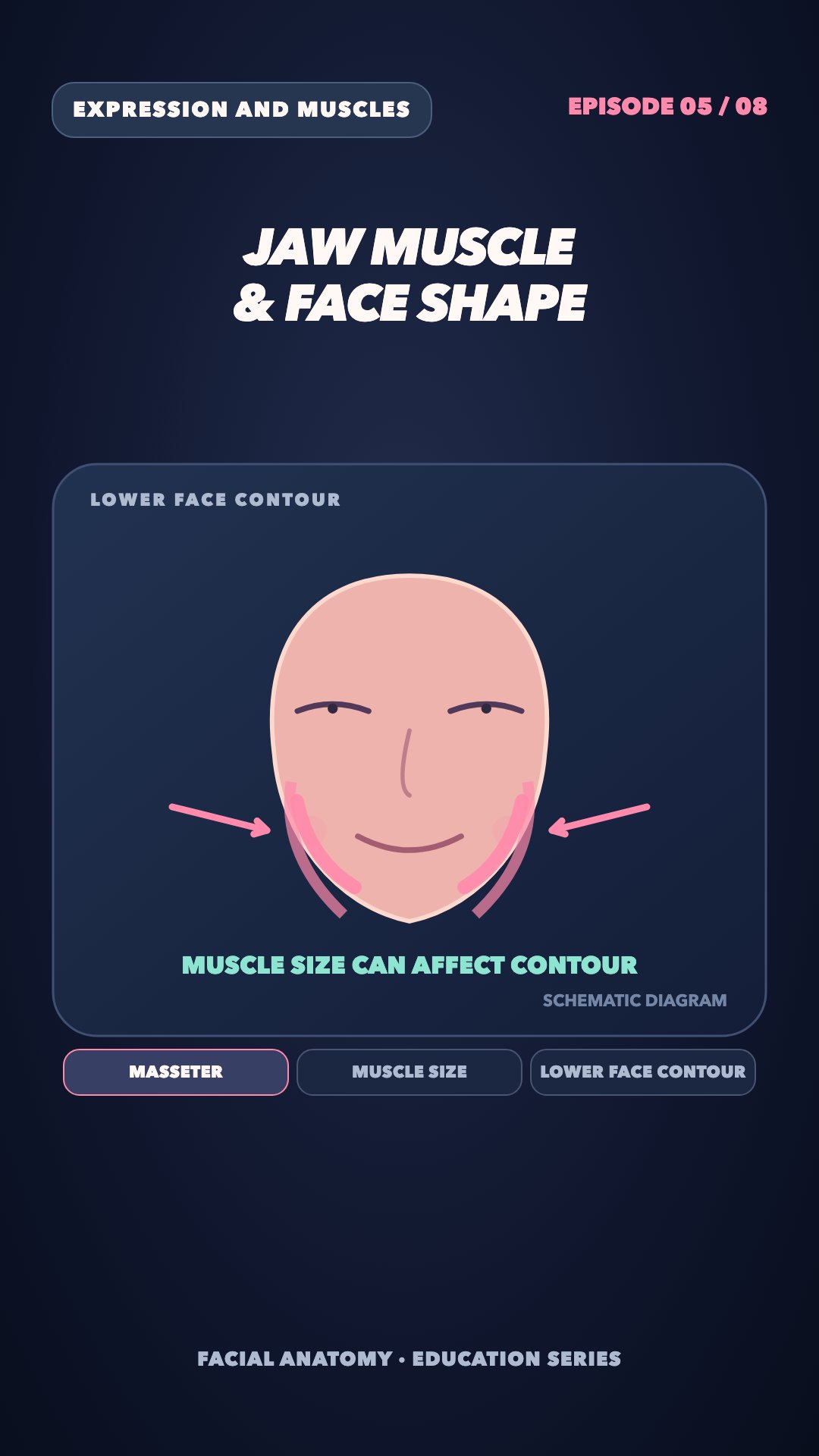
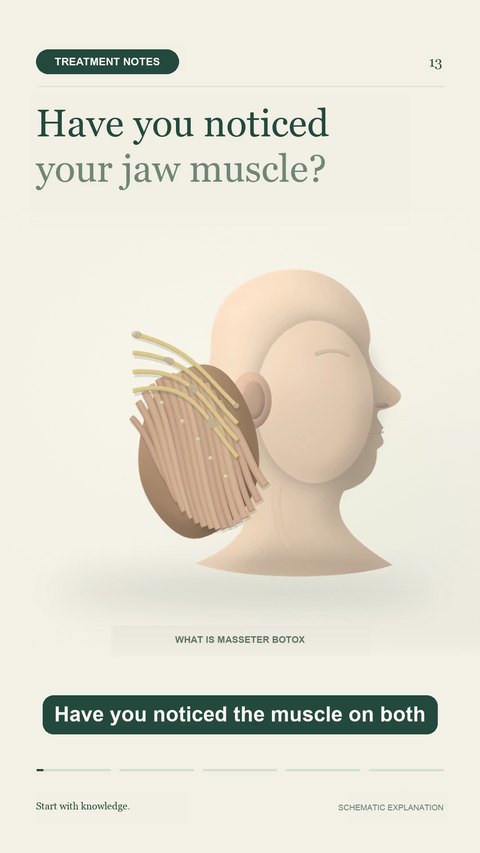
How does the jaw muscle affect facial shape?

Expression and Muscles

English narration and captions

English transcript and sources

When you clench your teeth, you can feel a muscle firm up at the angle of the jaw: the masseter. This chewing muscle varies in size between people. When it is more prominent, the lower face may look wider or more angular. But the muscle alone does not define the facial outline; the jawbone, fat tissue and skin also affect it. The size of the jaw muscle cannot therefore be judged with certainty just by looking from the outside.

Facial Anatomy06

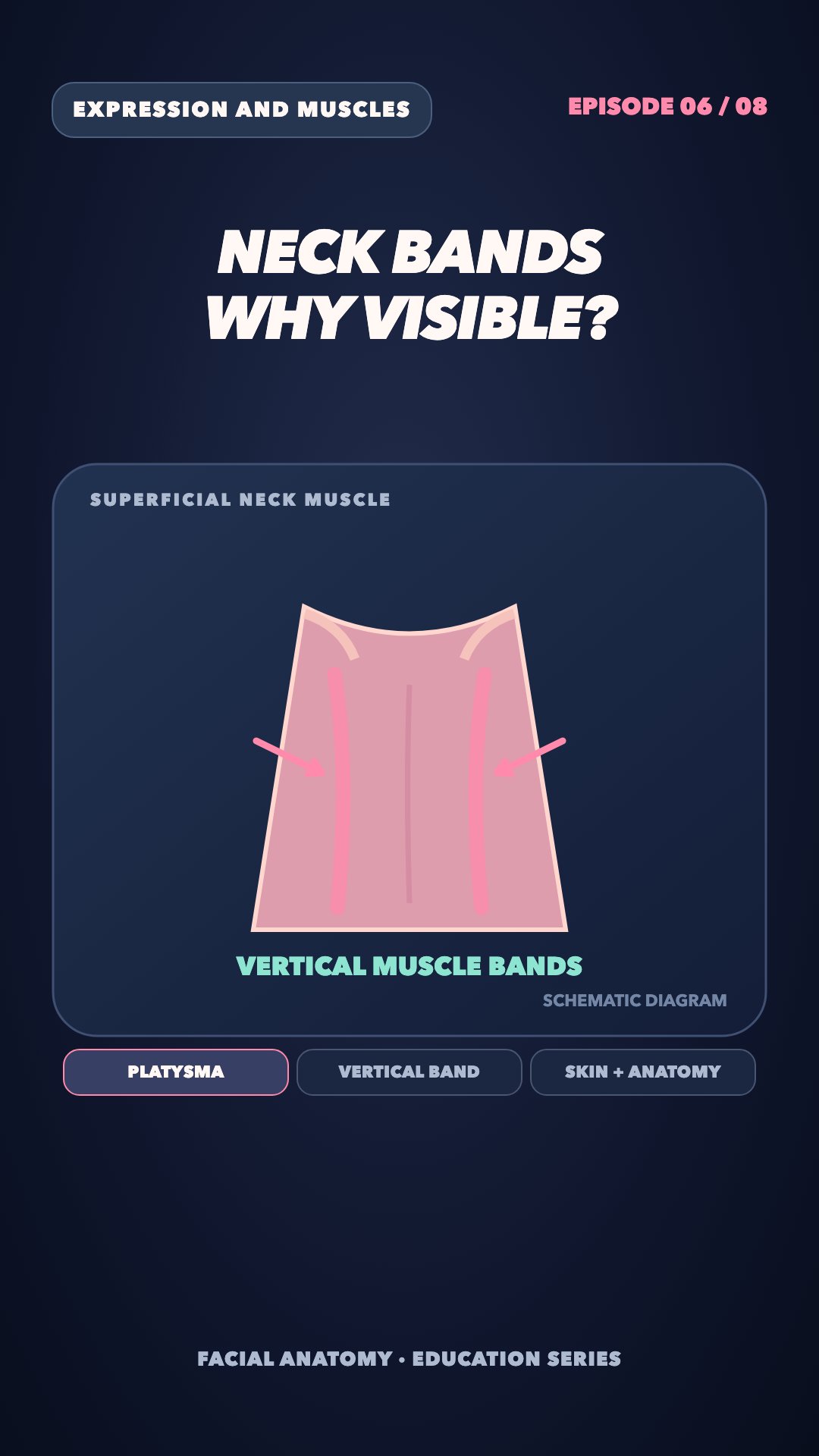
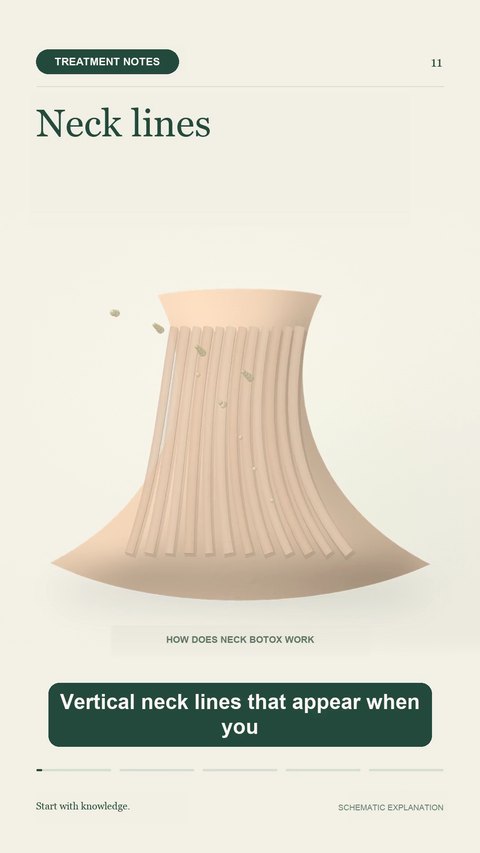
Why do vertical neck bands become visible?

Expression and Muscles

English narration and captions

English transcript and sources

Vertical lines that appear when you tense your neck are often related to a superficial muscle called the platysma. As it contracts, parts of it can become more prominent and look like bands. With time, as surrounding tissue loses elasticity, these bands may also be visible at rest. Not every neck line is the same: horizontal skin creases should be distinguished from vertical muscle bands. Muscle, skin and anatomy together determine the appearance.

Facial Anatomy07

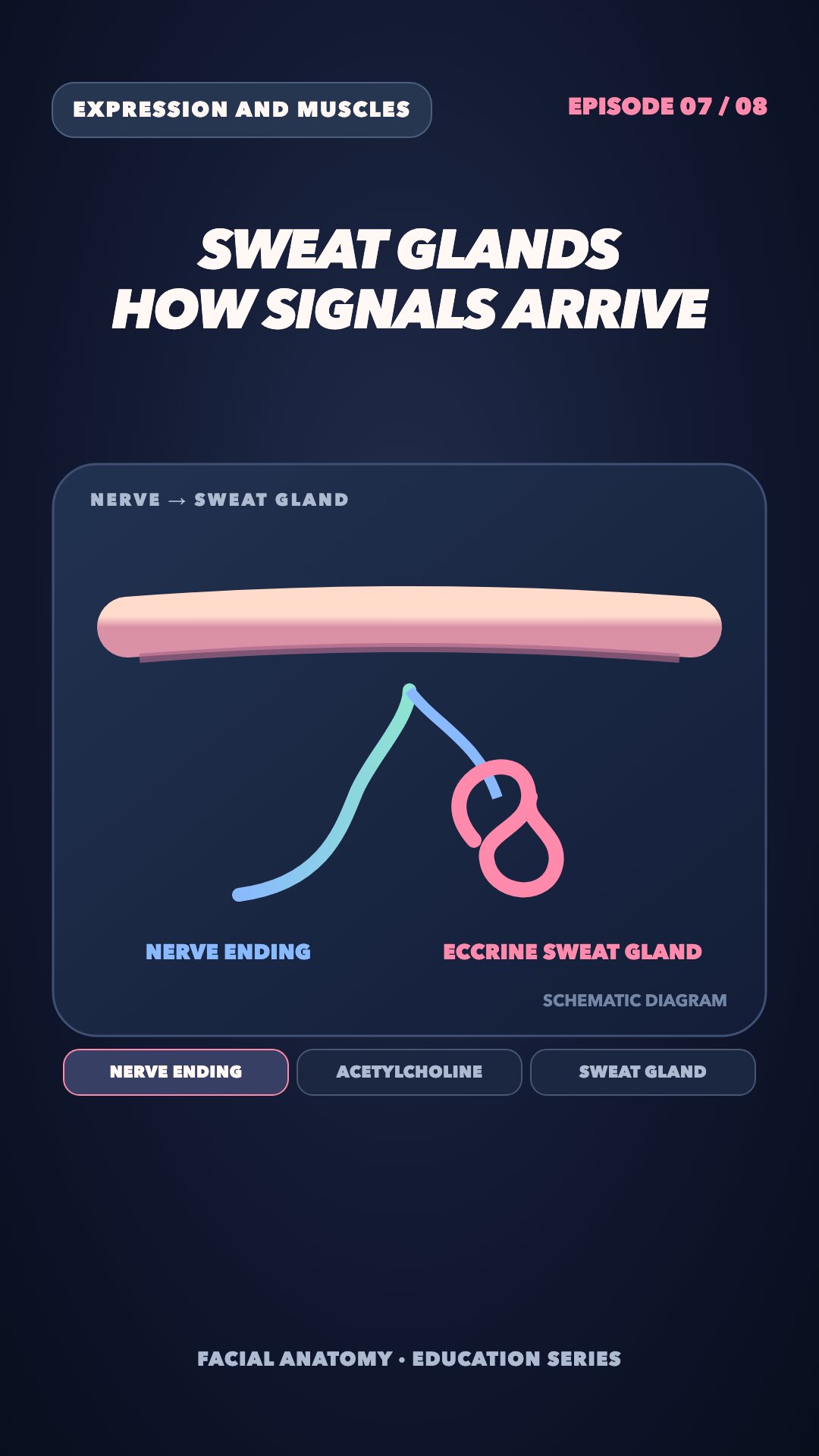
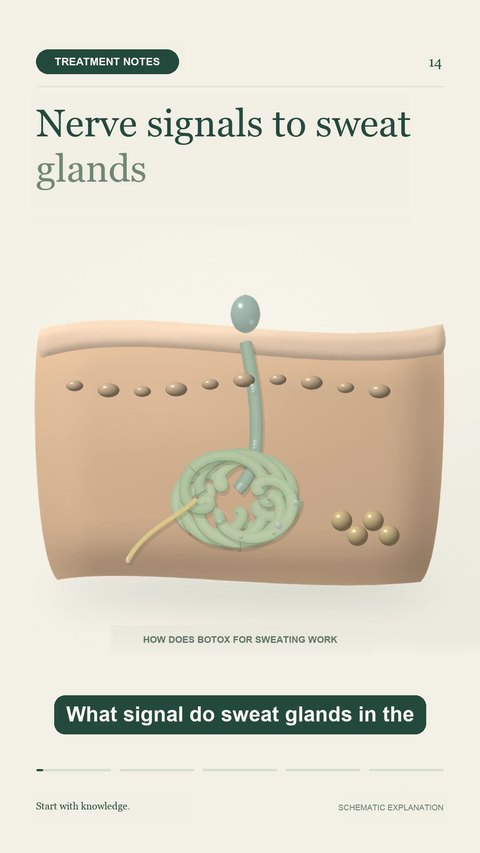
How do sweat glands receive nerve signals?

Expression and Muscles

English narration and captions

English transcript and sources

When you get hot, the brain sends messages through nerves to start sweating. Nerve endings reaching the skin's eccrine sweat glands release a chemical messenger called acetylcholine. When it binds to receptors in the gland, sweat production rises. Interestingly, these nerves are part of the sympathetic nervous system but mainly use acetylcholine here. Sweating can change with stress and physical activity as well as temperature.

Facial Anatomy08

Why is the effect on muscle movement temporary?

Expression and Muscles

English narration and captions

English transcript and sources

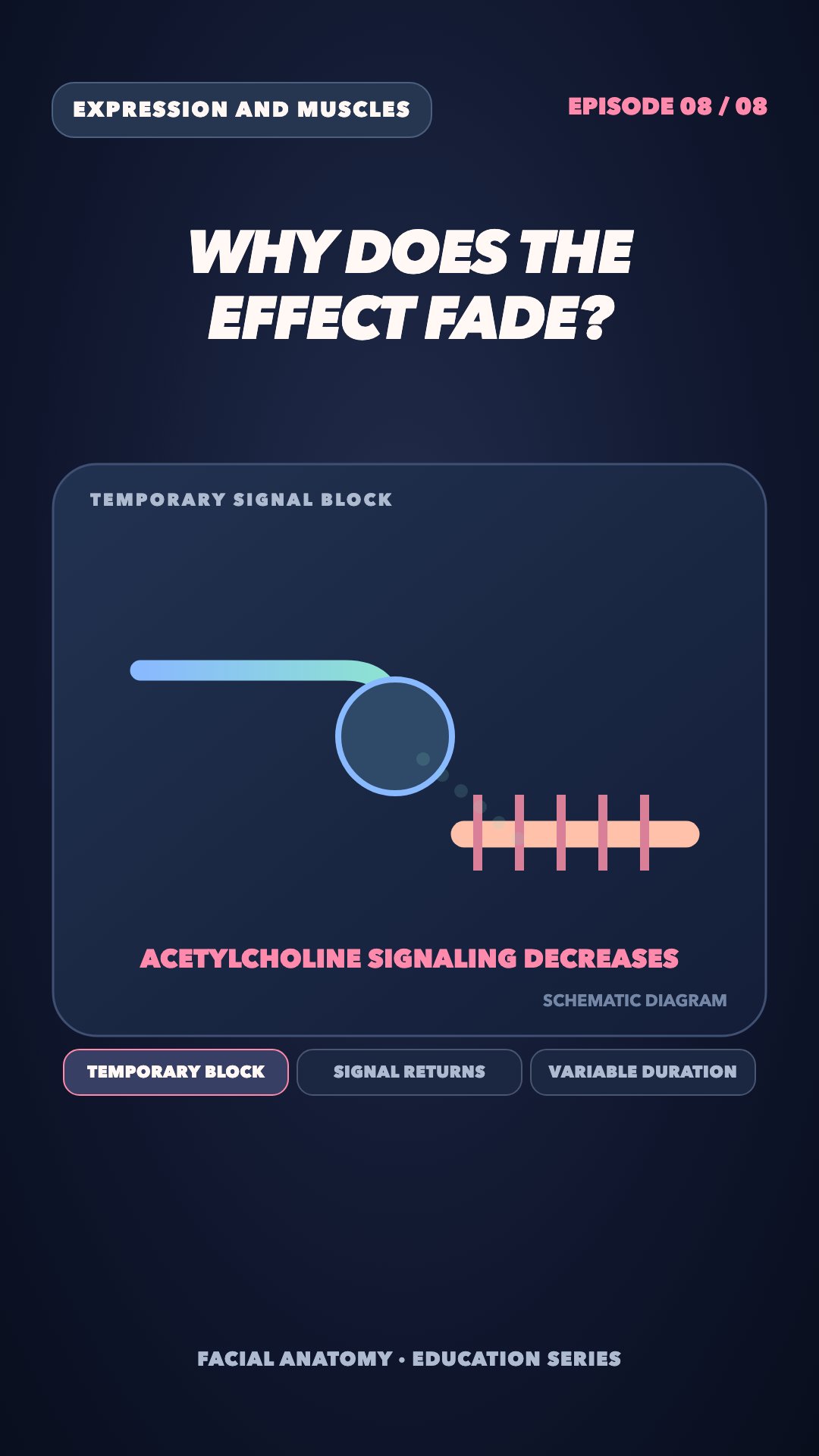
Botulinum toxin treatments that reduce muscle movement temporarily block the acetylcholine signal from the nerve ending to the muscle. The nerve-muscle connection regains function over time, and movement returns. The duration of the effect is therefore limited. It can vary with the treated area, dose and individual response. Not every line visible at rest is caused only by muscle movement; skin structure also needs to be considered.

Facial Volume01

Where does the face lose volume over time?

Facial Volume and Balance

English narration and captions

English transcript and sources

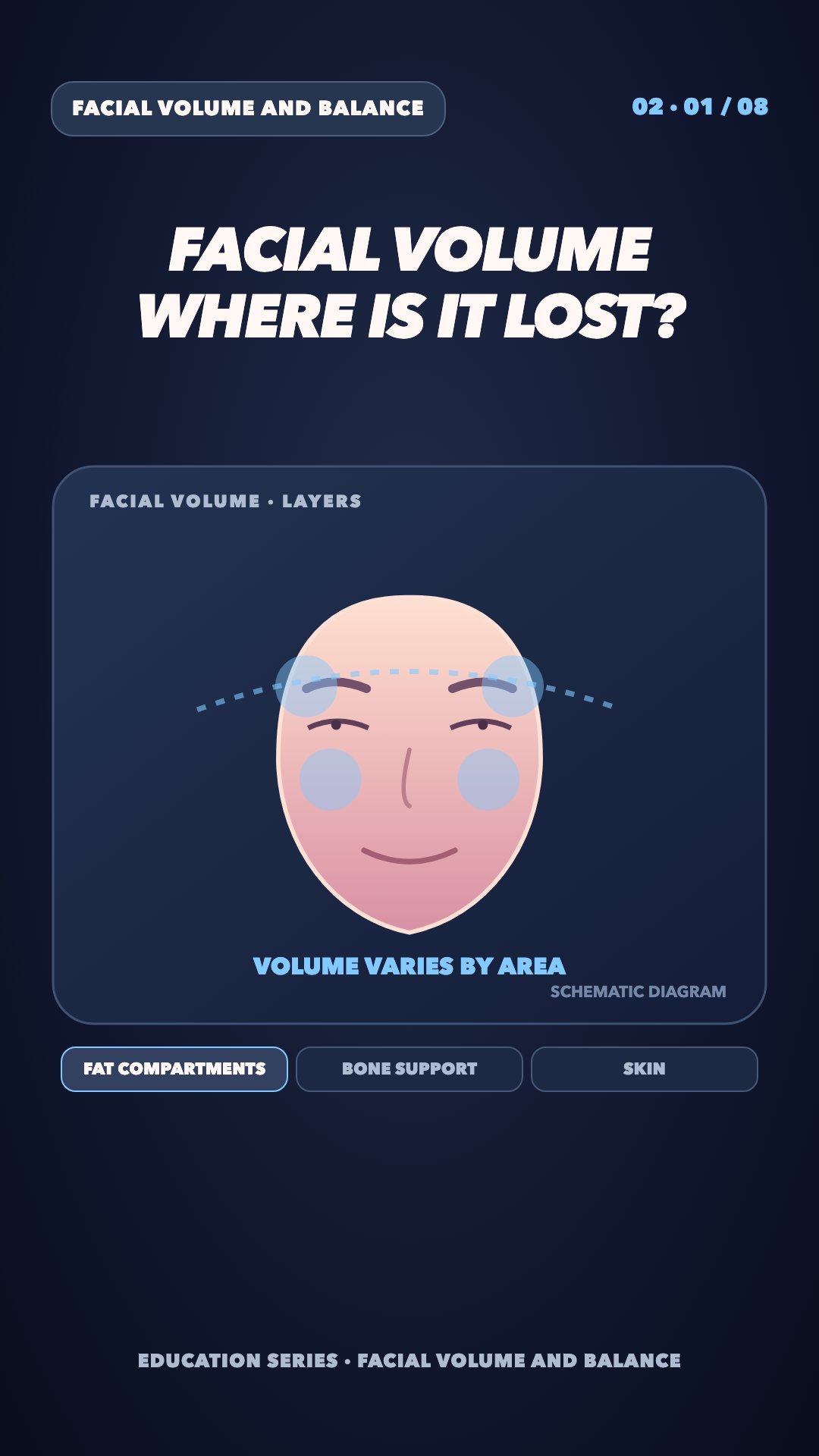
Skin is not the only part of the face that changes with age. Fat compartments around the cheeks and temples, bone support and skin can change at different rates. A hollow may stand out in one area and a shadow or looseness in another. Facial volume loss does not follow the same map for everyone. There may be changes in several layers behind a single line seen in a photograph.

Facial Volume02

Why does one milliliter of filler look different on two people?

Facial Volume and Balance

English narration and captions

English transcript and sources

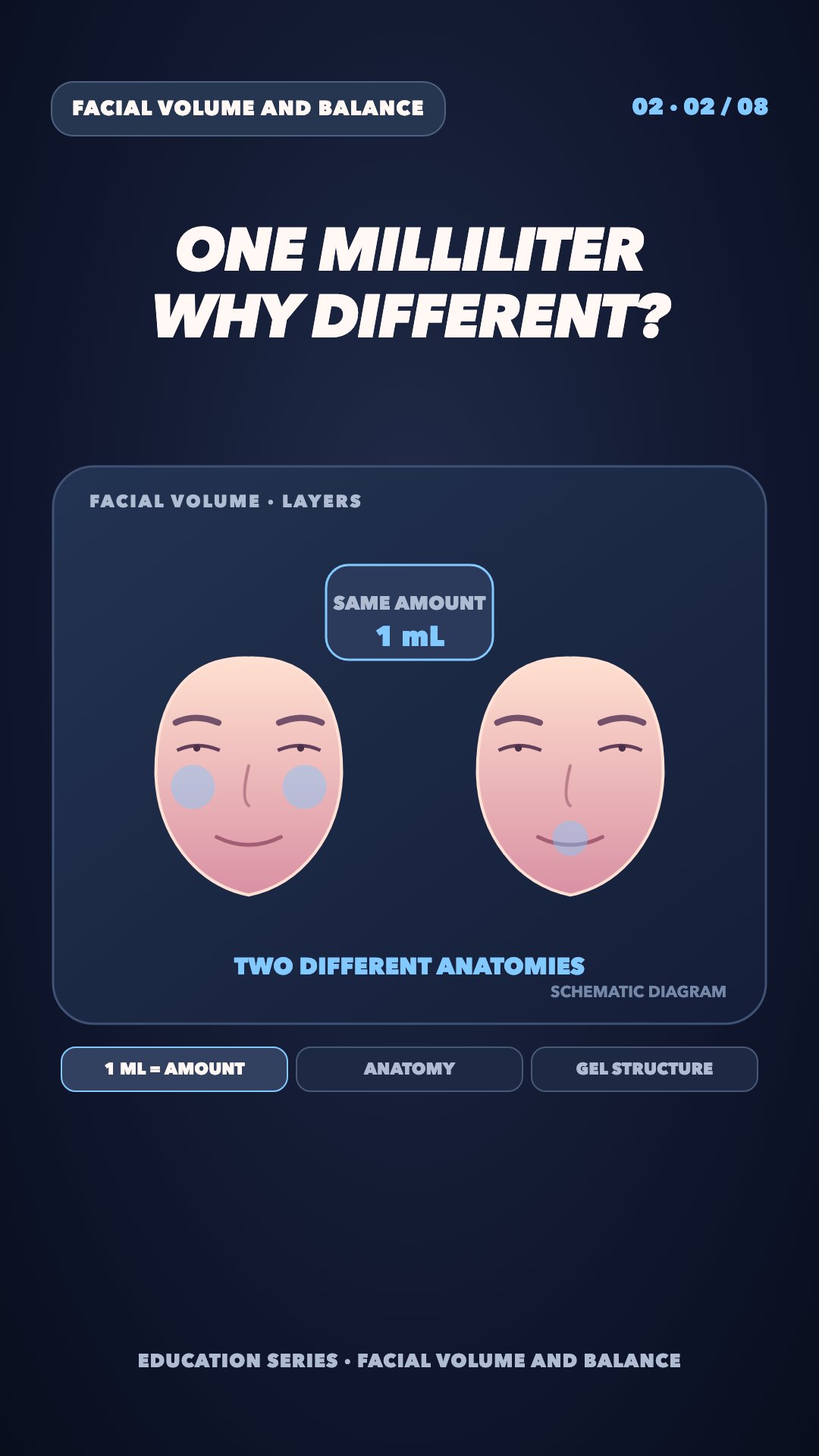
One millilitre describes the amount added; it cannot, on its own, tell you how that volume will look on a face. Starting anatomy, the treated area, tissue structure and the properties of the gel all affect the result. The same amount may create a noticeable change for one person and look subtler for another. Volume should therefore be considered alongside the whole face and a realistic goal, not just a number.

Facial Volume03

How does cheek volume affect the rest of the face?

Facial Volume and Balance

English narration and captions

English transcript and sources

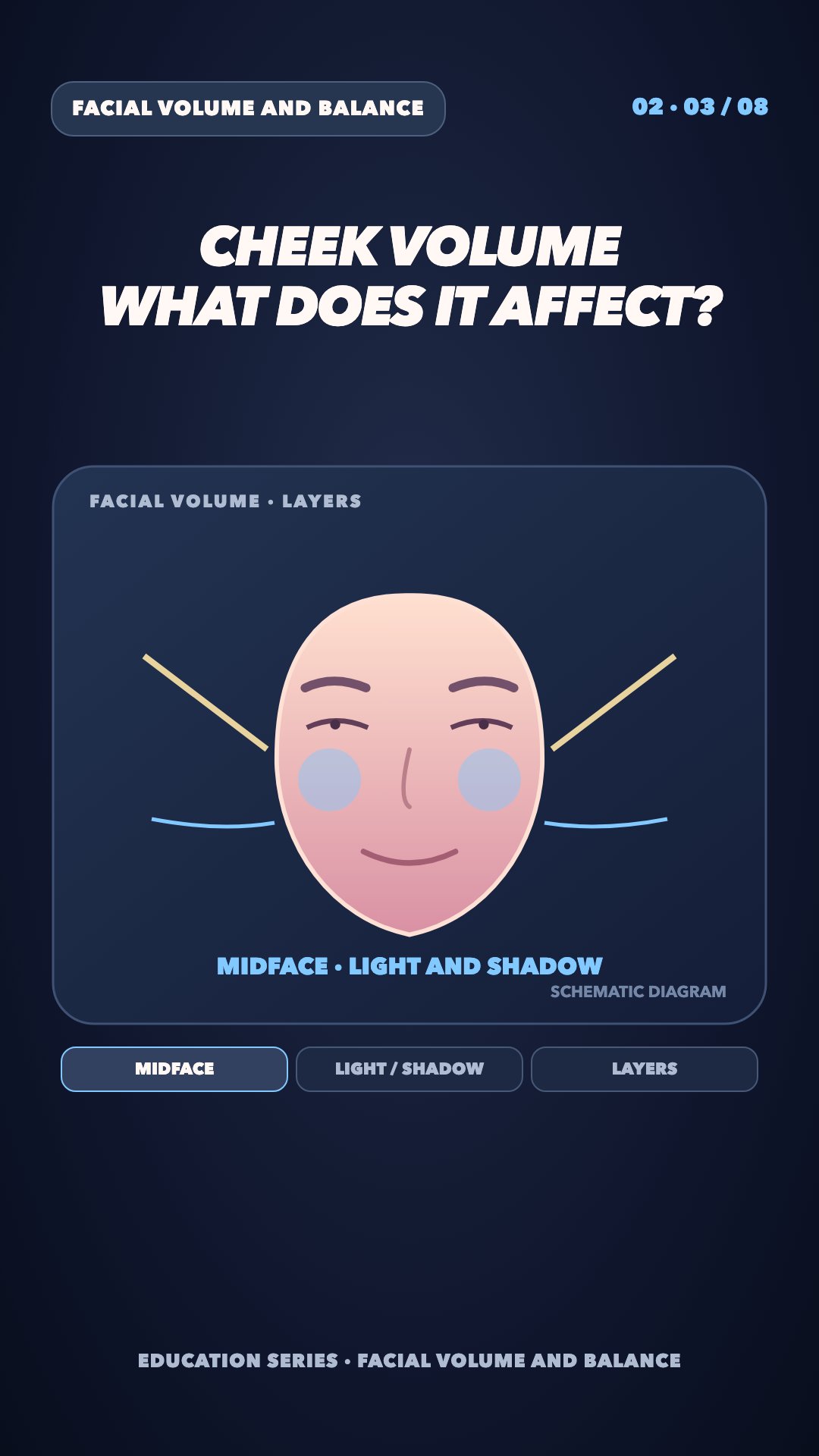
The cheek contributes both volume and the way light reflects across the midface. When its shape changes, the shadow beneath the eye and the transition beside the nose may also look different. But not every line or shadow is caused solely by cheek volume. Bone structure, skin and fat compartments need to be considered together. Drawing conclusions about the whole face from one spot can be misleading.

Facial Volume04

Why are lip shape and proportion about more than volume?

Facial Volume and Balance

English narration and captions

English transcript and sources

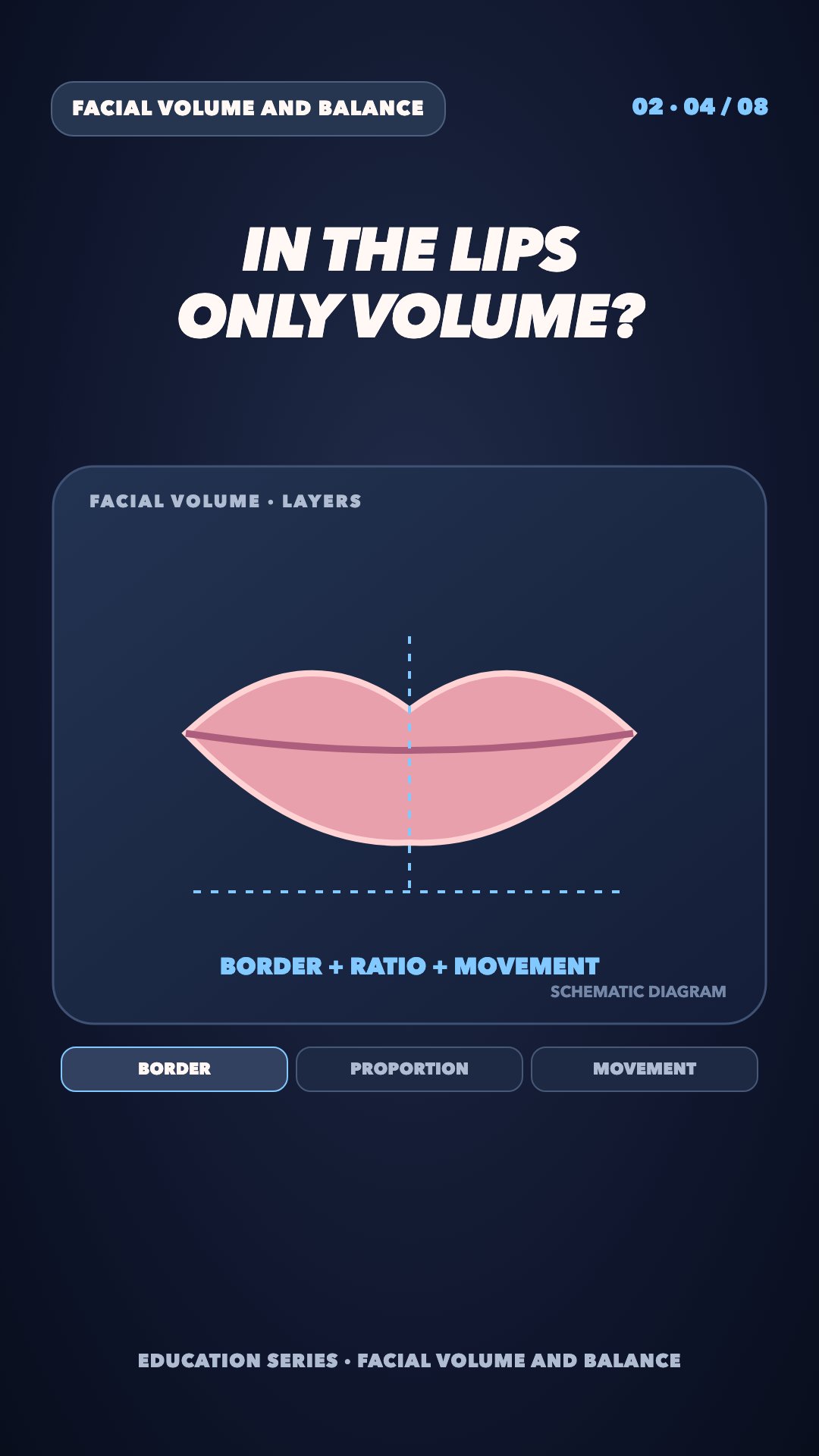
Fullness is not the only thing that shapes the appearance of a lip. The proportion of the upper and lower lips, their border, surrounding tissues and movement when smiling also matter. The same added volume looks different on different lip shapes. Adding a large amount of volume does not automatically define the border more clearly. To understand a natural appearance, the lips should be considered with the rest of the face and in motion.

Facial Volume05

How can the temples change facial expression?

Facial Volume and Balance

English narration and captions

English transcript and sources

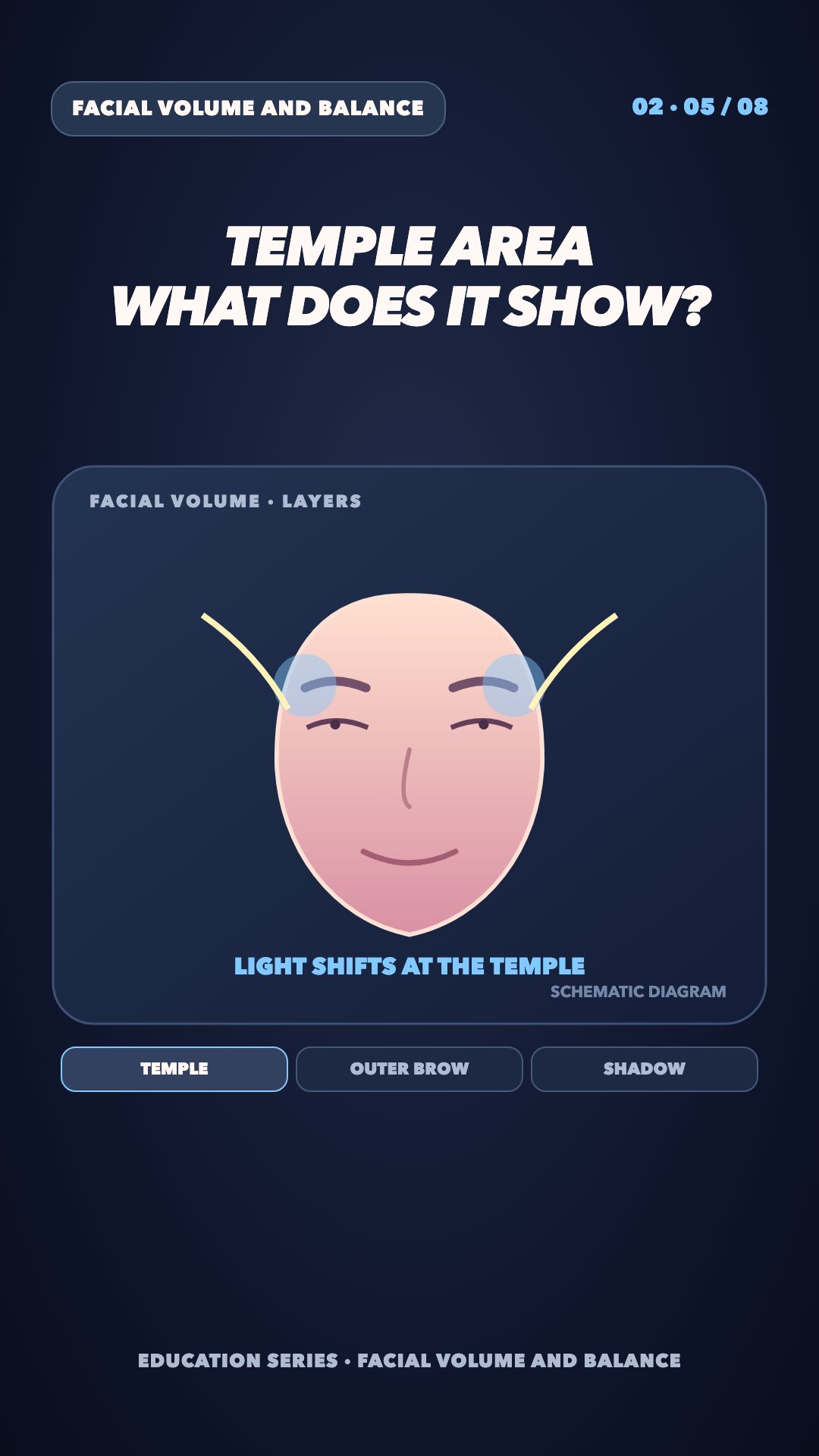
The temple is part of the facial transition beside the outer eye. Volume and bone shape there can affect how light falls and how the outer brow area looks. Hollowing that develops over time may make shadows on the face more noticeable. But this appearance alone does not measure someone's age or health. Natural facial anatomy varies between people.

Facial Volume06

What happens when hyaluronic acid gel holds water?

Facial Volume and Balance

English narration and captions

English transcript and sources

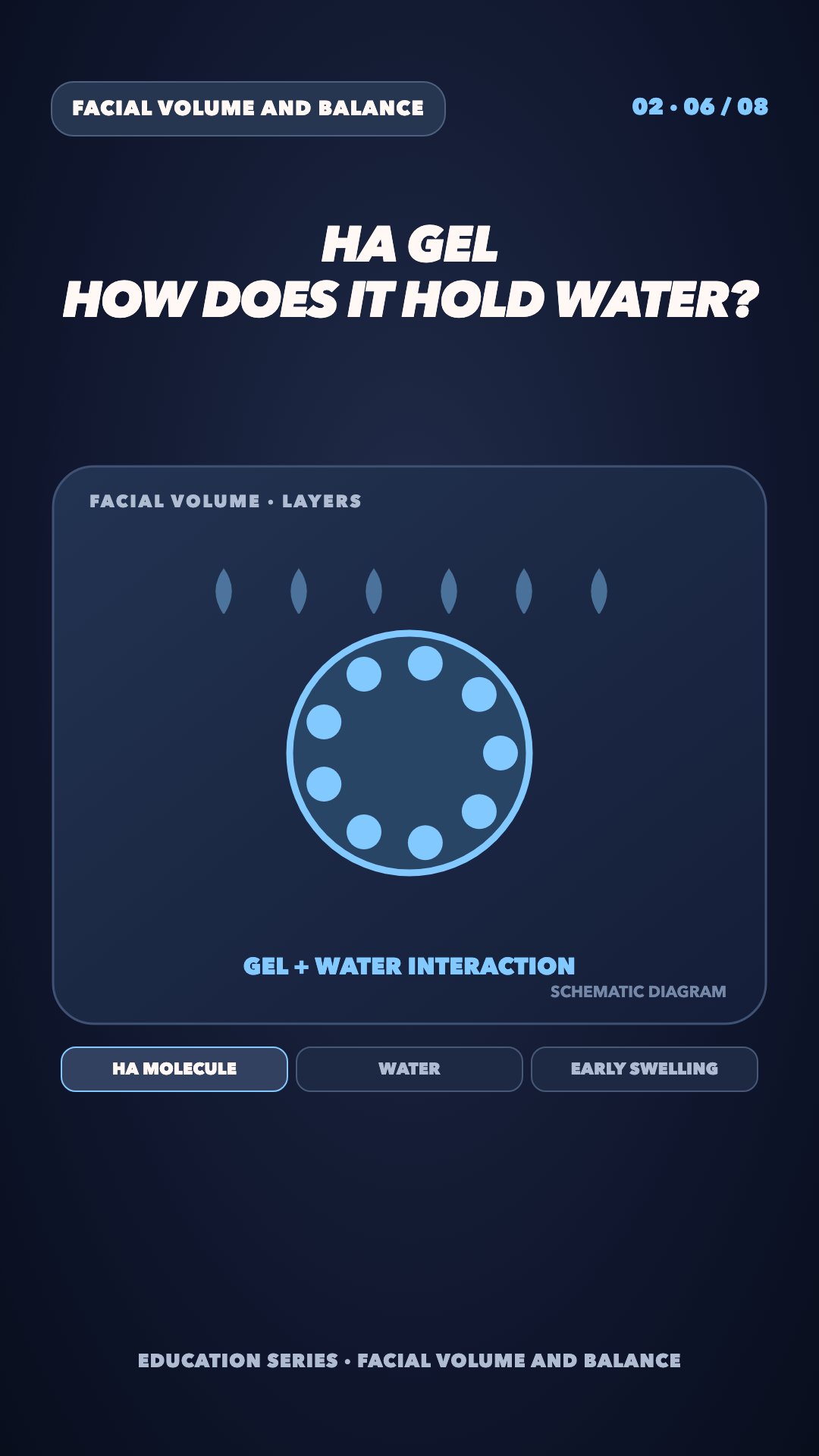
Hyaluronic acid is a molecule that can interact with water. A filler gel occupies space in tissue and also interacts with water around it. This can affect the gel's volume and feel, but products do not all behave the same way. Swelling in the first few days is not simply the gel holding water; it may also be the tissue's response to treatment. The early stage needs to be considered separately when judging the final appearance.

Facial Volume07

How can early swelling be distinguished from the final result?

Facial Volume and Balance

English narration and captions

English transcript and sources

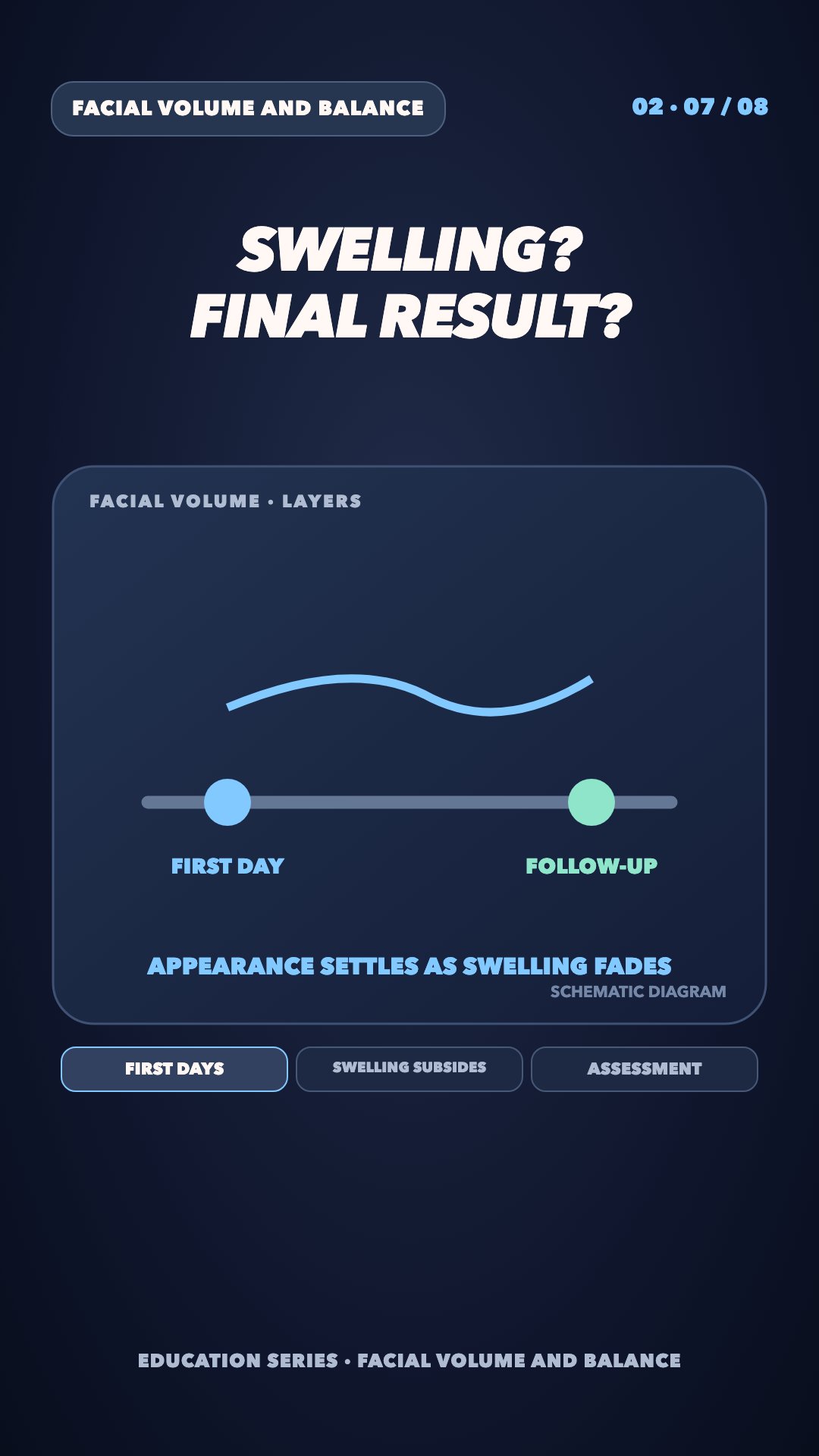
Swelling, tenderness or bruising may occur in the first days after filler treatment. Part of this early appearance is a temporary tissue response to the procedure. Shape can be assessed more clearly as swelling subsides. How long to wait varies by person and treatment area; the healthcare professional who performed the procedure can advise. Symptoms such as severe or increasing pain are not something to simply wait and watch.

Facial Volume08

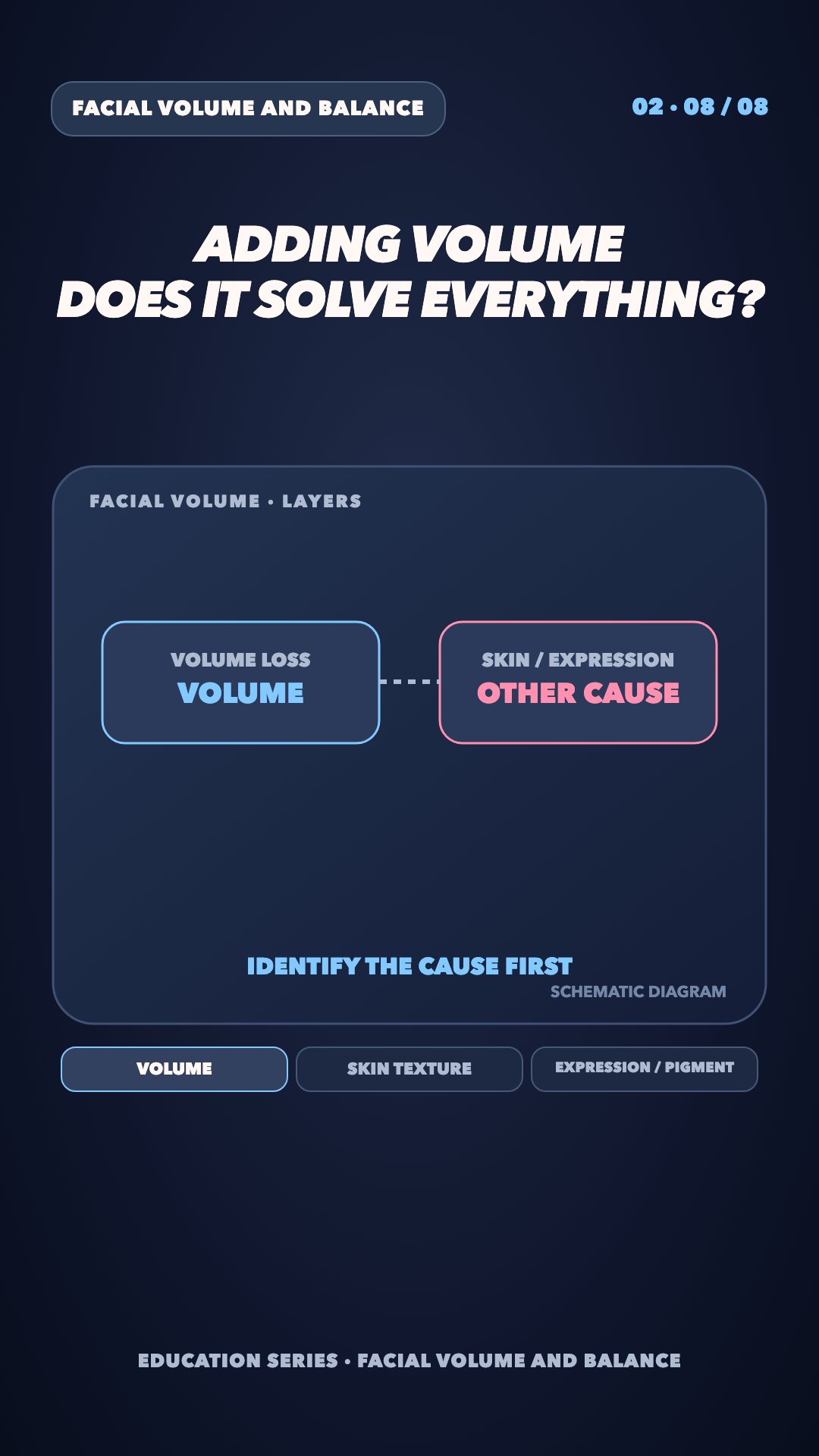
Which appearance concerns can adding volume not solve?

Facial Volume and Balance

English narration and captions

English transcript and sources

A method used to address lost volume does not answer every appearance concern. Thin skin, pigmentation, expression lines and marked laxity arise for different reasons. Adding volume will not correct all of them and may sometimes make the appearance heavier. Accurately identifying what has changed is the basis for discussing suitable options.

Skin Health01

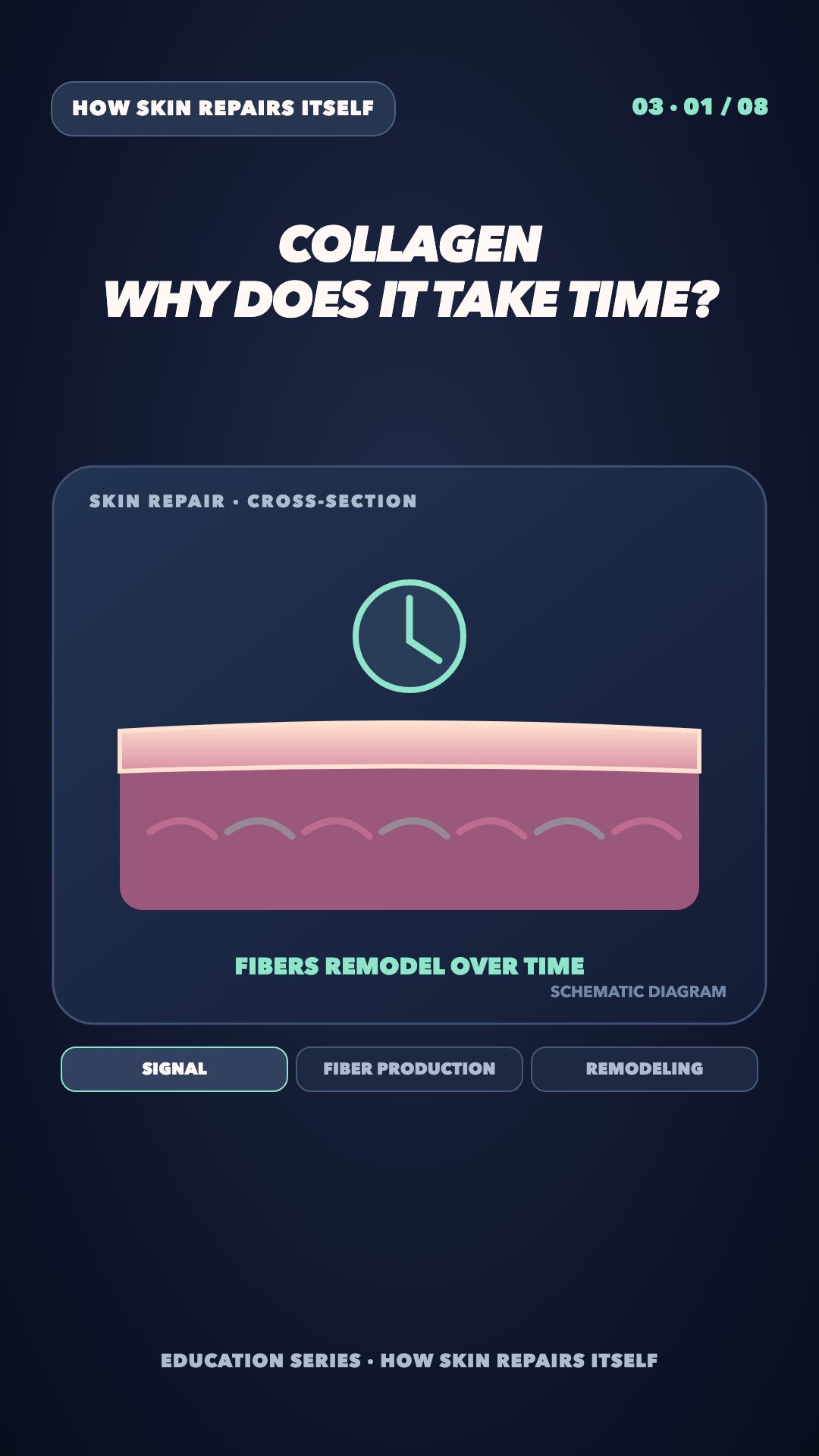
Why do changes involving collagen take time?

How Skin Repairs Itself

English narration and captions

English transcript and sources

Collagen is one part of the skin's supporting tissue. When skin responds to a stimulus, production of new fibres and remodelling of existing fibres progress in stages. The process can begin within days, but visible change may take weeks or sometimes months. Fullness or redness seen on the first day after treatment is not evidence of new collagen. The tissue's healing pace must be considered when assessing results.

Skin Health02

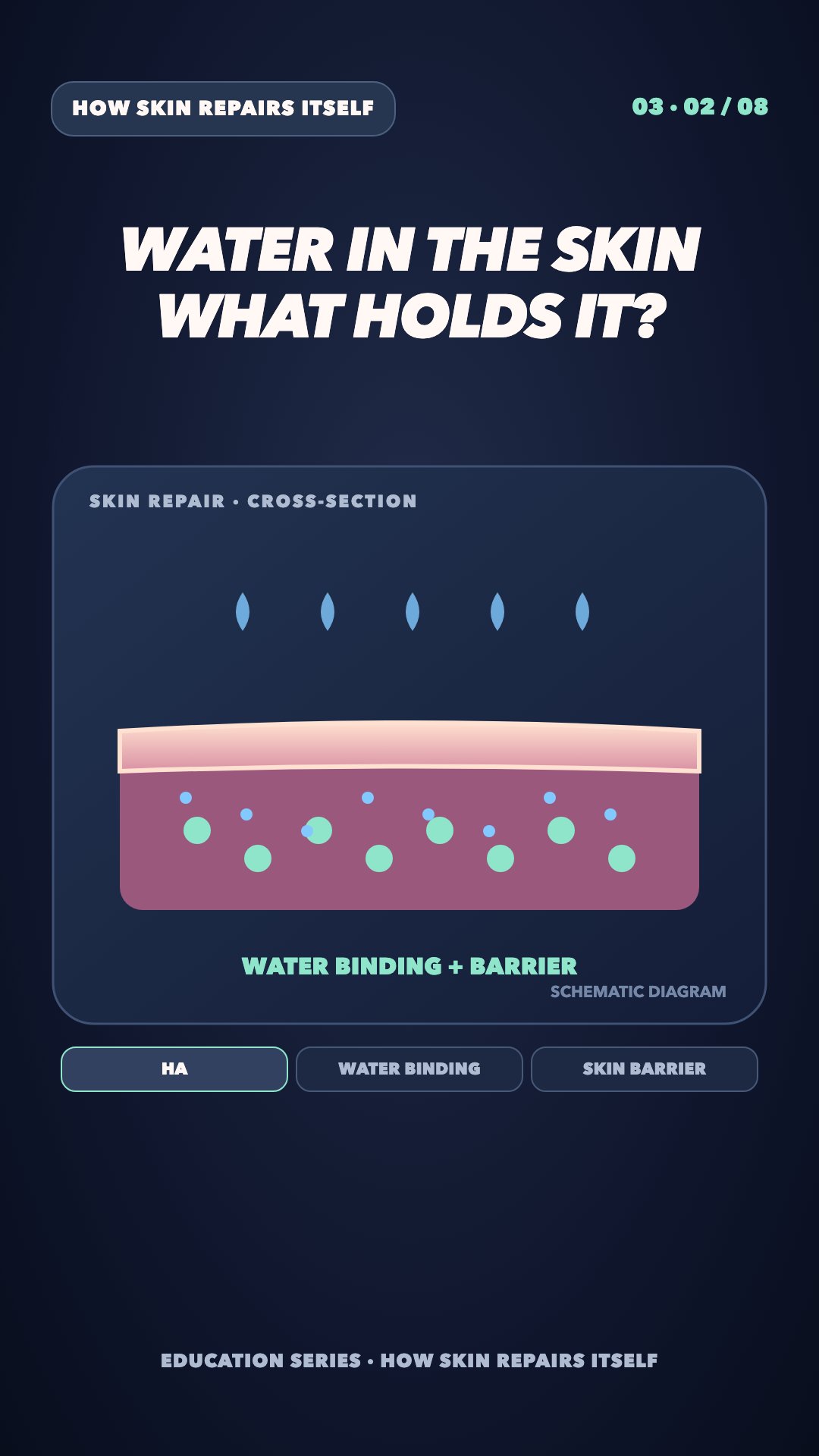
How does hyaluronic acid retain water in the skin?

How Skin Repairs Itself

English narration and captions

English transcript and sources

Hyaluronic acid is a water-interacting molecule found between skin cells. Its ability to bind surrounding water helps tissue feel hydrated and supple. But skin moisture does not depend on a single molecule. The outer barrier, environmental conditions and skincare habits also affect water loss. A hydrated appearance should not be confused with lasting structural change.

Skin Health03

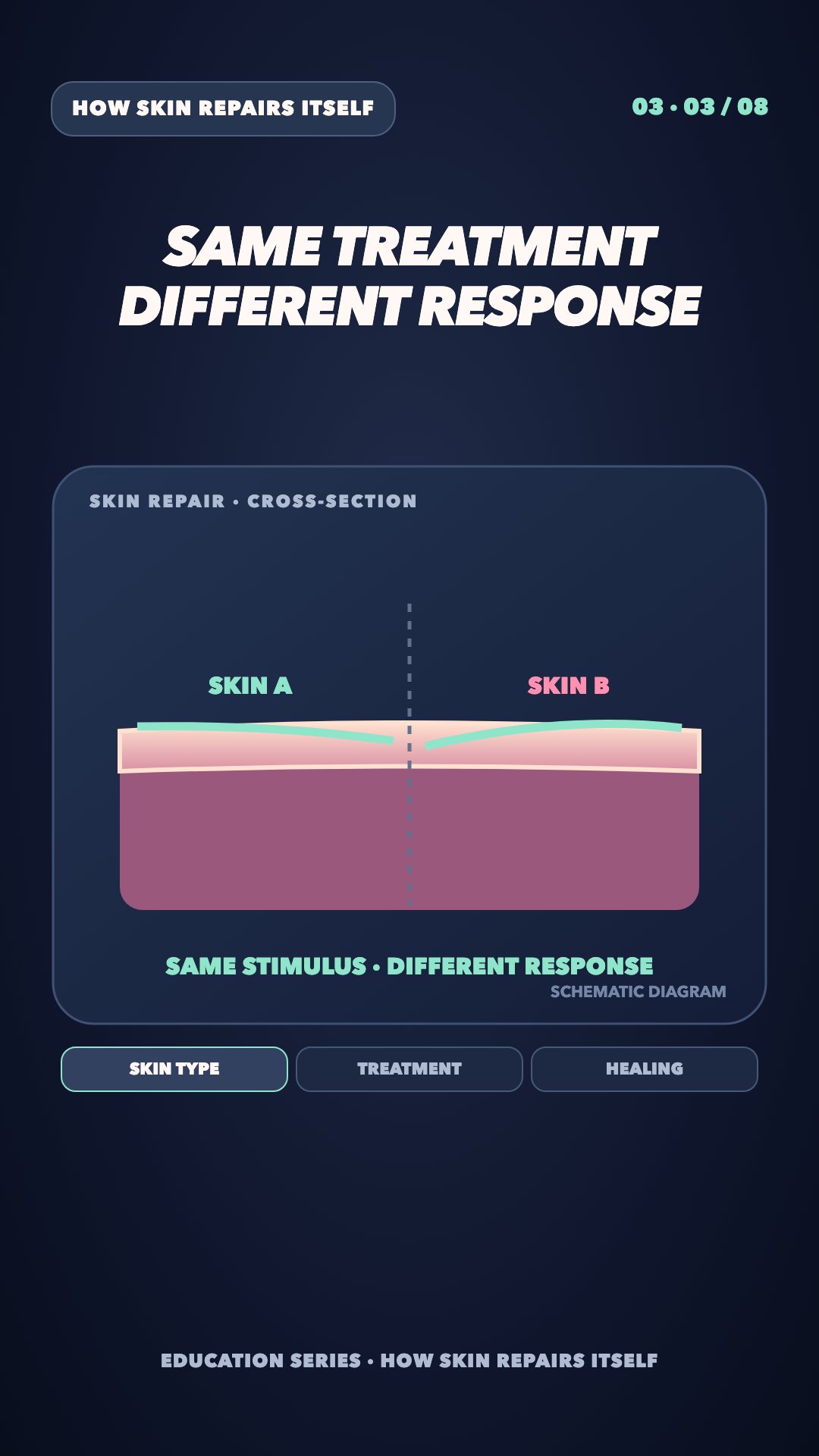
Why can the same treatment produce different responses?

How Skin Repairs Itself

English narration and captions

English transcript and sources

No two skins experience the same procedure in exactly the same way. Skin tone, sensitivity, previous sun damage, active inflammation and healing tendency may affect the appearance. The method used and treatment depth also change the outcome. Another person's photograph therefore cannot promise a particular result for your own skin. An assessment should consider personal risks and expectations together.

Skin Health04

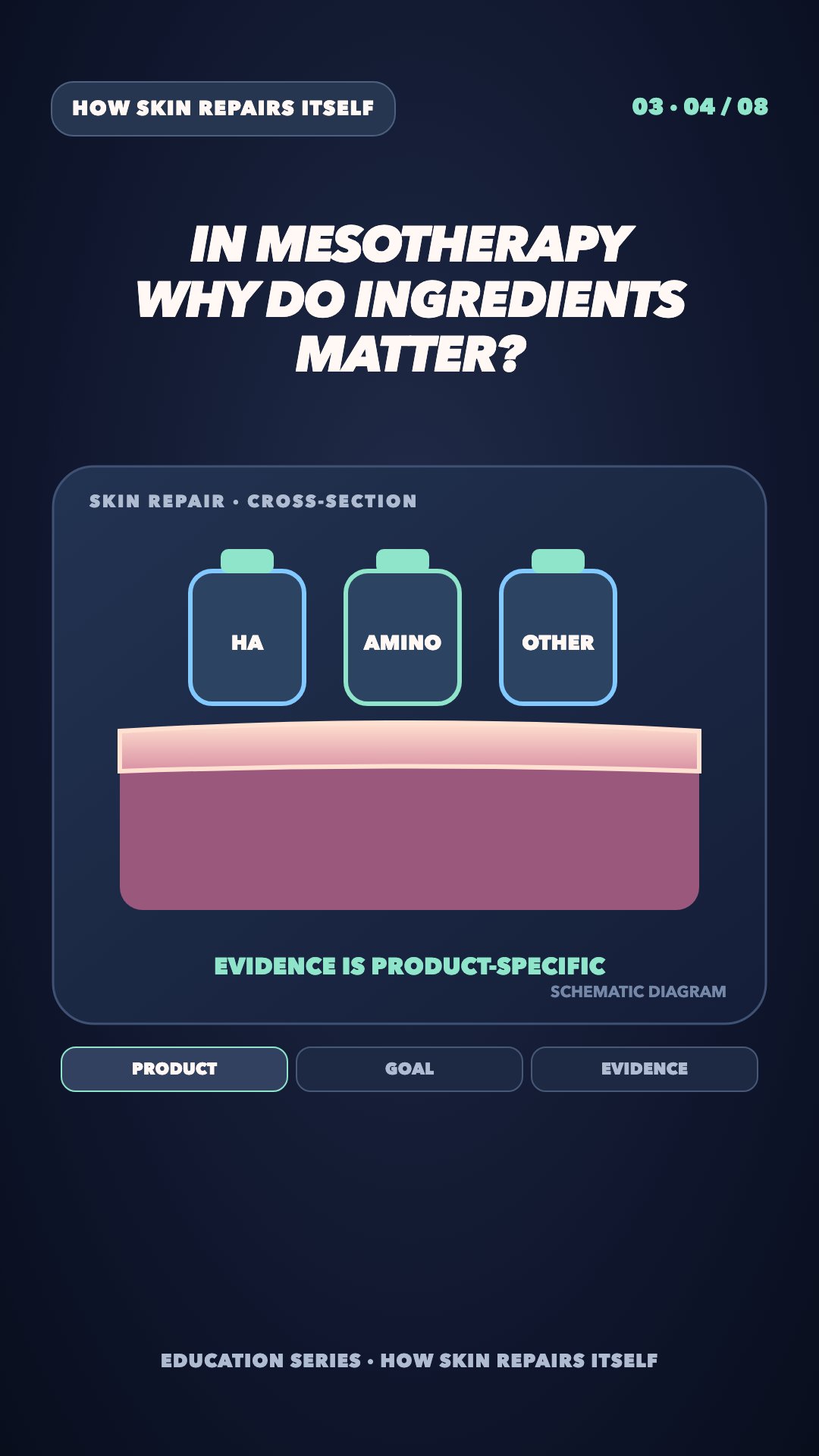
Why do mesotherapy ingredients matter?

How Skin Repairs Itself

English narration and captions

English transcript and sources

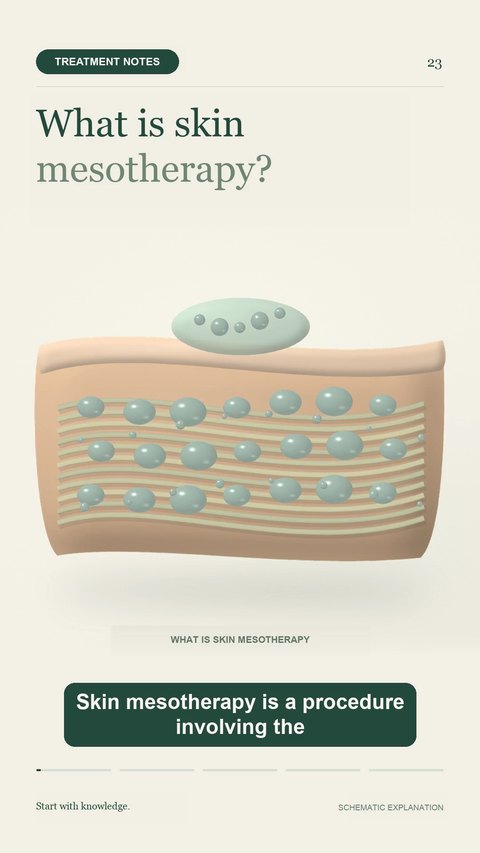
Mesotherapy is not the name of one standard liquid; the substances delivered into the skin can vary. Products containing hyaluronic acid, amino acids or other ingredients do not share the same aims or evidence. Looking only at the method's name is therefore not enough. The exact product, purpose and safety conditions should be discussed clearly. Research on one product cannot automatically be applied to every mixture.

Skin Health05

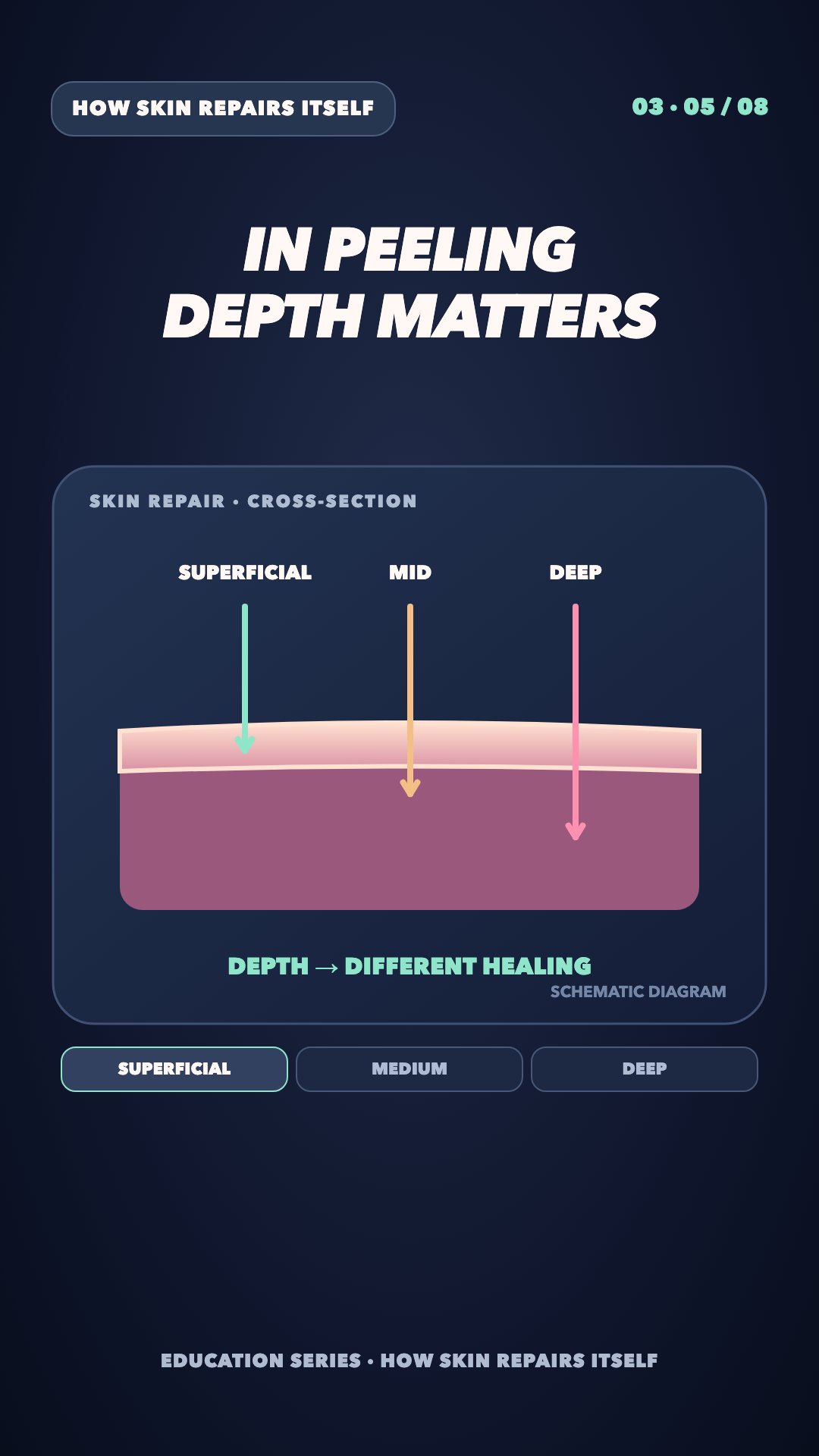
What is the difference between superficial and deep chemical peels?

How Skin Repairs Itself

English narration and captions

English transcript and sources

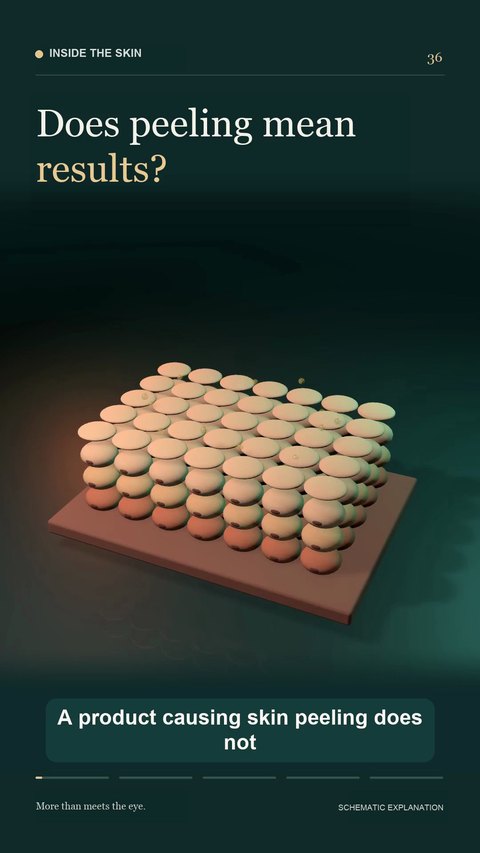
The substance used in a chemical peel and the depth of its application determine which layers of skin are affected. Recovery is usually shorter after superficial treatments. Deeper treatments require longer care and follow-up, and their risks differ. Thinking of a peel as simply 'removing skin' misses this distinction. A specialist chooses an approach according to the skin concern and the person's risks.

Skin Health06

Does redness always mean skin is renewing?

How Skin Repairs Itself

English narration and captions

English transcript and sources

Redness can appear after a procedure; it is a response from the skin. But not all redness is a positive sign of renewal. Irritation, a contact reaction or infection must also be considered. Its intensity and duration, and any accompanying pain or discharge, matter. If a reaction is stronger than expected or getting worse, the healthcare professional who performed the procedure should be contacted.

Skin Health07

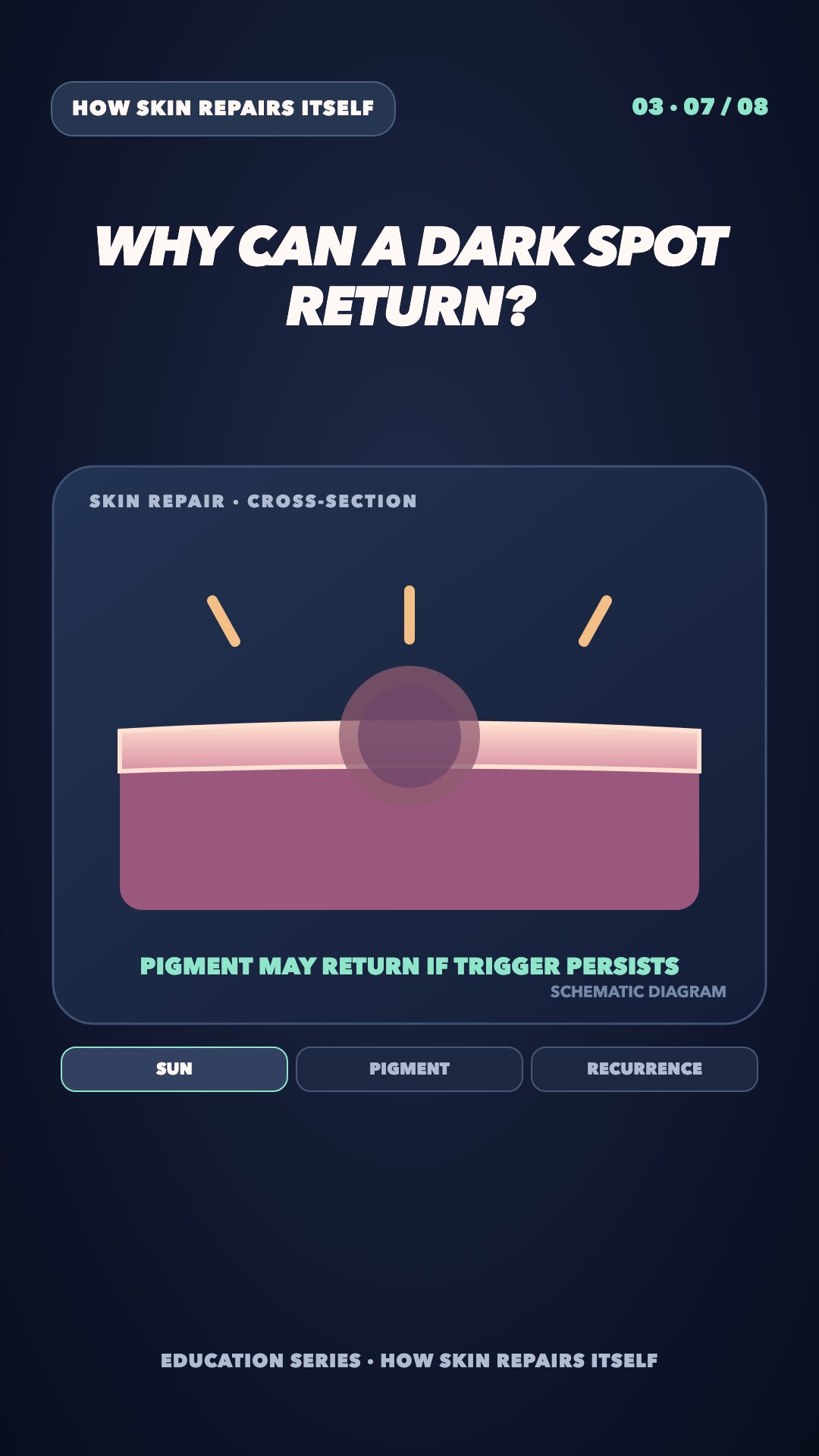
Why can a dark spot become darker again?

How Skin Repairs Itself

English narration and captions

English transcript and sources

Even when a dark spot has lightened, the factors that triggered it may remain. Sunlight in particular can make some pigmentation concerns darken again. Hormone-related factors and skin sensitivity may also play a role in melasma. Lightening after one treatment is therefore no guarantee of a lasting result. Knowing the type of pigmentation and continuing a protection plan matter.

Skin Health08

Why can pigmentation change as skin heals?

How Skin Repairs Itself

English narration and captions

English transcript and sources

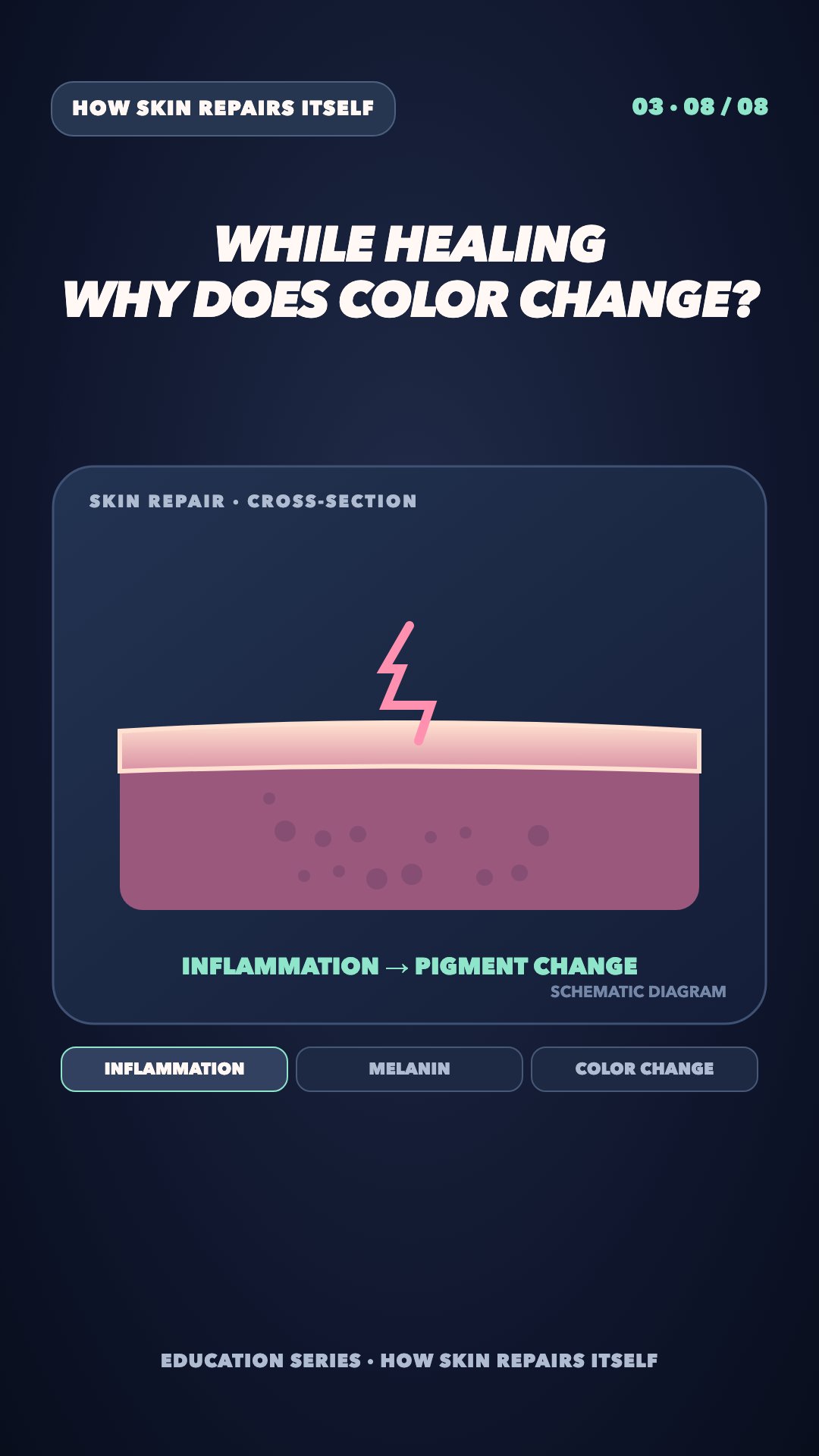
Inflammation may develop after a pimple, irritation or minor skin injury. If pigment-producing cells deposit more melanin during healing, a dark mark can form; sometimes the skin may become lighter instead. The change can be more noticeable in some skin tones. Picking at the injury and sun exposure can worsen the problem. The cause should be assessed correctly before trying to reduce the colour change.

Hair and Body01

What are the stages of the hair growth cycle?

Hair and Body Atlas

English narration and captions

English transcript and sources

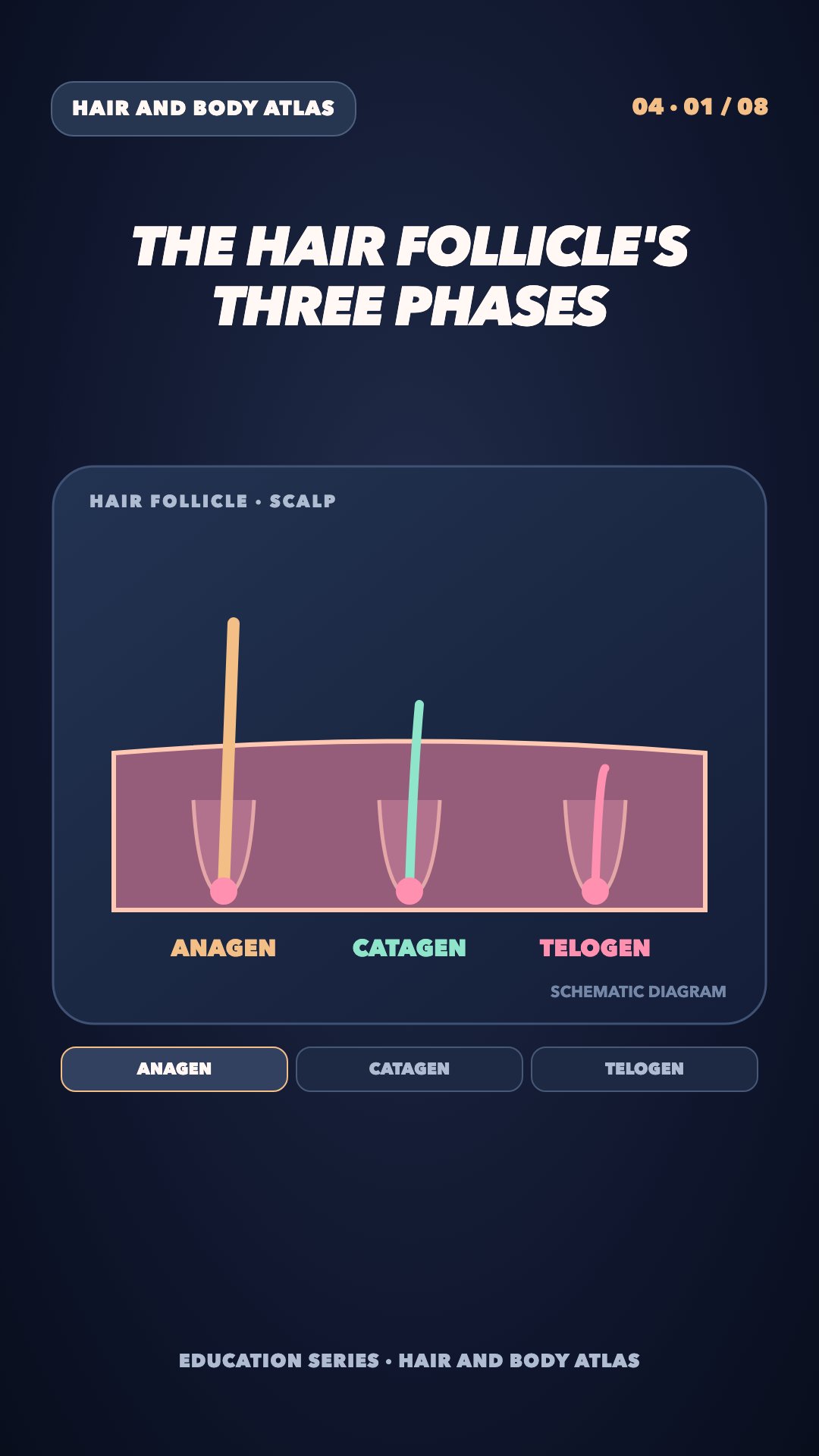
A hair follicle does not produce hair at the same rate all the time. A hair grows during the anagen phase. Catagen is a short transition period when growth slows. In telogen, the follicle rests and the old hair sheds; a new cycle may then begin. Not all the hairs on our heads are in the same phase at once. Some daily hair shedding alone therefore does not mean there is a disease.

Hair and Body02

Are hair shedding and thinning the same?

Hair and Body Atlas

English narration and captions

English transcript and sources

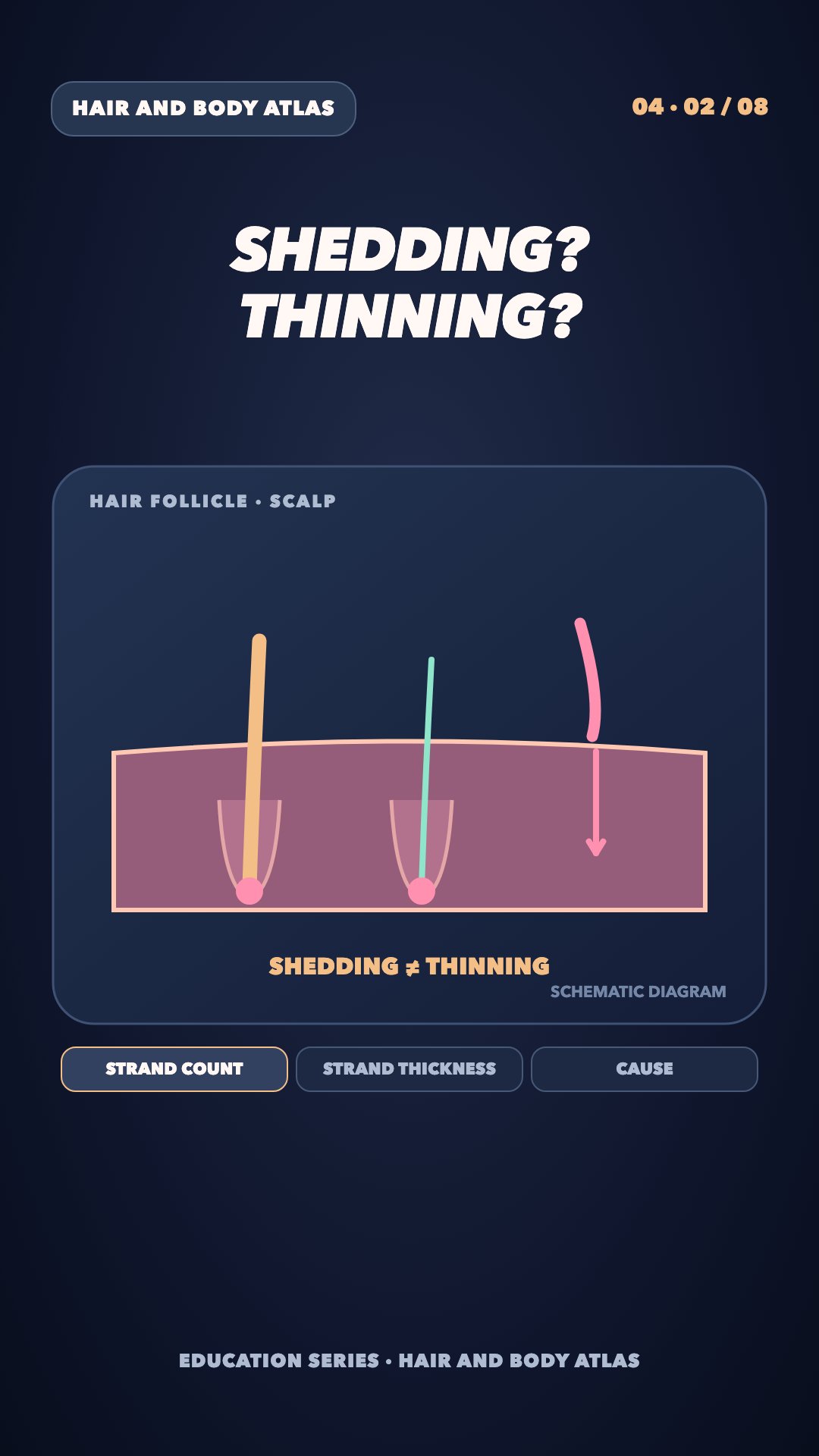
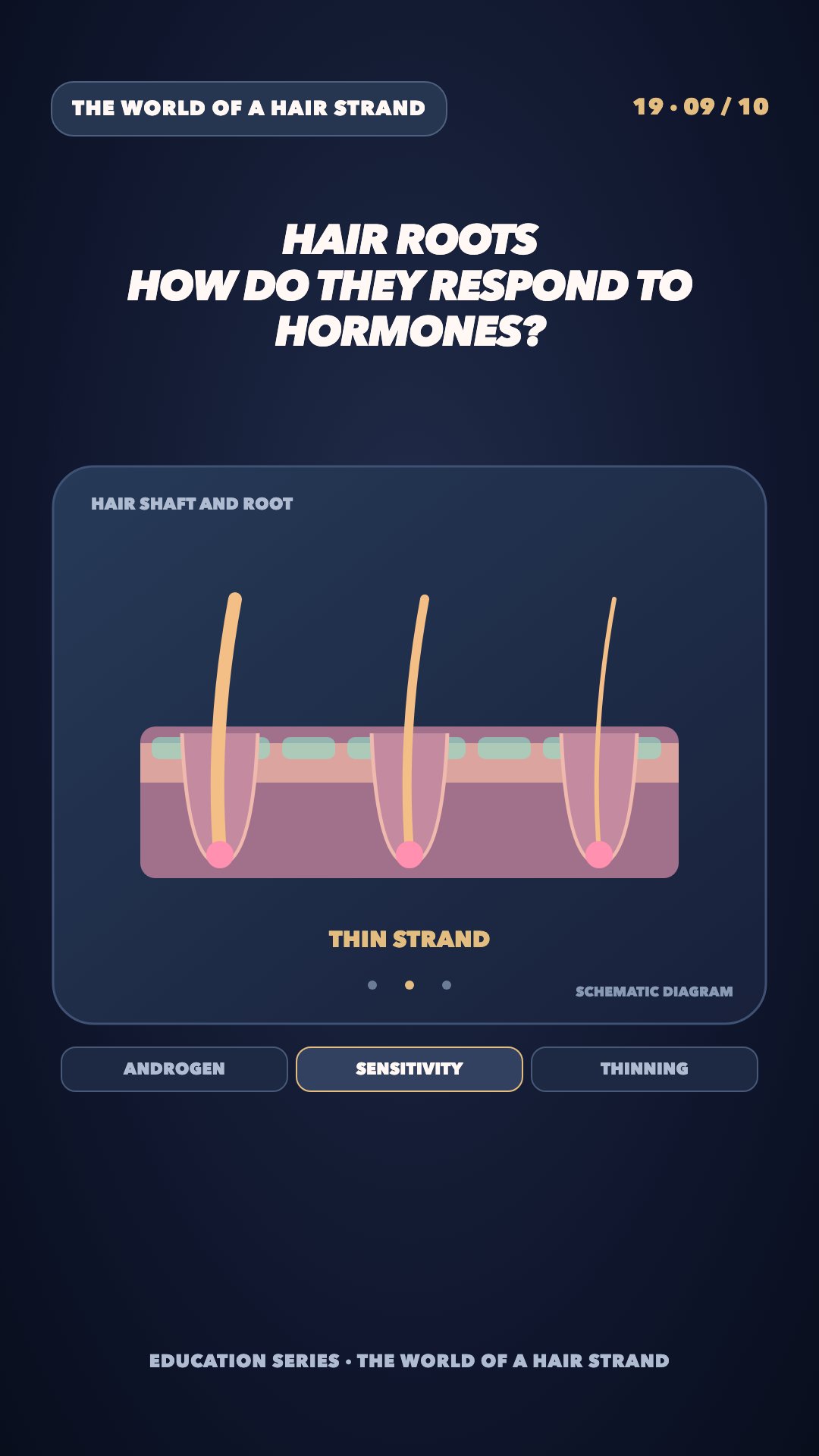
With shedding, you may find more loose hairs in your hand. With thinning, a follicle gradually produces finer, shorter hairs and the parting may widen. These changes can occur together, but they do not necessarily have the same cause. Temporary shedding after stress and hereditary thinning are assessed differently. Counting shed hairs alone does not show the full picture.

Hair and Body03

Why does the hairline change over time?

Hair and Body Atlas

English narration and captions

English transcript and sources

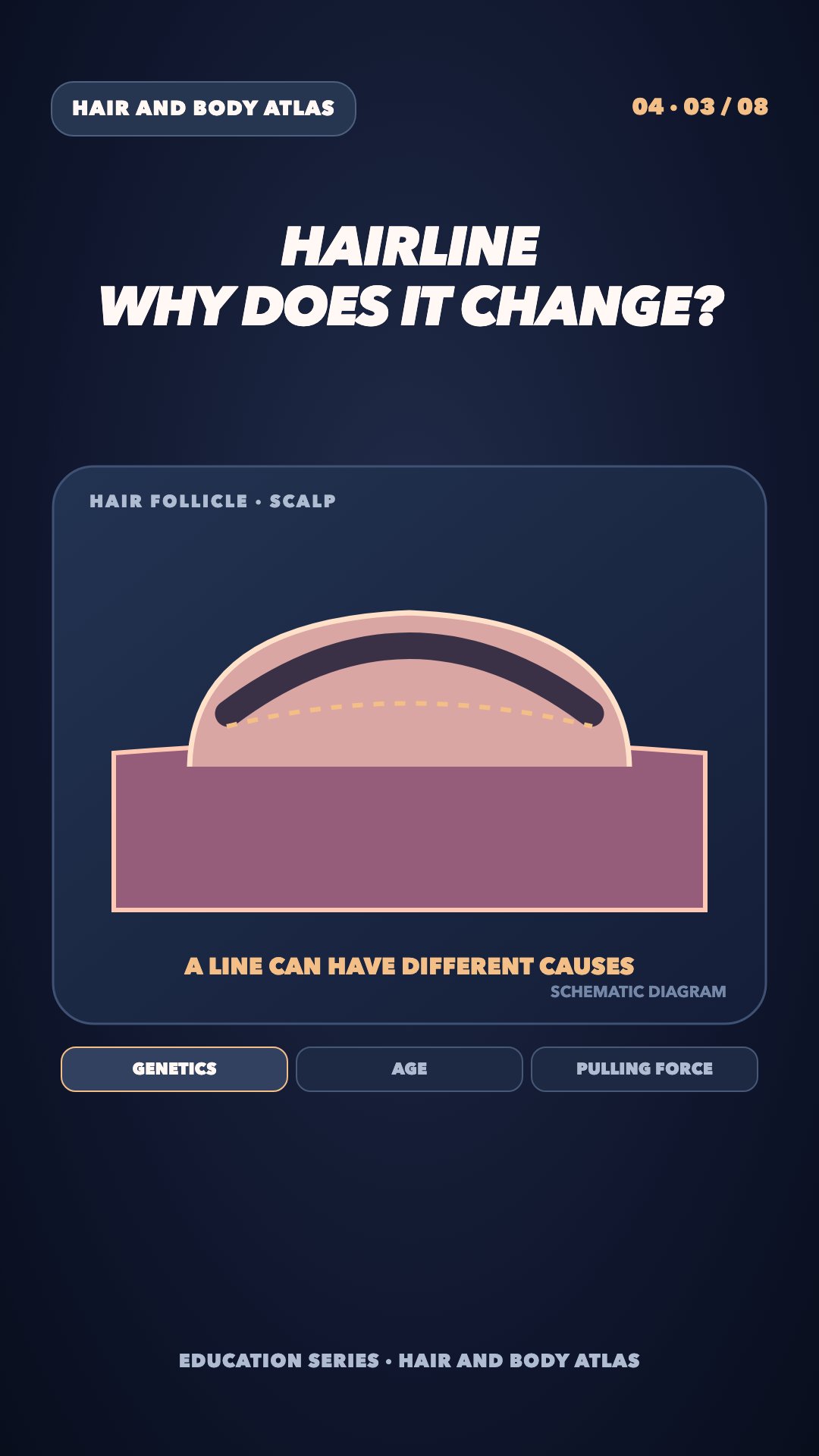
The hairline does not start in the same shape on everyone's face. Growth patterns can change with age, and hereditary hair loss may cause recession, especially at the temples. Keeping hair tightly pulled back for a long time can also damage the front hairline in some people. A changing hairline cannot therefore be attributed to just one cause. Its pace, any accompanying thinning and the condition of the scalp should be considered together.

Hair and Body04

How does scalp health affect the look of hair?

Hair and Body Atlas

English narration and captions

English transcript and sources

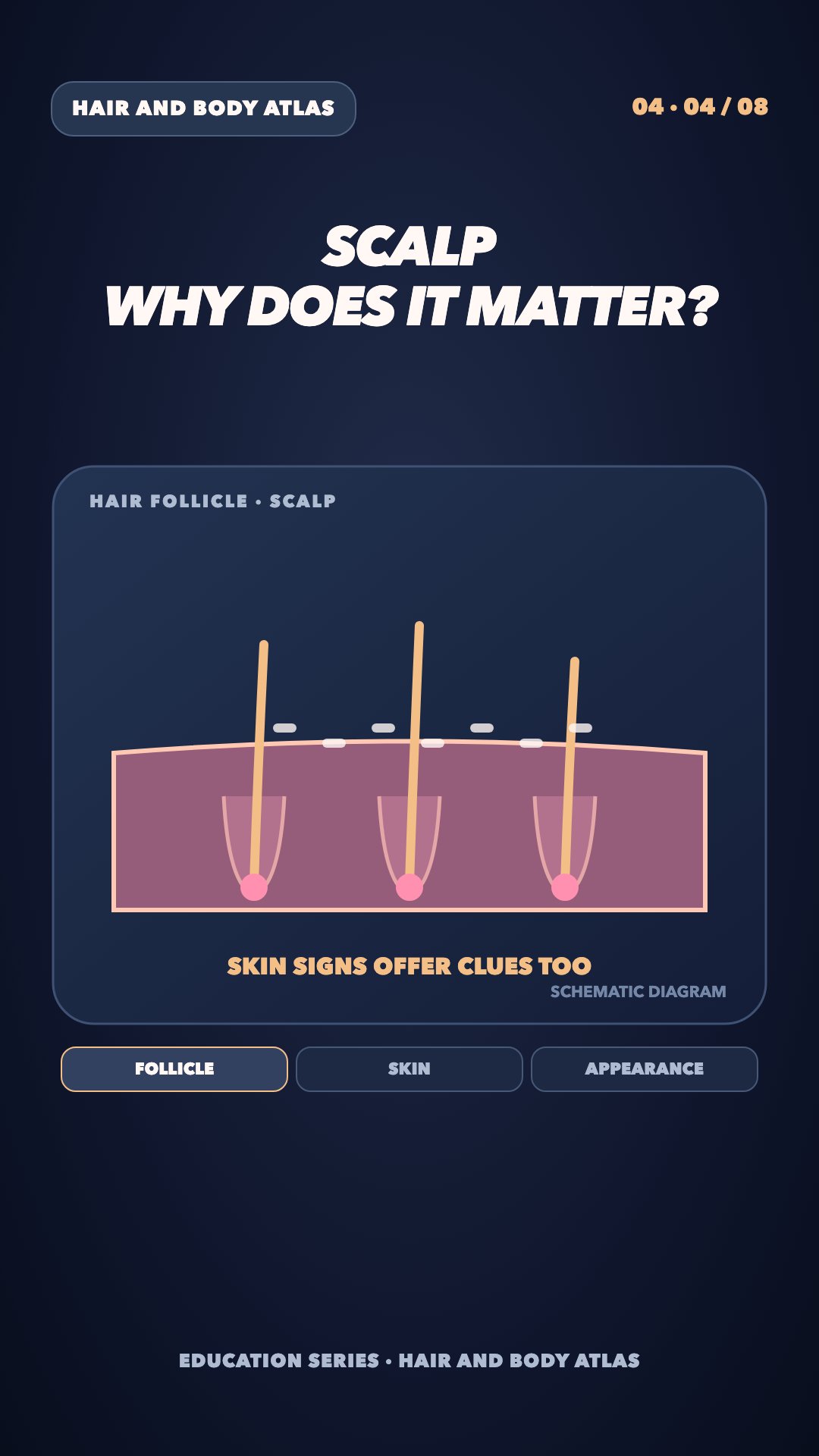
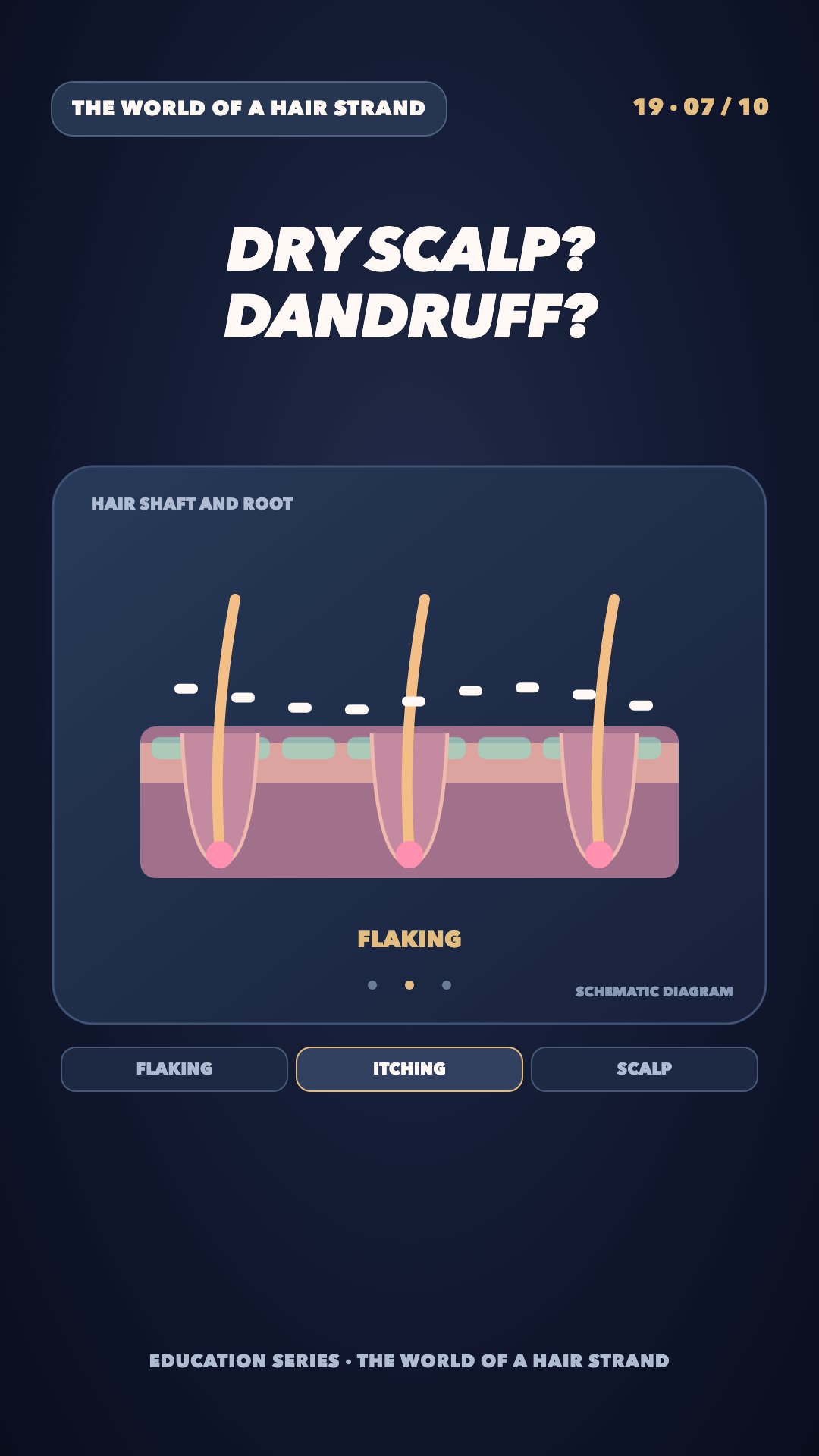
Hair grows from follicles in the scalp. Flaking, redness or inflammation there can affect its appearance, and some conditions can also disrupt follicle function. Oil can make strands stick together and the hair look sparser. Looking only at a photograph of the strands is therefore not enough. Assessing the scalp is part of finding the cause when hair loss is a concern.

Hair and Body05

Why identify the cause of shedding before hair treatment?

Hair and Body Atlas

English narration and captions

English transcript and sources

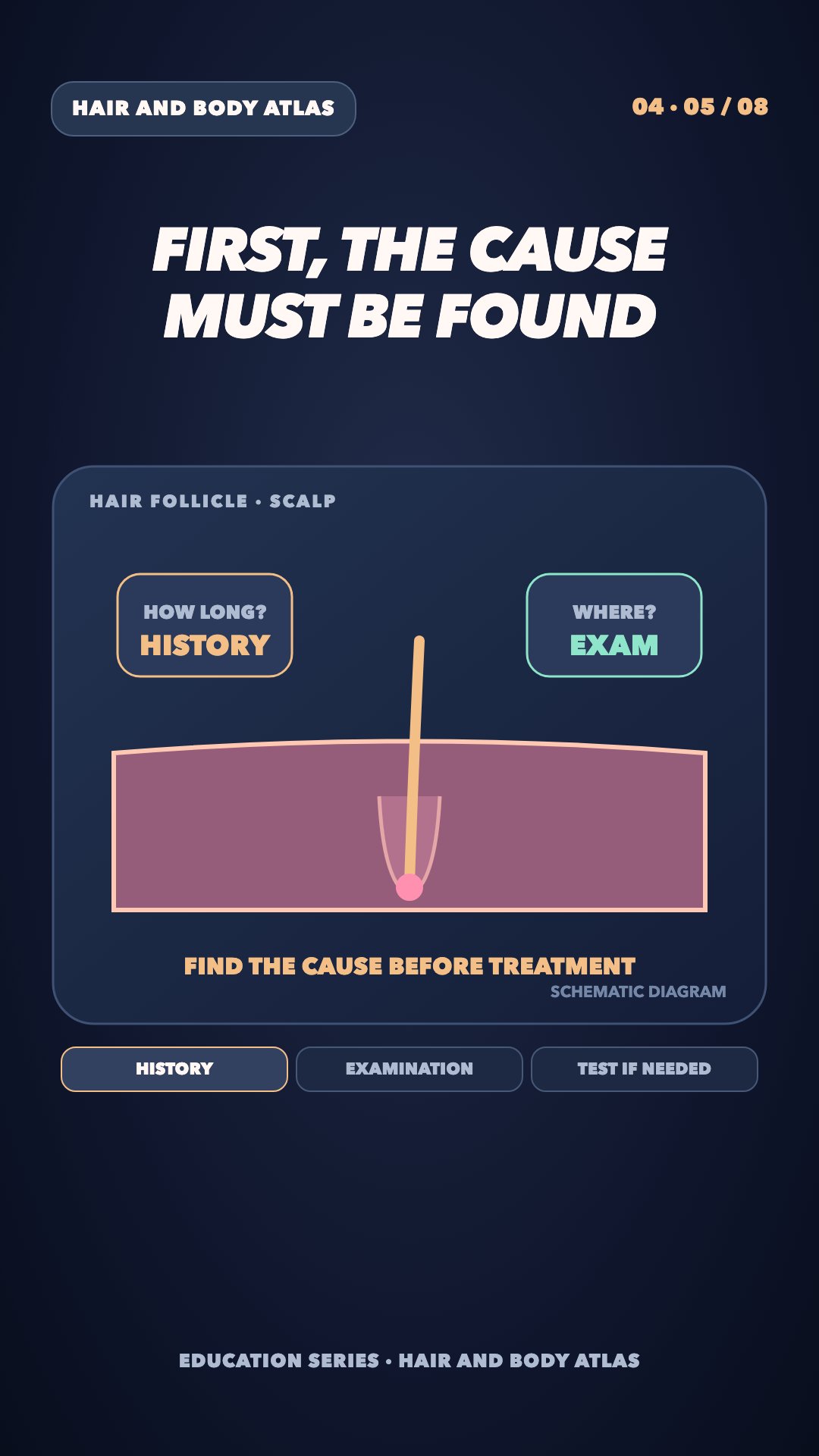
Hair loss is not a diagnosis; it can be a sign of many different conditions. Hereditary thinning, temporary shedding, inflammation and some health problems require different approaches. Assuming that one treatment works for everyone hides these differences. The time it began, its pattern, scalp findings and, when needed, tests are assessed together. Finding the right cause is the first step toward a realistic plan.

Hair and Body06

What changes in tissue when a fat cell grows?

Hair and Body Atlas

English narration and captions

English transcript and sources

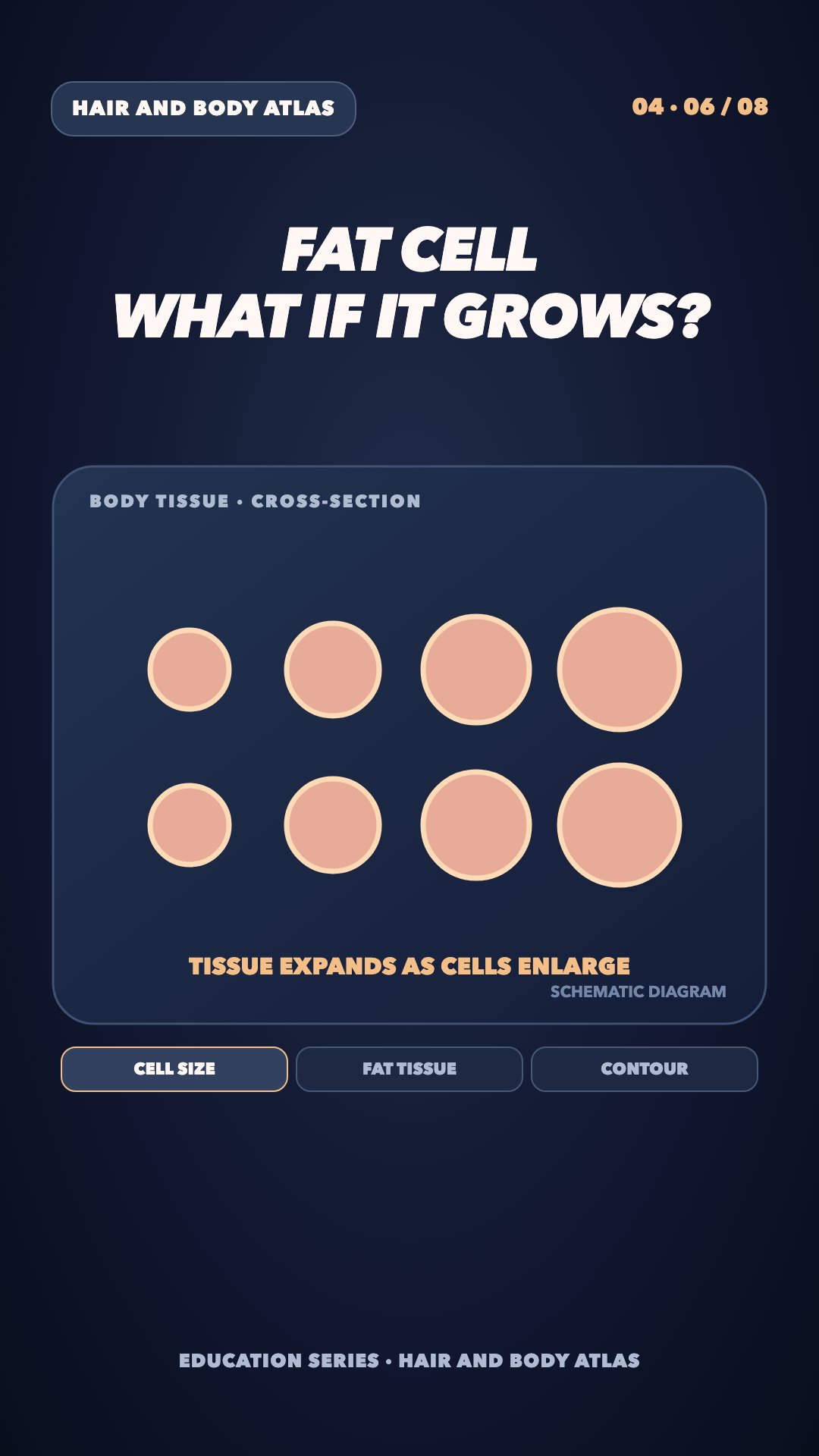
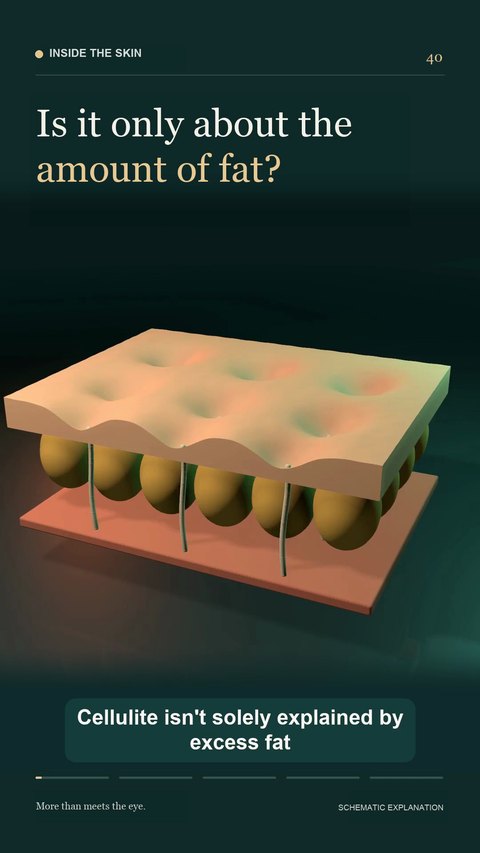
Fat tissue changes through more than the number of cells it contains. Existing fat cells can enlarge as they store more energy; this is called hypertrophy. As the tissue expands, its relationship with nearby blood vessels and supporting structures also changes. But appearance alone cannot tell us how much of a visible bulge is due to enlarged fat cells. Body contour reflects several tissues together.

Hair and Body07

How can swelling and fat look alike?

Hair and Body Atlas

English narration and captions

English transcript and sources

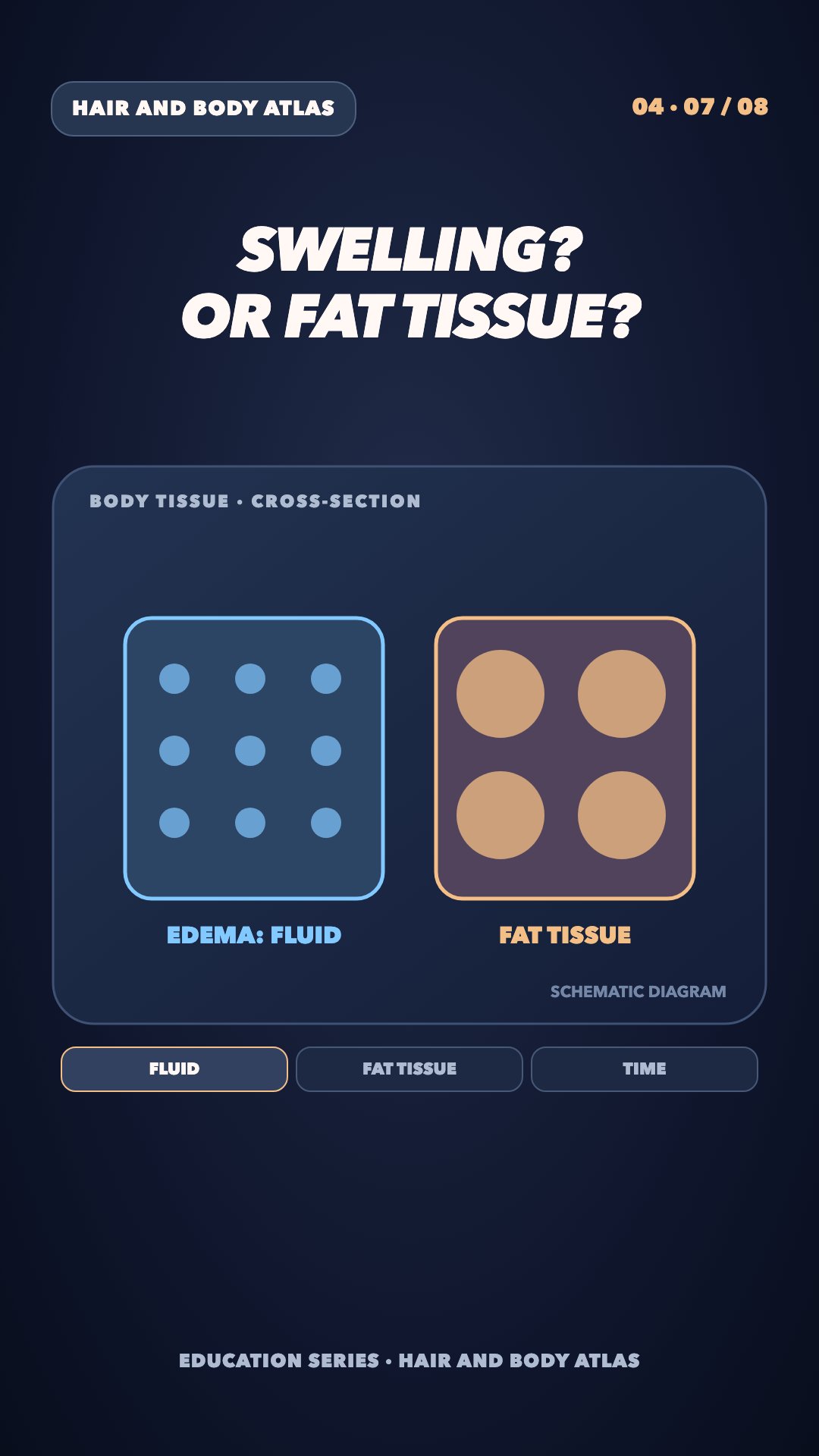
Oedema is swelling caused by fluid collecting between tissues. Fat tissue has a different structure. Both can make an area look fuller, so they can be easily confused in a photograph. Swelling that changes during the day or over a short period can be a clue, but it is not enough on its own for a definite distinction. New, one-sided or painful swelling in particular needs medical assessment.

Hair and Body08

Why can body contours change when weight stays the same?

Hair and Body Atlas

English narration and captions

English transcript and sources

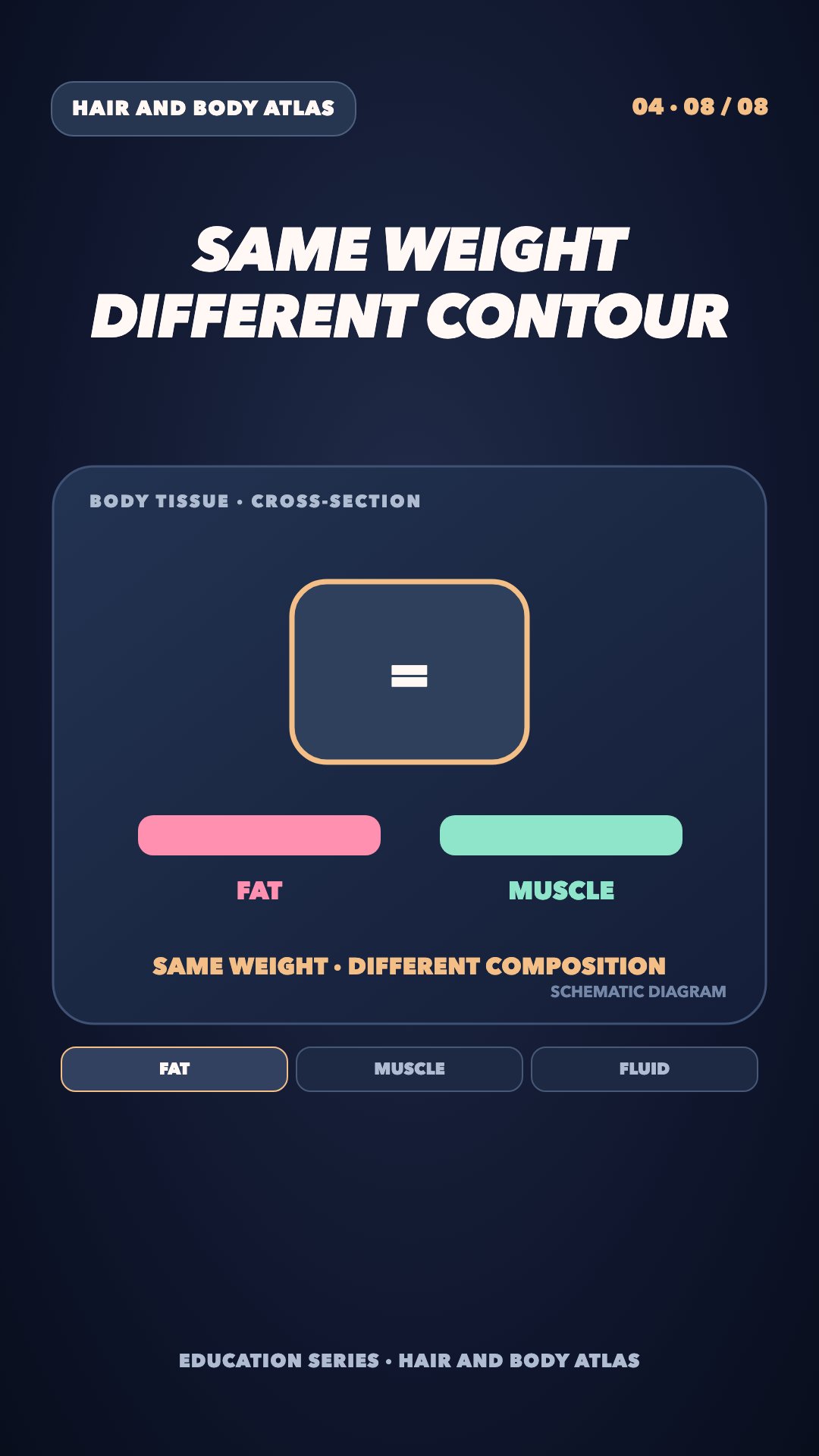
A scale shows total weight, not how that weight is distributed. When the amounts of fat and muscle change in opposite directions, the number may stay similar. Differences in fluid retention also affect appearance over the short term. Waist size, posture or overall contour can therefore look different at the same weight. A single reading on a scale cannot describe body composition or health status.

Treatment Guide01

What questions belong in an initial consultation?

Treatment Decision Guide

English narration and captions

English transcript and sources

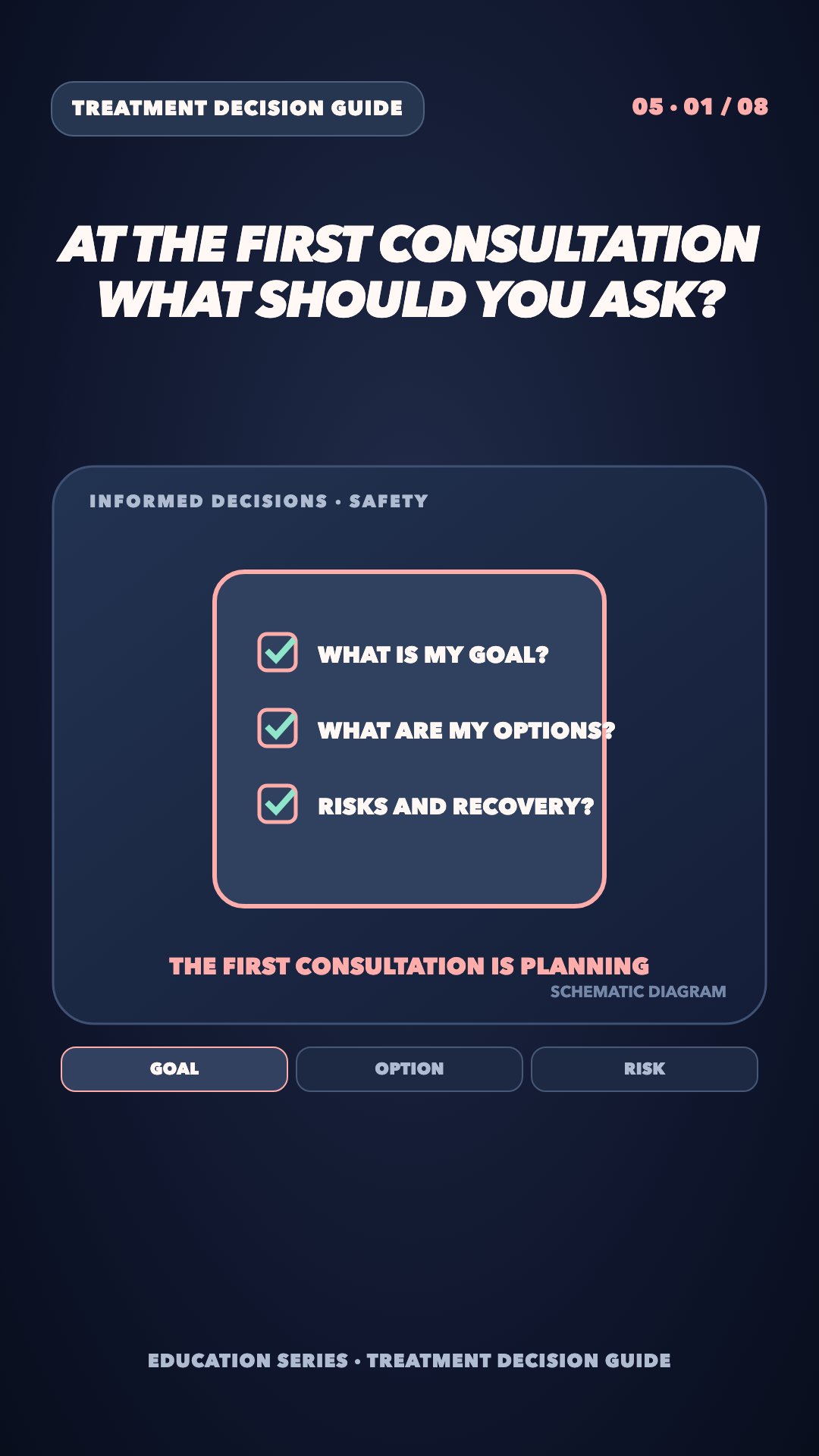
When considering an aesthetic procedure, the consultation involves more than asking, 'What should I change?' Your goal, what result would be realistic, who would perform the procedure, recovery time and possible risks should be discussed. Medical history and medicines also affect the assessment. A good consultation makes the options, limitations and alternatives clear, so the decision rests on that information.

Treatment Guide02

When might a treatment need to be postponed?

Treatment Decision Guide

English narration and captions

English transcript and sources

Sometimes the right decision is to wait before having a procedure. An active skin problem, suspected infection, medicines or uncertainty about a health condition may need assessment first. The planned procedure and treatment area affect that decision. Postponing does not mean abandoning the goal; it means reconsidering the safe timing and suitable method. The healthcare professional who examines the person makes this decision.

Treatment Guide03

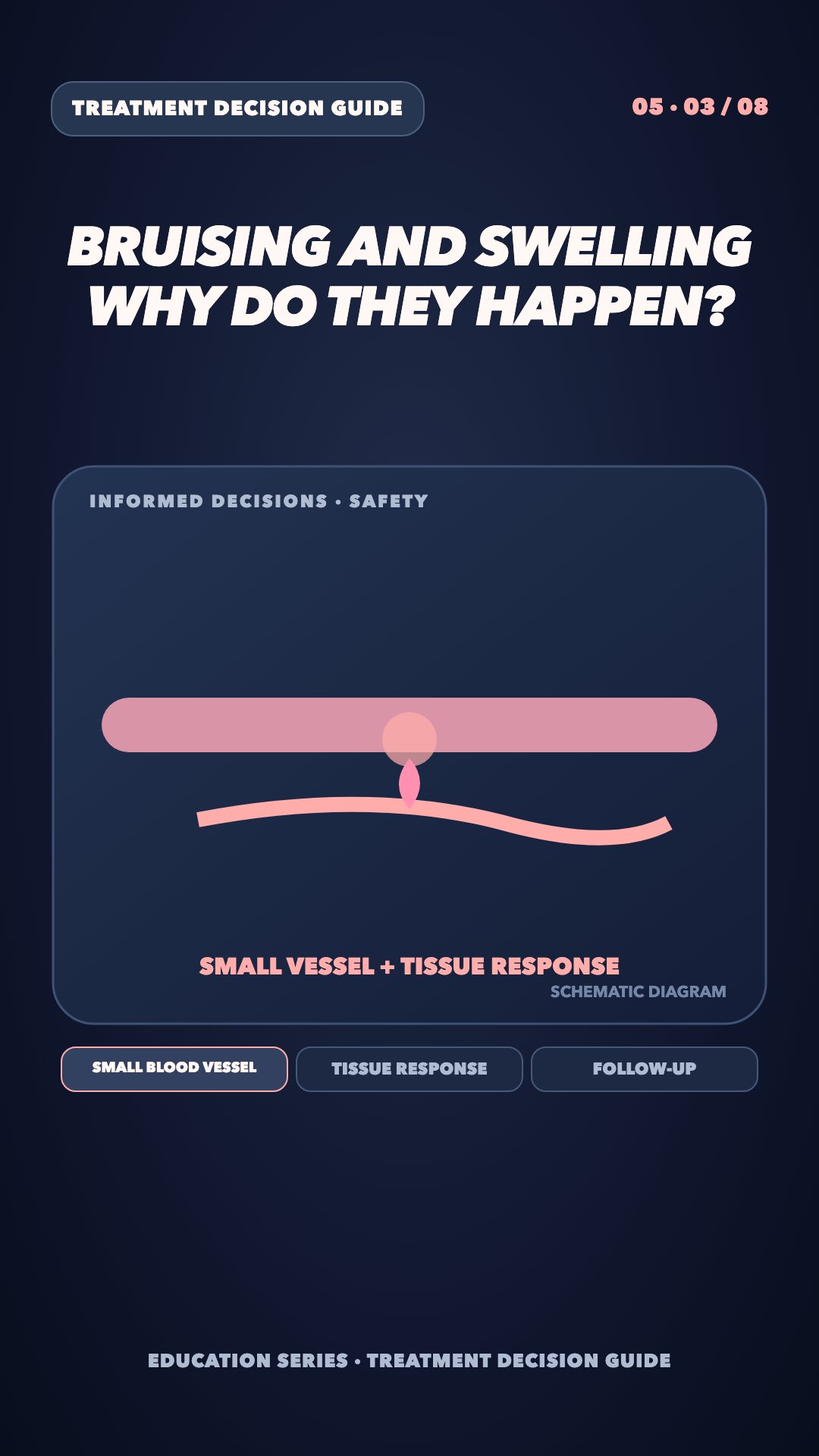
Why do bruising and swelling occur?

Treatment Decision Guide

English narration and captions

English transcript and sources

If a needle injures small blood vessels during a procedure, a little blood may leak beneath the skin and cause a bruise. Swelling is related to the tissue's response to treatment. The amount of each varies with the person, area and procedure. They are usually temporary, but very severe pain, rapidly increasing swelling or a change in colour should not be dismissed as ordinary healing.

Treatment Guide04

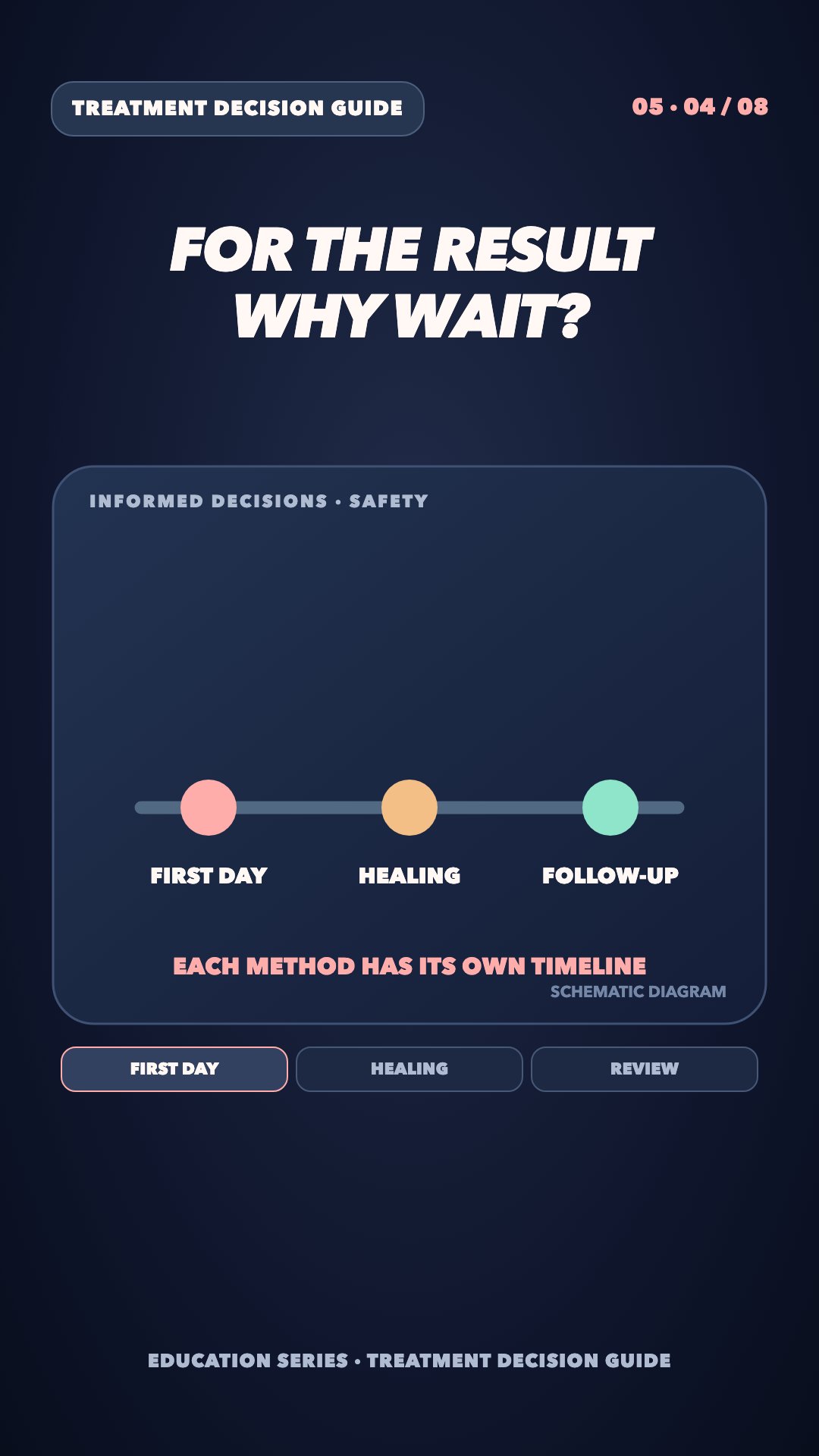
Why wait before judging a result?

Treatment Decision Guide

English narration and captions

English transcript and sources

The first appearance after a procedure is not always the final result. Tissue heals as swelling and redness subside, while biological changes after some treatments take longer to emerge. The right time for assessment therefore depends on the method. The early appearance of a filler and the response to collagen stimulation weeks later cannot be judged on the same timetable. Discuss follow-up timing with the treating professional beforehand.

Treatment Guide05

Why should before and after photos use the same lighting?

Treatment Decision Guide

English narration and captions

English transcript and sources

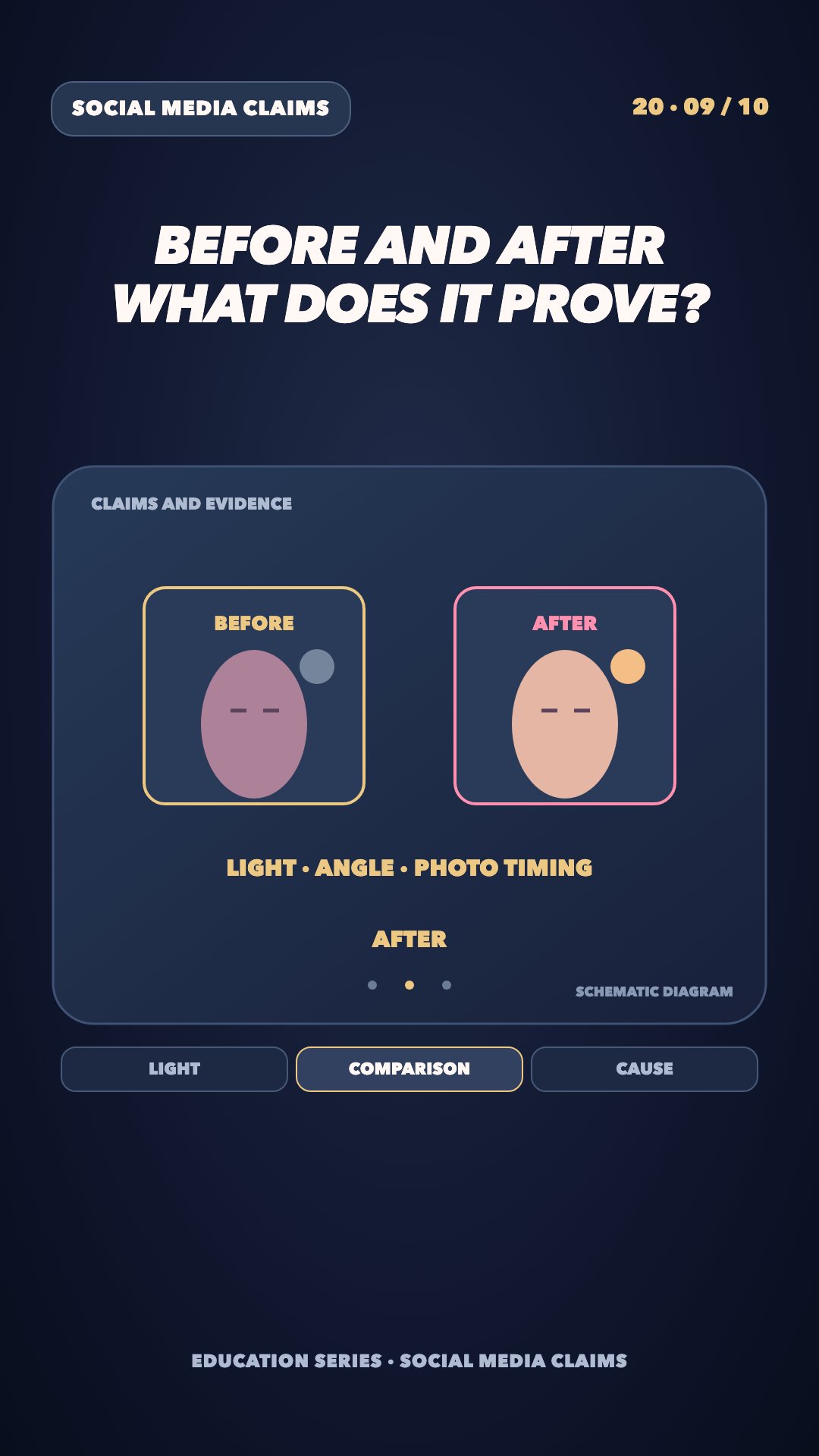
The same face can look different in different lighting. Harsh side lighting highlights hollows and lines, while soft light from the front can hide them. Camera angle, distance and facial expression also change the image. Before-and-after photographs should therefore be taken under conditions that are as similar as possible. Otherwise, it is unclear how much of the difference comes from the procedure and how much from the photograph.

Treatment Guide06

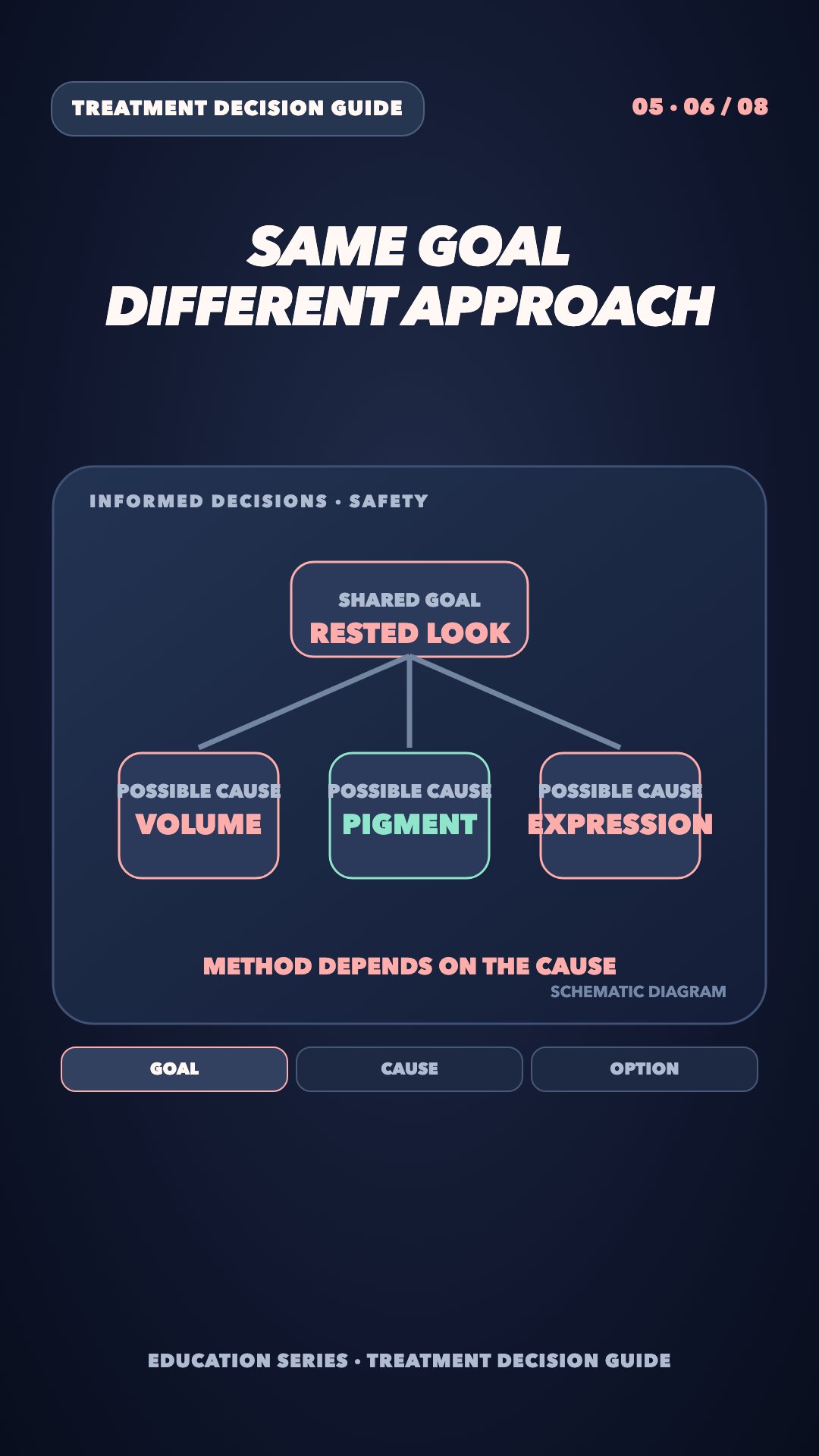
Why might similar goals call for different treatments?

Treatment Decision Guide

English narration and captions

English transcript and sources

Two people can say the same thing: 'I want to look more rested.' For one, the concern may be a shadow caused by lost volume; for another, pigment, skin texture or an expression line. Medical history and the time they can allow for healing also differ. One procedure cannot be prescribed from the shared goal alone. First identify the cause, then compare the benefits and limitations of the options.

Treatment Guide07

Why assess several areas together?

Treatment Decision Guide

English narration and captions

English transcript and sources

Facial areas do not appear independently of one another. The proportions of the cheeks, under-eye area, lips and chin form a whole; light and expression also affect how they are perceived. A change in one area may make another look more prominent. This does not mean every area needs treatment. Considering them together helps define the goal accurately and avoid unnecessary intervention.

Treatment Guide08

Why discuss rare risks during a consultation?

Treatment Decision Guide

English narration and captions

English transcript and sources

A risk being rare does not make it unimportant in a decision. With filler treatments, for example, many side effects may be temporary swelling or bruising, but accidental injection into a blood vessel can have serious consequences. The risk, the symptoms that require prompt help and the alternatives should be explained clearly during the consultation. The purpose of this information is to support a genuinely informed decision, not to frighten someone.

Skin Health01

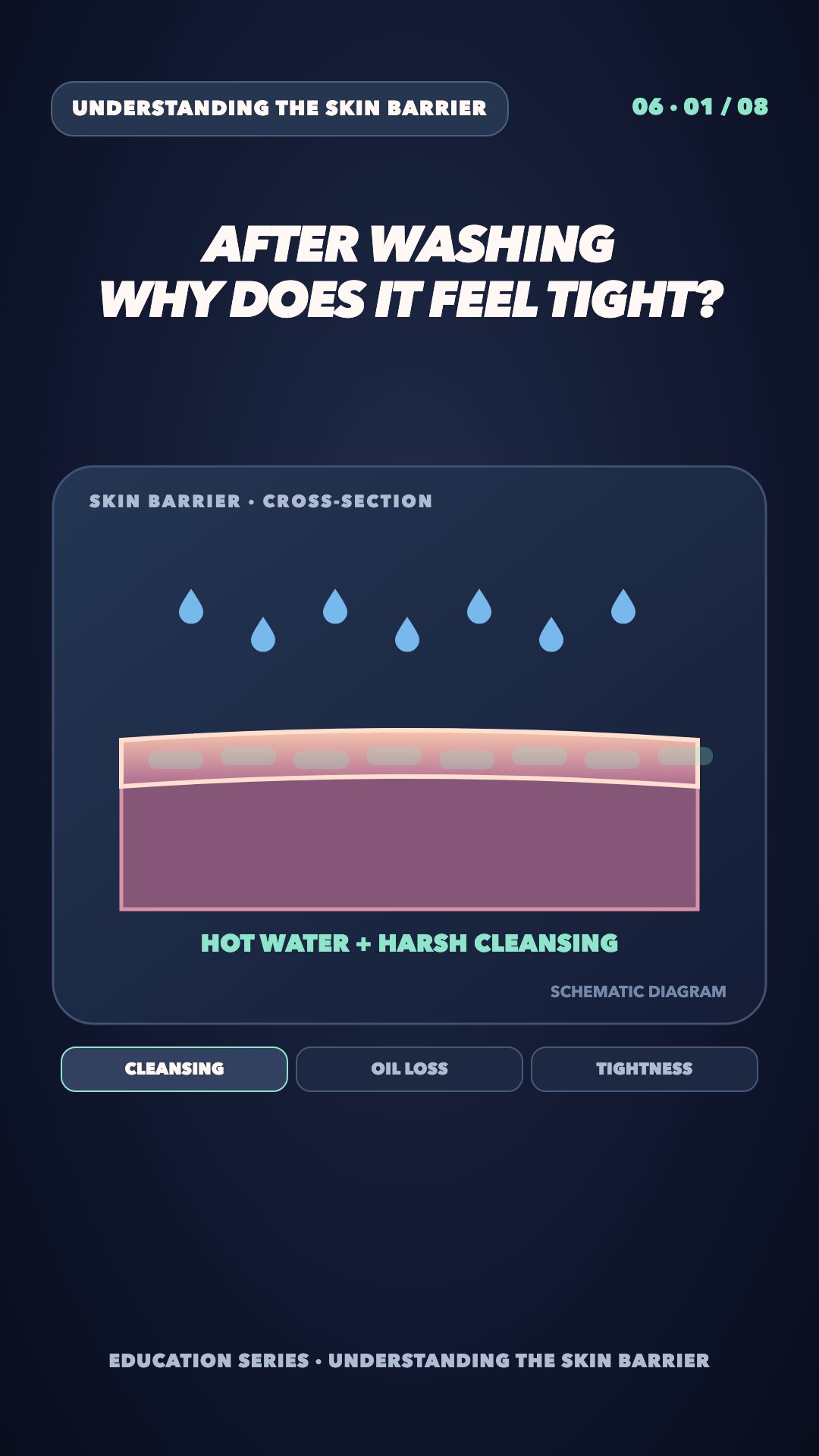
Why does skin feel tight after washing?

Understanding the Skin Barrier

English narration and captions

English transcript and sources

The tight feeling after washing your face is not proof that it has been cleaned better. A cleanser and hot water can remove protective oils from the skin's surface along with dirt. Frequent washing in particular can increase water loss, leaving skin feeling dry or sensitive. A gentler cleanser and suitable moisturising are often a better place to start.

Skin Health02

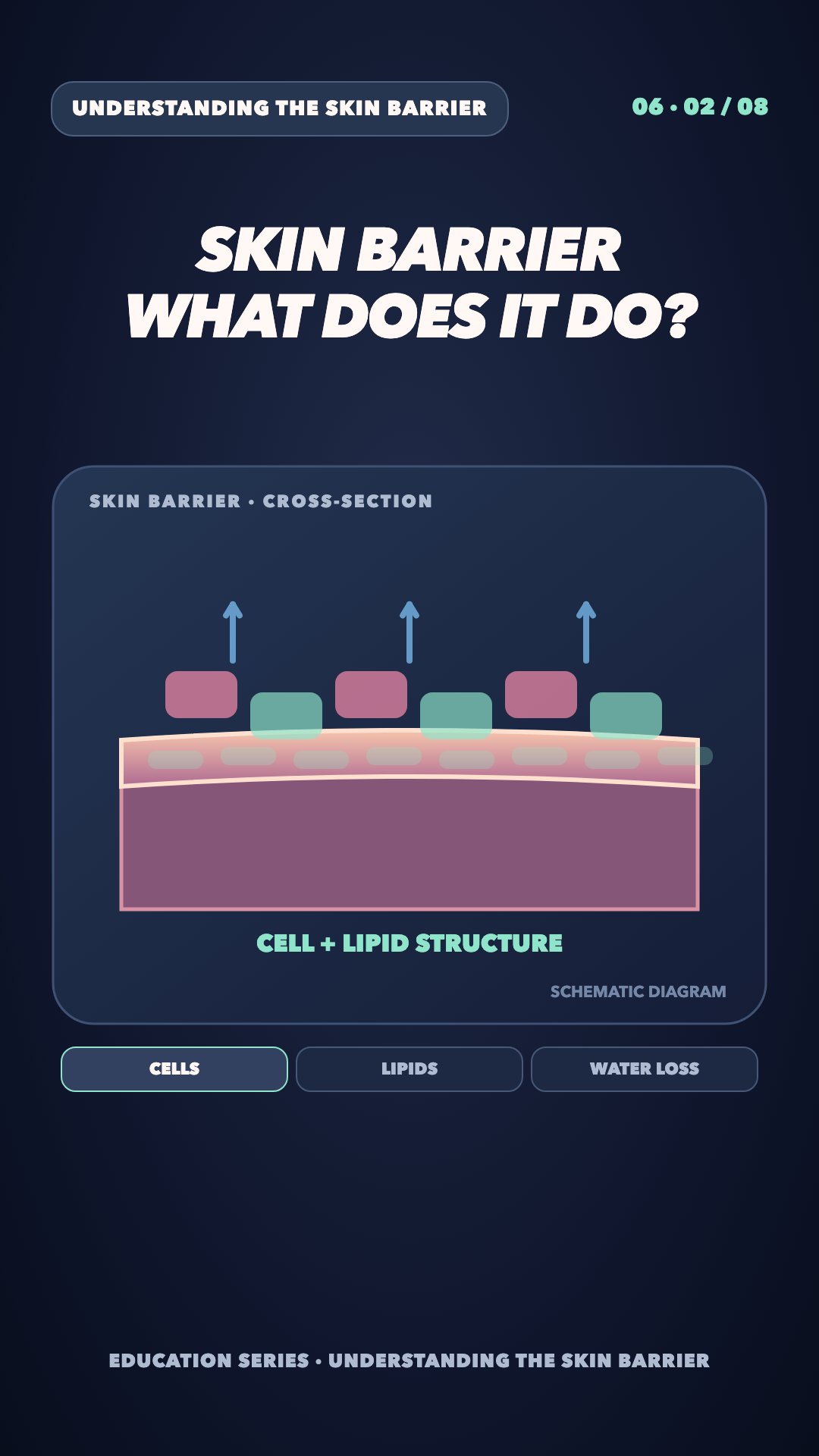
What does the skin barrier actually do?

Understanding the Skin Barrier

English narration and captions

English transcript and sources

The outermost layer of skin is made up of cells and the fats between them. Together, they make it harder for too much water to escape and help manage contact with the outside world. When this barrier is stressed, dryness, stinging and sensitivity may occur. A single product cannot repair it instantly; gentle care and time are also part of the process.

Skin Health03

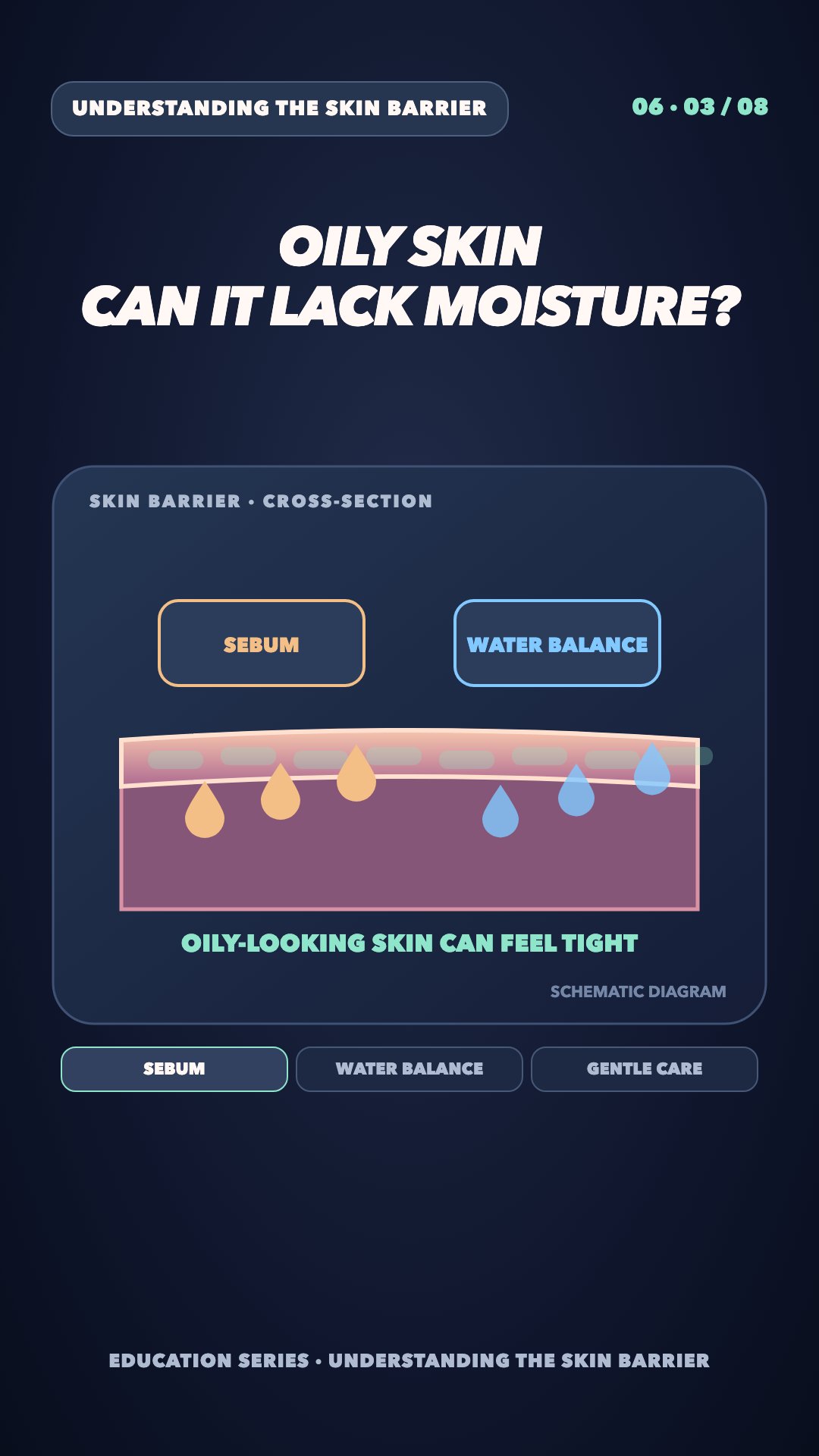
Can oily skin also lack moisture?

Understanding the Skin Barrier

English narration and captions

English transcript and sources

A shiny appearance does not mean skin is retaining enough water. Sebum made by oil glands and the skin's water balance are different things. Even an oily face can therefore feel tight after washing or look flaky. Rather than focusing only on reducing oil, it is important to consider irritation and the need for moisture as well.

Skin Health04

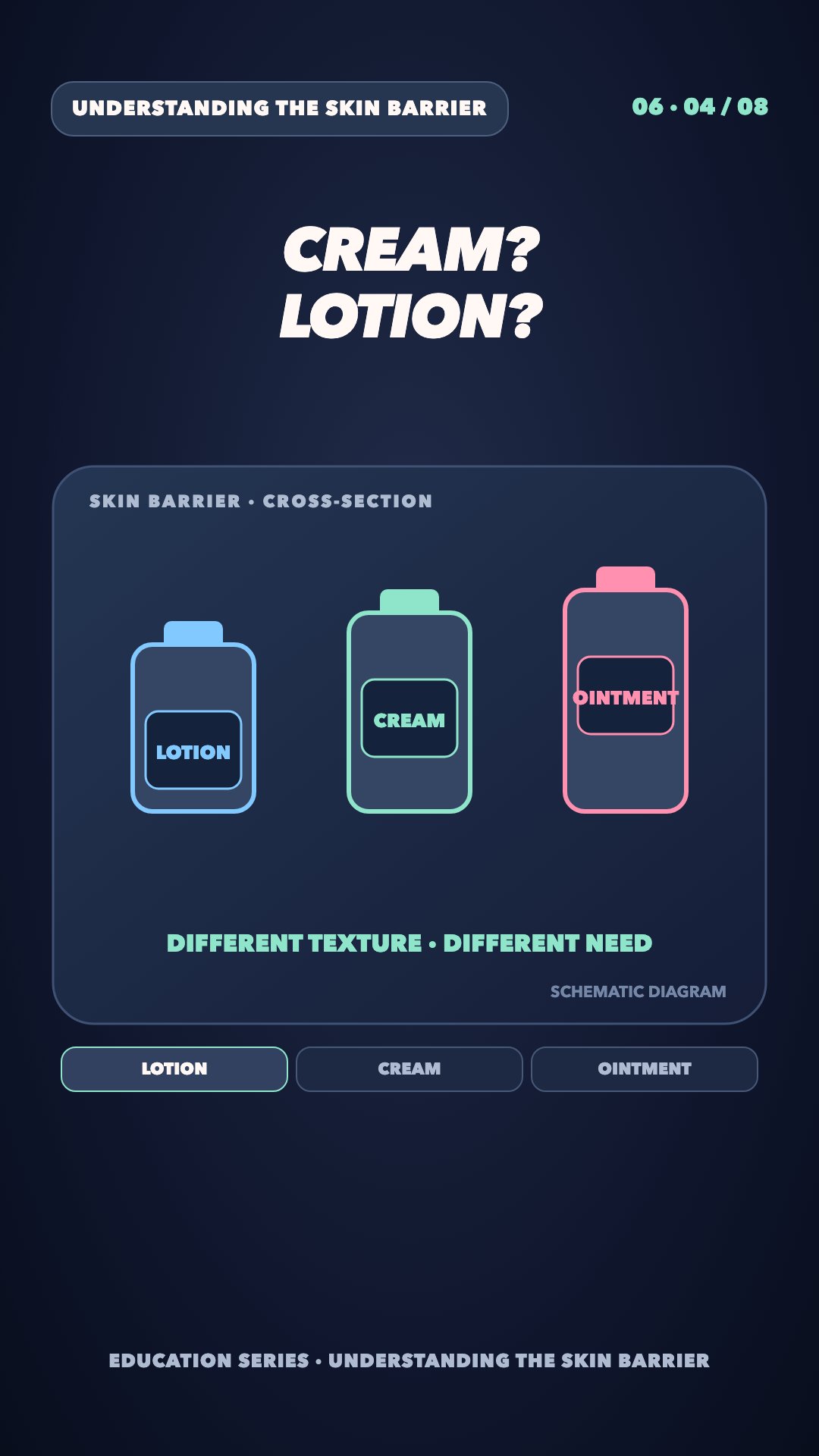
What is the difference between a cream, lotion and ointment?

Understanding the Skin Barrier

English narration and captions

English transcript and sources

The same moisturiser does not feel the same in every texture. A lotion is generally lighter, a cream richer, while an ointment can form a stronger layer to reduce water loss. A richer product may help a very dry area, while someone else may find a lighter product more comfortable. The choice depends on the skin's needs and the whole product, not just its label.

Skin Health05

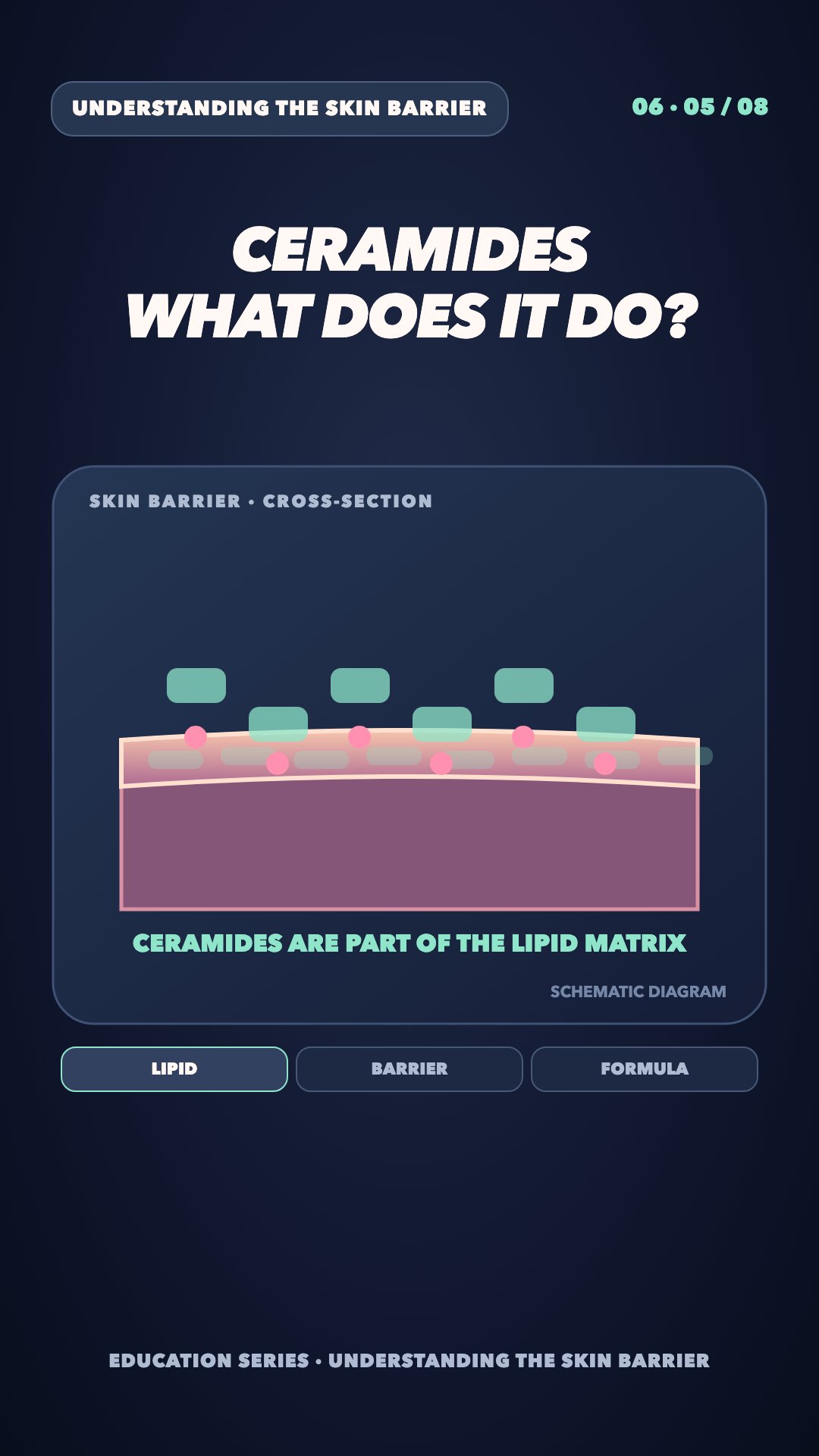
What do ceramides do in the skin?

Understanding the Skin Barrier

English narration and captions

English transcript and sources

Ceramides are among the fats in the skin's outer layer. They are part of the structure between cells and the barrier that helps retain water. That is why they often appear in moisturising formulas. But seeing 'ceramides' on a label does not guarantee a result; the whole formula, how it is used and the condition of the skin also matter.

Skin Health06

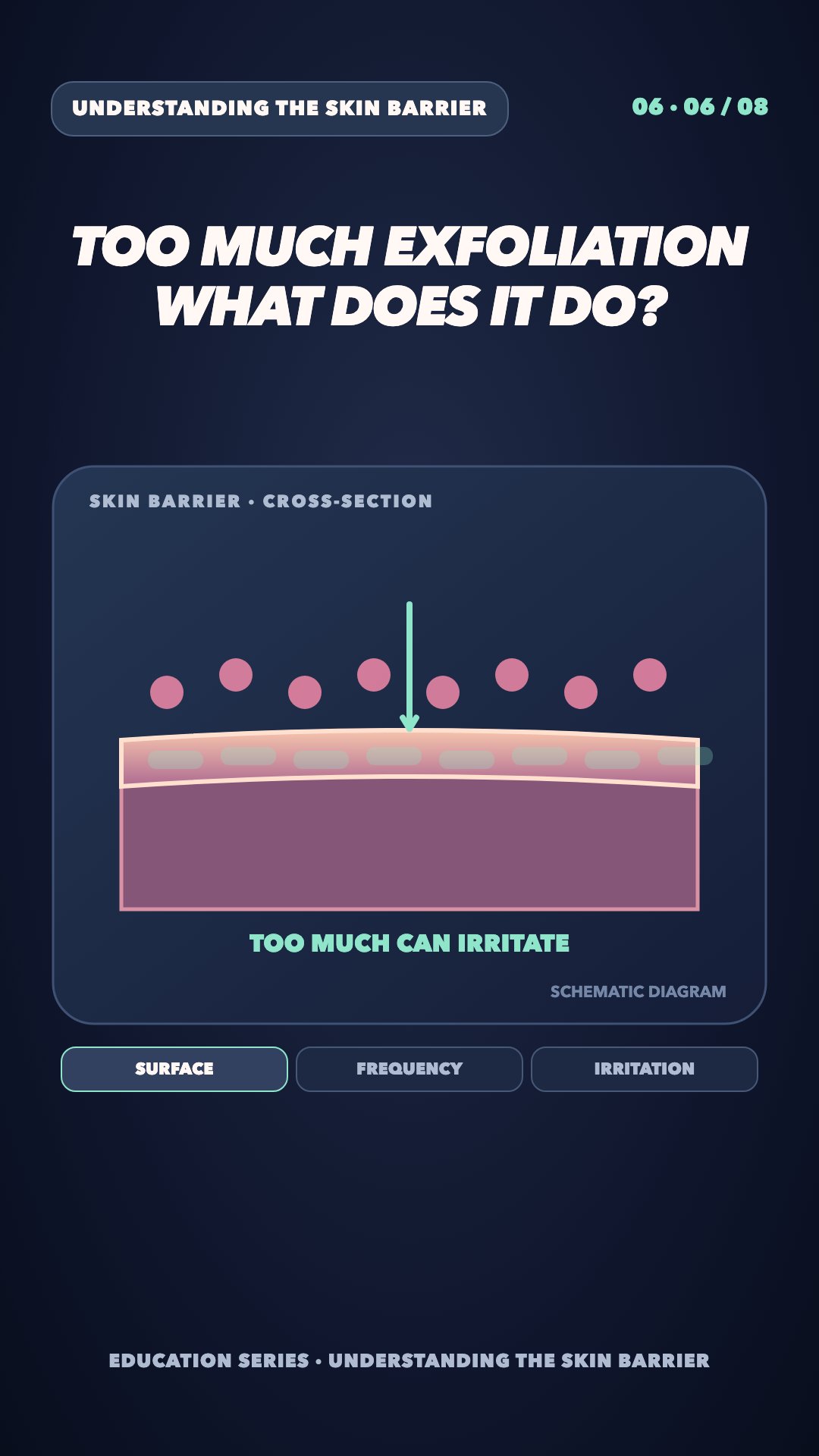
How does frequent exfoliation affect skin?

Understanding the Skin Barrier

English narration and captions

English transcript and sources

Exfoliation can help remove cells from the surface, but doing it more often does not always produce better results. Repeated exfoliation, especially when skin is already dry or burning, can increase irritation and delay relief. If skin is red or painful, simplifying the routine and seeking an assessment if needed is a wiser approach.

Skin Health07

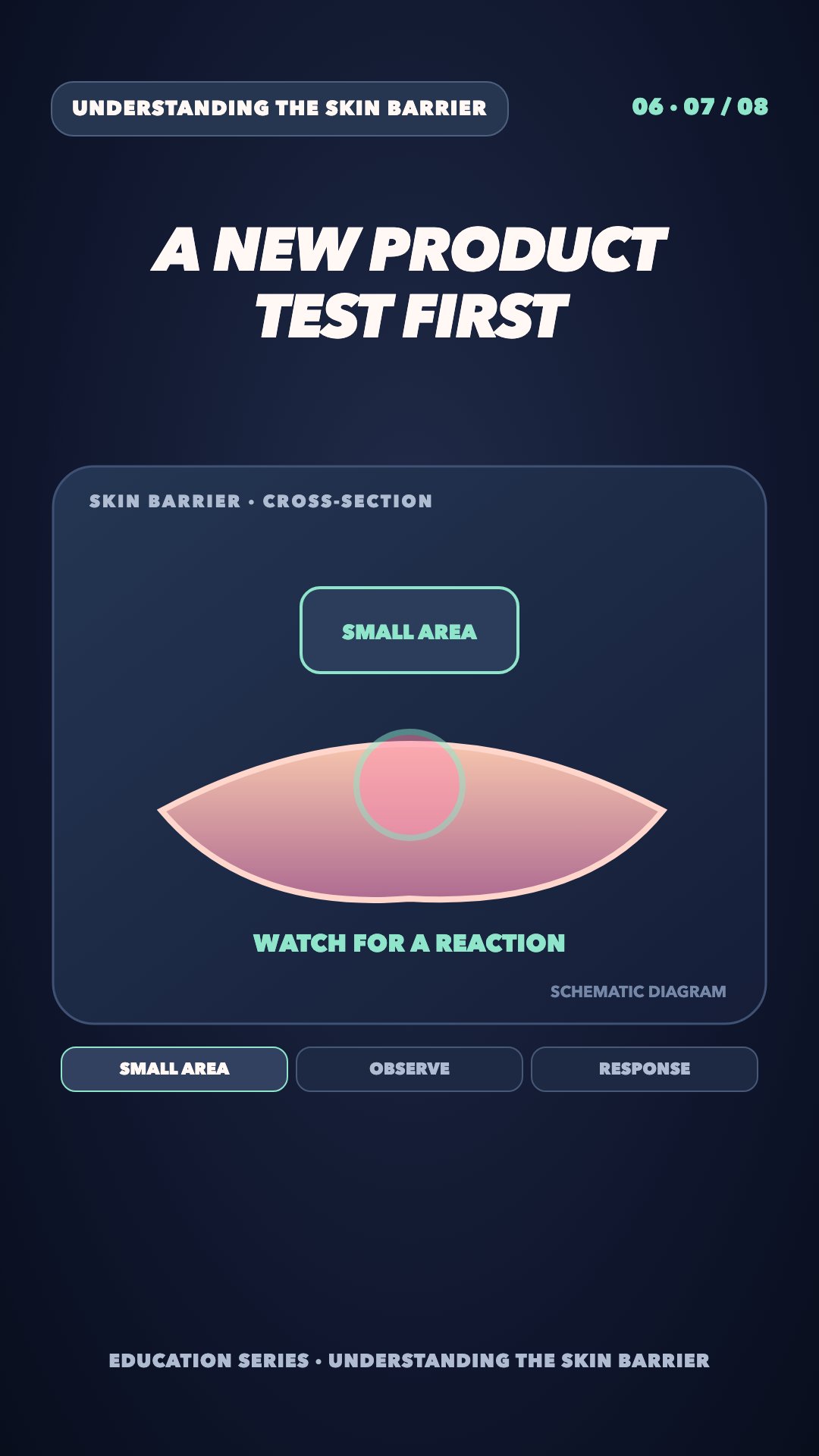
Why test a new product on a small area first?

Understanding the Skin Barrier

English narration and captions

English transcript and sources

Trying a new cream on a small area before applying it to your whole face can help you notice a possible reaction early. Redness, itching or swelling may appear over several days, not necessarily immediately. A small-area test cannot make any product risk-free, but it is a useful step in understanding how your skin responds.

Skin Health08

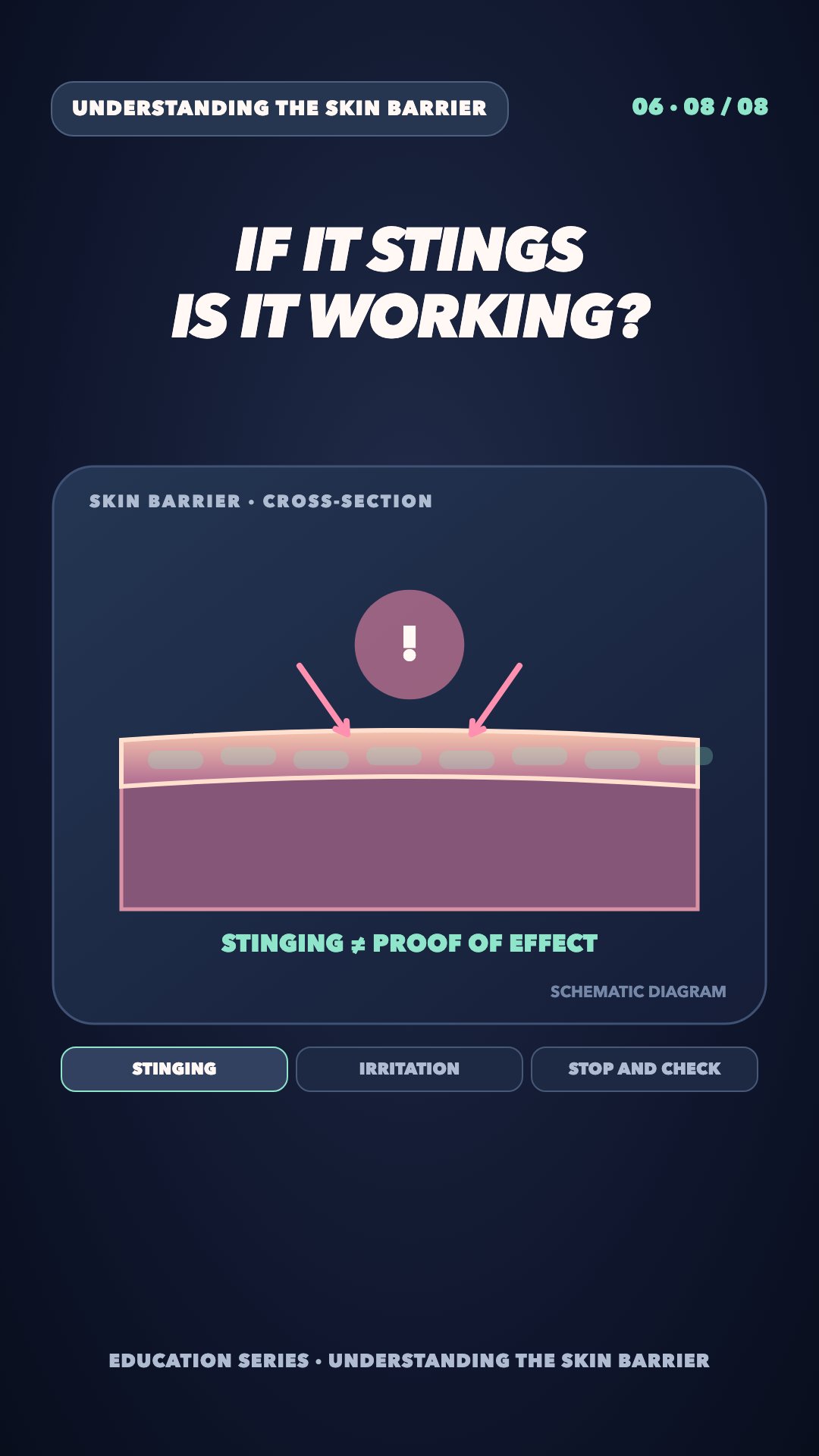
Does stinging mean a product is working?

Understanding the Skin Barrier

English narration and captions

English transcript and sources

Burning after applying a product is not proof that it is effective. Some active ingredients may cause mild initial stinging, but marked or persistent burning or increasing redness may signal irritation. In that case, it is better to stop and assess the ingredient and the condition of your skin than to force yourself to keep using it. A stronger sensation does not mean a stronger result.

Sun Protection01

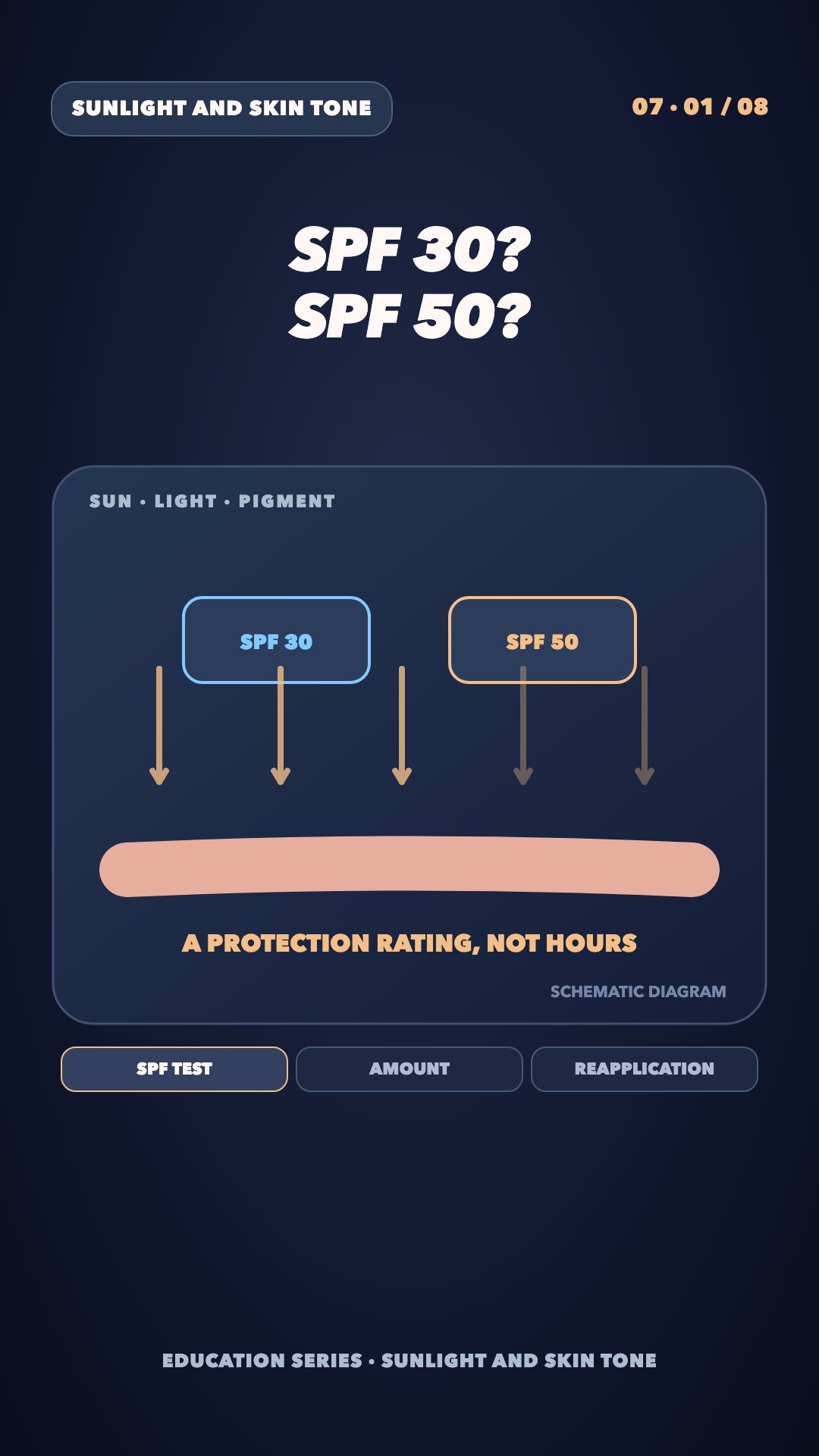
What is the difference between SPF 30 and SPF 50?

Sunlight and Skin Tone

English narration and captions

English transcript and sources

SPF describes the protection a sunscreen provides against sunburn in a specific test; it does not tell you how many hours you can stay in the sun. SPF 50 does not mean twice the protection of SPF 30. For everyday choices, broad-spectrum coverage, applying enough and reapplying when needed matter as much as the number on the label. No sunscreen blocks all radiation.

Sun Protection02

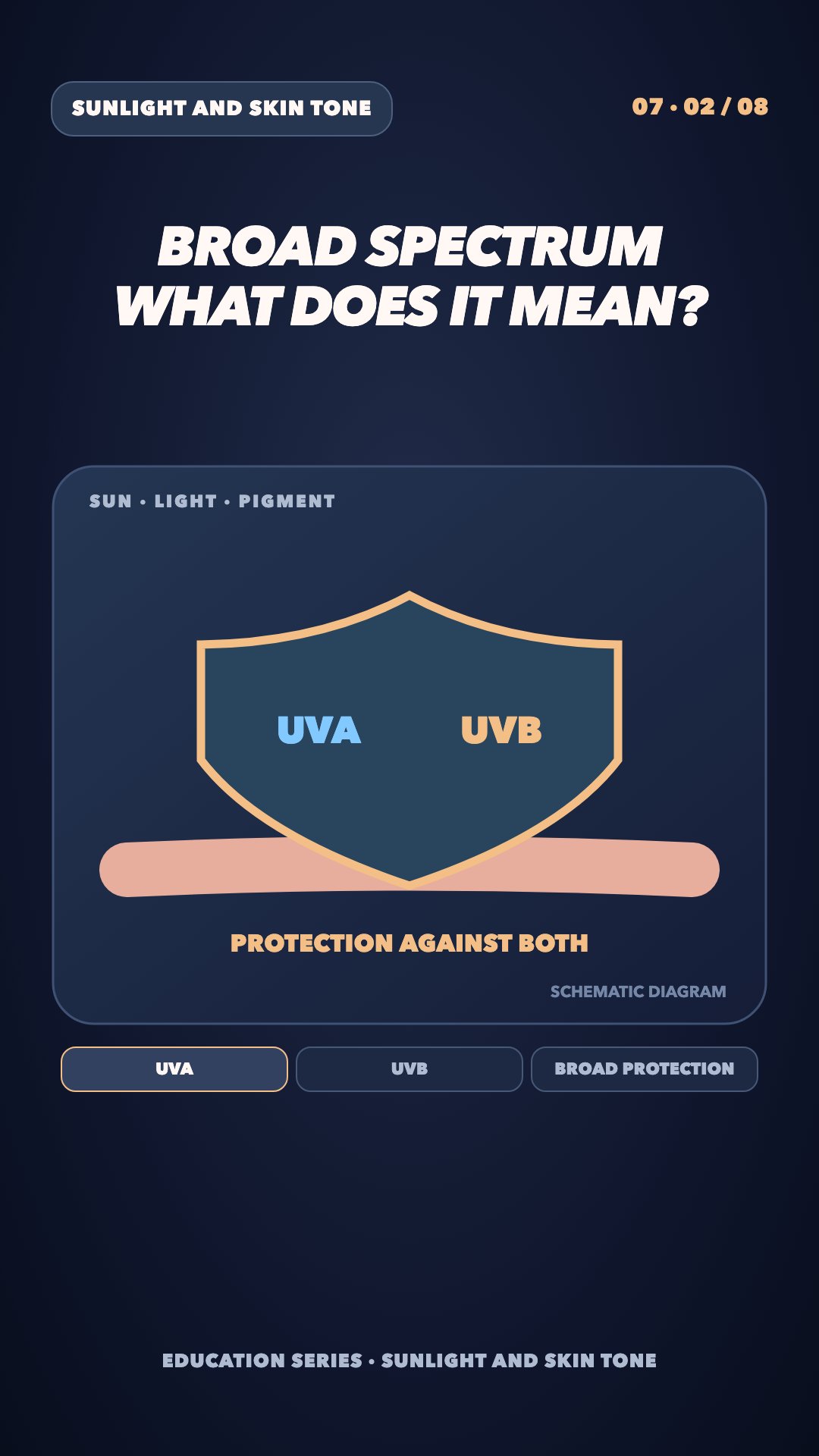
What does broad-spectrum protection mean?

Sunlight and Skin Tone

English narration and captions

English transcript and sources

UVA and UVB rays in sunlight affect the skin in different ways. While the SPF number mainly measures protection against sunburn, the term 'broad spectrum' indicates that a product also provides UVA protection. Looking only at a high SPF number is therefore not enough. A protection plan includes shade and clothing as well as the product label.

Sun Protection03

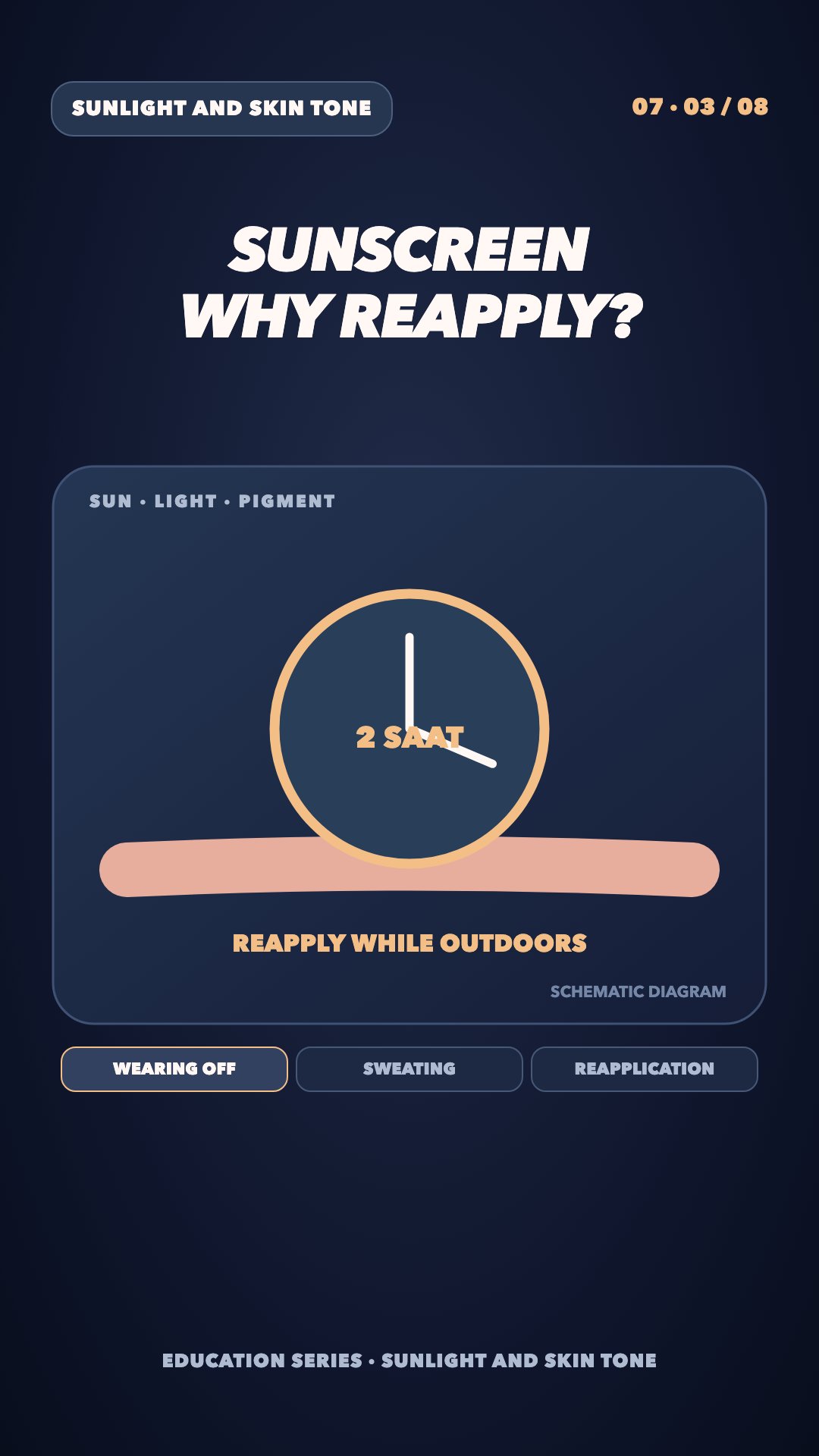
Why reapply sunscreen?

Sunlight and Skin Tone

English narration and captions

English transcript and sources

Sunscreen applied in the morning does not stay in the same layer all day. Sweating, swimming, wiping and contact can reduce the amount on the skin. Outdoors, the general recommendation is to reapply about every two hours, or sooner after swimming or heavy sweating. Even a good product will not provide the expected protection if too little is used or it is not reapplied at suitable intervals.

Sun Protection04

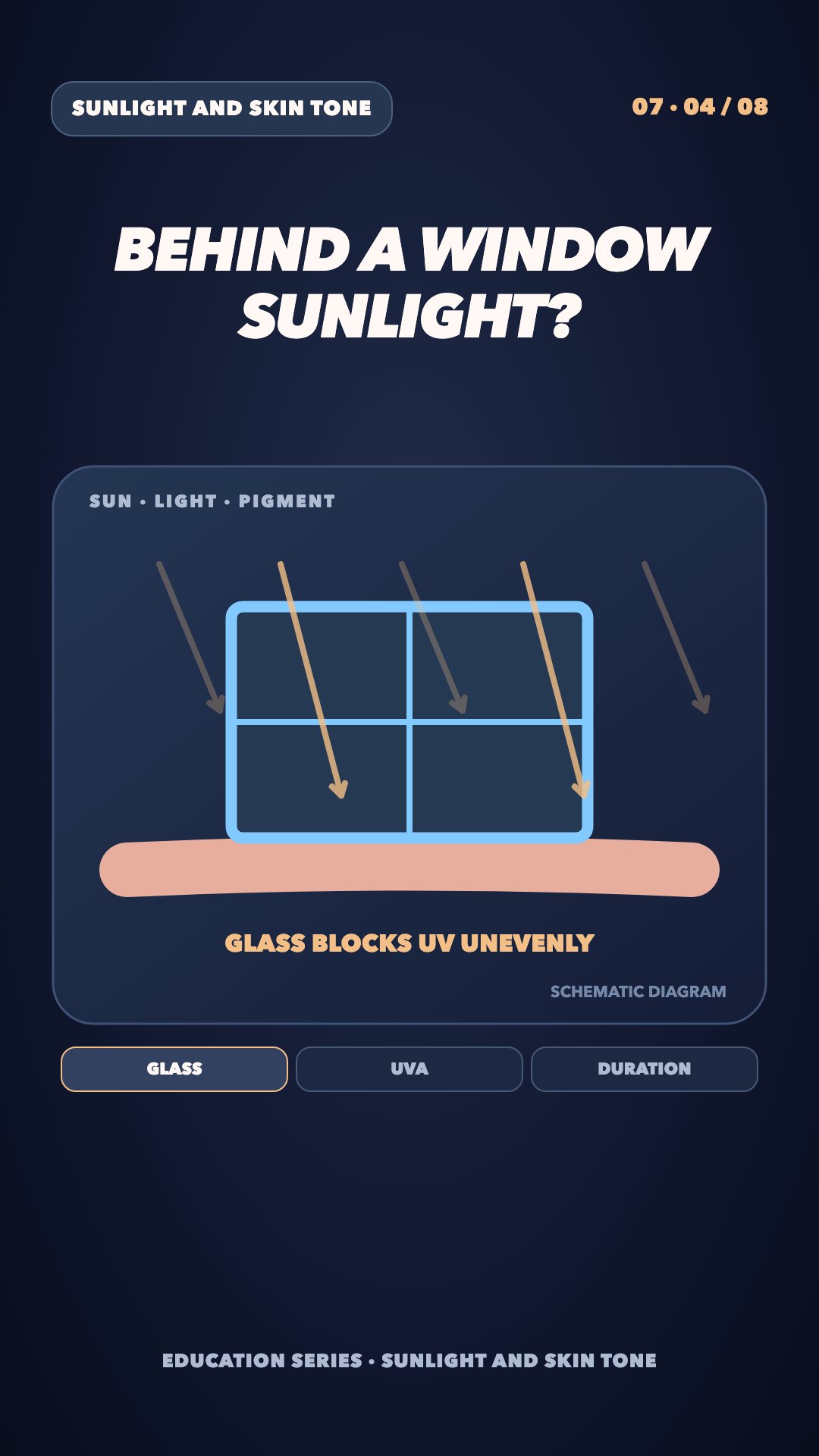
Can sunlight through a window affect skin?

Sunlight and Skin Tone

English narration and captions

English transcript and sources

Glass does not block every component of sunlight to the same extent. Ordinary window glass blocks most UVB but can let some UVA through. The type of glass, distance from the window and length of exposure all affect the outcome. For someone sitting near a bright window throughout the day, it would be inaccurate to regard indoors as completely free of sun exposure.

Sun Protection05

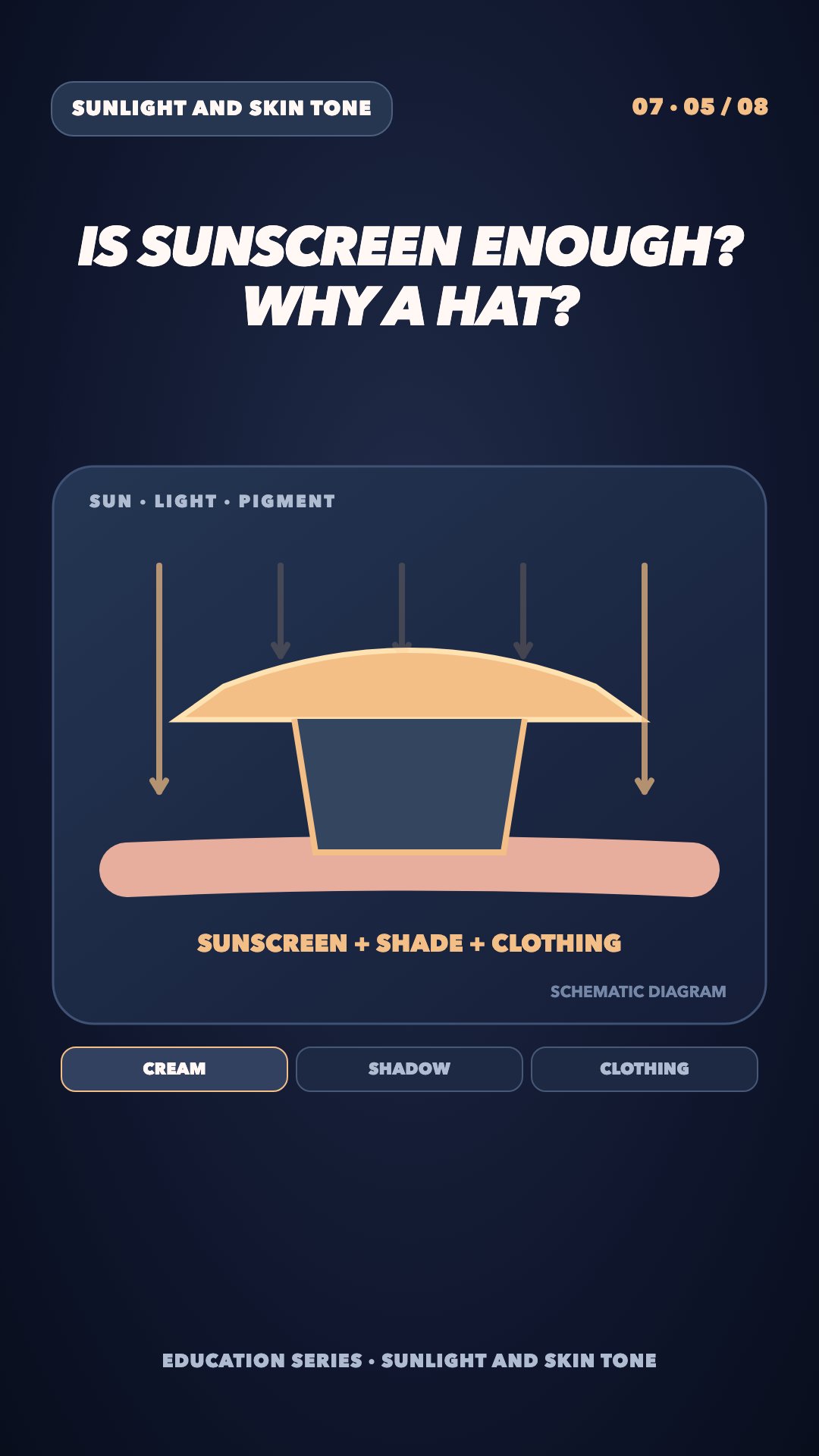
Why do hats and shade still matter?

Sunlight and Skin Tone

English narration and captions

English transcript and sources

Sunscreen alone is not a perfect shield. Areas where too little is applied or that are missed remain exposed. Shade, a wide-brimmed hat and protective clothing complement it by reducing exposure to sunlight. Especially if you are outdoors for a long time, using several methods together is a more reliable approach than relying on a single bottle.

Sun Protection06

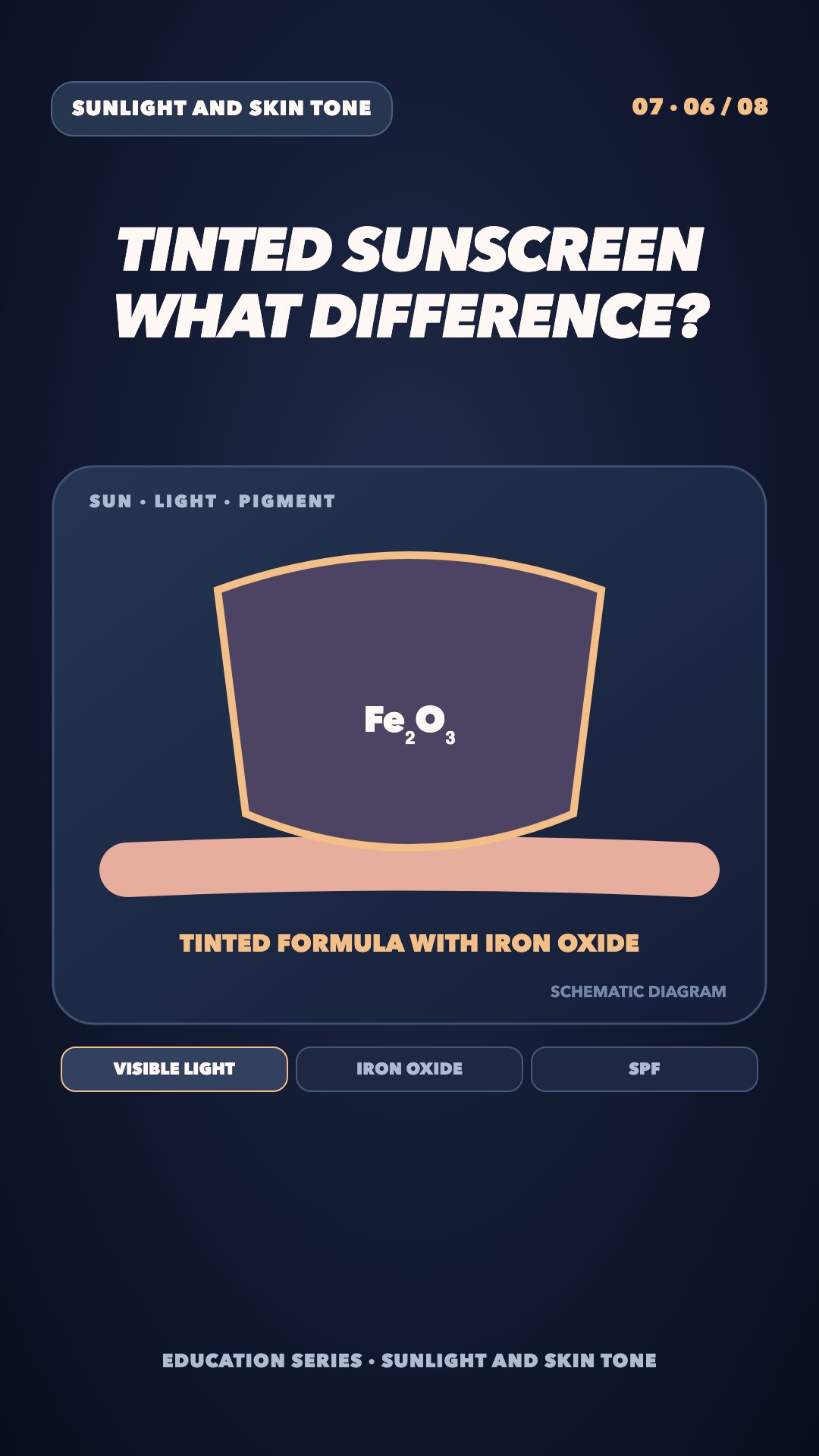
What does tinted sunscreen do?

Sunlight and Skin Tone

English narration and captions

English transcript and sources

For some pigmentation concerns, visible sunlight as well as ultraviolet light can play a role. Tinted sunscreens containing iron oxides may provide additional protection against visible light. This can matter particularly for people prone to melasma. But a tint alone is not enough; the product also needs broad-spectrum coverage and an appropriate SPF.

Sun Protection07

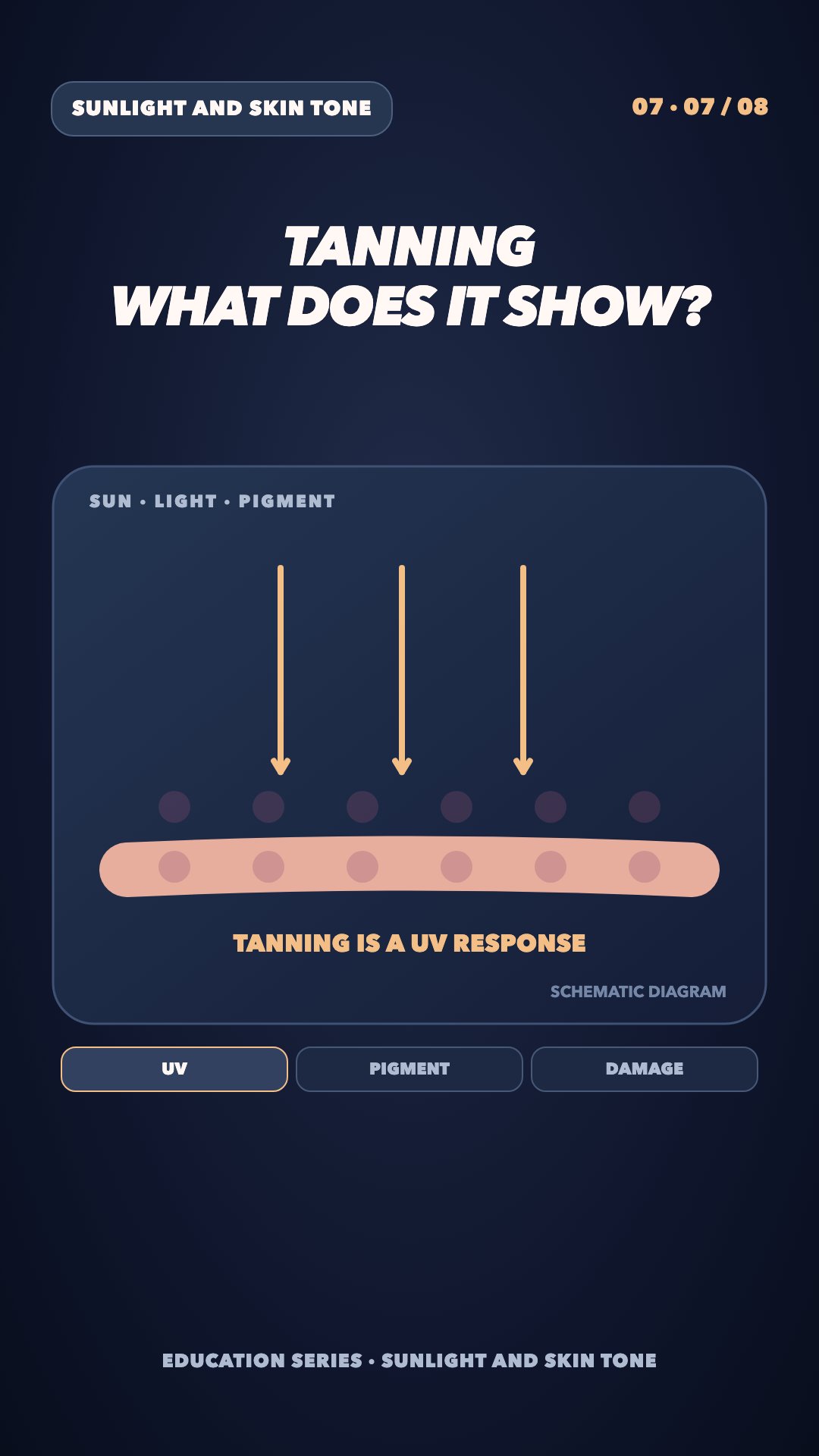
What happens to skin when it tans?

Sunlight and Skin Tone

English narration and captions

English transcript and sources

A tan is the skin's pigment response to ultraviolet light. Its appearance may be a personal preference, but it is not evidence of healthy or safe sun exposure. UV exposure can damage the skin; accumulated damage increases the risks of aging and cancer. Giving up protection to change skin colour is not the same as protecting the skin.

Sun Protection08

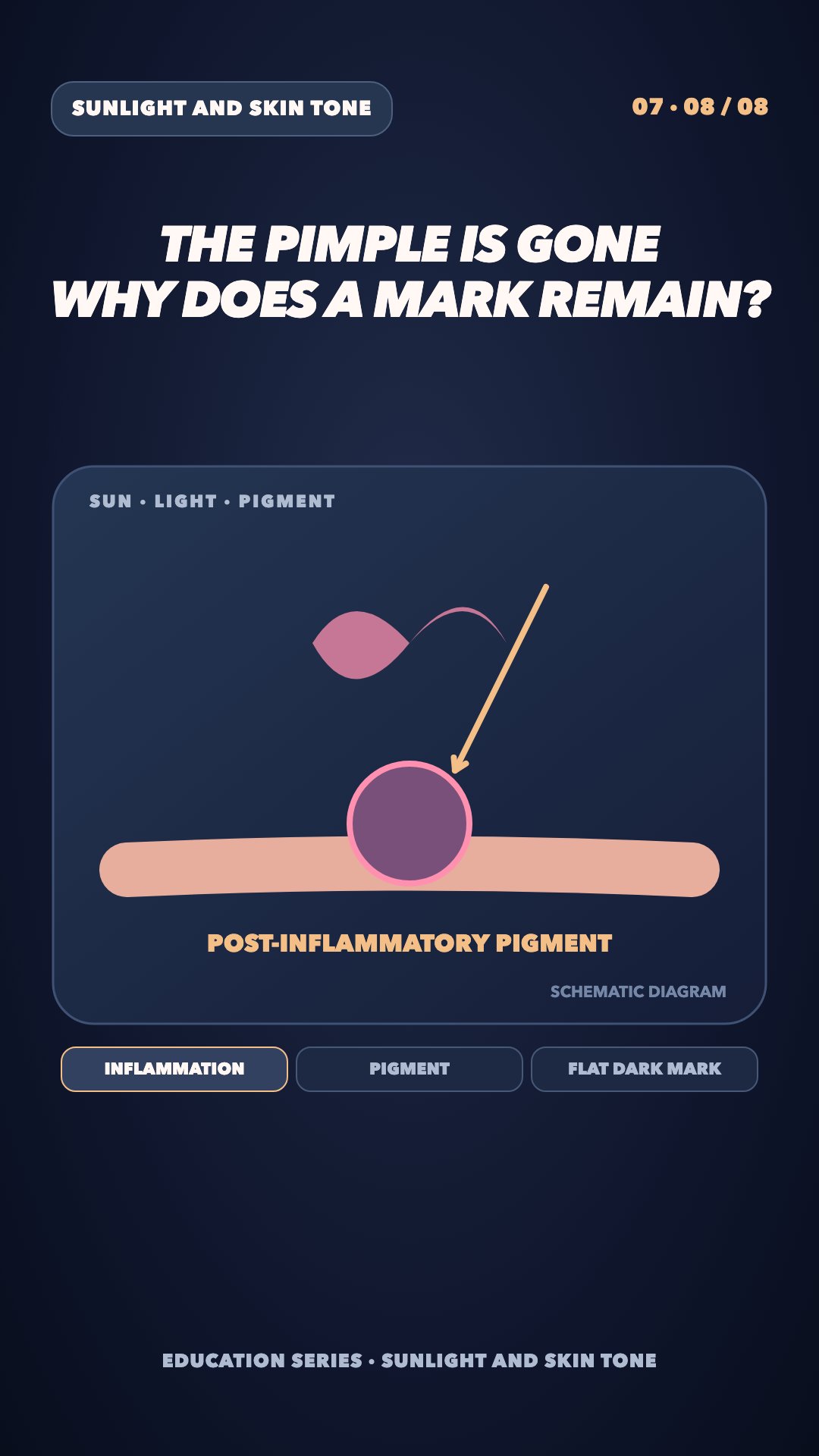
Why do dark marks remain after acne?

Sunlight and Skin Tone

English narration and captions

English transcript and sources

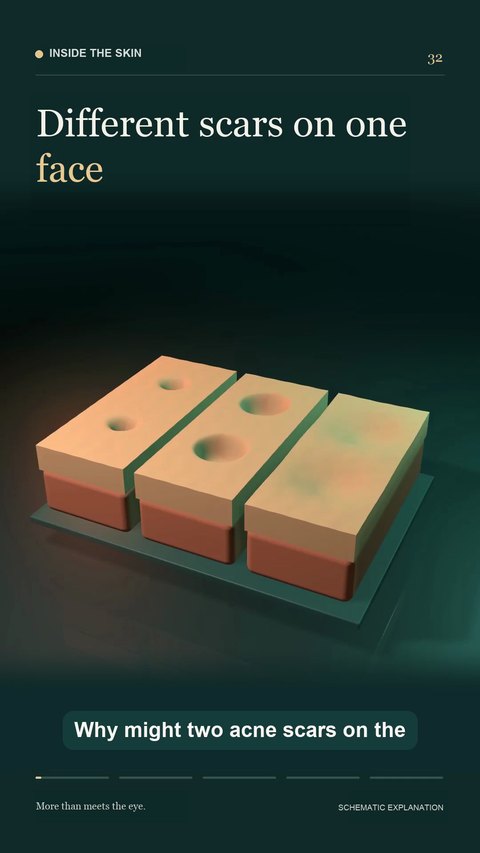
A flat, dark area left after a pimple settles is not always a permanent indented scar. Post-inflammatory pigmentation changes can be more noticeable in some skin tones. Controlling new breakouts and protecting skin from the sun can help reduce new marks. If a mark deepens or persists for a long time, it should be assessed.

Acne01

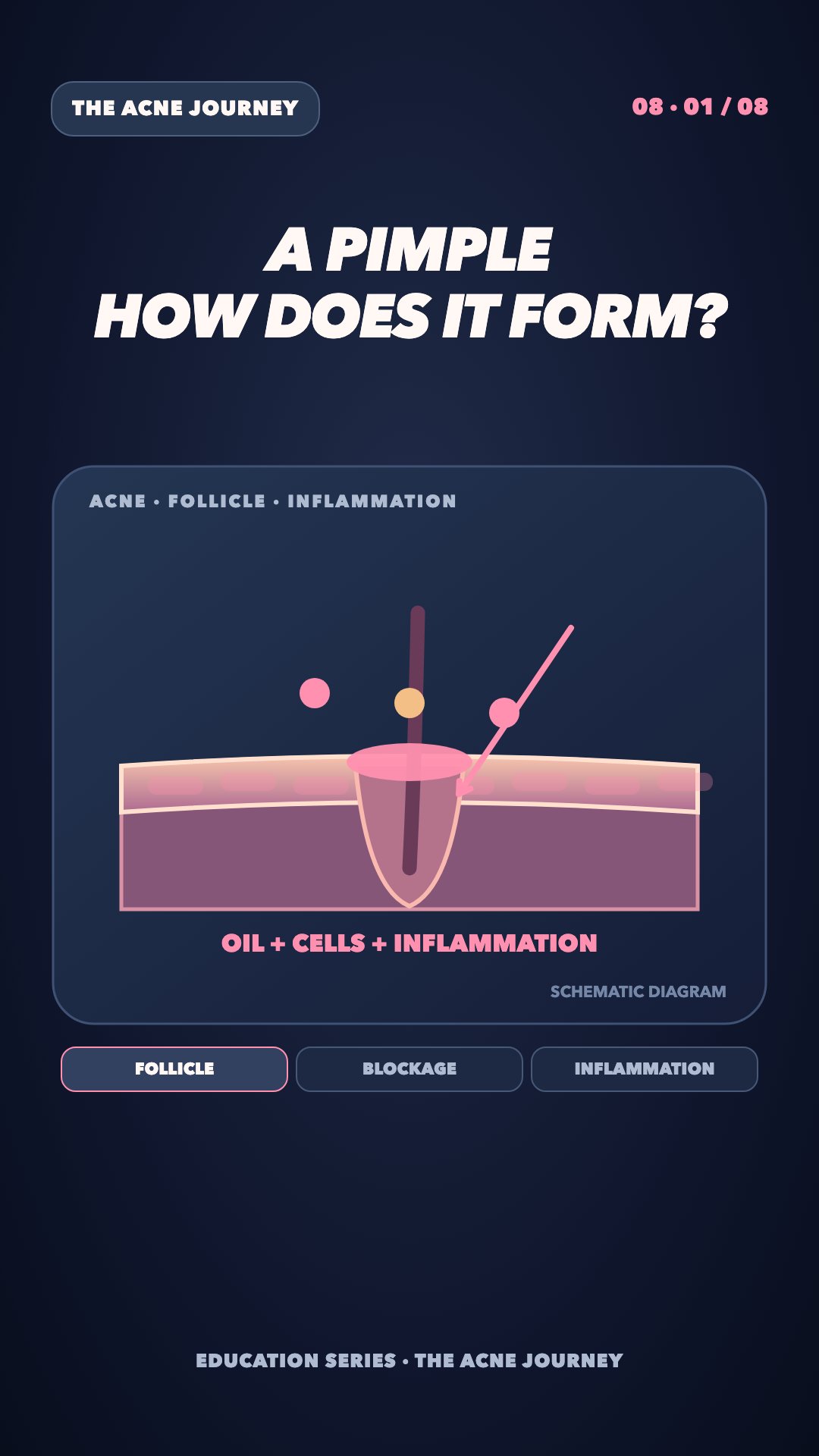
How does a pimple form?

The Acne Journey

English narration and captions

English transcript and sources

A pimple does not form simply because of dirt on the surface. Oil and dead cells can build up at the opening of a hair follicle; bacteria and inflammation may also contribute in some cases. This process can produce different appearances, from a closed comedone to a red bump. Rather than treating every pimple in the same way, it helps to understand what type of lesion is present.

Acne02

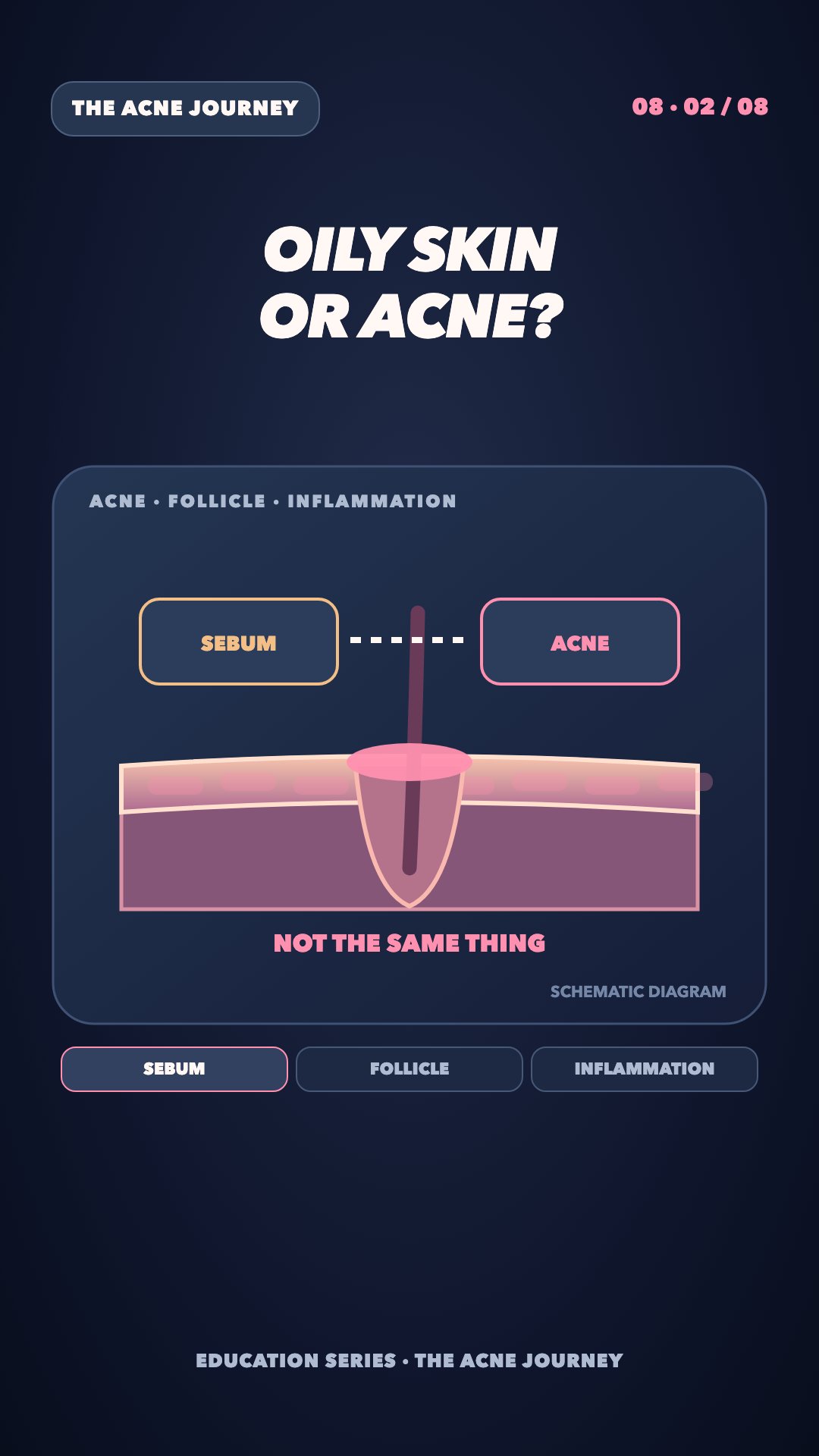
Are oily skin and acne the same thing?

The Acne Journey

English narration and captions

English transcript and sources

A shiny face does not necessarily mean acne. Sebum is the skin's natural oil production. Alongside oil, follicle blockage, inflammation and hormonal effects can also contribute to acne. Trying to eliminate all oil therefore will not solve the whole problem, and overly harsh cleansing may also irritate the skin.

Acne03

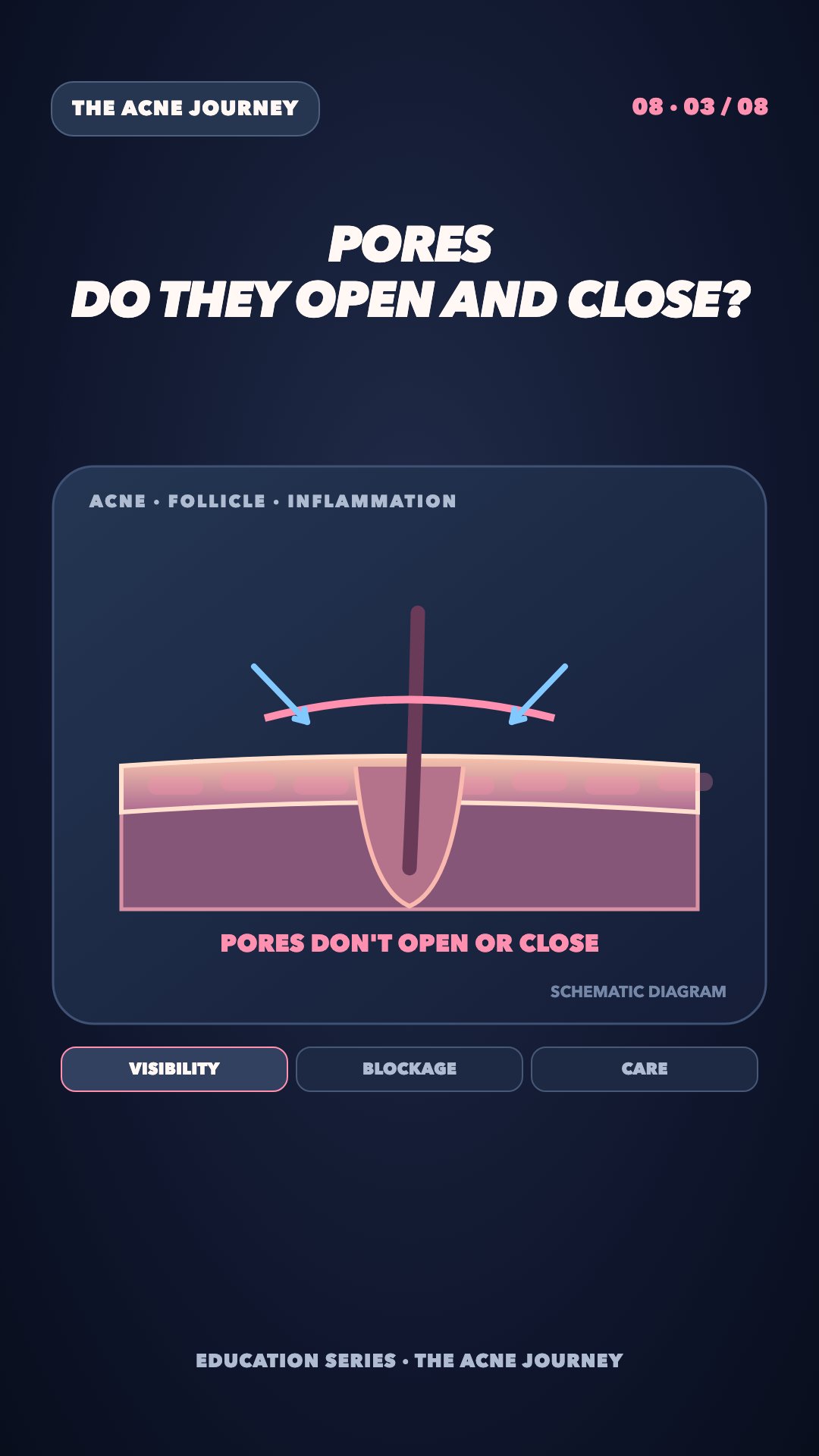
Do pores really open and close?

The Acne Journey

English narration and captions

English transcript and sources

Pores do not open and close on demand like little doors. How visible they look can change with oil, blockage, skin structure and lighting. The idea of opening them with hot water and closing them with cold water is therefore misleading. Gentle cleansing, acne control and sun protection are far more meaningful than trying to close pores with a temporary trick.

Acne04

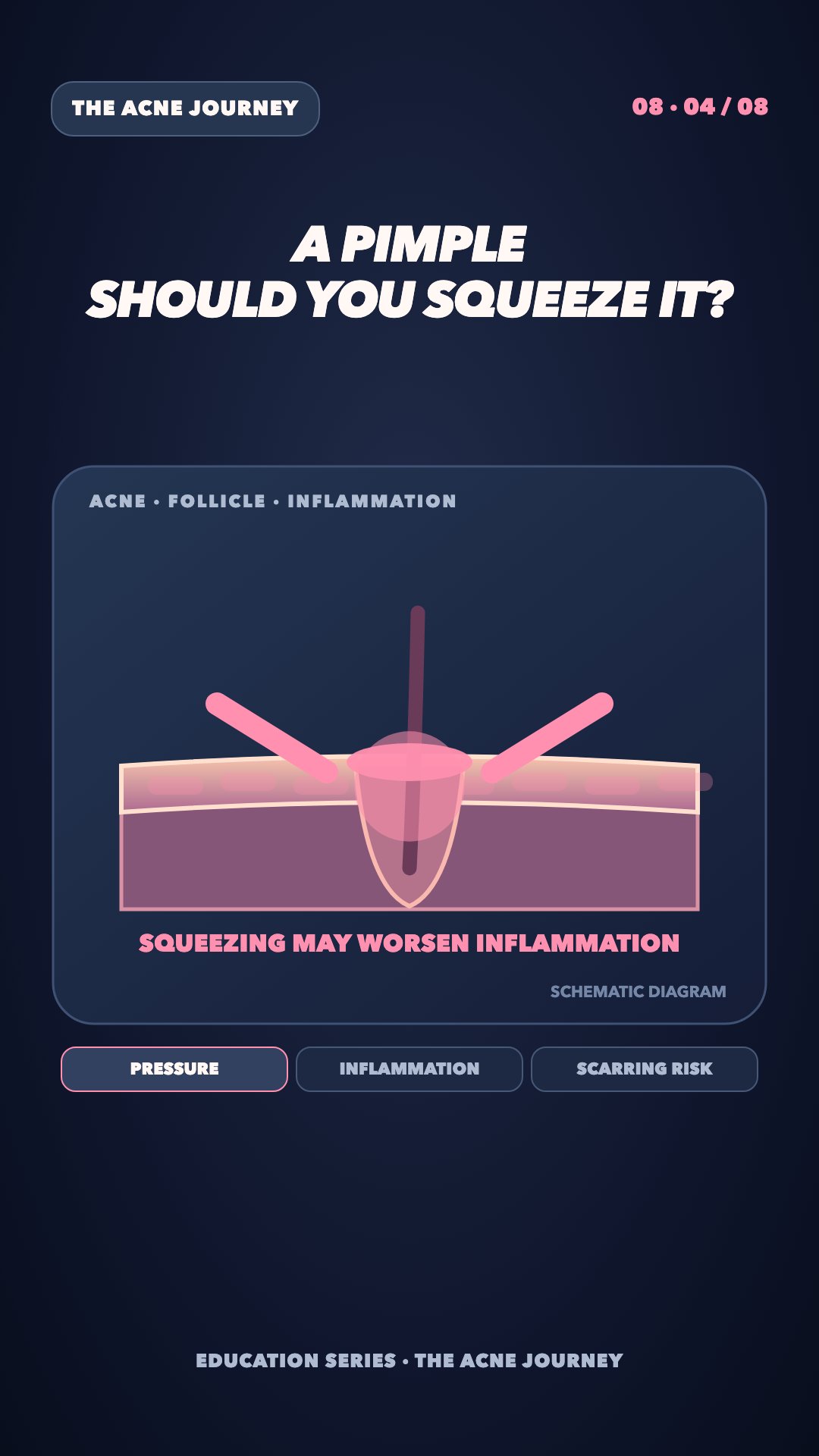
Why does squeezing a pimple increase the risk of scarring?

The Acne Journey

English narration and captions

English transcript and sources

Squeezing a pimple does not always push its contents out; it can deepen irritation and inflammation. When healing takes longer, the risk of a dark mark or permanent scar may increase. Particularly with painful, deep lesions, learning about suitable treatment is safer than trying to intervene at home. Trying to speed things up with your hands can sometimes delay the skin's recovery.

Acne05

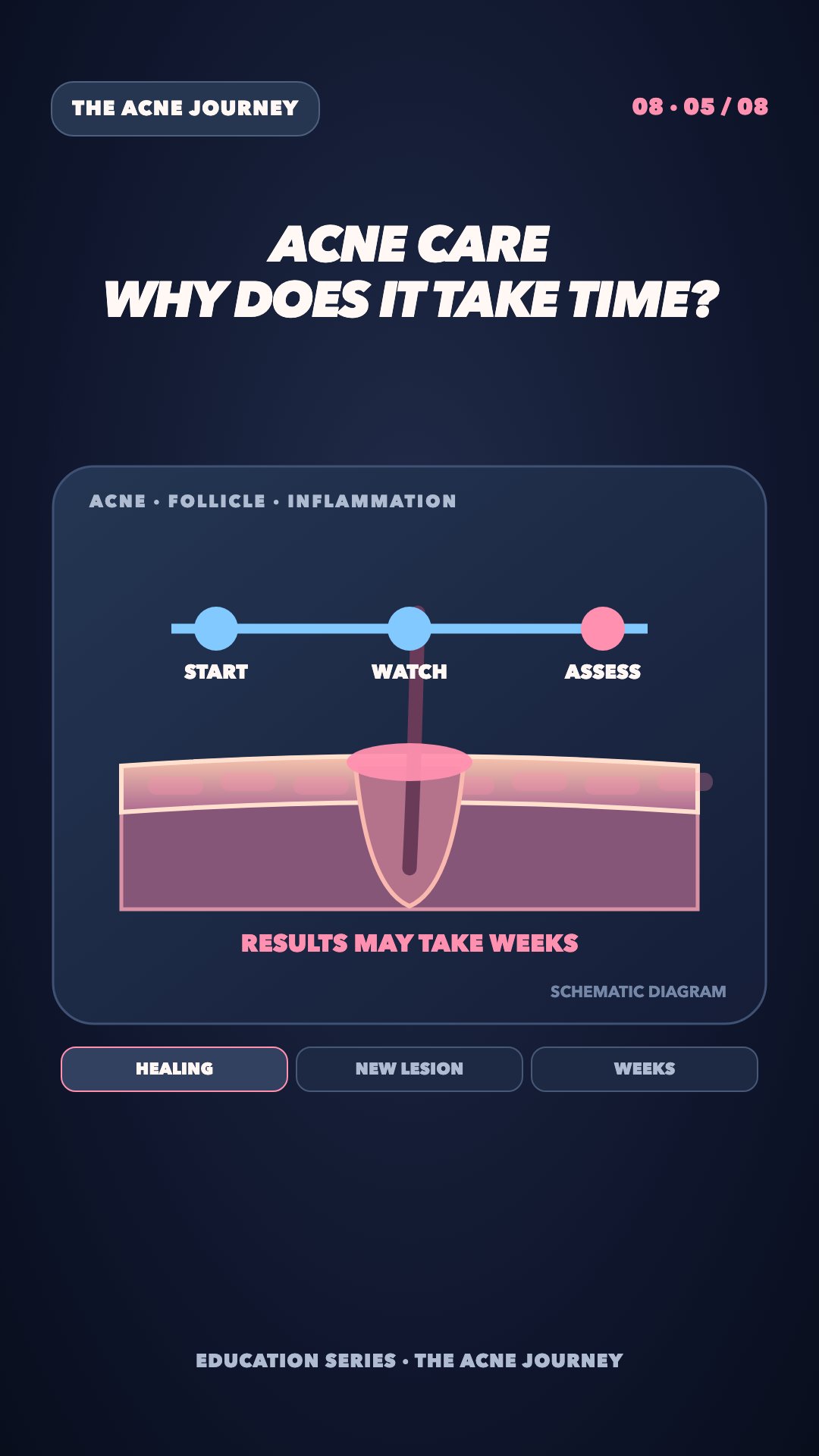
Why does acne care take time to show results?

The Acne Journey

English narration and captions

English transcript and sources

Acne care is not expected to make every lesion disappear overnight. Existing pimples need to heal while new ones are prevented. Declaring a product ineffective after a few days and constantly changing it may irritate the skin. Assessing the effect of a suitable approach often takes weeks; professional support is important for deep acne or acne that leaves scars.

Acne06

What role do hormones play in jawline acne?

The Acne Journey

English narration and captions

English transcript and sources

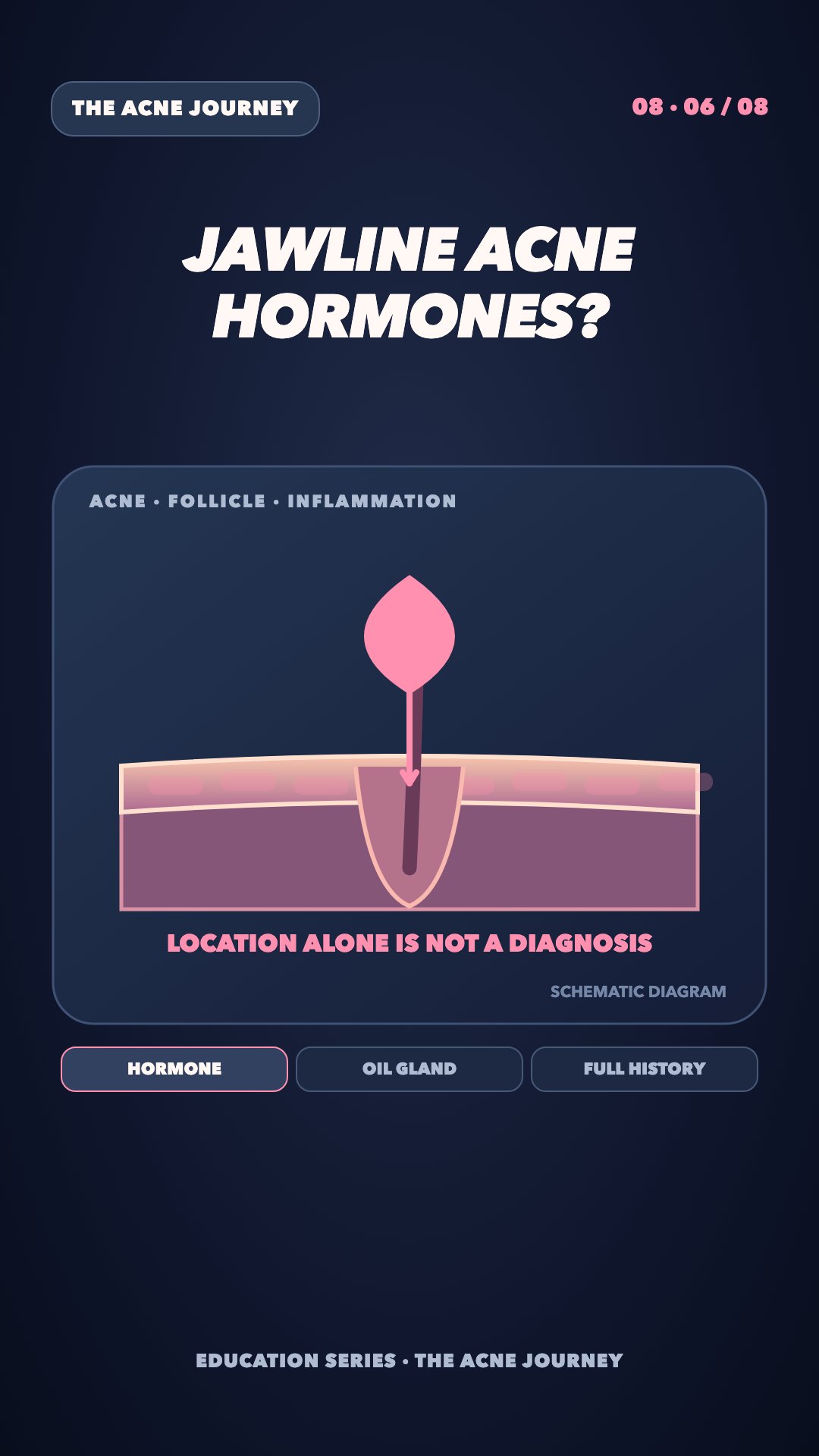
Hormones can affect how oil glands work and contribute to acne flares in some people. Lesions around the jaw in adults can therefore attract attention. But location alone cannot establish a hormonal diagnosis; products, medicines and other symptoms also need consideration. A single area of the face does not explain the whole cause.

Acne07

Is back acne different from facial acne?

The Acne Journey

English narration and captions

English transcript and sources

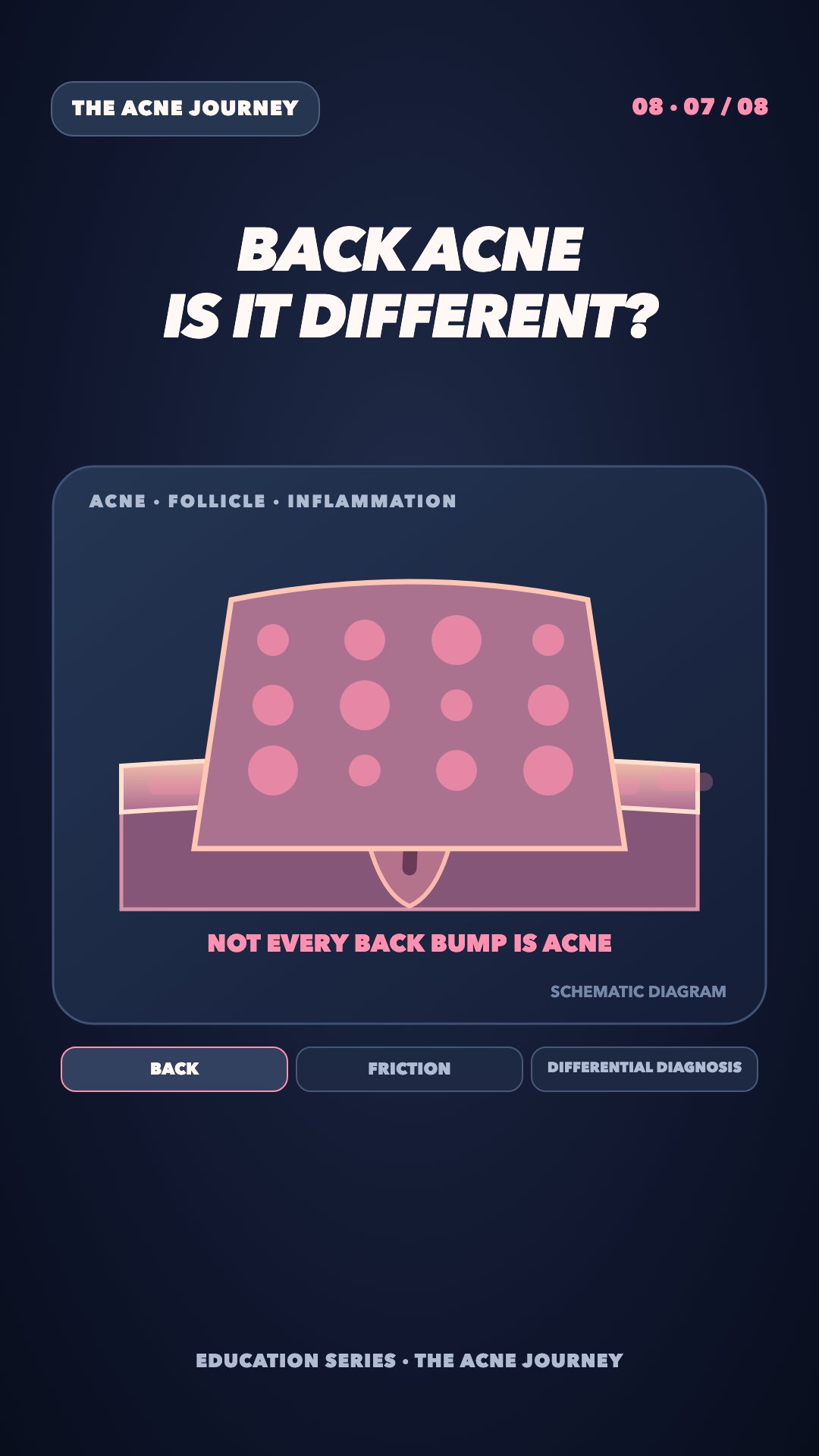
The back also has oil glands and hair follicles, so acne can develop there too. Sweat, friction and some hair products may affect its appearance. But not every bump on the back is acne; conditions such as folliculitis can look similar. With widespread, painful or scarring lesions, making the correct distinction matters more than trying random products.

Acne08

Are red and brown post-acne marks the same?

The Acne Journey

English narration and captions

English transcript and sources

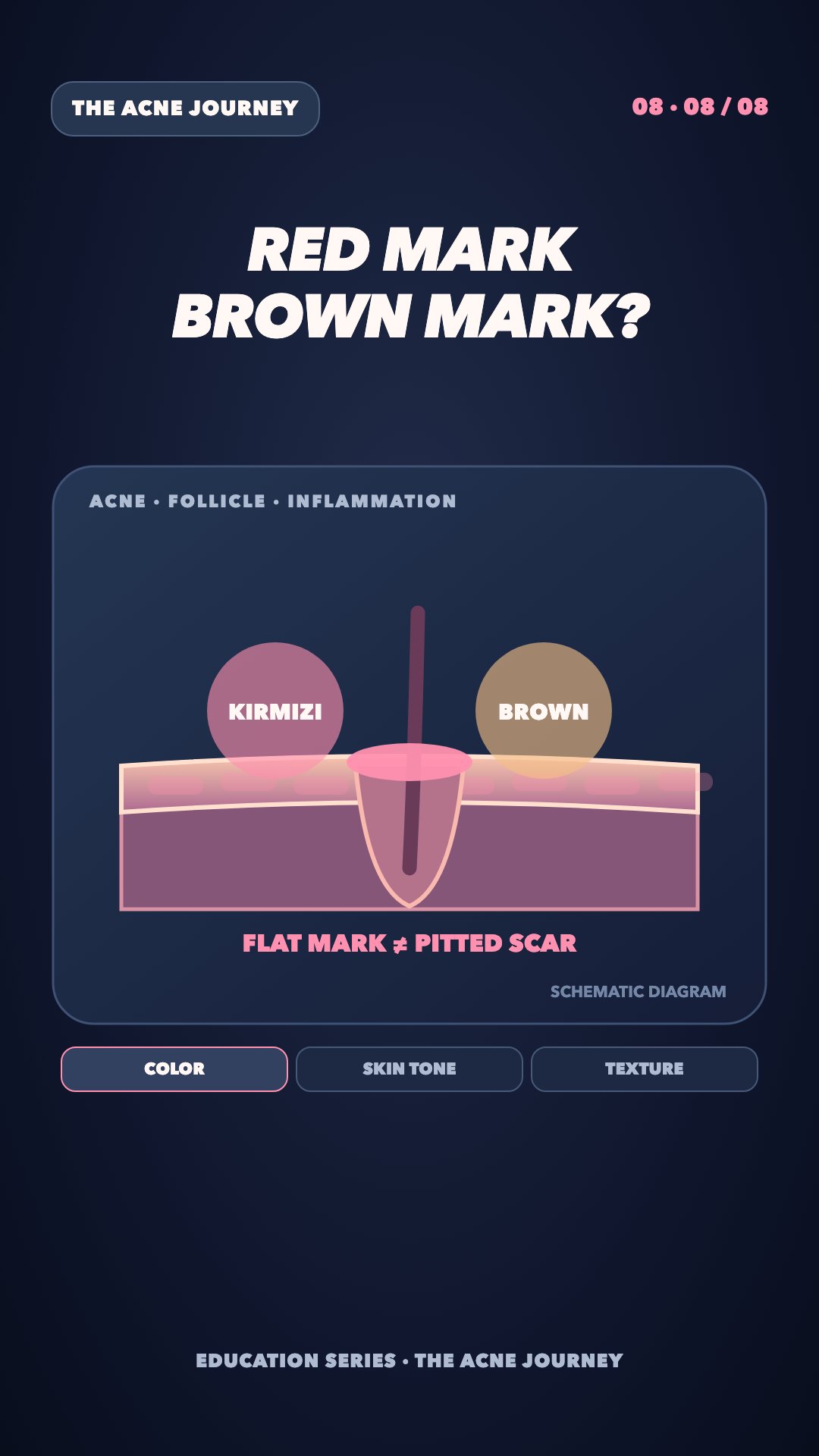
A flat discoloured mark can remain after a pimple clears. Red or pink marks and brown marks may reflect different processes even on the same skin, and skin tone also affects their colour. A flat colour change differs from an indented or raised scar. Making that distinction helps set realistic expectations for duration and care.

Hair Health01

What might a widening hair part indicate?

Clues to Hair Loss

English narration and captions

English transcript and sources

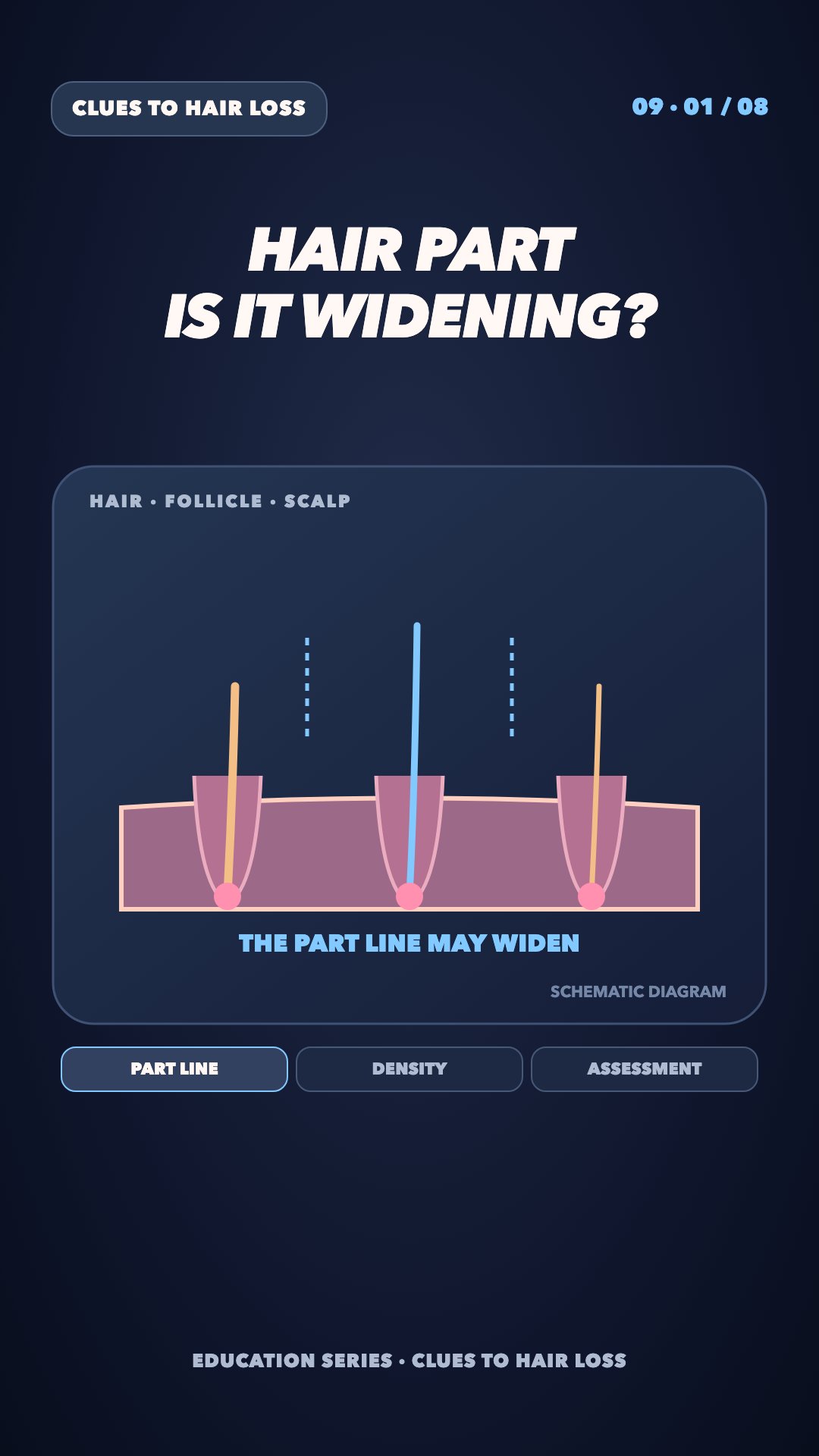
Noticing that the line of your usual hair part is widening may indicate a change in hair density. Pattern hair thinning is one possible cause, but it is not the only one. Photographs, hairstyle and lighting can alter its appearance. If the change continues, the scalp and history of shedding should be assessed together.

Hair Health02

How can hair breakage be distinguished from shedding?

Clues to Hair Loss

English narration and captions

English transcript and sources

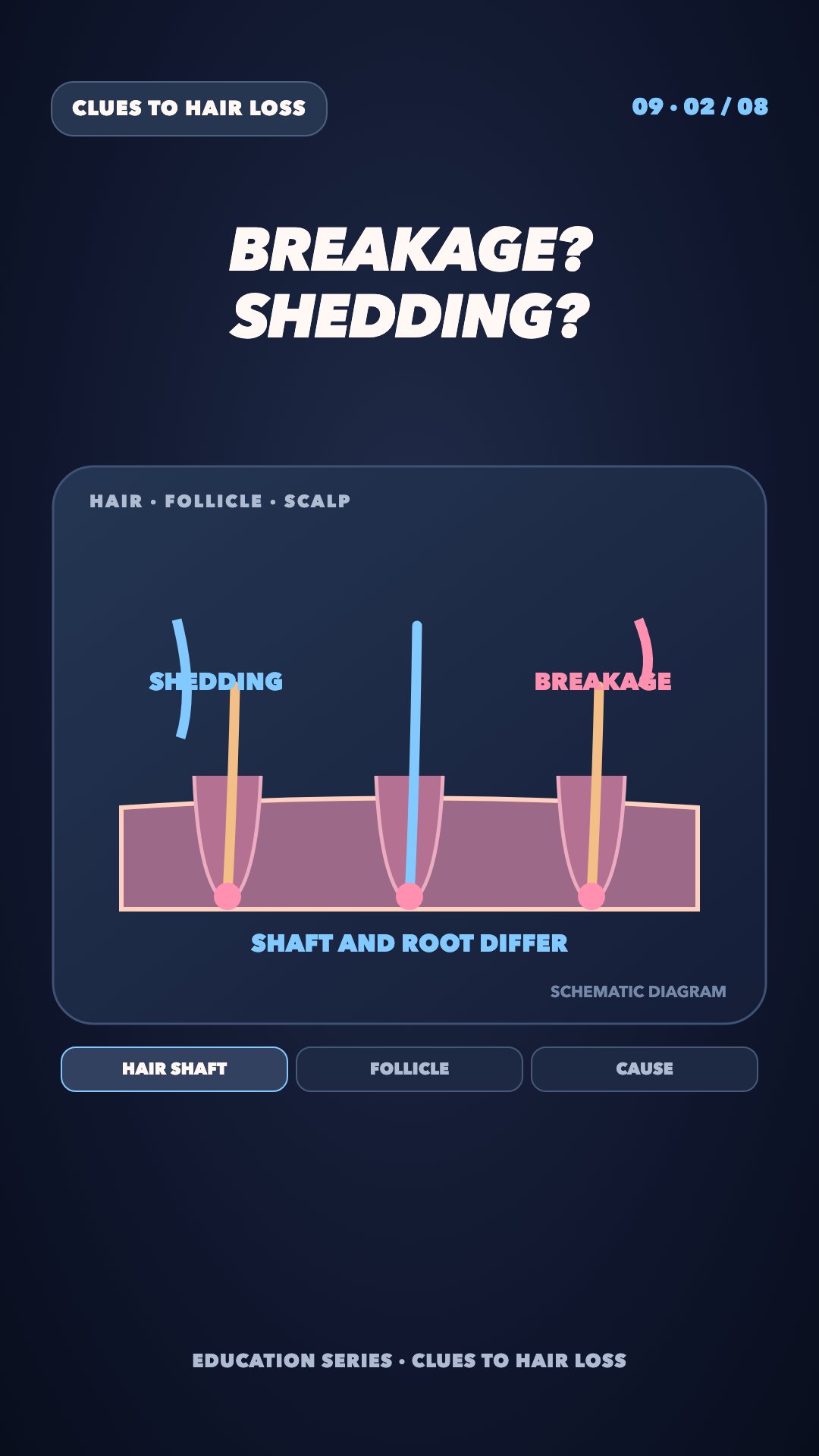
Not every short strand you see in the sink means a hair follicle has been lost. Some strands break along the shaft because of heat, friction or tight styling. Hairs shed from the root are more often full length. Looking at home cannot establish a definite diagnosis, but distinguishing breakage from shedding makes it easier to discuss care habits and possible causes.

Hair Health03

Can iron deficiency affect the appearance of hair?

Clues to Hair Loss

English narration and captions

English transcript and sources

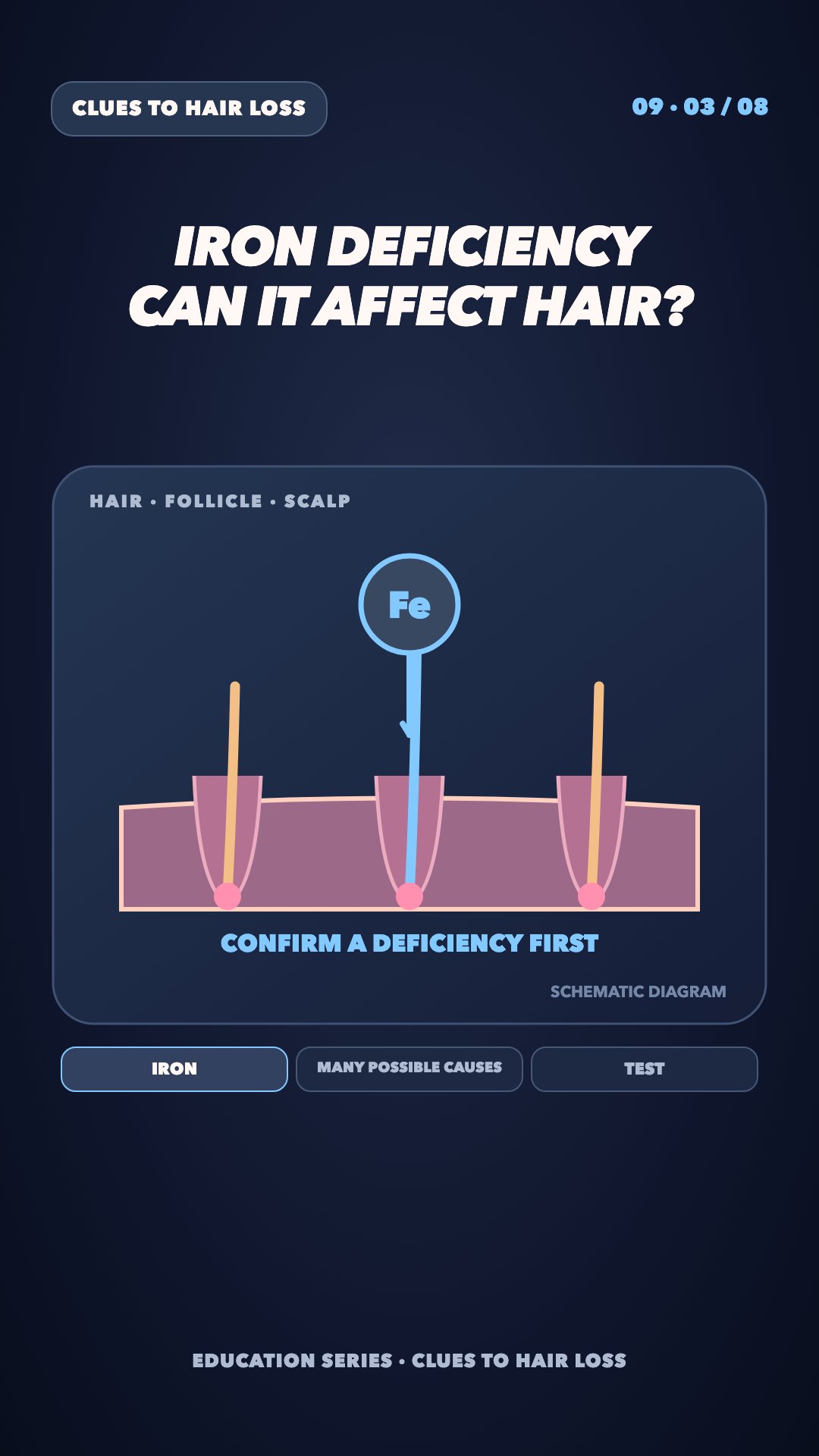
Iron deficiency can contribute to hair shedding in some people. But not every case is caused by iron; inherited traits, illnesses and other nutritional deficiencies can also play a role. Rather than taking supplements at random, an appropriate assessment should establish whether there is actually a deficiency. A solution chosen without finding the cause may miss the target.

Hair Health04

Why can thyroid changes affect hair?

Clues to Hair Loss

English narration and captions

English transcript and sources

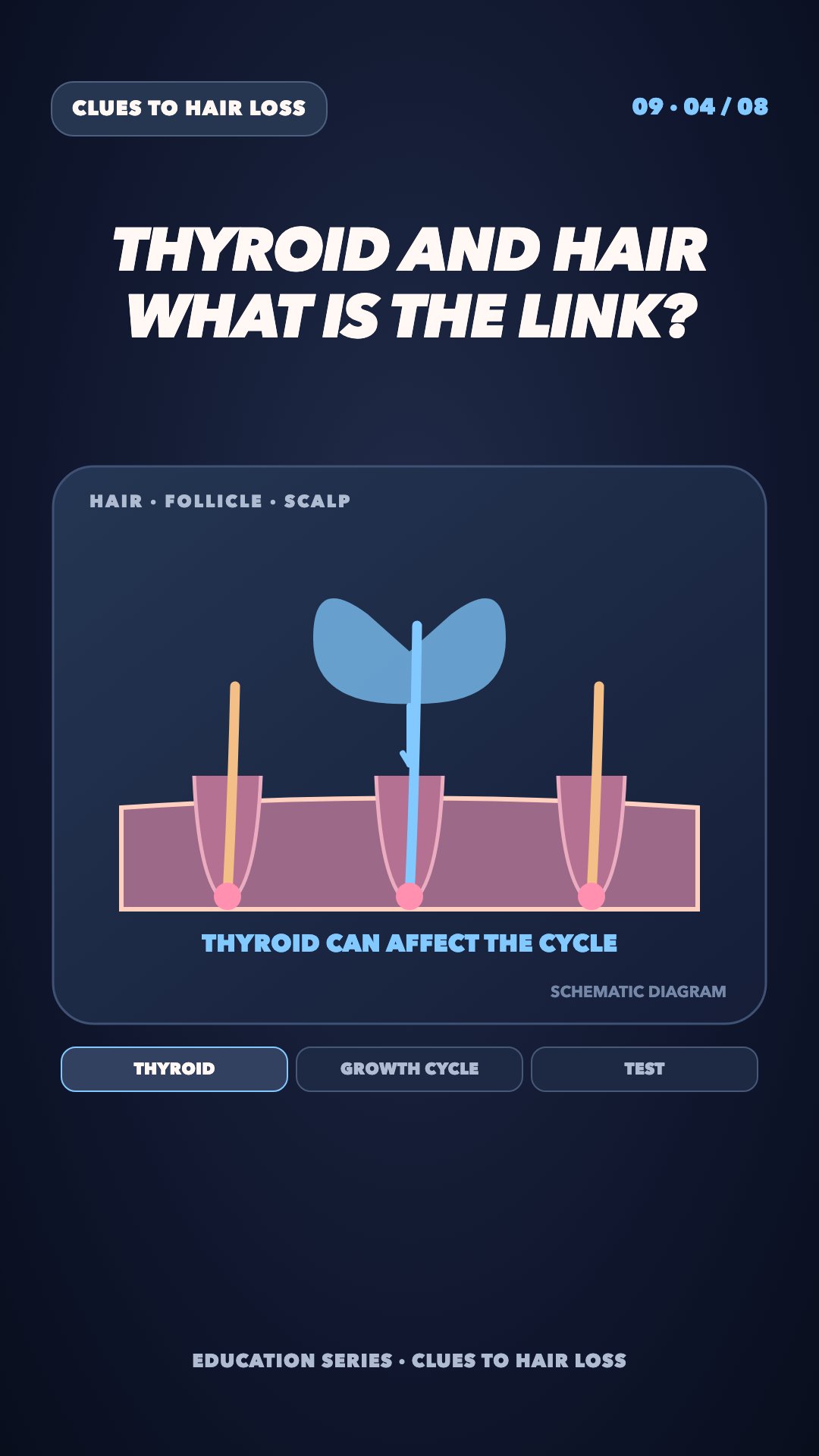
Thyroid hormones affect the way many tissues in the body function, including the hair growth cycle. Some people with thyroid disorders notice thinning or widespread shedding. Hair loss alone, however, does not diagnose a thyroid condition. Other symptoms and tests when needed help clarify the cause.

Hair Health05

Are dandruff and hair loss the same problem?

Clues to Hair Loss

English narration and captions

English transcript and sources

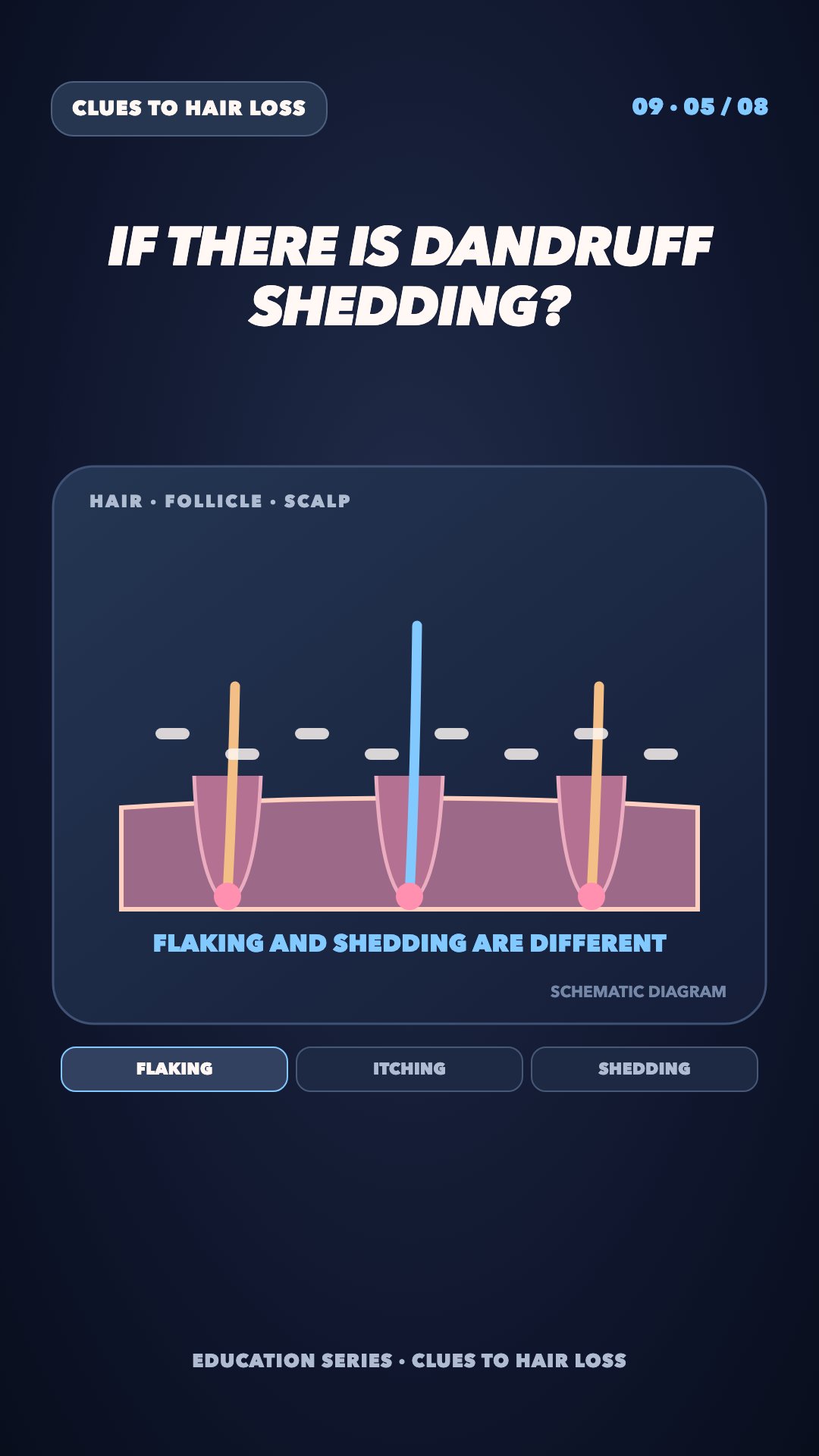
Dandruff is noticed as flaking of the scalp, whereas hair loss involves a change in hair density or daily shedding. They are not the same thing, although they can occur in the same person. If there is intense itching, redness, crusting or noticeable thinning, changing shampoo alone may not be enough. The scalp may need a separate assessment.

Hair Health06

Can tight hairstyles affect the hairline?

Clues to Hair Loss

English narration and captions

English transcript and sources

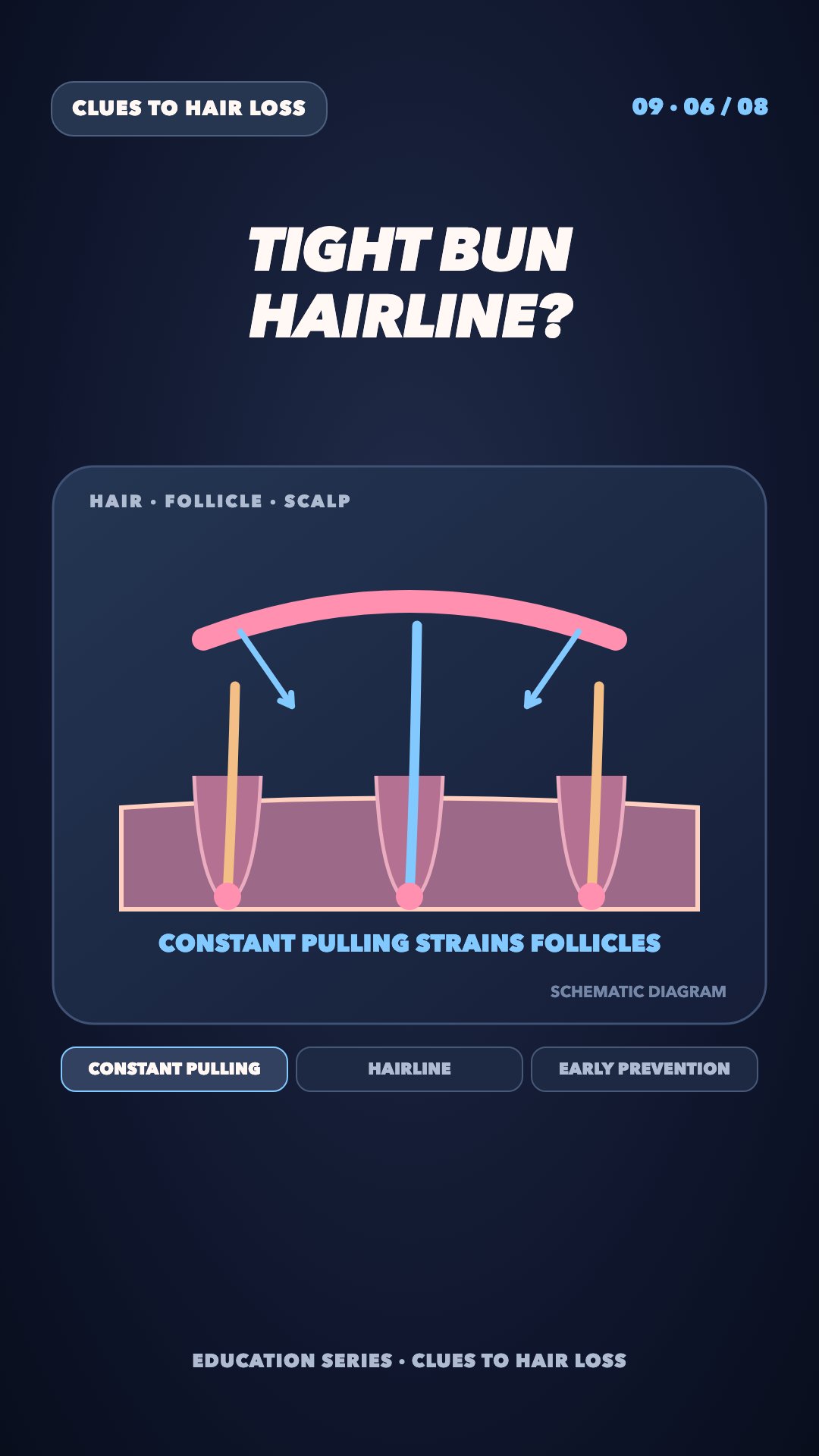
Hairstyles that keep pulling the hair taut repeatedly place tension on follicles, especially along the front and sides of the hairline. Over time this can lead to traction-related hair loss. Early signs may include tenderness and short broken strands. Reducing the pull early matters; long-standing damage may be harder to reverse.

Hair Health07

Why does postpartum hair shedding happen?

Clues to Hair Loss

English narration and captions

English transcript and sources

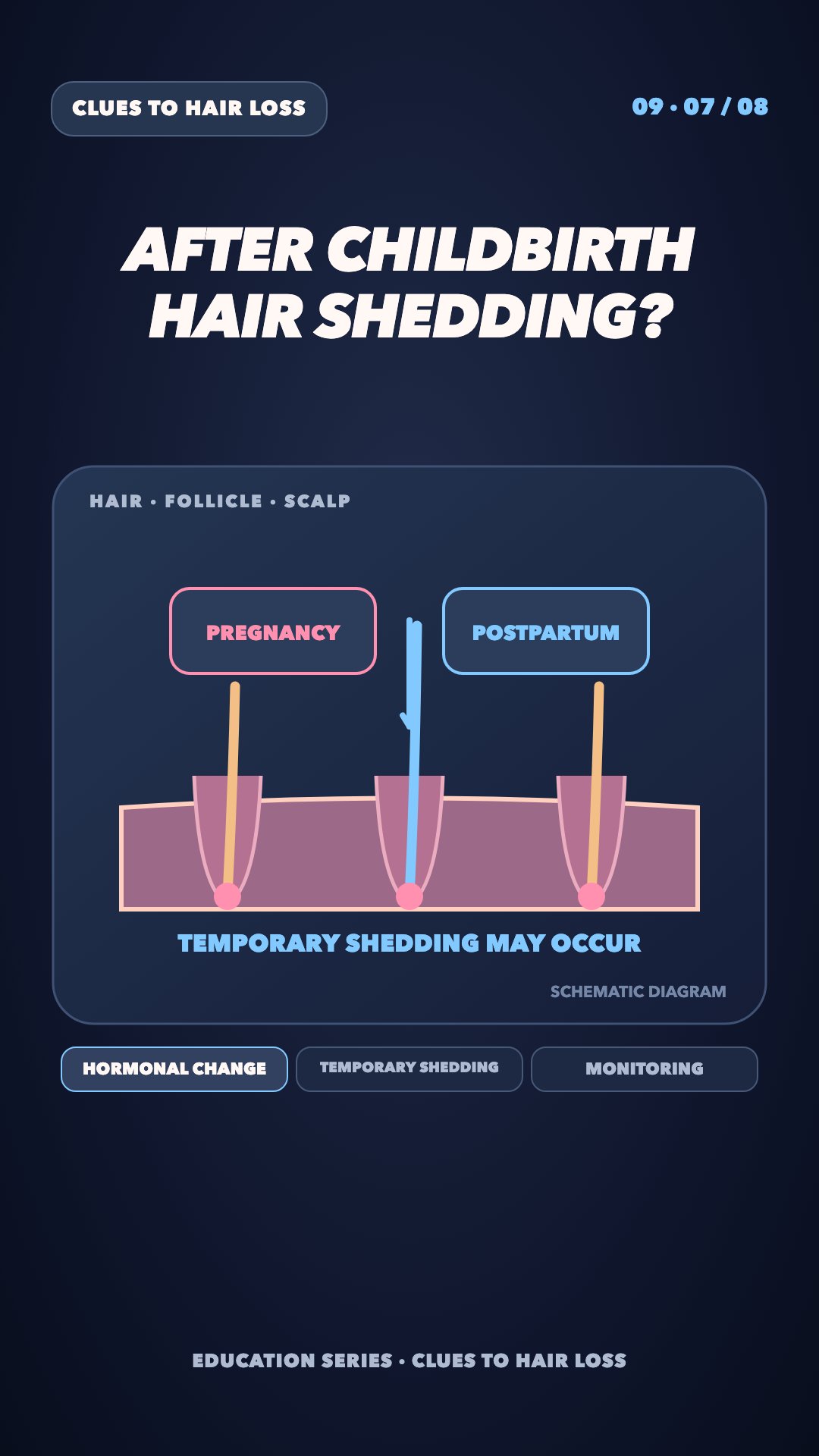
Increased hair shedding a few months after childbirth is a temporary change many people experience. As hormone levels altered during pregnancy return toward normal, more hairs enter the resting and shedding phases. It usually eases with time, but very heavy or prolonged shedding, or shedding with other symptoms, warrants assessment.

Hair Health08

When should hair loss be assessed?

Clues to Hair Loss

English narration and captions

English transcript and sources

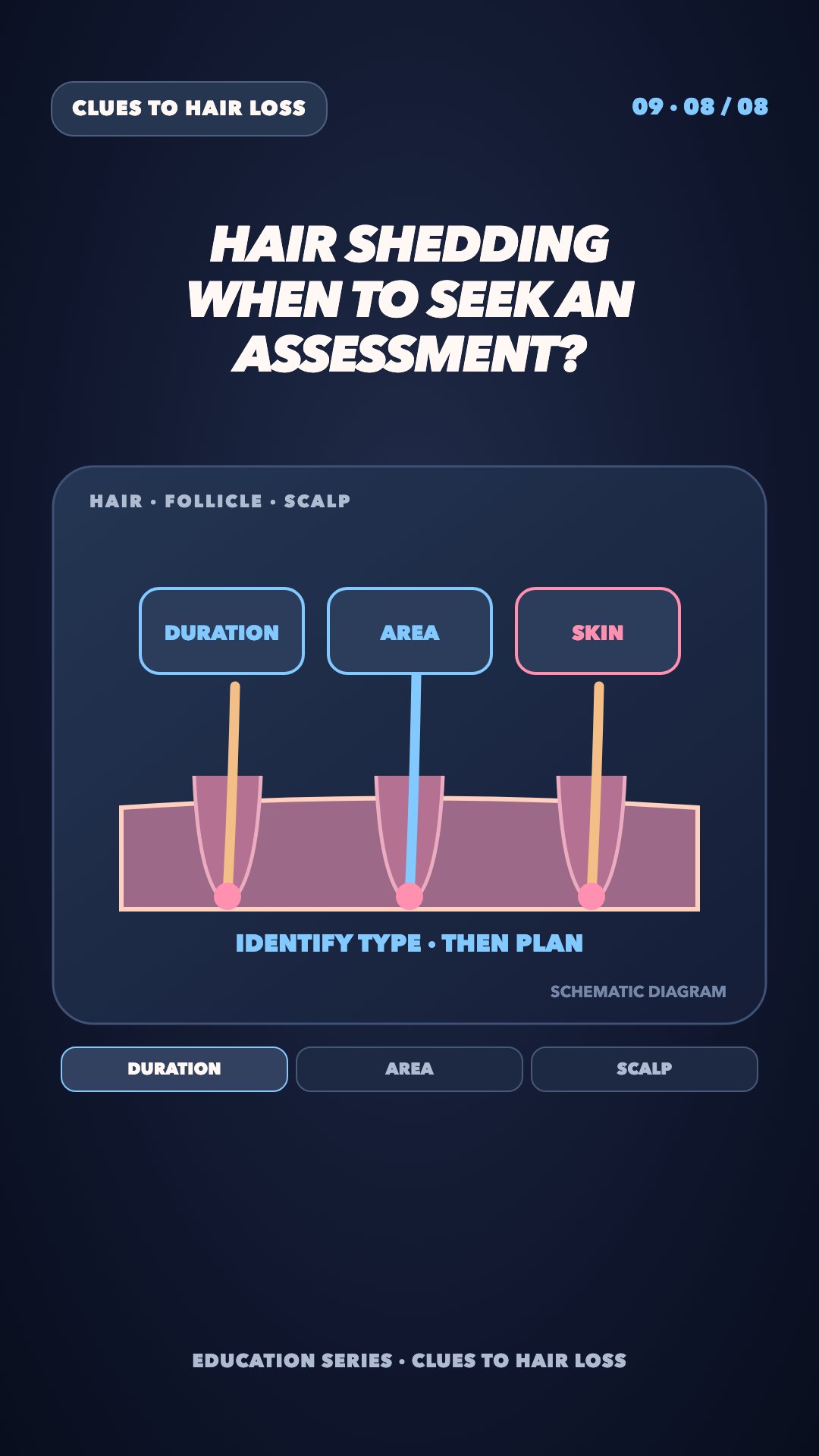
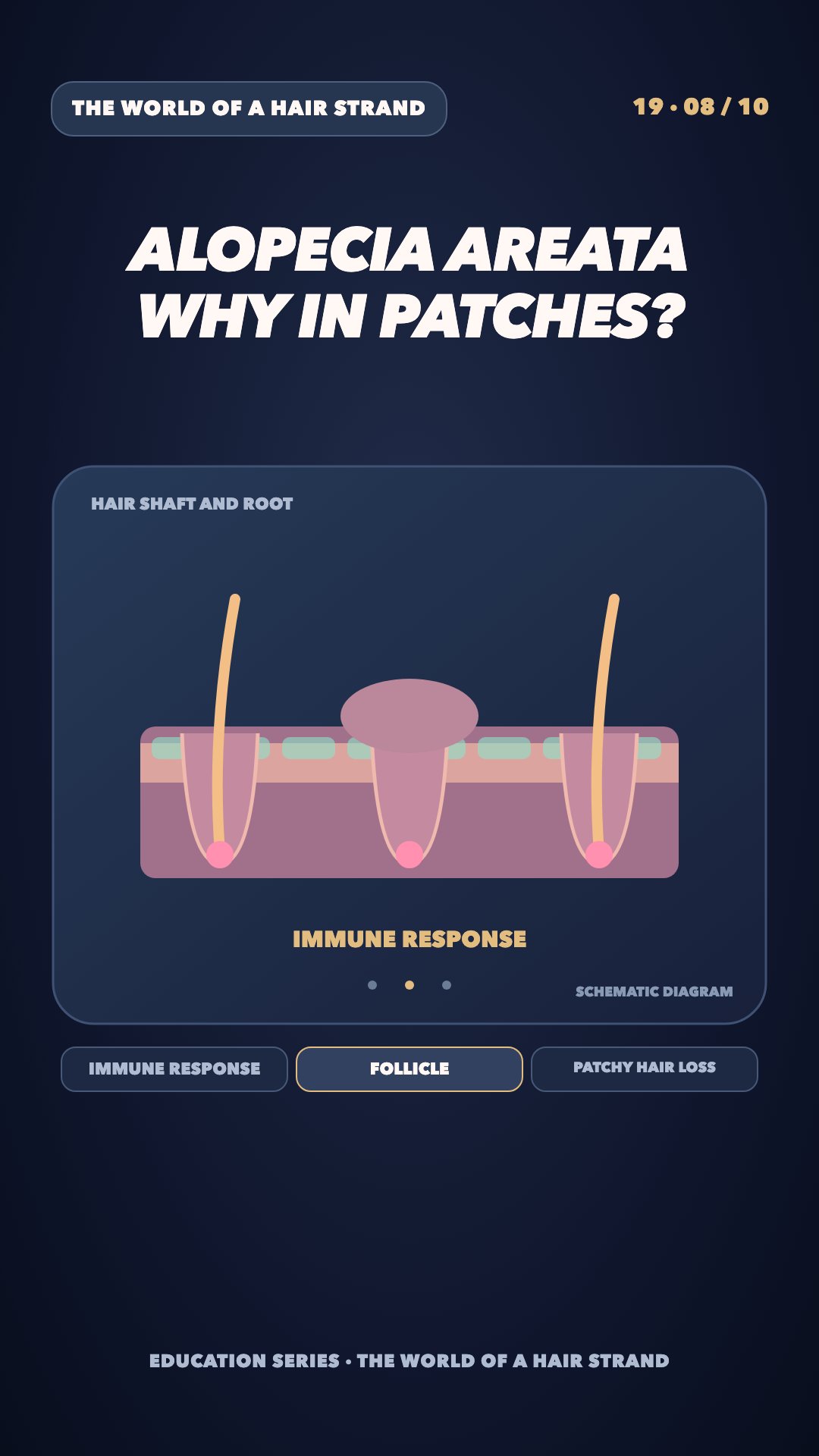
How long shedding has lasted, where it began and changes on the scalp can offer clues to its cause. Sudden patchy hair loss, marked redness or steadily increasing thinning should not be left unassessed. The same tests or treatments are not appropriate for everyone. Understanding the pattern of loss and any accompanying conditions is the basis for choosing an approach.

Cosmetics Guide01

Are fragrance-free and unscented the same?

Reading Cosmetics Labels

English narration and captions

English transcript and sources

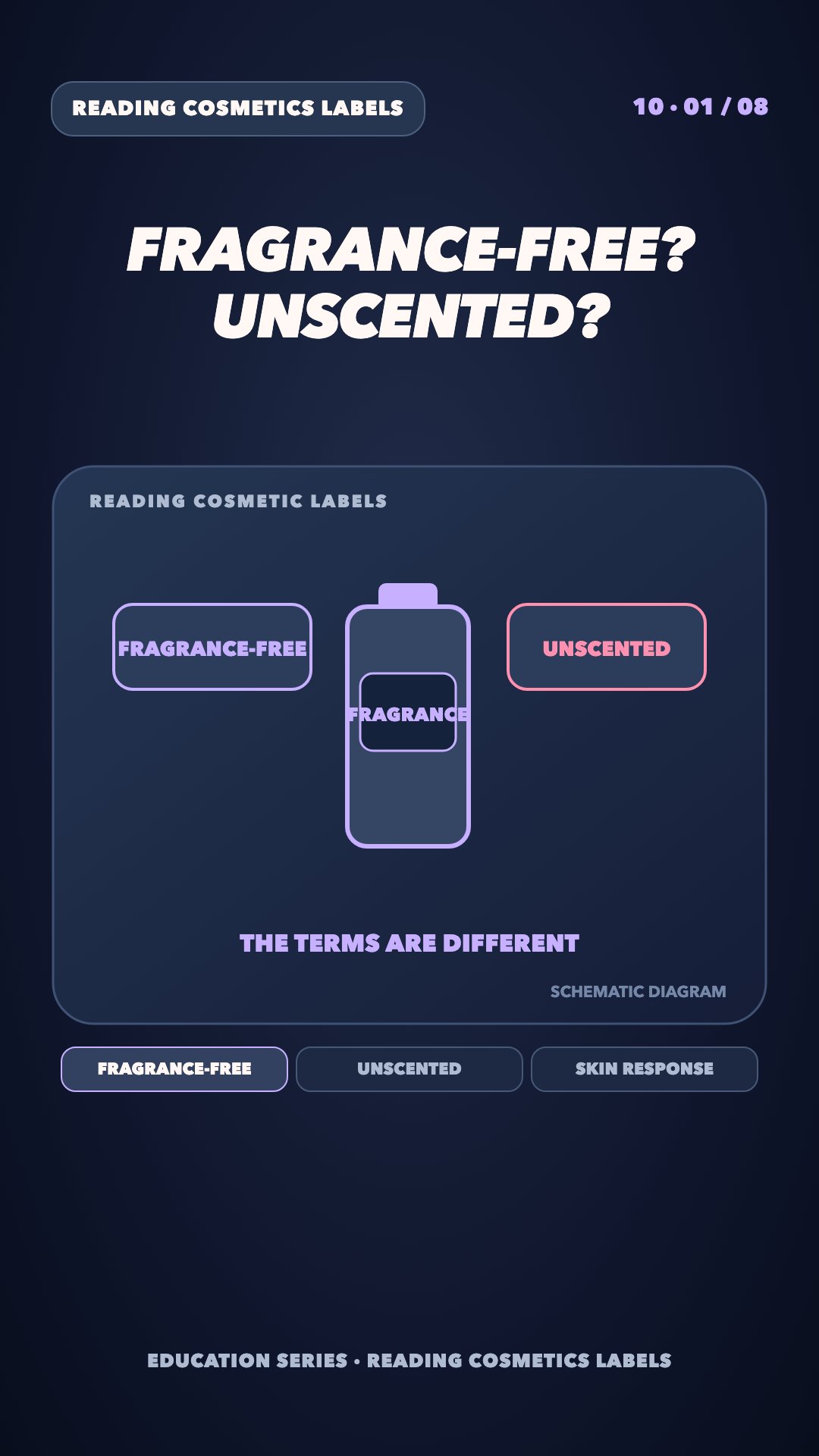
An unscented product may contain ingredients that mask an odour. 'Fragrance-free' means avoiding added fragrance ingredients. This distinction can matter especially for sensitive or easily irritated skin. Even so, a single label claim cannot guarantee that a product will suit everyone; check the ingredient list and how your skin responds.

Cosmetics Guide02

What does hypoallergenic actually guarantee?

Reading Cosmetics Labels

English narration and captions

English transcript and sources

A product labelled 'hypoallergenic' cannot be assumed to cause no allergies in anyone. People react to different substances, and the entire formula matters. In particular, the US Food and Drug Administration does not define this term as a guarantee of zero allergy risk. If you have reacted before, checking the ingredients and testing a new product on a small area is more useful.
Cosmetics Guide03

What does non-comedogenic mean?

Reading Cosmetics Labels

English narration and captions

English transcript and sources

'Non-comedogenic' describes a product designed to be less likely to clog pores. It is a useful clue when choosing for acne-prone skin, but it does not guarantee that no one will develop pimples. The whole formula, amount applied and individual skin response affect the result. Look beyond one word to your actual experience with the product.

Cosmetics Guide04

Is a higher ingredient percentage always better in a serum?

Reading Cosmetics Labels

English narration and captions

English transcript and sources

A high percentage on a serum does not, by itself, mean better results. The active ingredient's formulation, how it reaches the skin, how often it is used and its potential to irritate also matter. A higher concentration may sometimes cause only more sensitivity. When comparing products, consider your skin's tolerance and your goal as well as the number.

Cosmetics Guide05

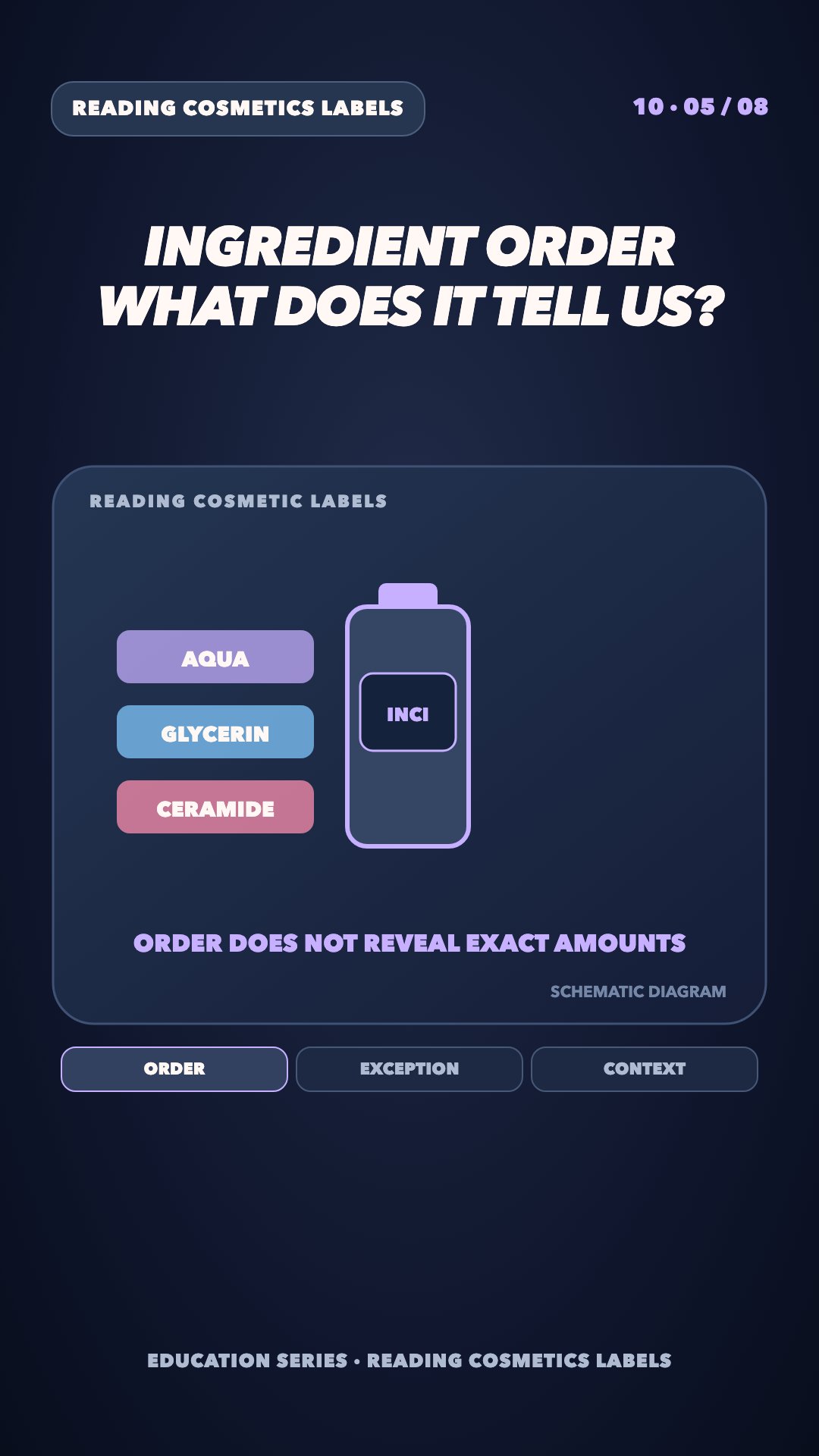
What does the order of an ingredient list tell us?

Reading Cosmetics Labels

English narration and captions

English transcript and sources

Ingredients are usually listed from the largest to the smallest amount, although exceptions may apply to low-concentration ingredients. The order gives clues about the overall formula but does not reveal each exact percentage or effect. An ingredient near the end is not automatically ineffective. The label needs to be read in context.

Cosmetics Guide06

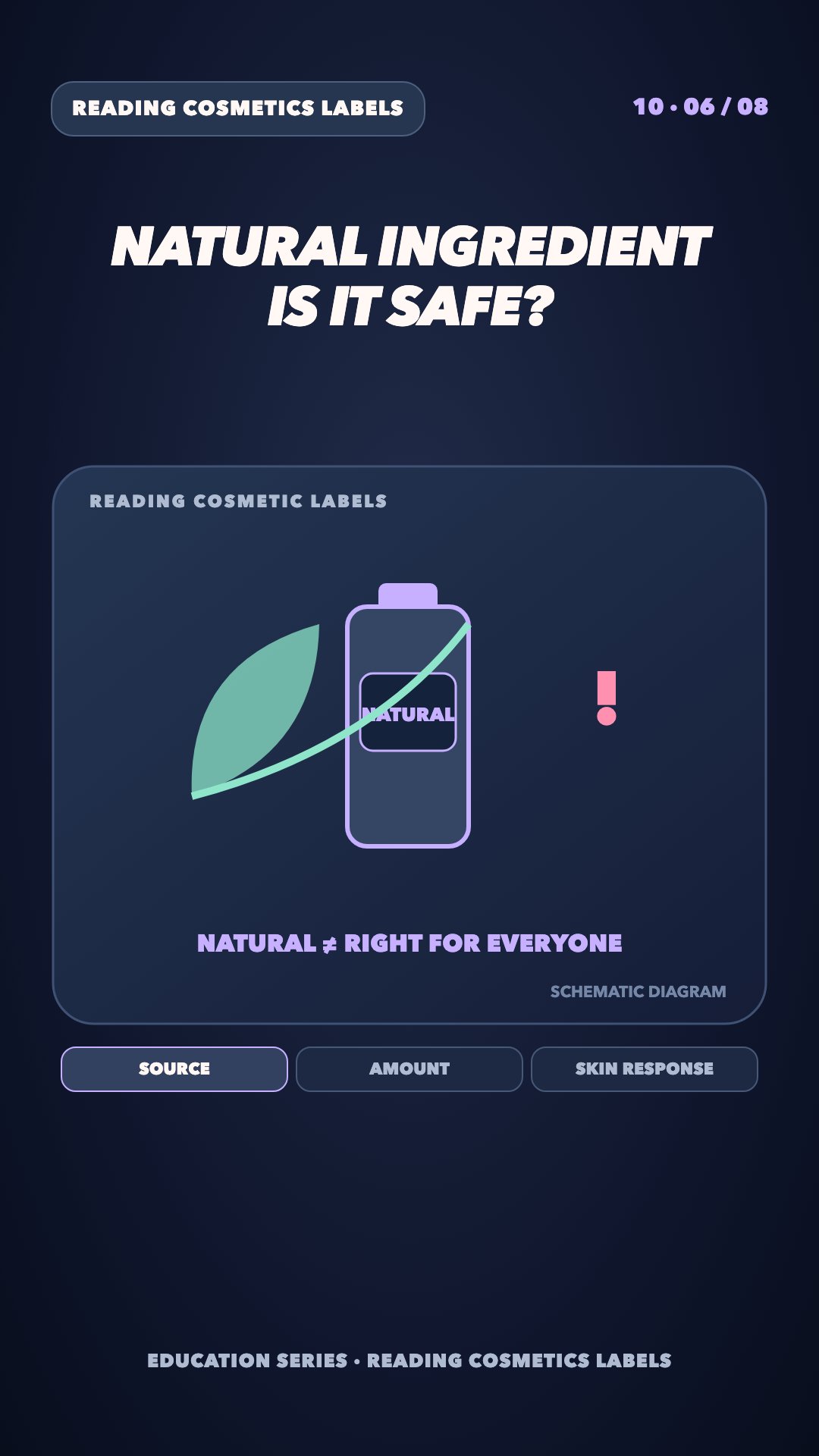
Are natural ingredients right for every skin type?

Reading Cosmetics Labels

English narration and captions

English transcript and sources

Being derived from a plant does not guarantee that a substance is safe for everyone. Botanical extracts and fragrances can also cause sensitivity or allergic reactions. Likewise, a laboratory-made substance is not harmful simply because it was made there. What matters more than its source is the ingredient itself, its amount and how the product is used on the skin.

Cosmetics Guide07

Why is trying several new products at once confusing?

Reading Cosmetics Labels

English narration and captions

English transcript and sources

Adding several new products to a routine on the same day makes it harder to tell which one helps or irritates your skin. Layering active ingredients in particular can be demanding on the skin. Trying products one at a time and on a small area makes your skin's response easier to understand. A complex routine is not always a more effective one.

Cosmetics Guide08

How can you tell how long an opened product lasts?

Reading Cosmetics Labels

English narration and captions

English transcript and sources

Some cosmetic packages show an open-jar symbol with a label such as '12M'; this indicates the recommended period of use in months after opening. Storage conditions also matter. If the smell, colour or texture has changed noticeably, do not rely only on the calendar. Check the product's own label and storage instructions.

Skin Health01

What do the skin's three main layers do?

The Invisible World of Skin

English narration and captions

English transcript and sources

Looking closely at your skin, you can see only its surface. The epidermis forms the outer boundary; the dermis contains blood vessels, nerves and connective tissue. The fatty tissue below contributes cushioning and insulation. These layers work together. Understanding a small change on the surface may sometimes require looking deeper.

Skin Health02

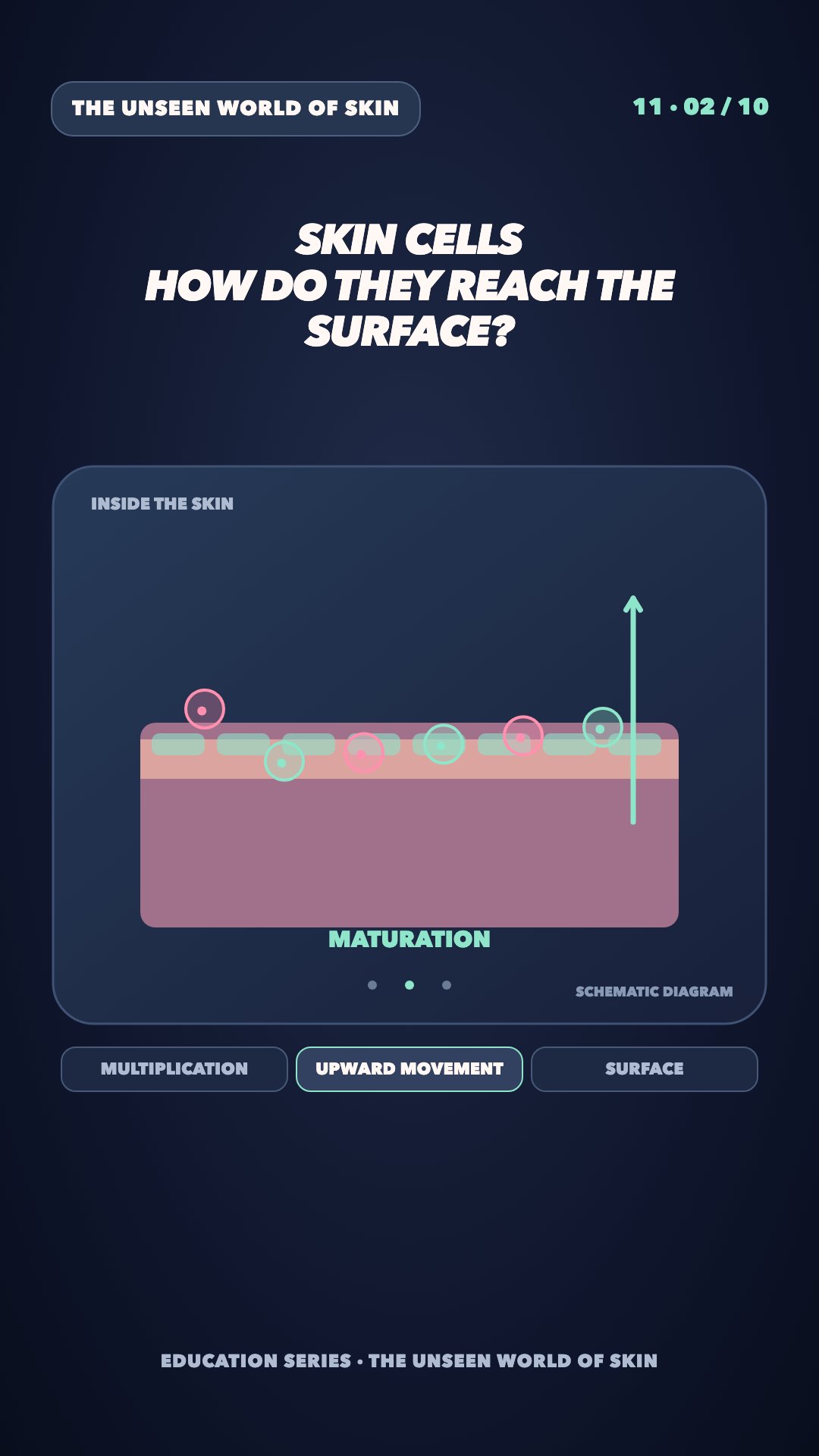
How do skin cells reach the surface?

The Invisible World of Skin

English narration and captions

English transcript and sources

The skin surface is not always made up of the same cells. Keratinocytes multiplying in a lower layer move upward over time, changing their form and function. At the outside they become part of the protective layer and eventually shed from the surface. The pace of this cycle is not identical for everyone. An exfoliating treatment does not renew the whole skin overnight.

Skin Health03

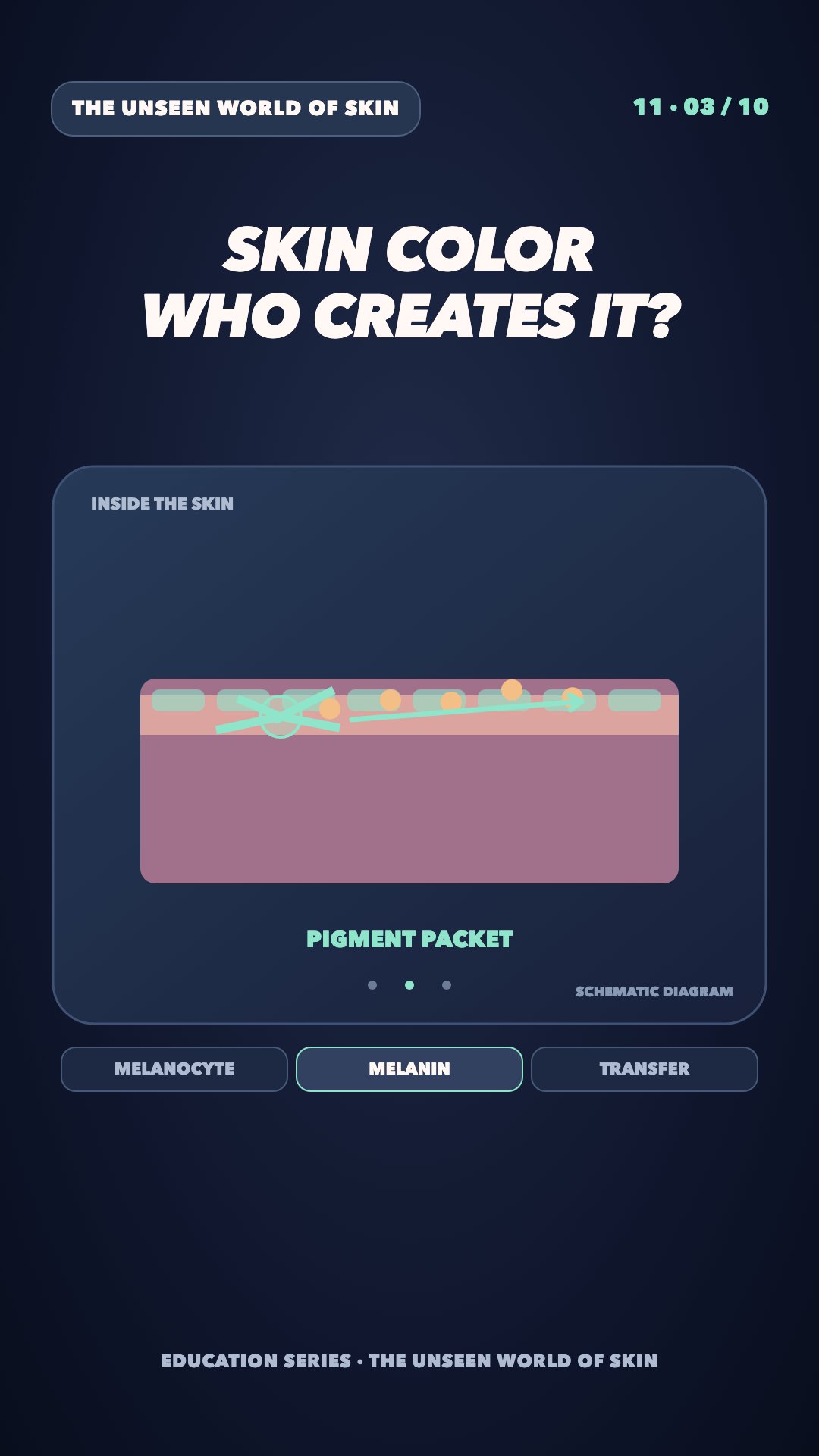
How do melanocytes determine skin color?

The Invisible World of Skin

English narration and captions

English transcript and sources

Melanocytes are important players in skin colour. These cells produce a pigment called melanin and pass it to surrounding cells in small packets. Colour is not determined by cell count alone; the type, amount and distribution of pigment also matter. Changes in colour after sun exposure are one of this system's responses.

Skin Health04

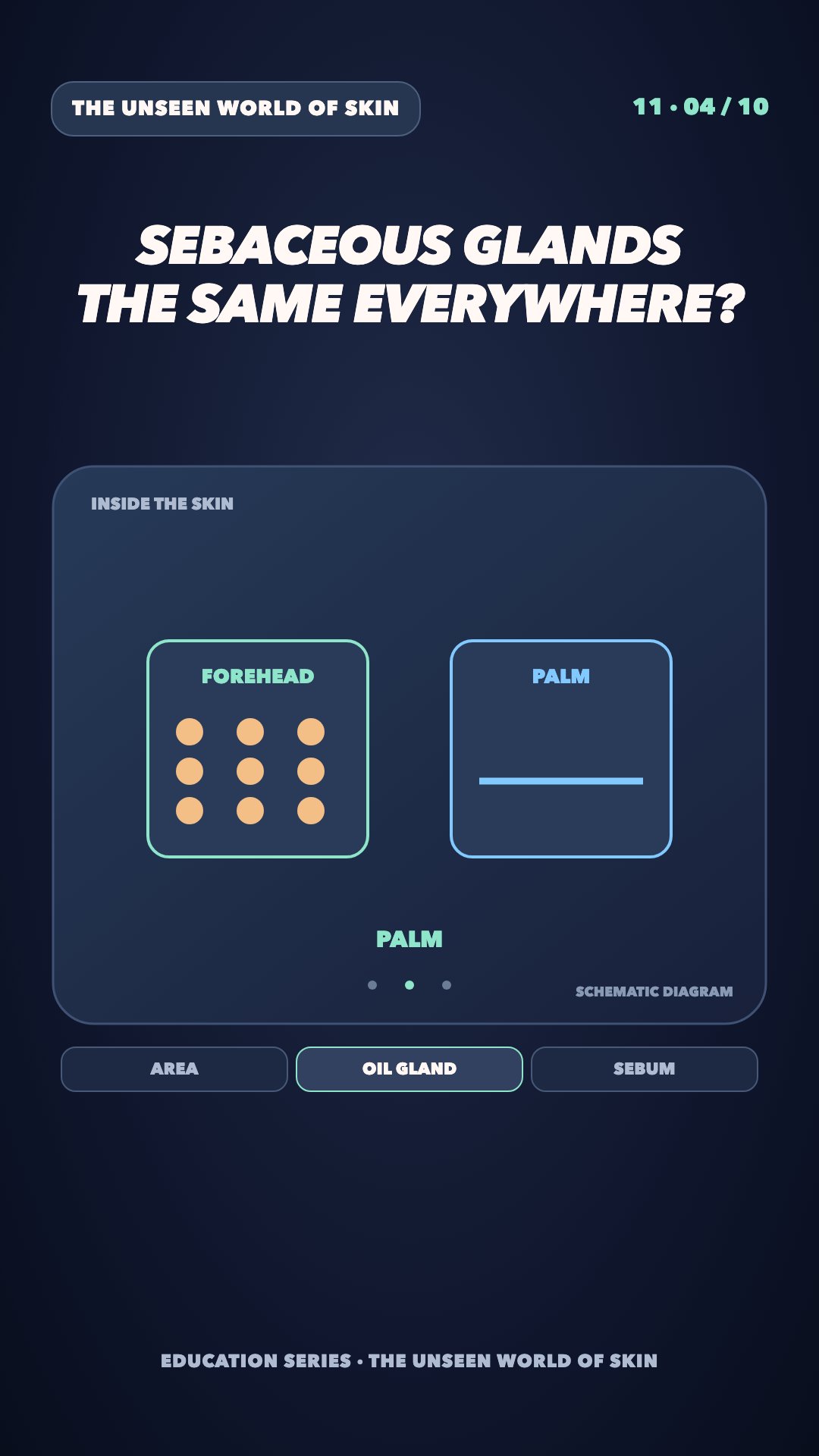
Are oil glands the same throughout the body?

The Invisible World of Skin

English narration and captions

English transcript and sources

One reason your forehead and palm look different is their oil glands. These glands are more concentrated in some areas of the face and body, and are absent from the palms and soles. The sebum they produce contributes to the oily components of the skin surface. Oiliness in one area therefore does not mean the whole body has the same care needs.

Skin Health05

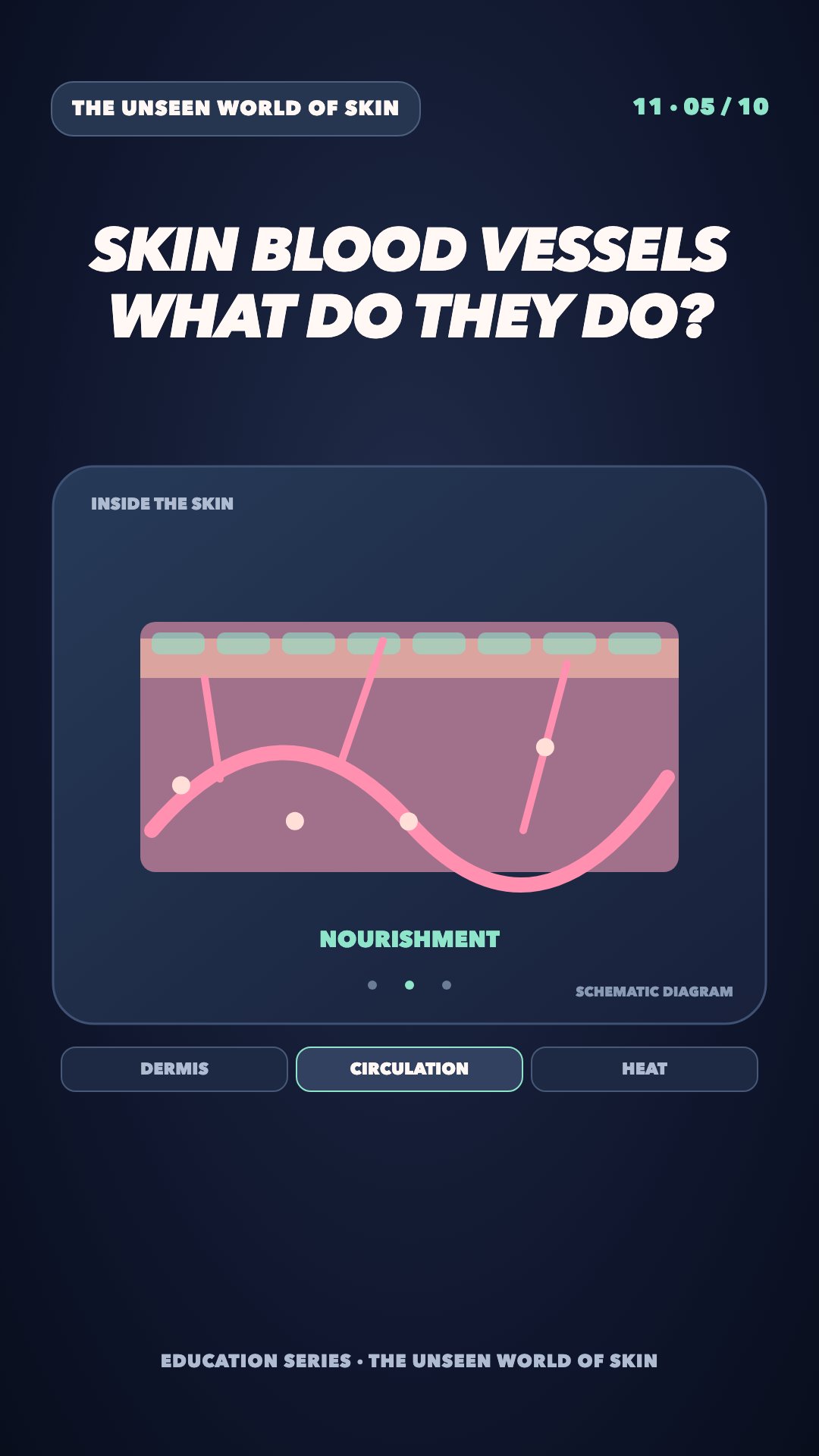
What do blood vessels in the skin do?

The Invisible World of Skin

English narration and captions

English transcript and sources

There are no blood vessels in the outermost layer of skin. The network of vessels in the dermis beneath it helps nourish tissue and regulate heat. As these vessels widen and narrow, skin colour and temperature can change. Redness is therefore more than a surface colour change; circulation contributes to its appearance.

Skin Health06

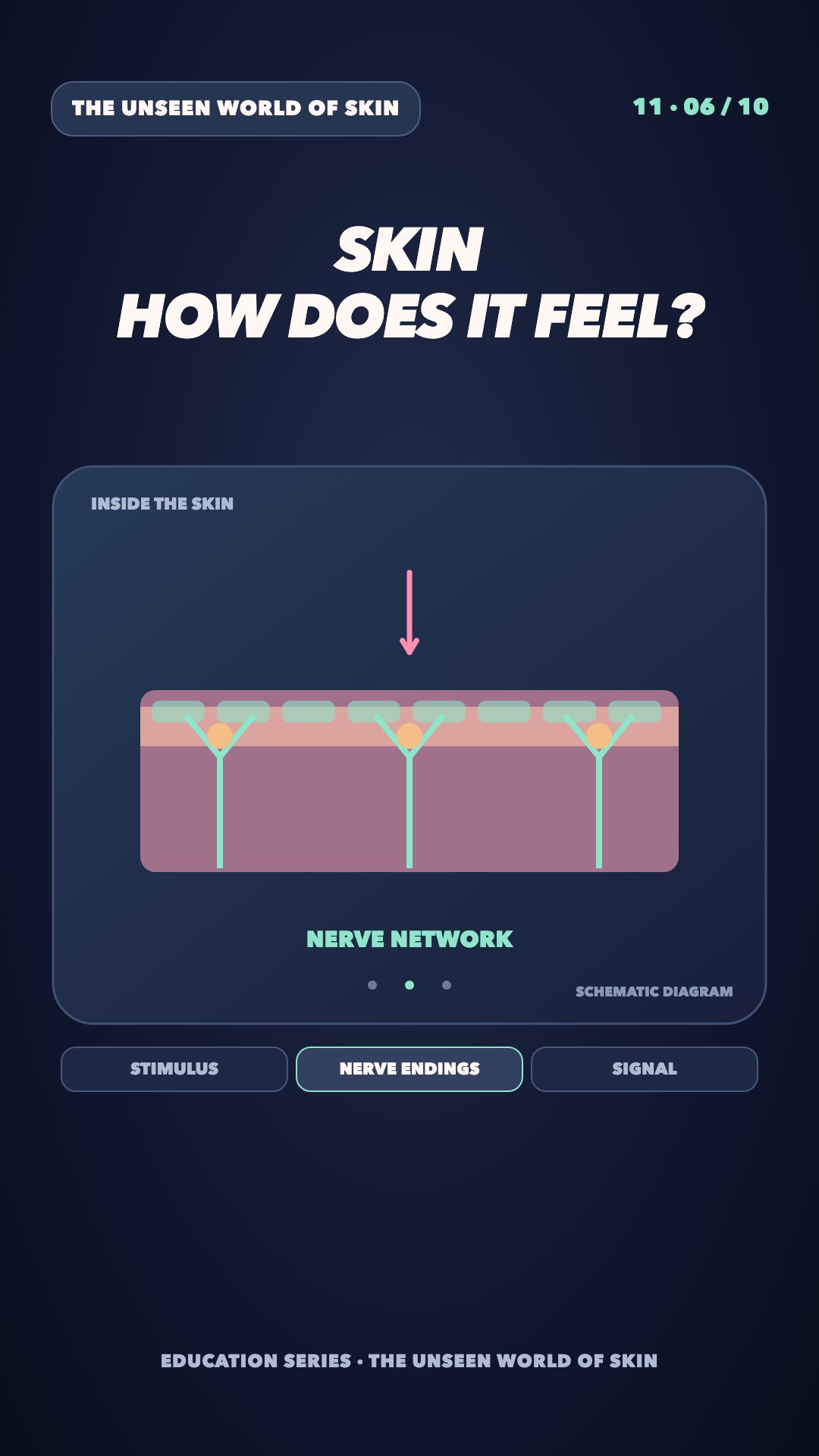
How does skin sense heat and touch?

The Invisible World of Skin

English narration and captions

English transcript and sources

When you touch a surface, your skin does more than make contact: it gathers information for the nervous system. Different nerve endings and sensory structures help generate signals for touch, pressure, temperature and pain. Nerves carry those signals and the brain interprets them. That is why not every stimulus at the same spot feels the same.

Skin Health07

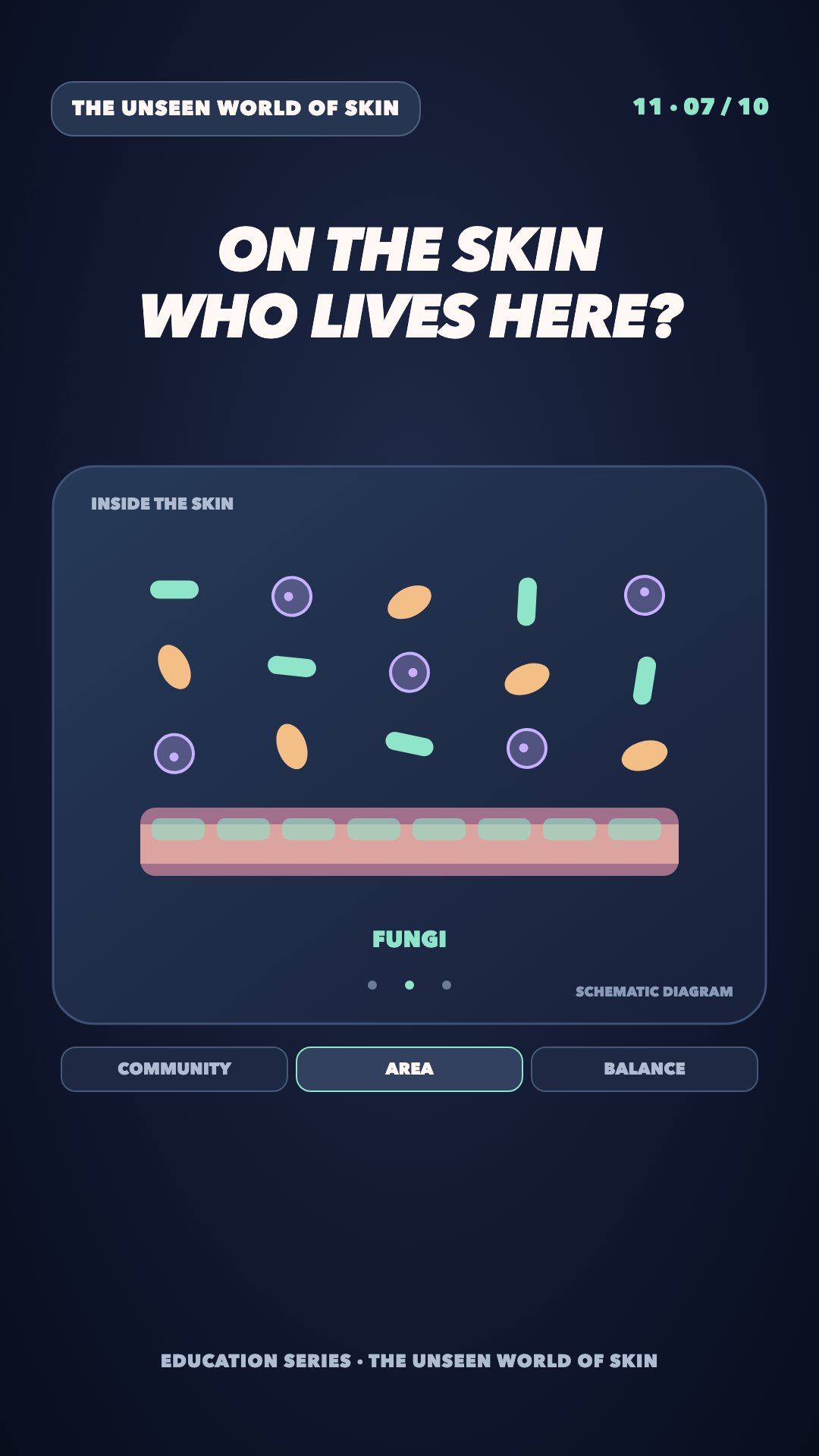
What is the skin microbiome?

The Invisible World of Skin

English narration and captions

English transcript and sources

The skin surface is home to more than dirt. Bacteria, fungi and other microorganisms are natural inhabitants of this environment. This community is called the skin microbiome. Its distribution differs across oily, dry and moist areas. The presence of a microorganism alone does not mean disease; skin conditions and the community's balance also matter.

Skin Health08

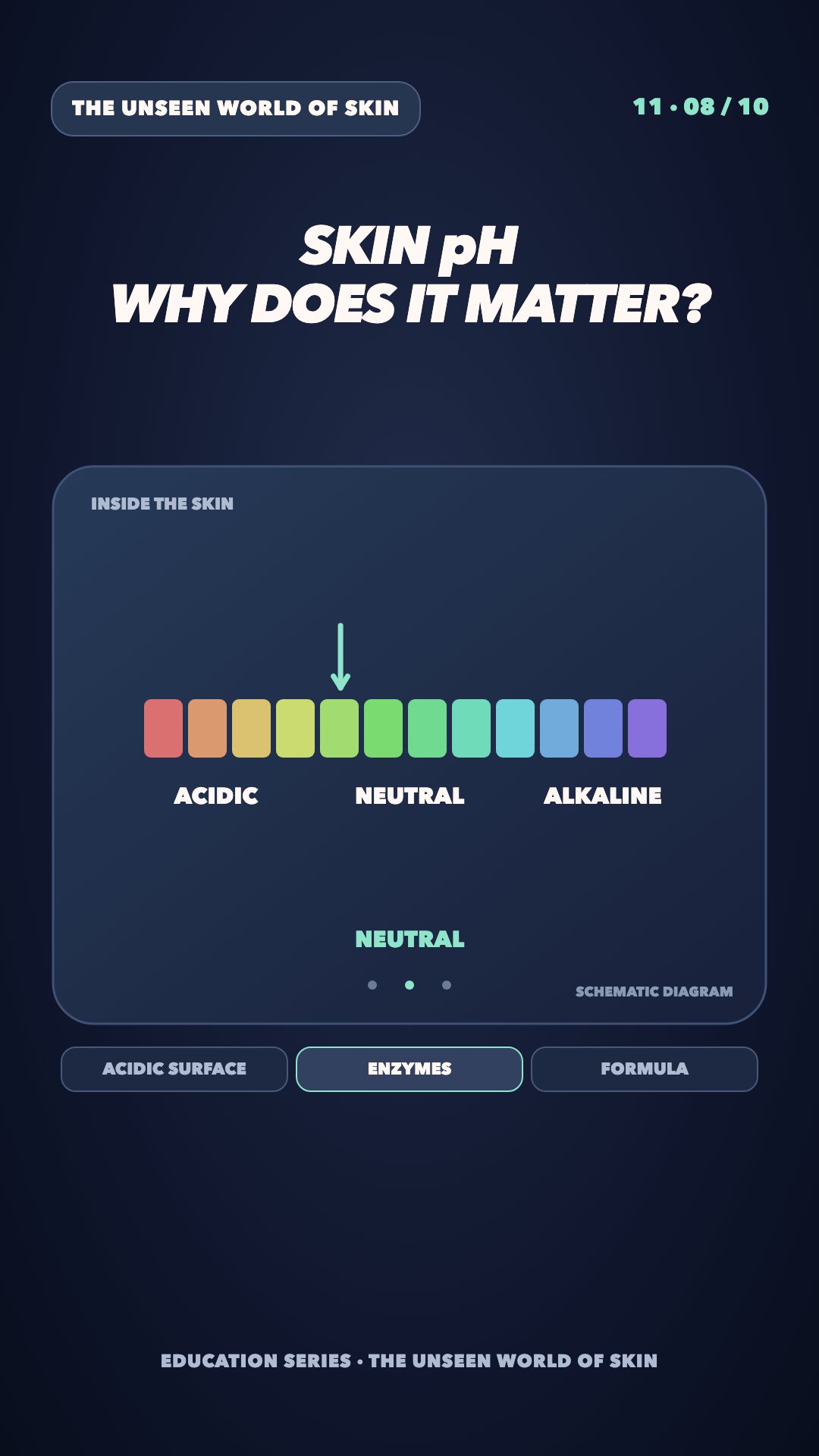
Why do we talk about skin pH?

The Invisible World of Skin

English narration and captions

English transcript and sources

The skin surface is generally slightly acidic. This environment supports the activity of some barrier enzymes and interactions with microorganisms. But pH is not the only measure of skin health. Choosing a cleanser solely by the number printed on it is not enough; the whole formula and how it feels on your skin also matter.

Skin Health09

What causes goosebumps?

The Invisible World of Skin

English narration and captions

English transcript and sources

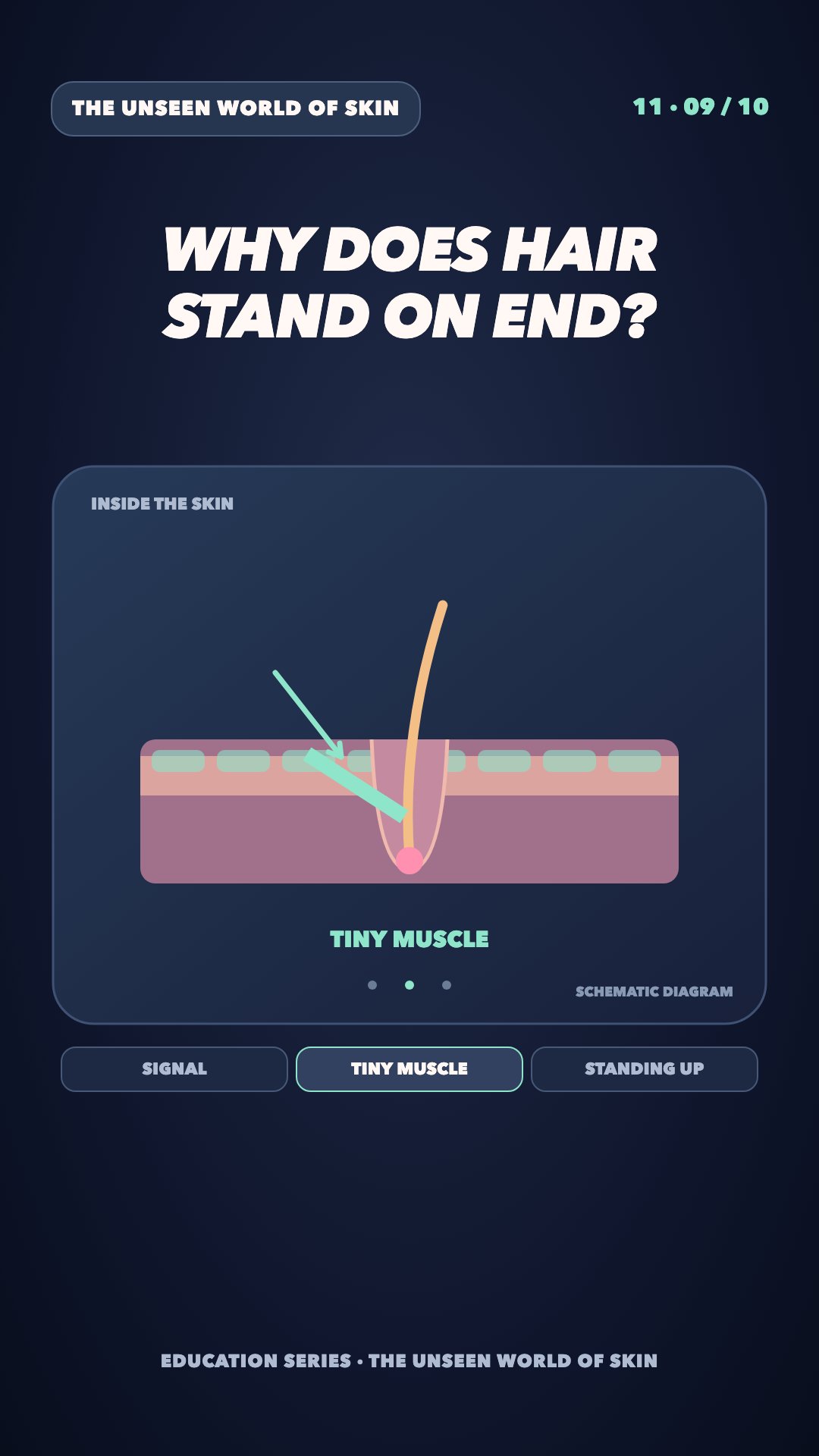
When you feel cold or a strong emotion, your hairs may stand up. Tiny muscles attached to hair follicles contract under the influence of the nervous system. This brings the hairs into a more upright position and makes small bumps on the skin. You are not seeing new hairs grow, but a brief movement of existing structures.

Skin Health10

Why do fingers wrinkle in water?

The Invisible World of Skin

English narration and captions

English transcript and sources

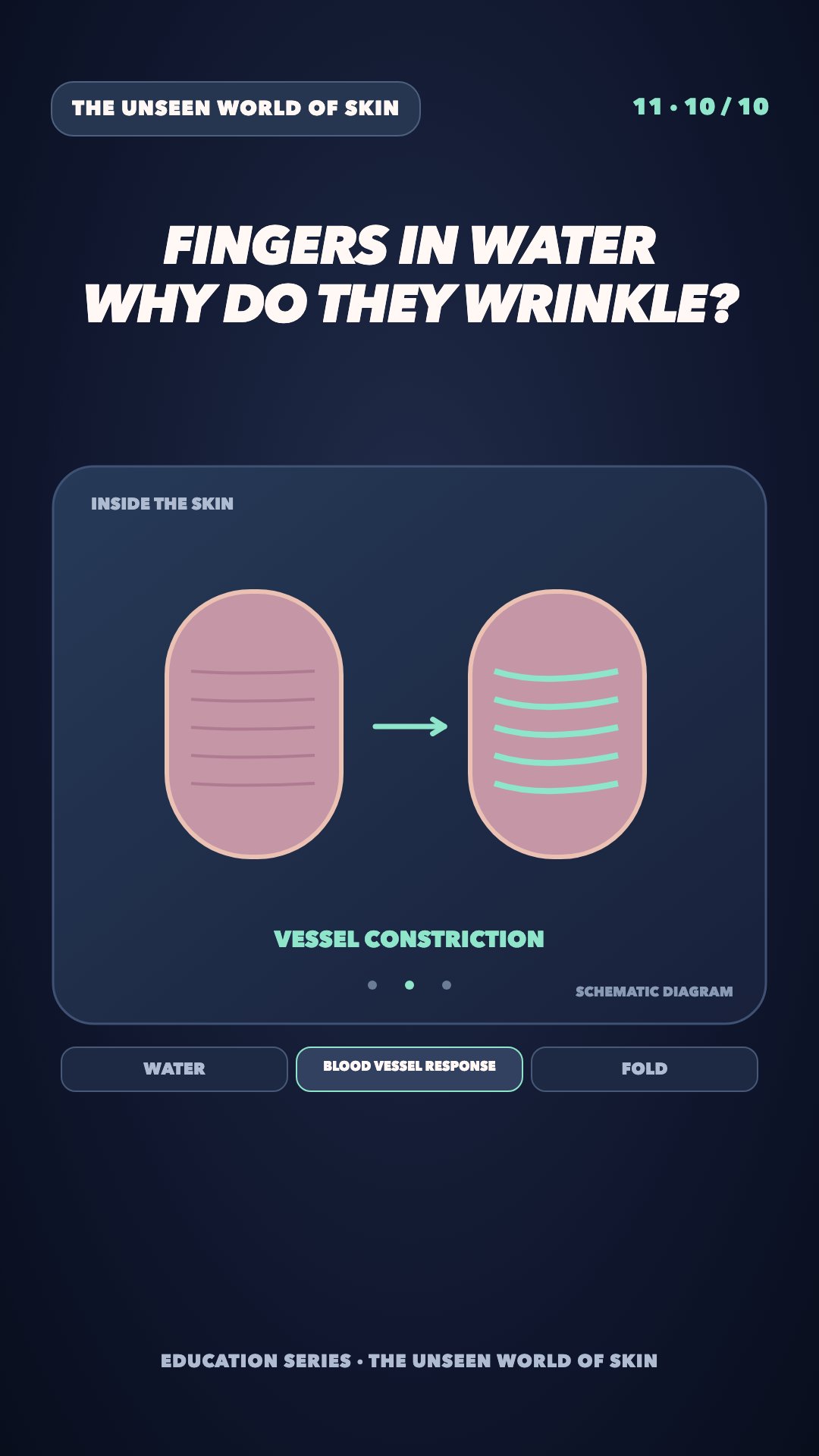
Finger wrinkling after a long time in water cannot be explained only by the skin absorbing water. The nervous system and narrowing of blood vessels in the fingers also contribute. The idea that wrinkling helps grip wet surfaces has been studied, but not all studies show this function in the same way. How the appearance arises and what purpose it might serve are different questions.

Ingredient Guide01

Why is niacinamide used in skincare?

A Closer Look at Ingredients

English narration and captions

English transcript and sources

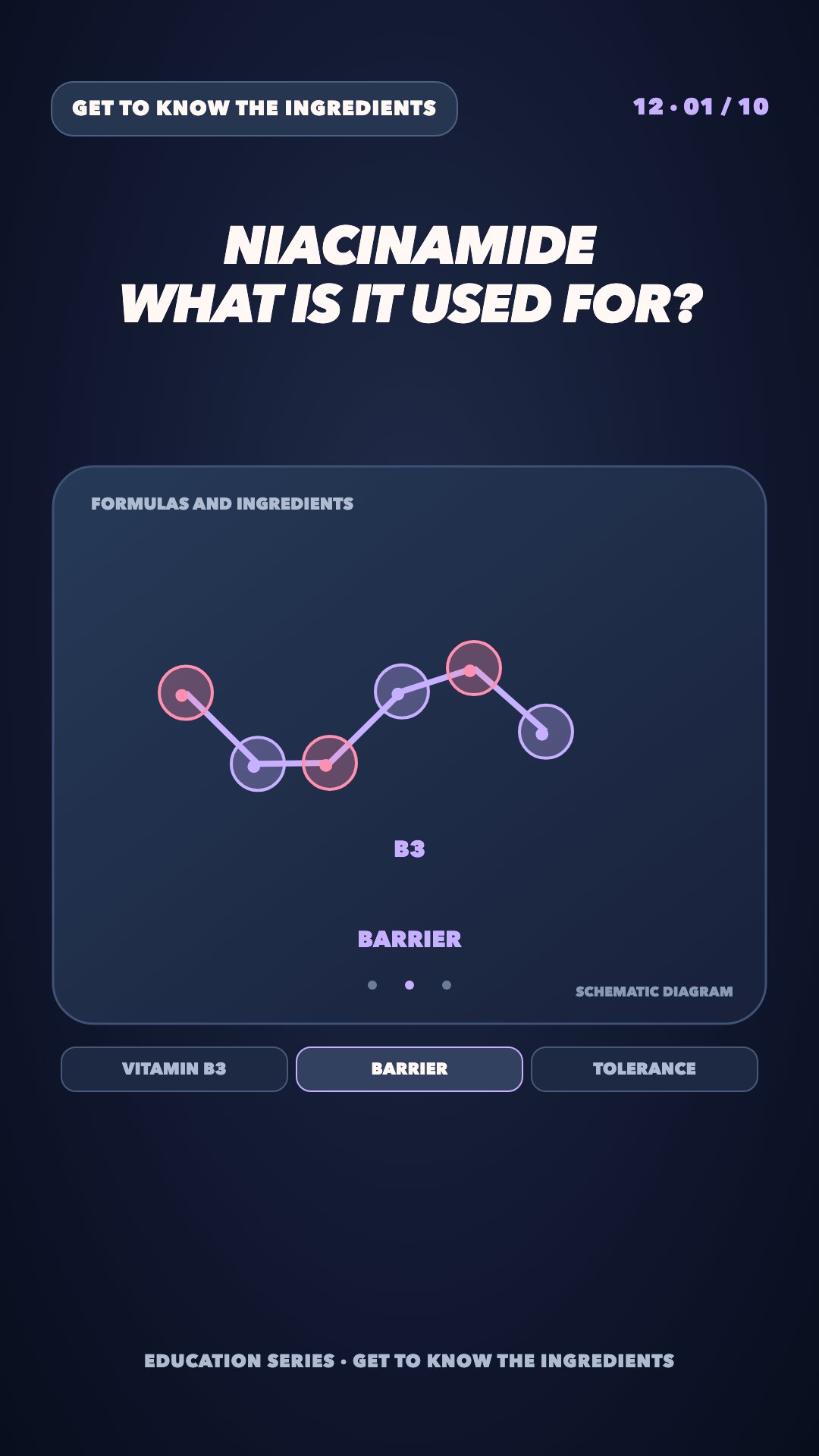
Niacinamide is a form of vitamin B3. In skincare products it is used for several purposes, including supporting the barrier and addressing redness or uneven tone. The effects studied depend on the formula and conditions of use. Seeing its name on a label is not enough to expect the same result for everyone. How well your skin tolerates the product matters as much as the concentration.

Ingredient Guide02

Why does formulation matter in vitamin C serums?

A Closer Look at Ingredients

English narration and captions

English transcript and sources

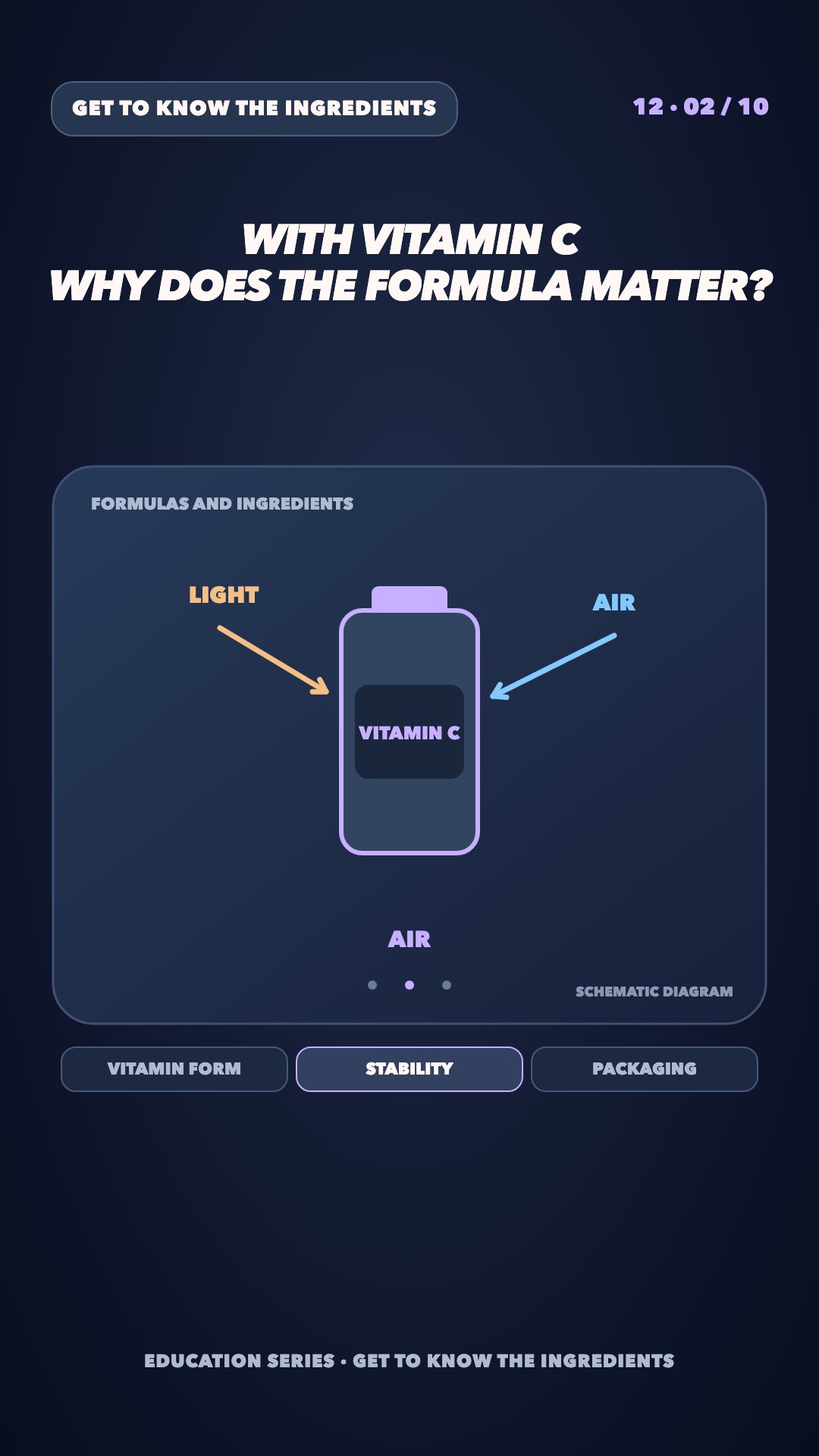
The percentage is not the only thing to consider in a vitamin C serum. The form of vitamin, product stability and delivery into the skin affect the result. Light and air can degrade some formulas, so packaging and storage conditions matter. An antioxidant serum also does not replace sunscreen; they have different roles in skincare.

Ingredient Guide03

What is azelaic acid used for?

A Closer Look at Ingredients

English narration and captions

English transcript and sources

Azelaic acid is one of the ingredients used for acne and some forms of rosacea. It can affect inflammation and the build-up of cells in follicles, and may also be considered for pigmentation concerns. But not all redness or dark spots have the same cause. Knowing an ingredient's name is not the same as diagnosing yourself; whether it is suitable depends on your skin's condition.

Ingredient Guide04

How do salicylic and glycolic acids differ?

A Closer Look at Ingredients

English narration and captions

English transcript and sources

Salicylic acid and glycolic acid are different ingredients that affect the shedding of surface cells. Salicylic acid is oil-soluble and often used in acne-prone skincare. Glycolic acid belongs to the alpha hydroxy acid group. Their different names do not mean combining them suits everyone. Concentration, formula and the potential for irritation need to be considered together.

Ingredient Guide05

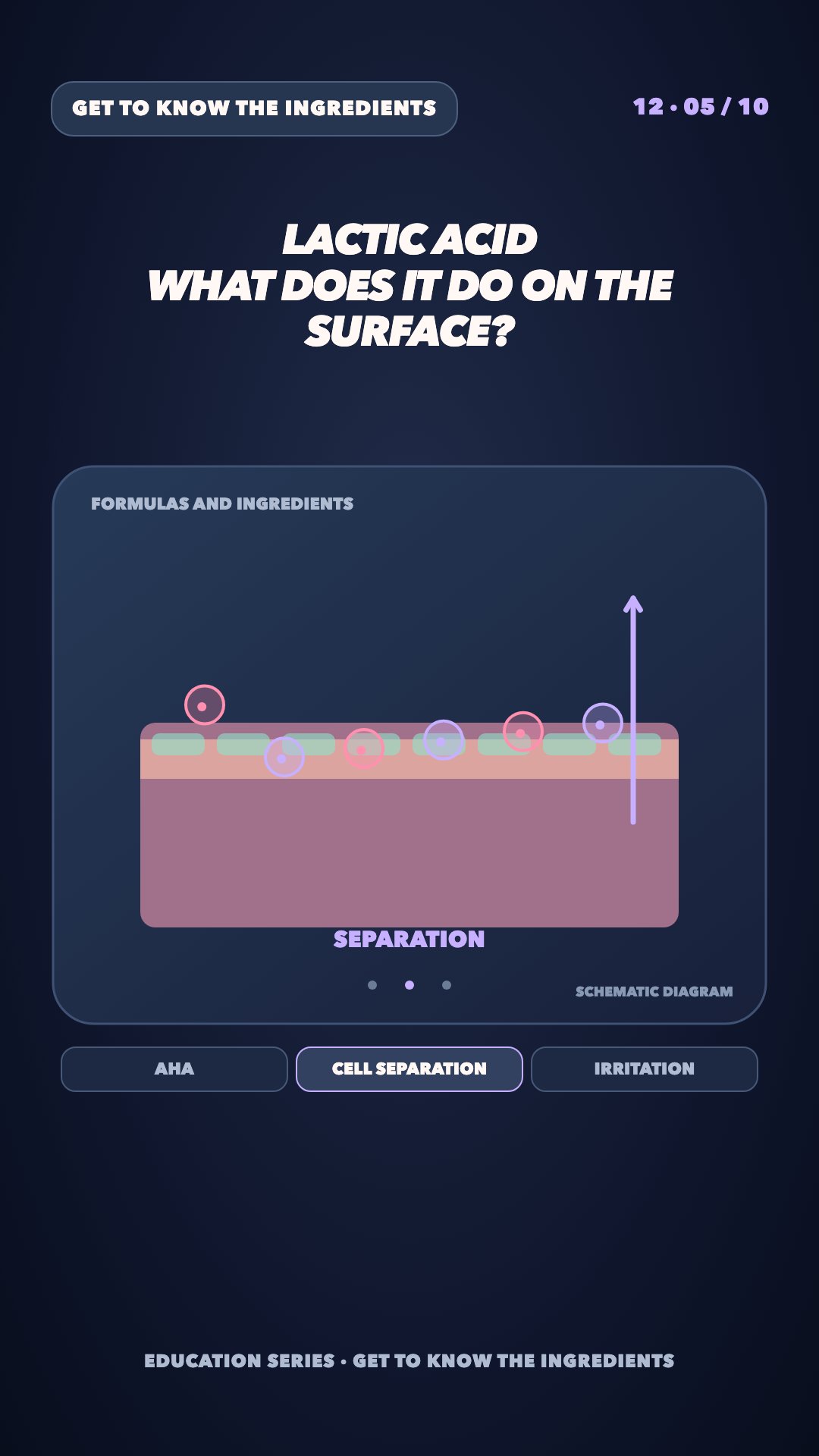
What does lactic acid do in skincare?

A Closer Look at Ingredients

English narration and captions

English transcript and sources

Lactic acid is an alpha hydroxy acid. In a suitable formula, it can help surface skin cells separate from one another. Its effect depends on more than its name; concentration, pH and application time also matter. Applying more does not mean better care. If irritation develops, the approach to using it needs to be reconsidered.

Ingredient Guide06

What do different urea concentrations in creams mean?

A Closer Look at Ingredients

English narration and captions

English transcript and sources

Two creams containing urea may serve different purposes. At lower concentrations the moisture-retaining effect is more prominent, while higher concentrations may be used to soften a thickened surface. The intended body area and the skin's condition affect the choice. Rather than assuming a higher percentage is automatically better, consider the need the product was made to address.

Ingredient Guide07

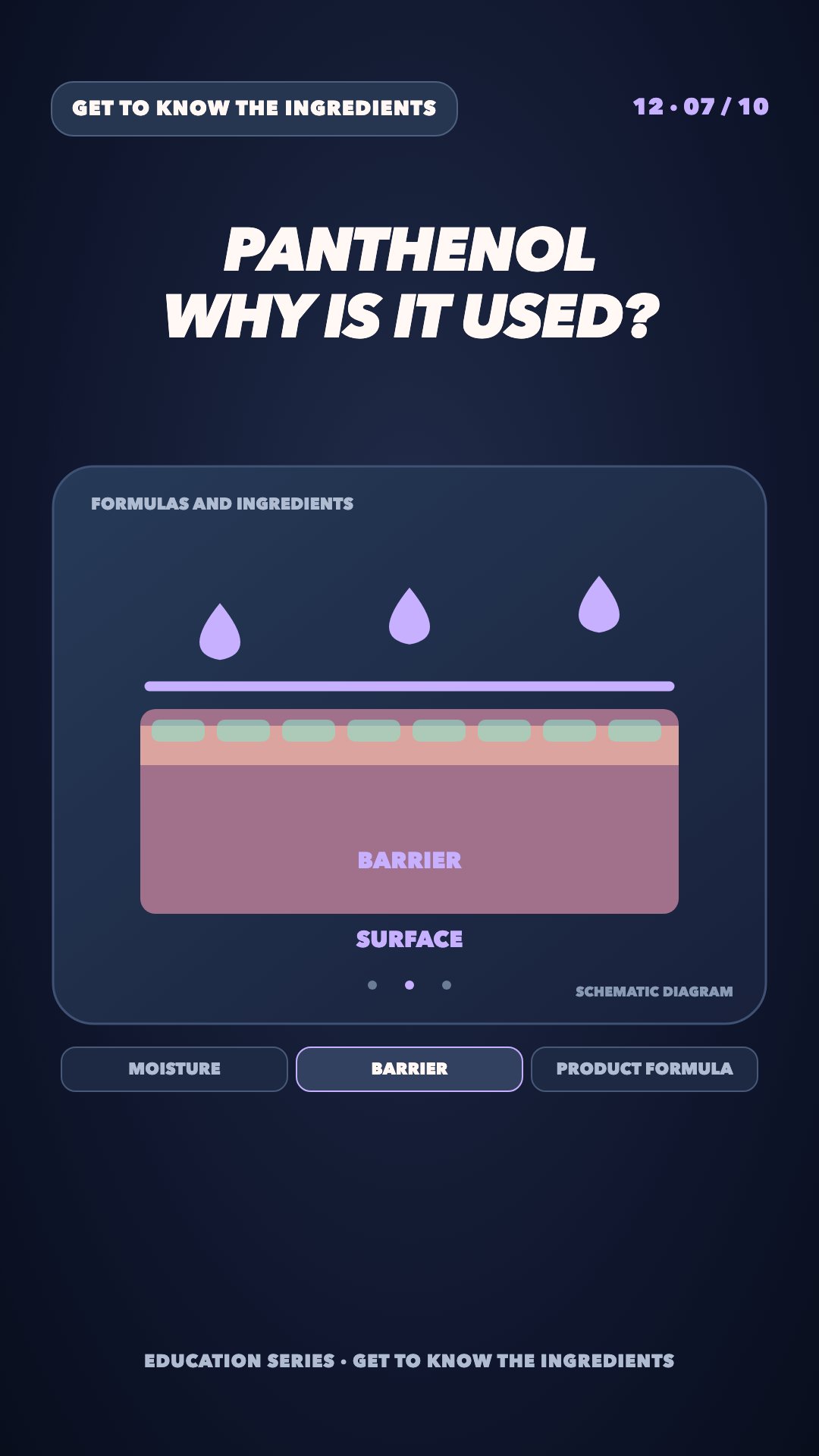
Why is panthenol used in skincare products?

A Closer Look at Ingredients

English narration and captions

English transcript and sources

Panthenol is a common skincare ingredient. Research on products containing dexpanthenol has examined their potential to support moisturising and barrier recovery. Those findings do not guarantee the same effect from every product. The skin's starting condition, other ingredients and how it is used together determine the real-world result.

Ingredient Guide08

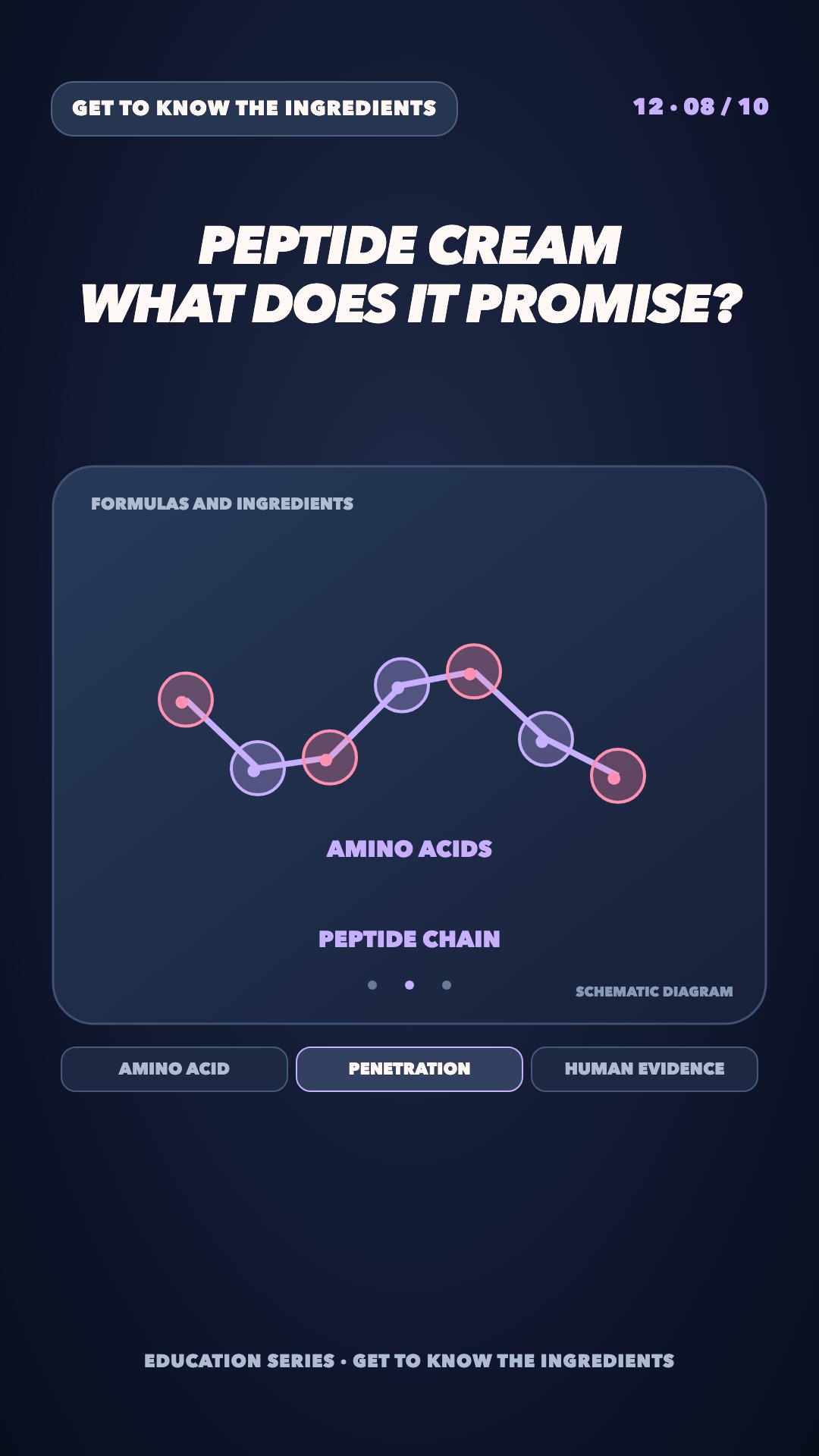
What can you expect from a peptide cream?

A Closer Look at Ingredients

English narration and captions

English transcript and sources

Peptides are short chains of amino acids. Different peptides are formulated for different cosmetic purposes. An effect shown for one peptide in a laboratory does not directly equal the outcome of an entire cream on human skin. Delivery into the skin and the product's clinical evidence matter too. One ingredient name does not mean wrinkles will definitely disappear.

Ingredient Guide09

What do antioxidants mean in skincare?

A Closer Look at Ingredients

English narration and captions

English transcript and sources

Antioxidants are substances that can limit the effects of molecules involved in oxidative processes. This makes them of interest in skincare. But an antioxidant ingredient does not mean a product can prevent every kind of damage. Stability, delivery into the skin and results from human studies also matter. A single serum cannot replace basic sun protection.

Ingredient Guide10

Why can the same ingredient work differently in two products?

A Closer Look at Ingredients

English narration and captions

English transcript and sources

Two products with the same ingredient are not necessarily equivalent. The ingredient's amount, chemical form, delivery system and other substances can change how it behaves. Packaging and conditions of use also matter, as does the individual's skin response. We therefore cannot transfer a research finding for one product to another based only on the ingredient name.

Skin Health01

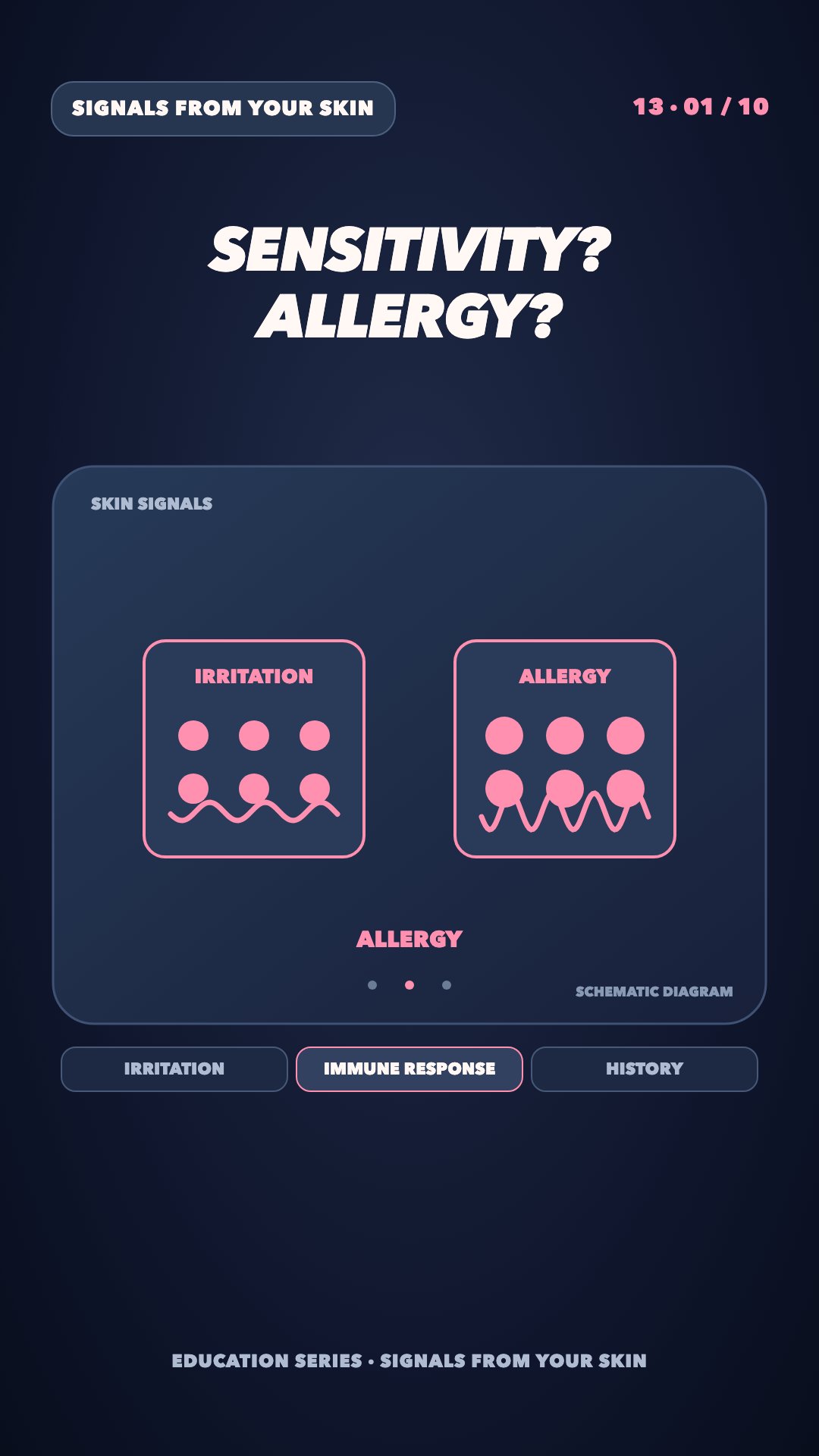
How can sensitive skin be distinguished from an allergic reaction?

Signals from Your Skin

English narration and captions

English transcript and sources

Stinging from a product does not necessarily mean an allergy. Irritation and allergic reactions can cause similar redness, but arise through different mechanisms. An immune response plays a role in allergy, and symptoms may begin after a delay. Appearance alone cannot reliably distinguish them. With repeated reactions, the history of products used and, when needed, patch testing can help.

Skin Health02

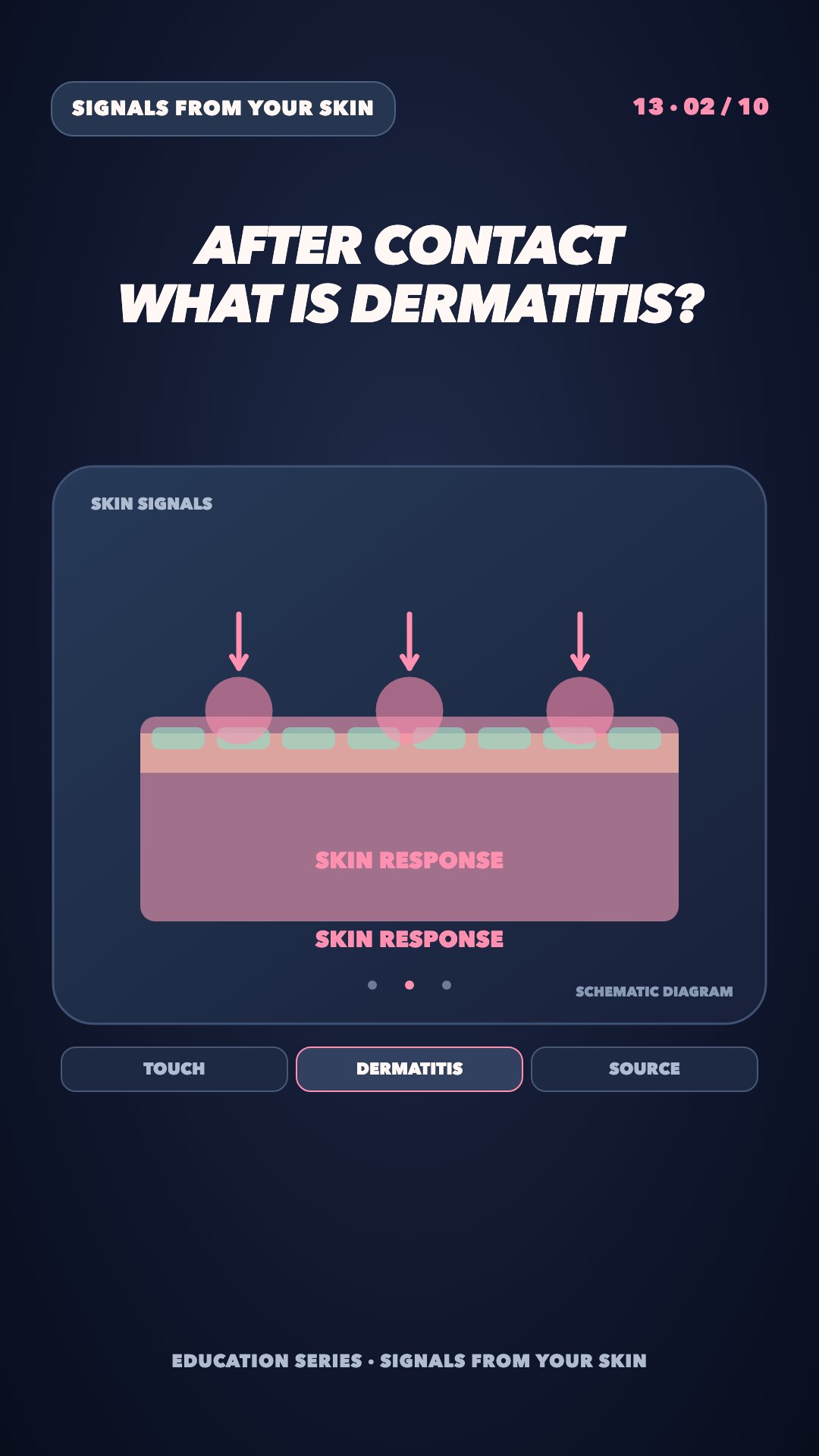
What is contact dermatitis?

Signals from Your Skin

English narration and captions

English transcript and sources

A substance in contact with the skin can cause redness, itching and scaling. This is called contact dermatitis. Sometimes the substance irritates the skin directly; in other cases an allergic response develops. The location of the rash and products used offer important clues. Finding the source of contact, rather than only suppressing redness, matters for reducing recurrence.

Skin Health03

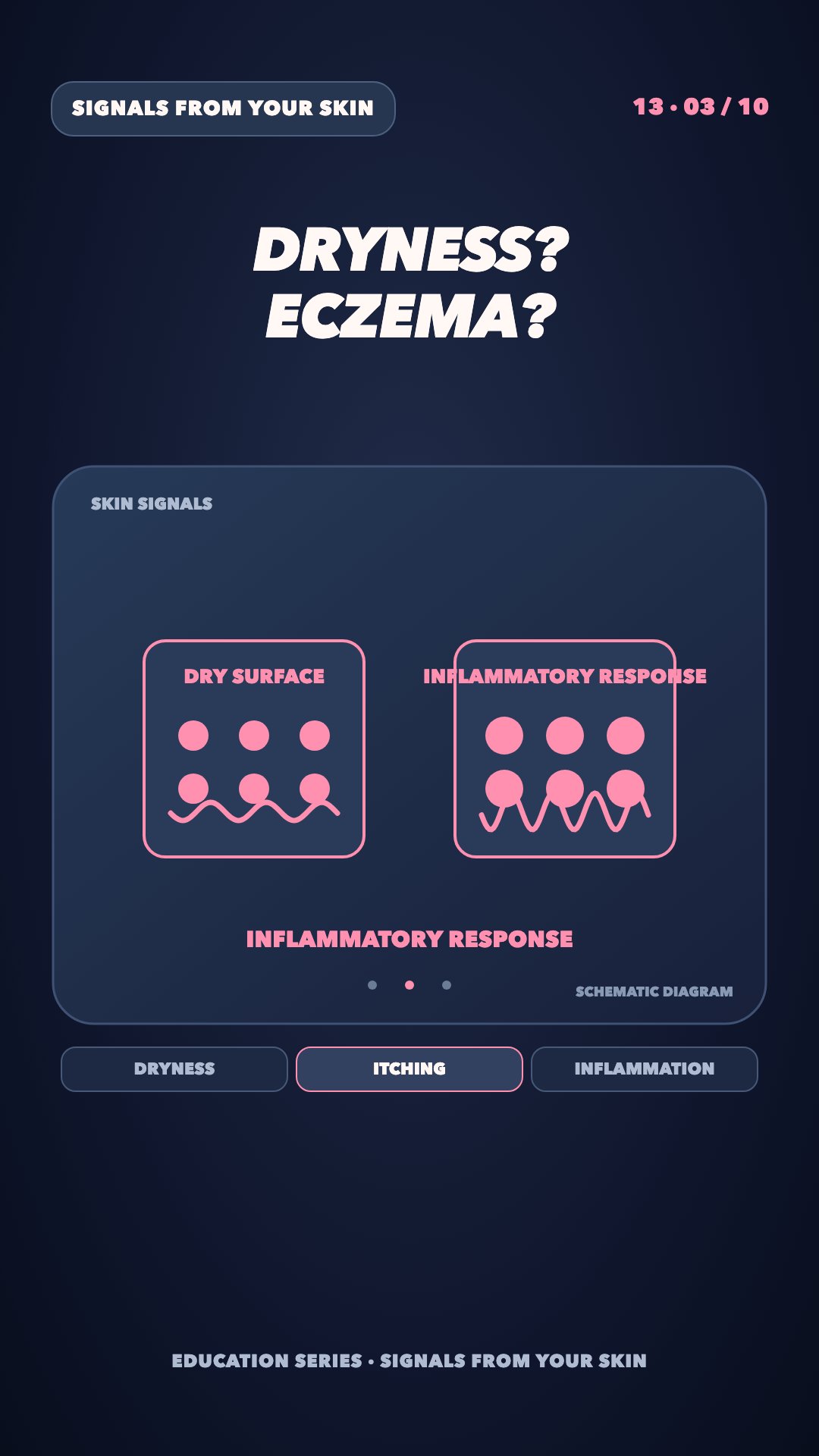
What is the difference between eczema and ordinary dryness?

Signals from Your Skin

English narration and captions

English transcript and sources

Dry skin may feel tight and appear flaky. With eczema, itching and inflammatory changes may also occur, including redness, cracking or periodic flares. The two are not completely unrelated, but not every dry area is eczema. When itching persists or a rash recurs, understanding the cause should come before choosing care.

Skin Health04

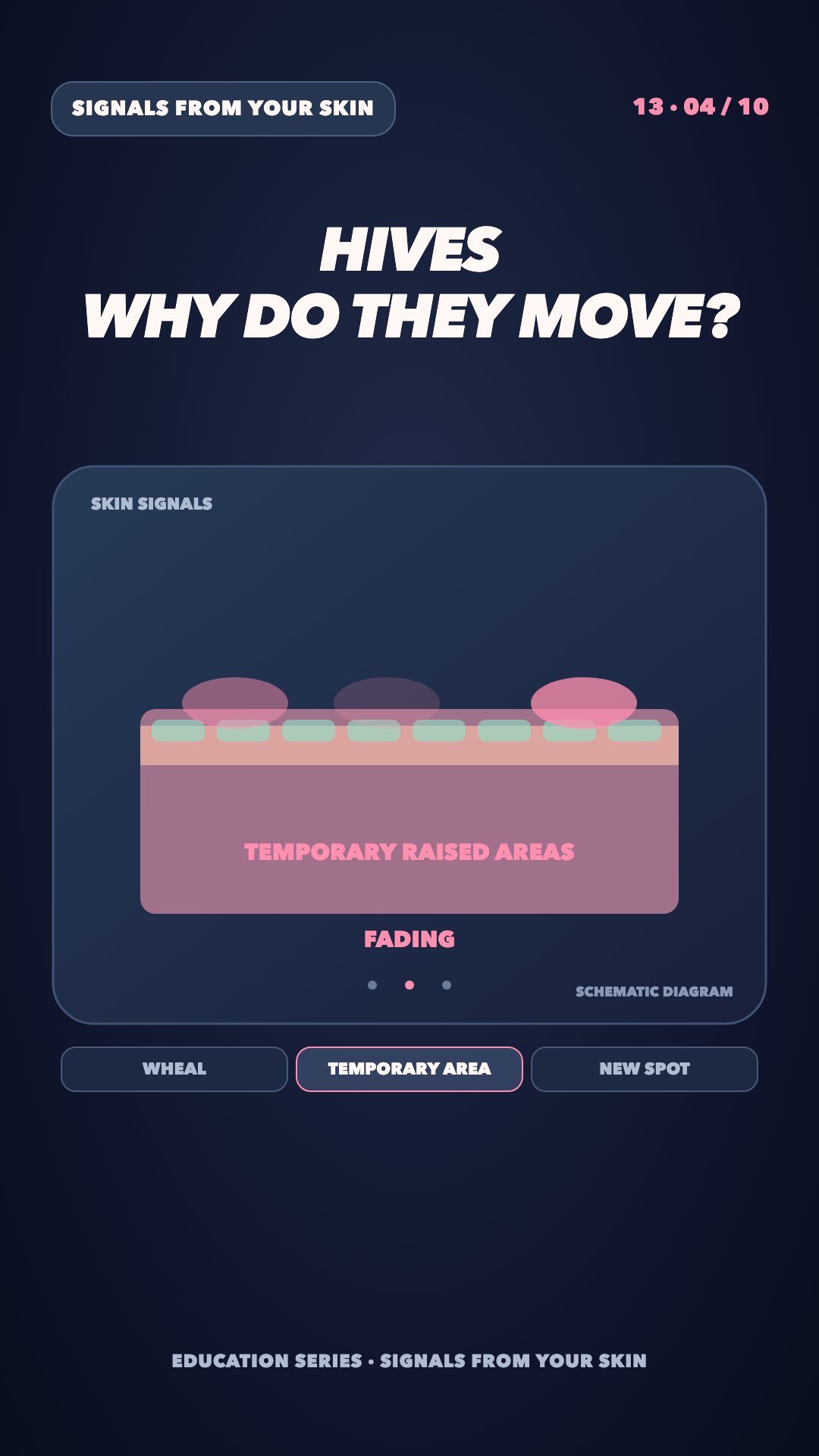
Why can hives come and go?

Signals from Your Skin

English narration and captions

English transcript and sources

Hives can cause itchy, raised areas of skin; an individual area often fades within twenty-four hours while new ones may appear elsewhere. Not every case of hives is explained by an allergy to a particular food; causes vary. If breathing difficulty or swelling of the tongue or throat occurs as well, that is a different situation requiring urgent assessment.

Skin Health05

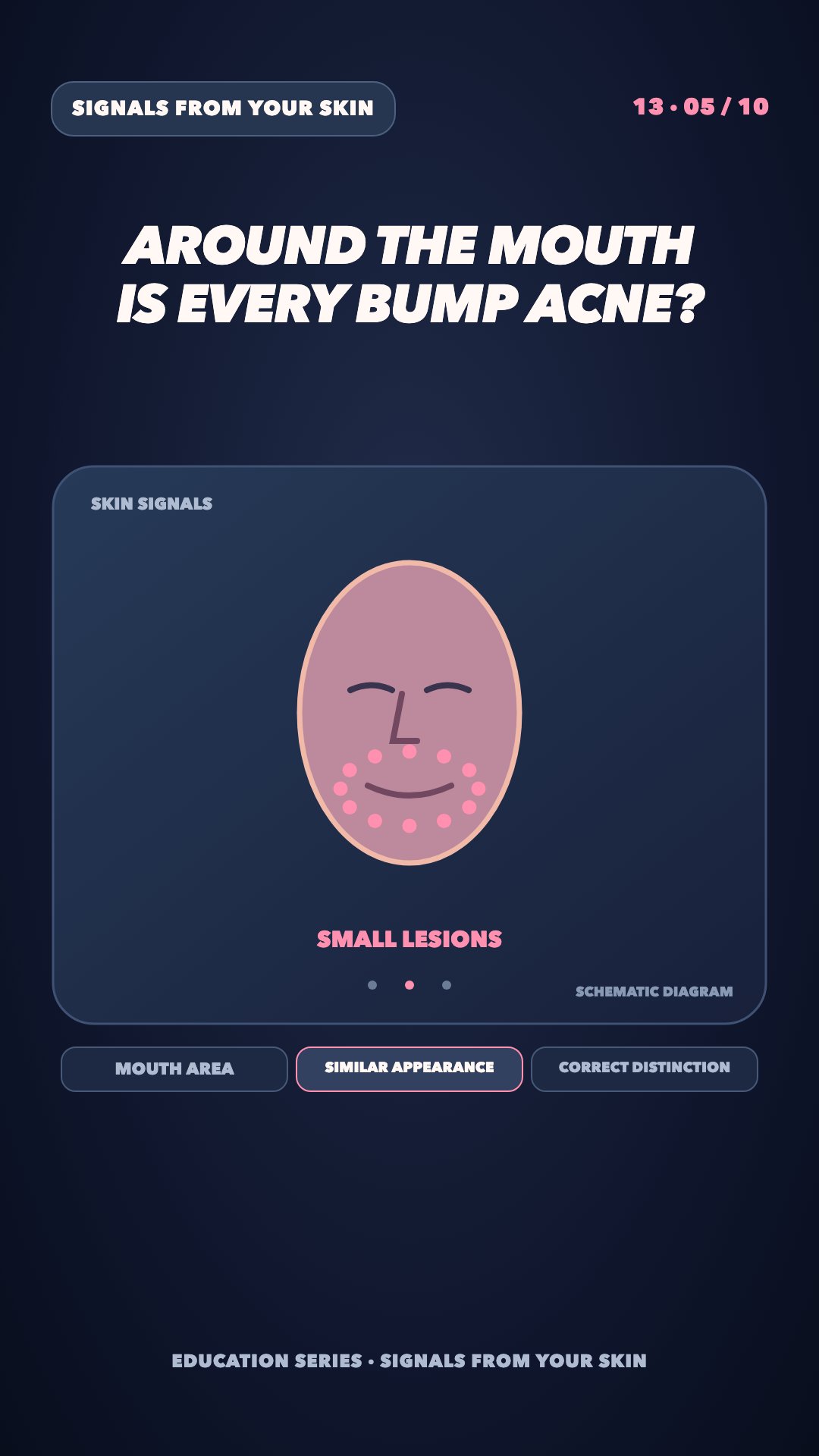
Are bumps around the mouth always acne?

Signals from Your Skin

English narration and captions

English transcript and sources

Small bumps around the mouth are not always acne. A condition called periorificial dermatitis can cause similar lesions around the mouth and sometimes the nose or eyes. Burning and scaling may occur too. Using a steroid cream without guidance can complicate the picture. Making the right distinction requires a history, not just a single photograph.

Skin Health06

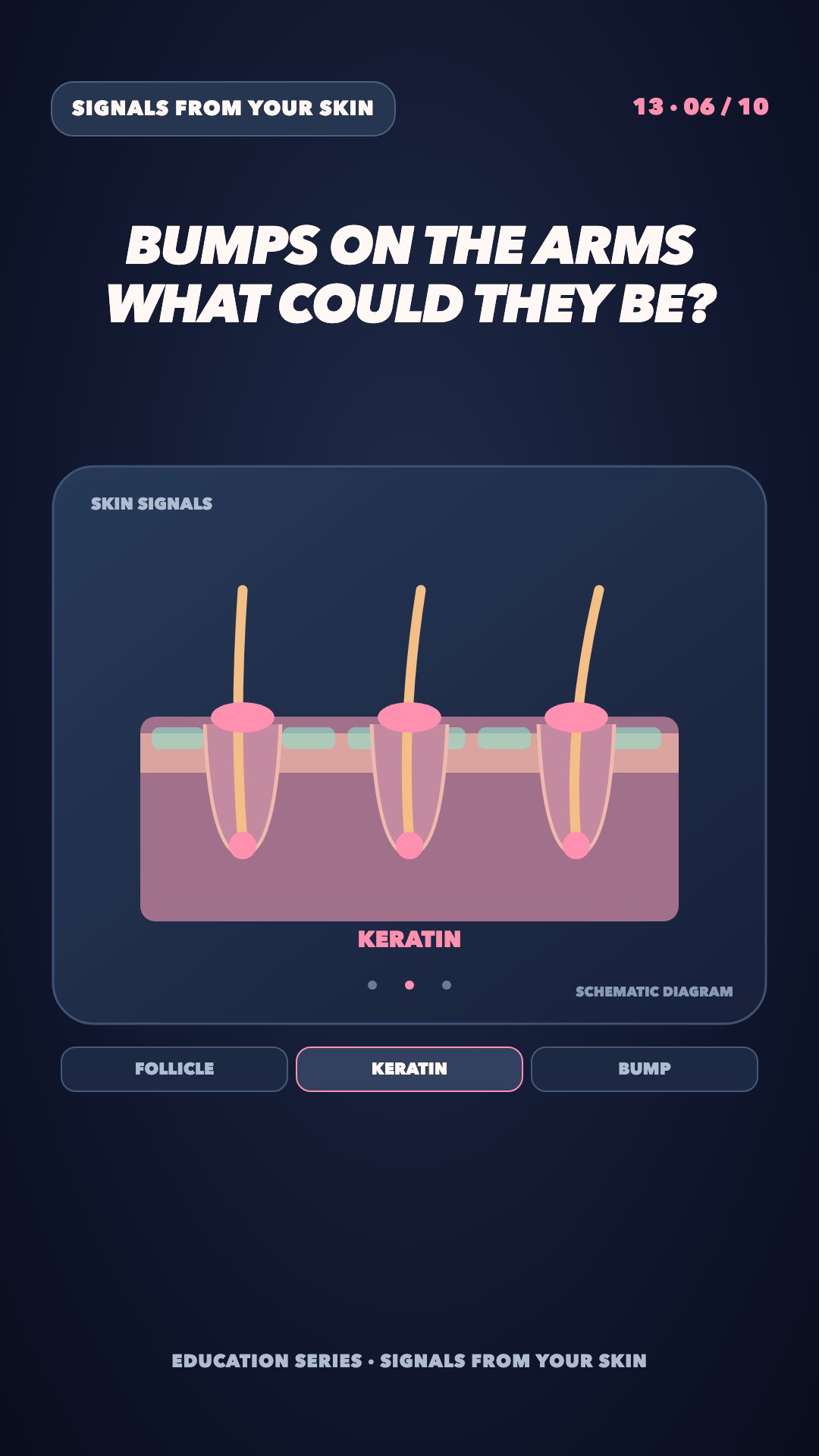
What could the small bumps on your arms be?

Signals from Your Skin

English narration and captions

English transcript and sources

One cause of small, regularly spaced bumps on the upper arms is keratosis pilaris. Related to keratin building up at hair follicle openings, it is common and not contagious. Not every bump has the same diagnosis. Harsh scrubbing can irritate the skin; care depends on dryness, redness and skin tolerance.

Skin Health07

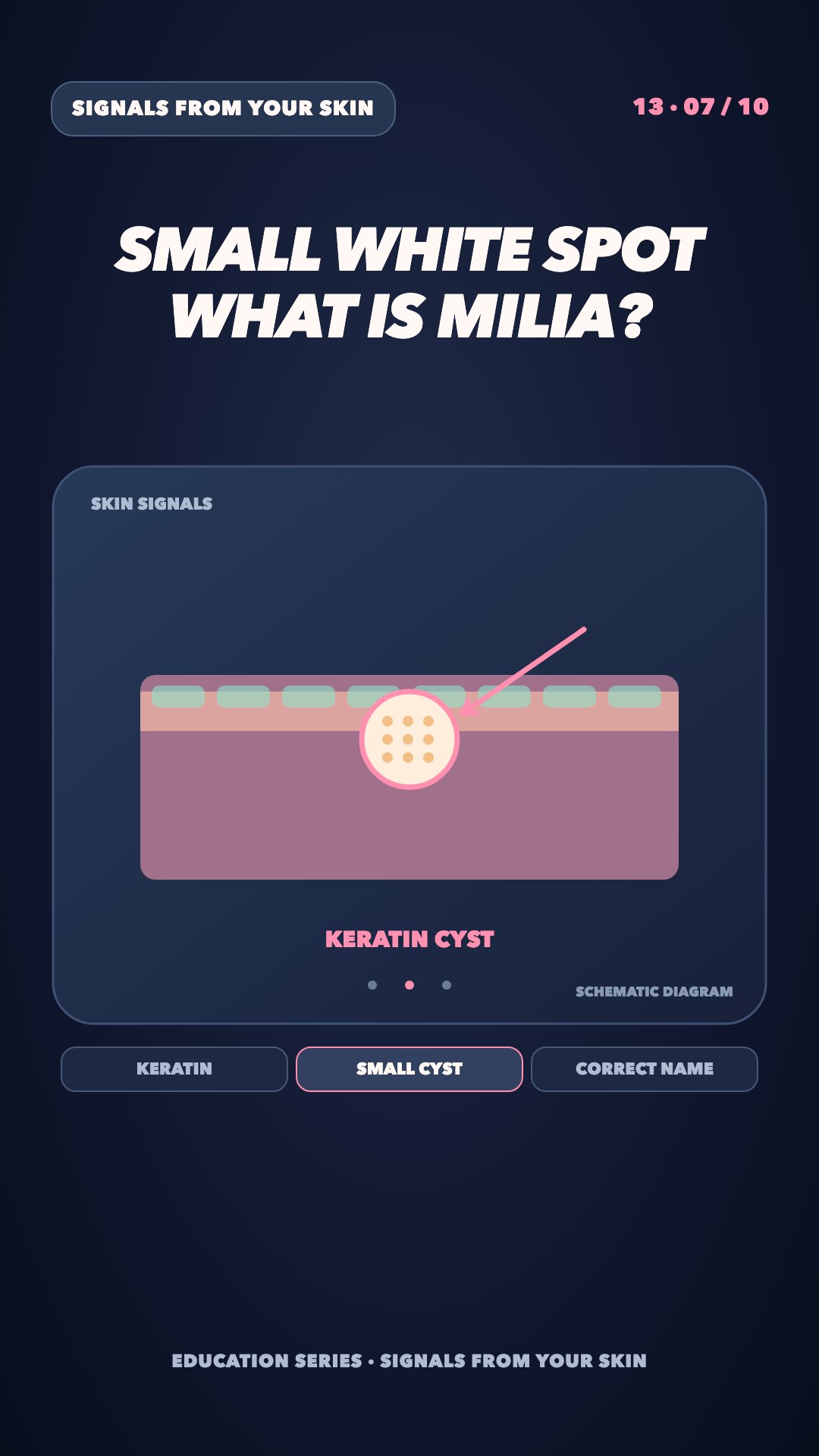
Why does milia look like tiny white dots?

Signals from Your Skin

English narration and captions

English transcript and sources

Milia are small keratin cysts near the skin surface. They may look like white dots, especially around the eyes. They are not simply oil-filled pimples. Some disappear on their own, while persistent ones may need a different approach. Trying to open them with a needle at home can irritate or injure this sensitive area. Correct identification comes first.

Skin Health08

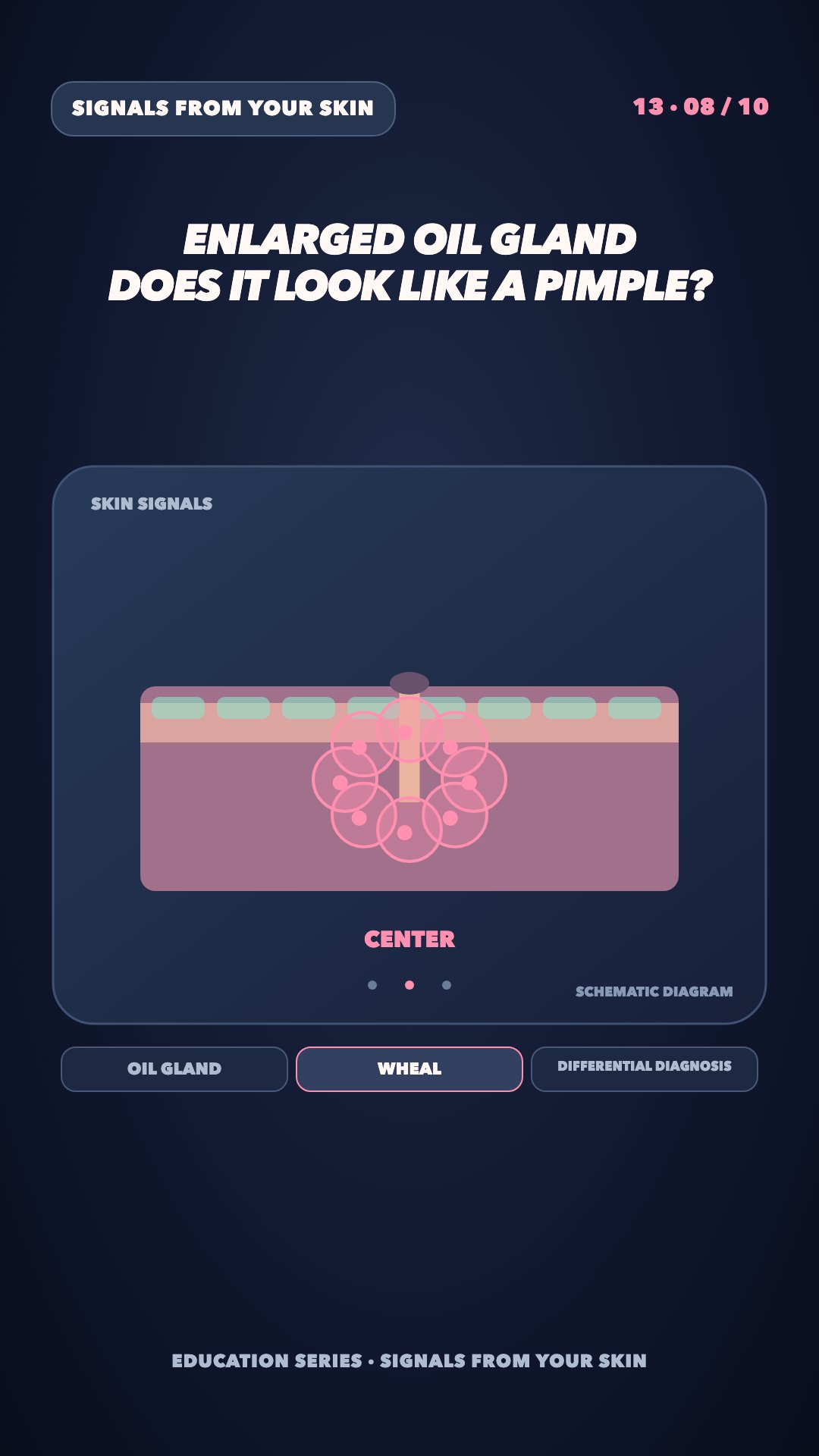
Can enlarged oil glands be mistaken for pimples?

Signals from Your Skin

English narration and captions

English transcript and sources

Some small yellowish bumps on the face may be related to enlarged oil glands. With this appearance, called sebaceous hyperplasia, a small central dip may be visible. Because it can be confused with pimples and other lesions, colour alone is not enough to identify it. A new, changing or bleeding growth is better assessed than squeezed.

Skin Health09

Why is itching about more than dry skin?

Signals from Your Skin

English narration and captions

English transcript and sources

Dryness is a common cause of itching, but not the only one. Eczema, allergic reactions, infections and some systemic conditions can also cause it. The presence of a rash, its duration and where it began help distinguish causes. Persistent or widespread itching in particular calls for assessment of the cause rather than simply trying another moisturiser.

Skin Health10

Why assess an area of skin that will not heal?

Signals from Your Skin

English narration and captions

English transcript and sources

An area of skin that does not heal for a long time, repeatedly crusts over or bleeds needs assessment. Irritation or other conditions may cause this; some skin cancers can look similar too. Such a sign alone does not establish a cancer diagnosis. But its persistence in the same place is a reason not to cover it up with cosmetic products alone.

Area-specific Care01

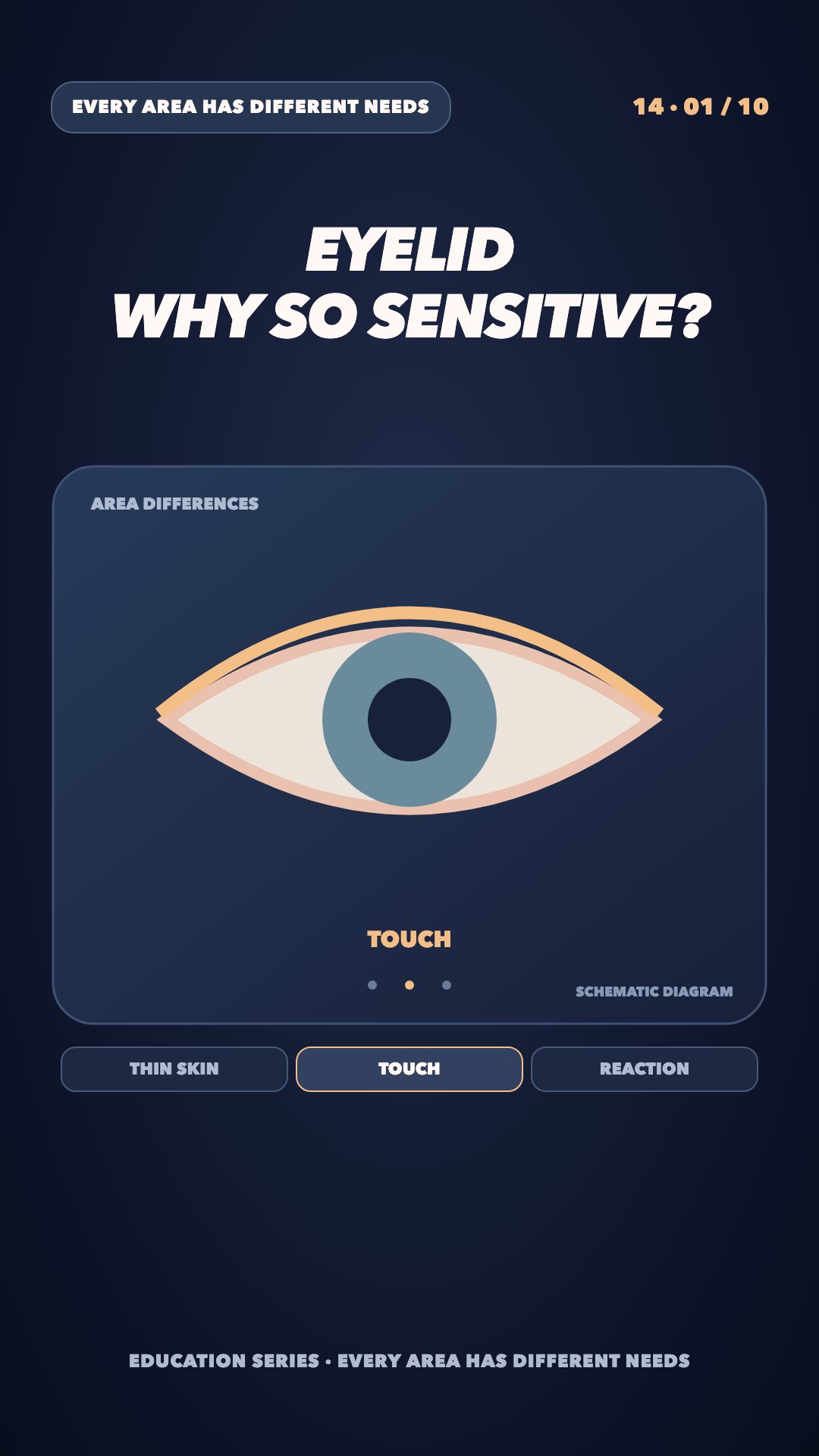
Why is eyelid skin easily irritated?

Different Areas, Different Needs

English narration and captions

English transcript and sources

Eyelid skin is thin and sensitive to irritation. Soap, cosmetics or a substance transferred from the hands can cause redness and itching there, even if the same substance causes no symptoms elsewhere. The source of a reaction around the eyes is therefore not always an eye cream. All products used and possible contacts need to be considered.

Area-specific Care02

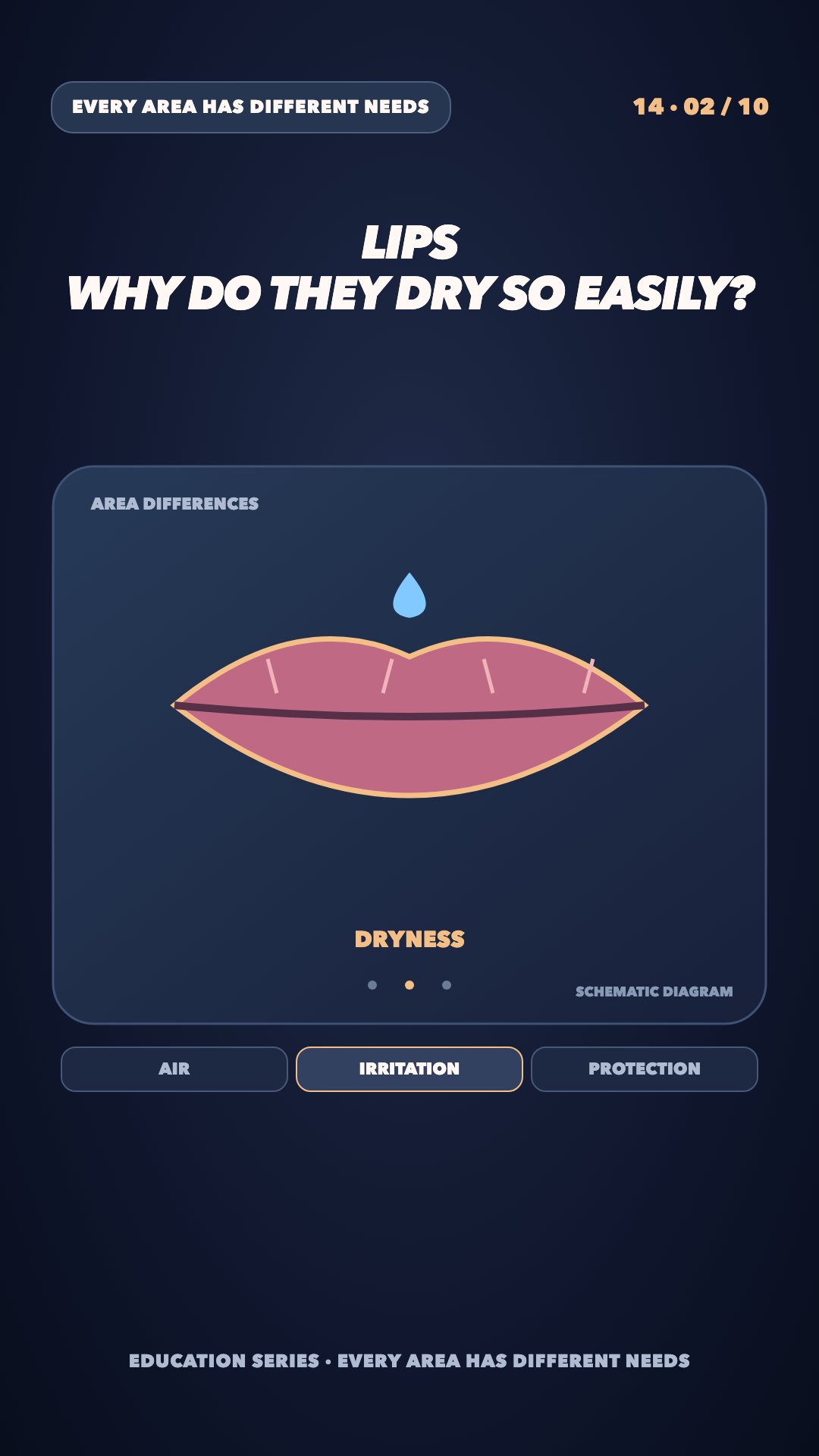
Why do lips dry out easily?

Different Areas, Different Needs

English narration and captions

English transcript and sources

Lips can be easily affected by cold weather, sun and irritating contact. When dryness, cracking and discomfort develop, licking them more may bring brief relief but can make the problem worse. Gentle, non-irritating care matters. A persistent change on the lips should not be attributed only to the weather; other causes are possible.
Area-specific Care03

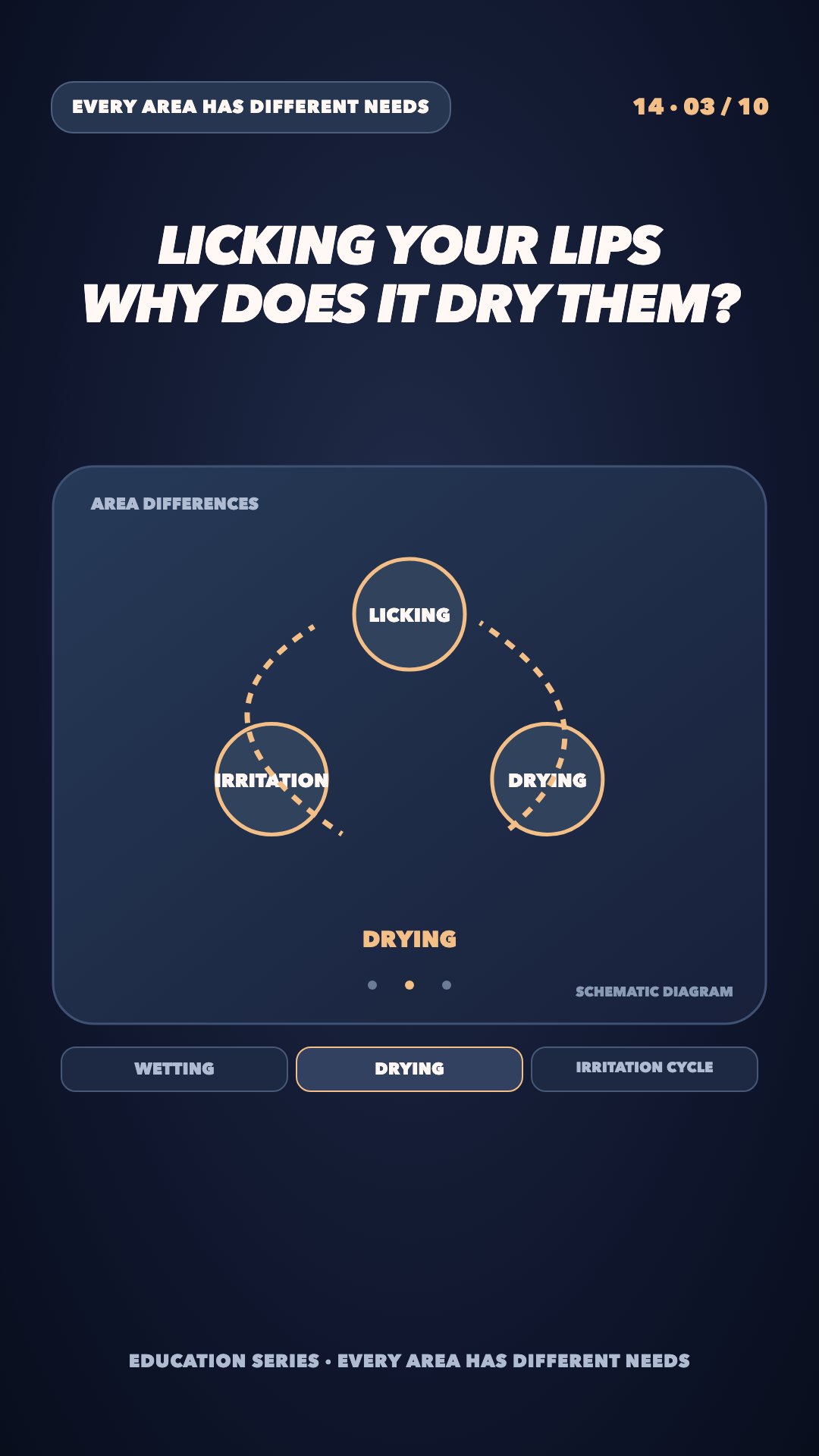
How does lip licking affect dryness?

Different Areas, Different Needs

English narration and captions

English transcript and sources

Licking dry lips makes them feel moist at first. But repeated contact with saliva, followed by drying, can irritate both the lips and the surrounding skin. Dryness then leads to more licking, which causes more irritation. Recognising this cycle matters as much as looking for a different balm.

Area-specific Care04

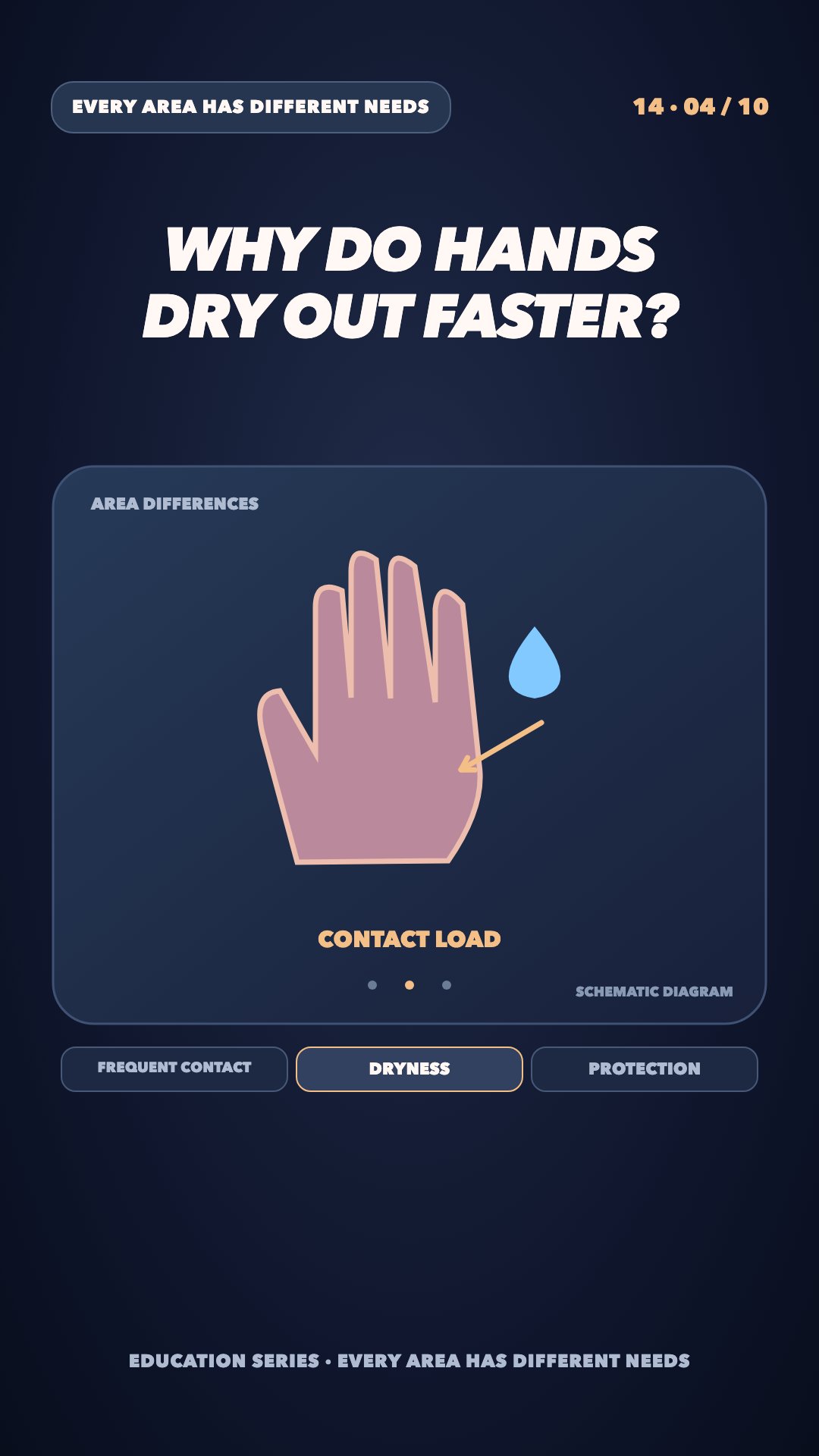
Why can hands dry out faster than the face?

Different Areas, Different Needs

English narration and captions

English transcript and sources

Throughout the day, hands often encounter water, soap, cleaning products and friction. This repeated contact can strain the skin's protective surface and cause dryness. A routine that suits your face may not be enough for your hands. Moisturising after washing and using suitable protection while cleaning can help reduce the daily burden of contact.

Area-specific Care05

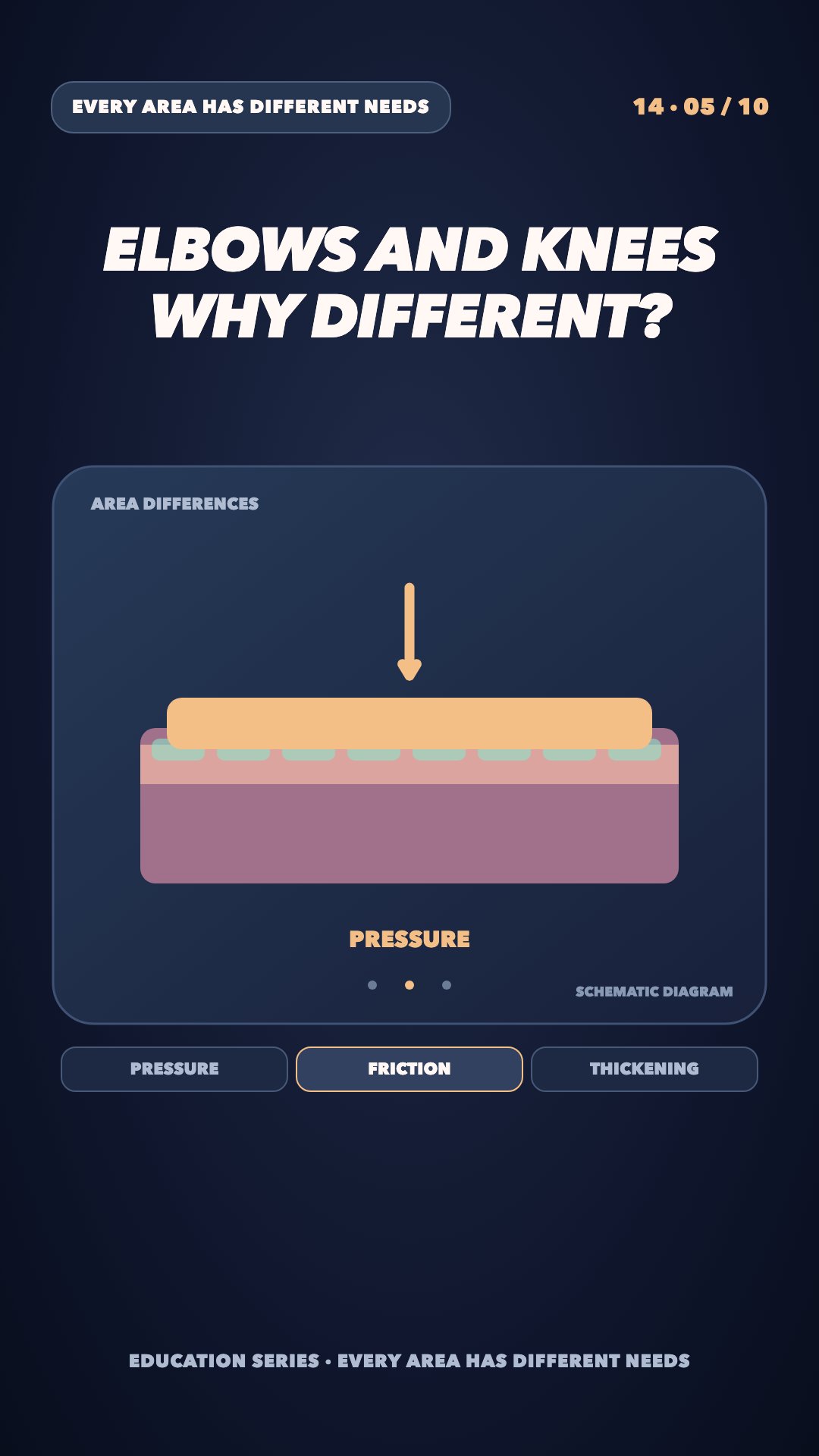
Why does skin on elbows and knees look different?

Different Areas, Different Needs

English narration and captions

English transcript and sources

Elbows and knees face repeated pressure during movement and when leaning on surfaces. Friction and dryness can make skin in these areas look thicker or more lined. But not every darkened area is caused only by friction. If there is marked itching, a rash or a new change, the cause as well as the appearance should be assessed.

Area-specific Care06

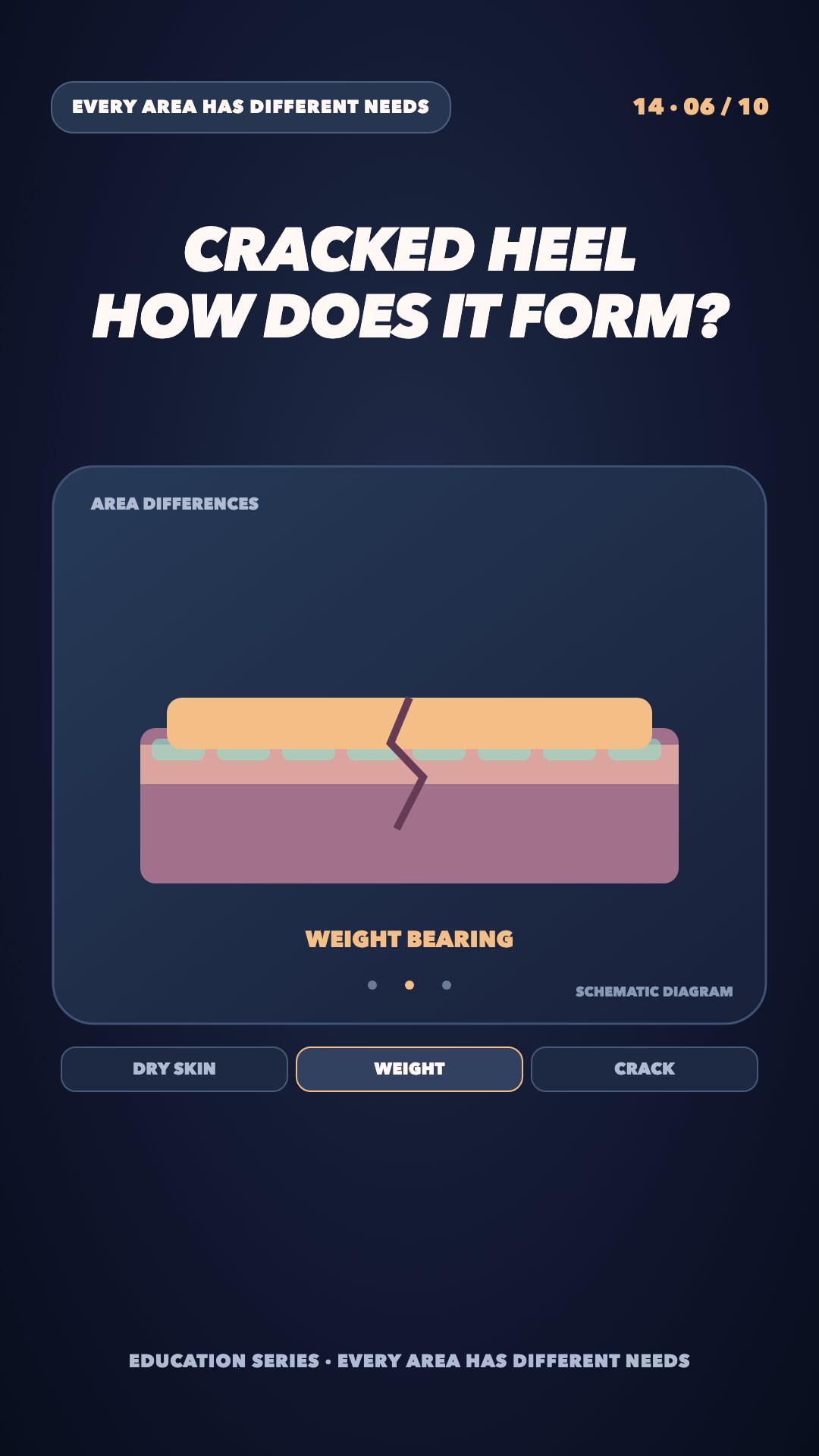
How do heel cracks form?

Different Areas, Different Needs

English narration and captions

English transcript and sources

When thick, dry skin builds up around the edge of the heel, it may become less flexible. As weight bears down on the foot, the softer tissue underneath expands sideways; this tension can crack the surface. Deep fissures can cause pain and bleeding. Especially if you have diabetes or a circulation problem, heel cracks should not be treated as a purely cosmetic detail.

Area-specific Care07

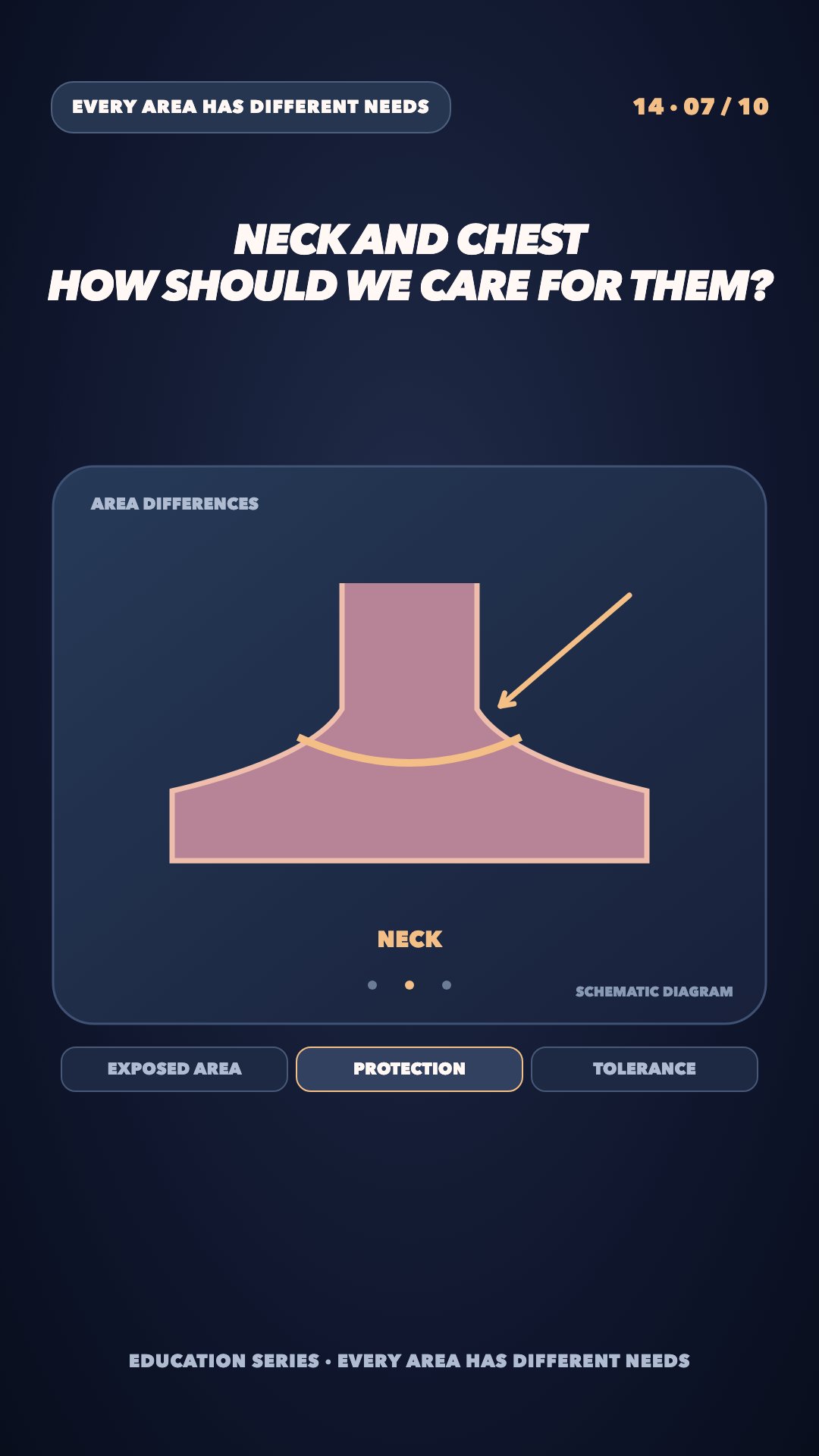
What matters in caring for the neck and chest?

Different Areas, Different Needs

English narration and captions

English transcript and sources

Skincare does not end at the face. Exposed areas of the neck and chest also receive sunlight, and may respond to products differently from facial skin. Sun protection, gentle cleansing and moisturising if needed are basic steps. Before applying a strong ingredient you use comfortably on your face just as often in these areas, watch how the skin tolerates it.

Area-specific Care08

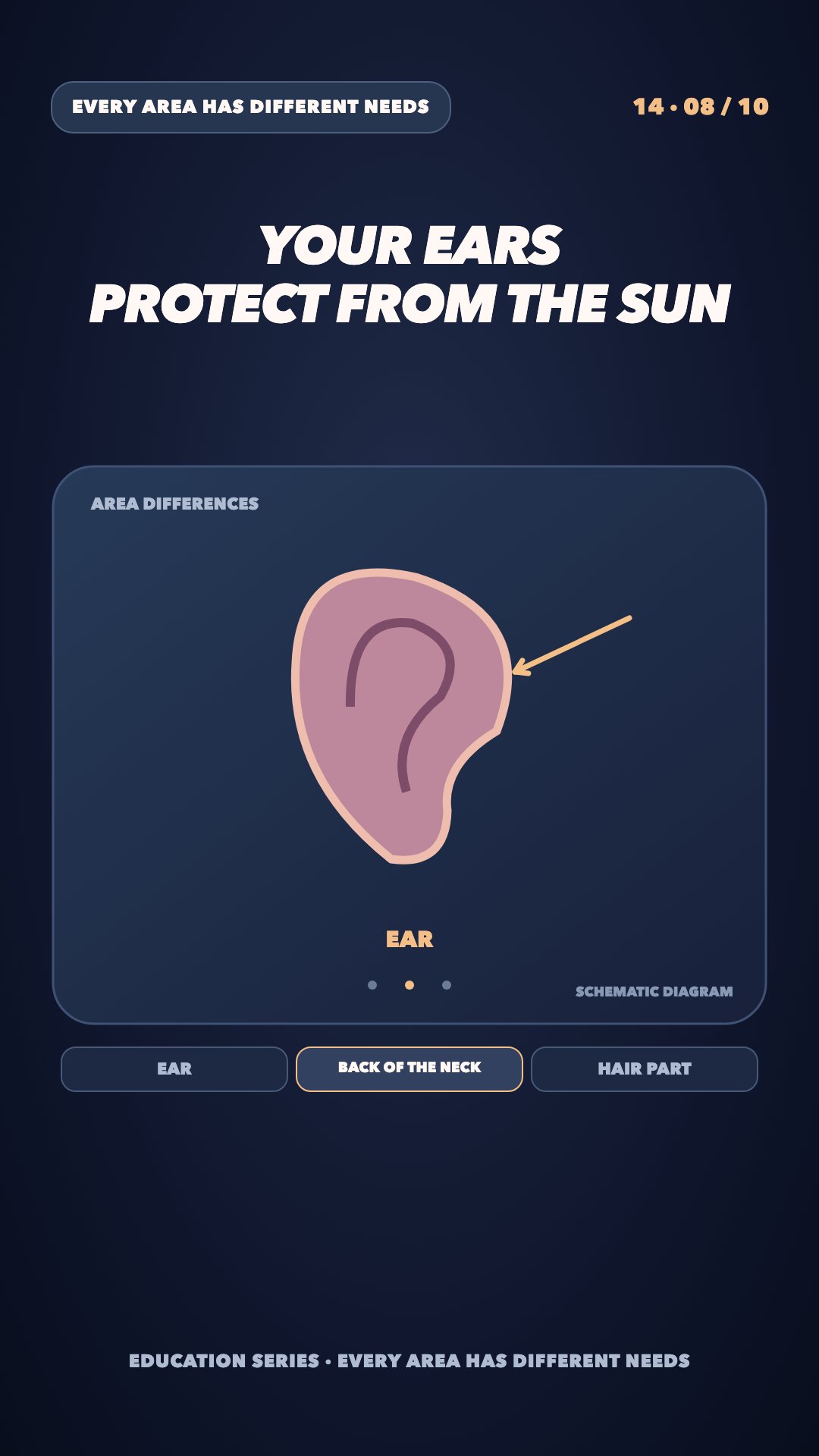
Why are ears overlooked in sun protection?

Different Areas, Different Needs

English narration and captions

English transcript and sources

It is easy to remember your cheeks when applying sunscreen and forget your ears. Yet the exposed surfaces of the ears also receive ultraviolet light. Using a hat and sunscreen together helps protect overlooked areas. The back of the neck and the hair part should be included too. Daily protection is not complete when only the centre of the face is covered.

Area-specific Care09

What might cause darkening in the underarms?

Different Areas, Different Needs

English narration and captions

English transcript and sources

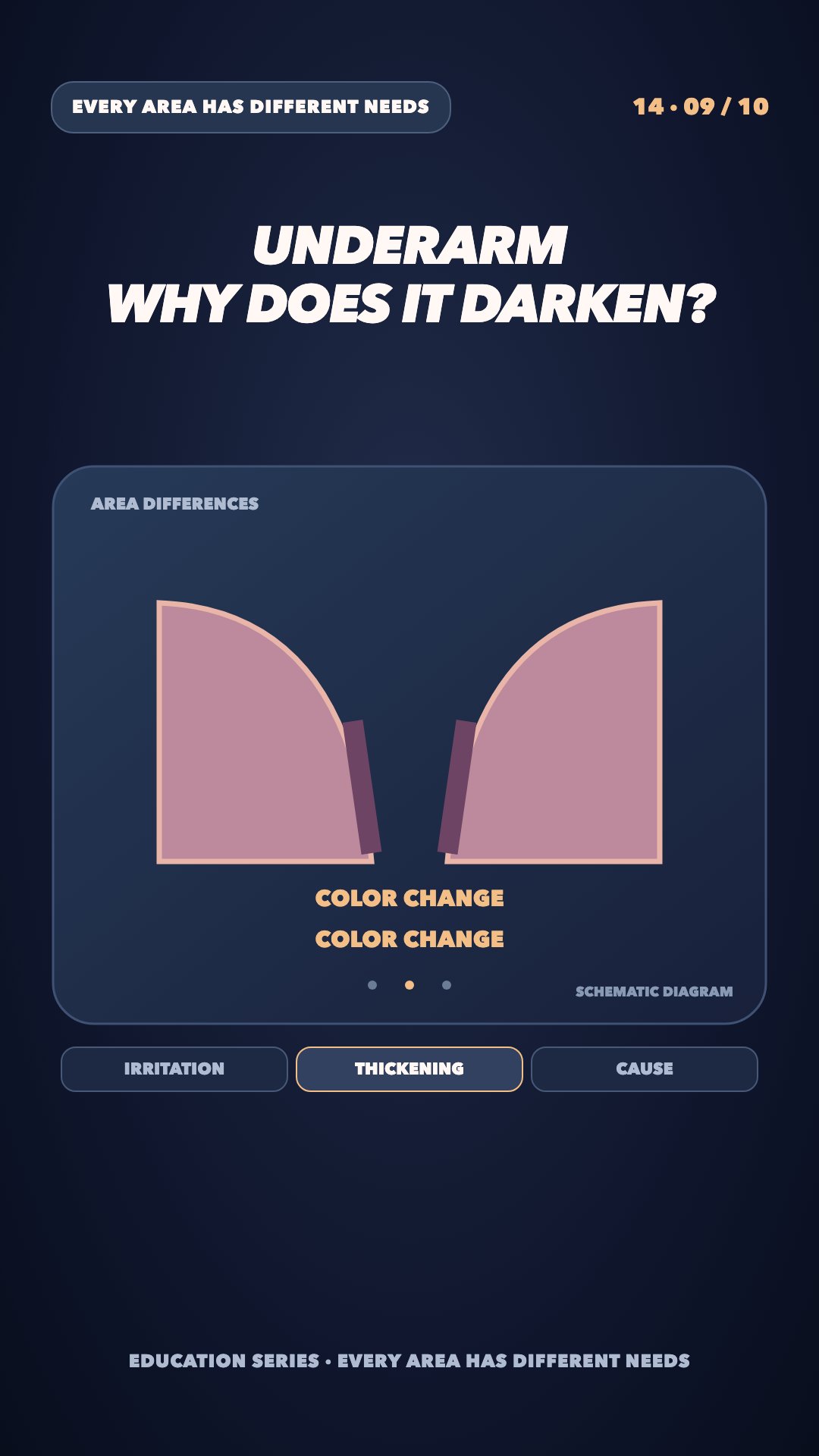
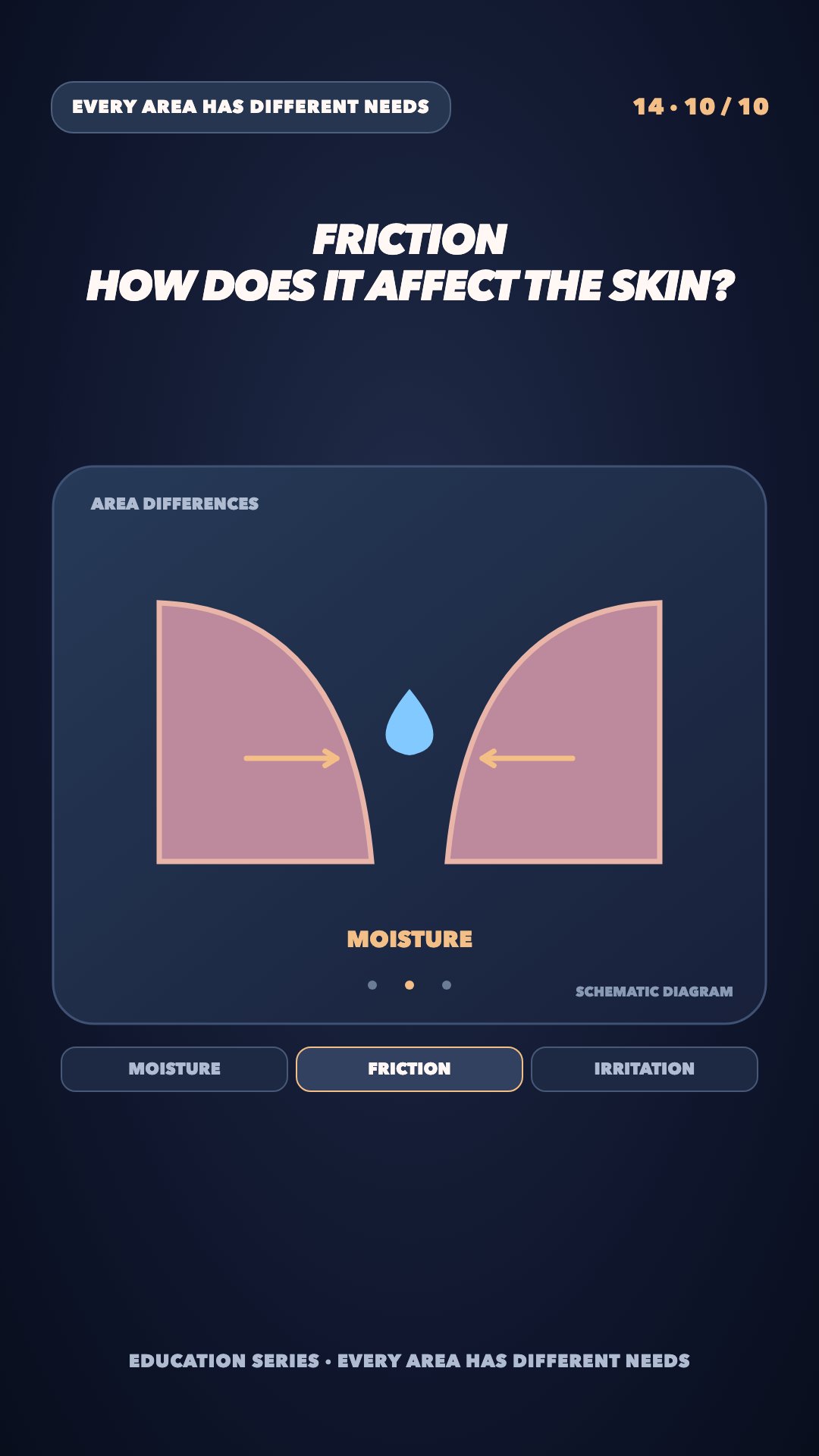
Darkening under the arms may be related to friction and pigment changes after irritation. Velvety thickening, however, may suggest another condition such as acanthosis nigricans, which can sometimes be associated with metabolic problems. Not every darkened area has the same diagnosis. With a new or marked change, it is better to assess the cause than to look only for a lightening product.

Area-specific Care10

How does friction affect skin in the groin and inner thighs?

Different Areas, Different Needs

English narration and captions

English transcript and sources

Heat, moisture and friction can come together where skin surfaces touch. This environment may cause redness and sensitivity and can make it easier for some microorganisms to multiply. Not every rash is fungal. Keeping the area dry and comfortable may help, but persistent pain, odour or rash calls for identifying the right cause.

Daily Care01

How do air conditioning and heating affect skin comfort?

Daily Life and Skin

English narration and captions

English transcript and sources

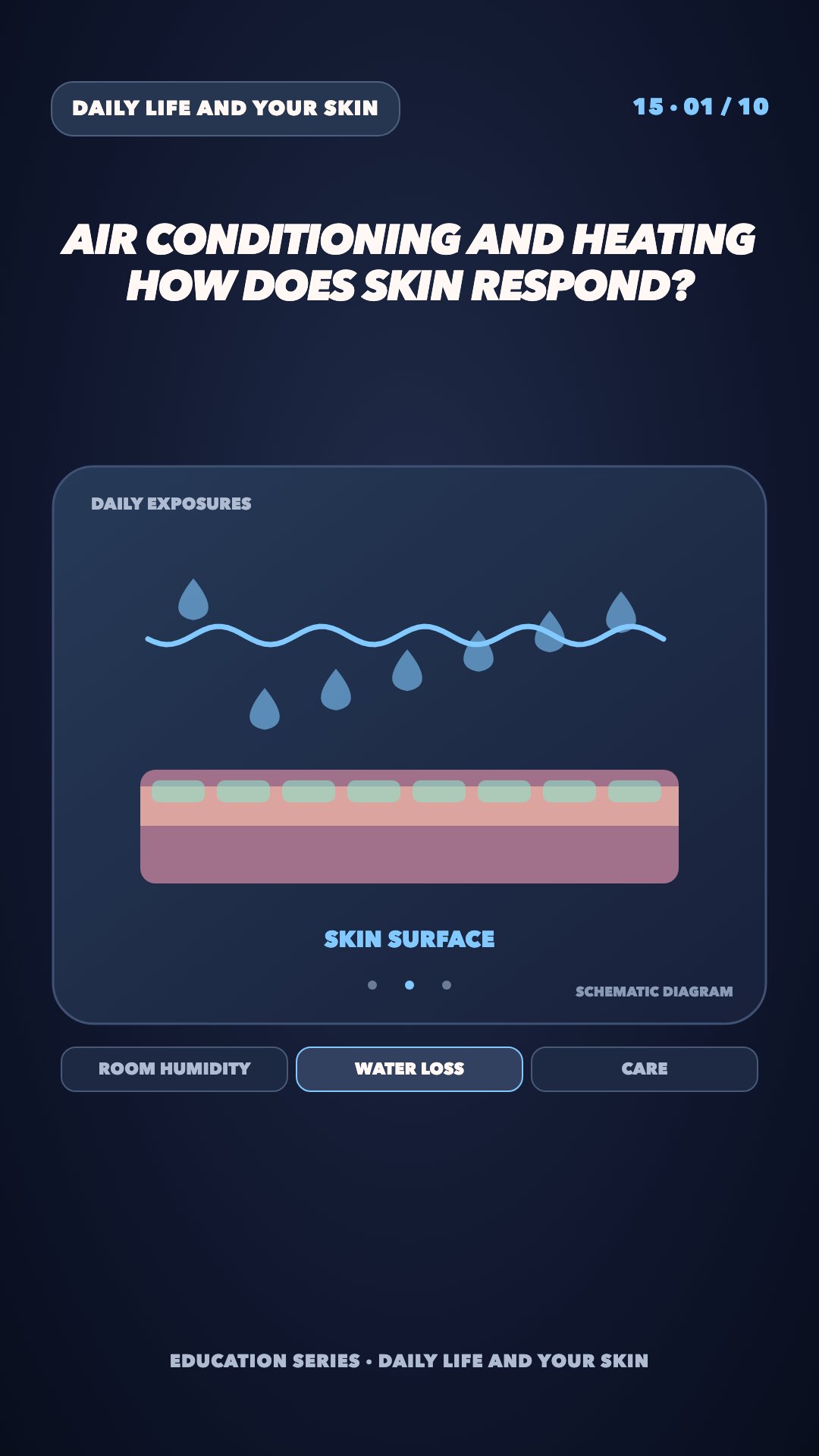
Skin can feel tighter in heated or very dry indoor spaces. Lower humidity may affect water loss from the skin and the feeling of dryness. Long, hot showers can add to this. Gentle cleansing and suitable moisturising matter. Rather than blaming every case of dryness on one device, consider both the environment and skincare.

Daily Care02

How might washing with hard water feel on the skin?

Daily Life and Skin

English narration and captions

English transcript and sources

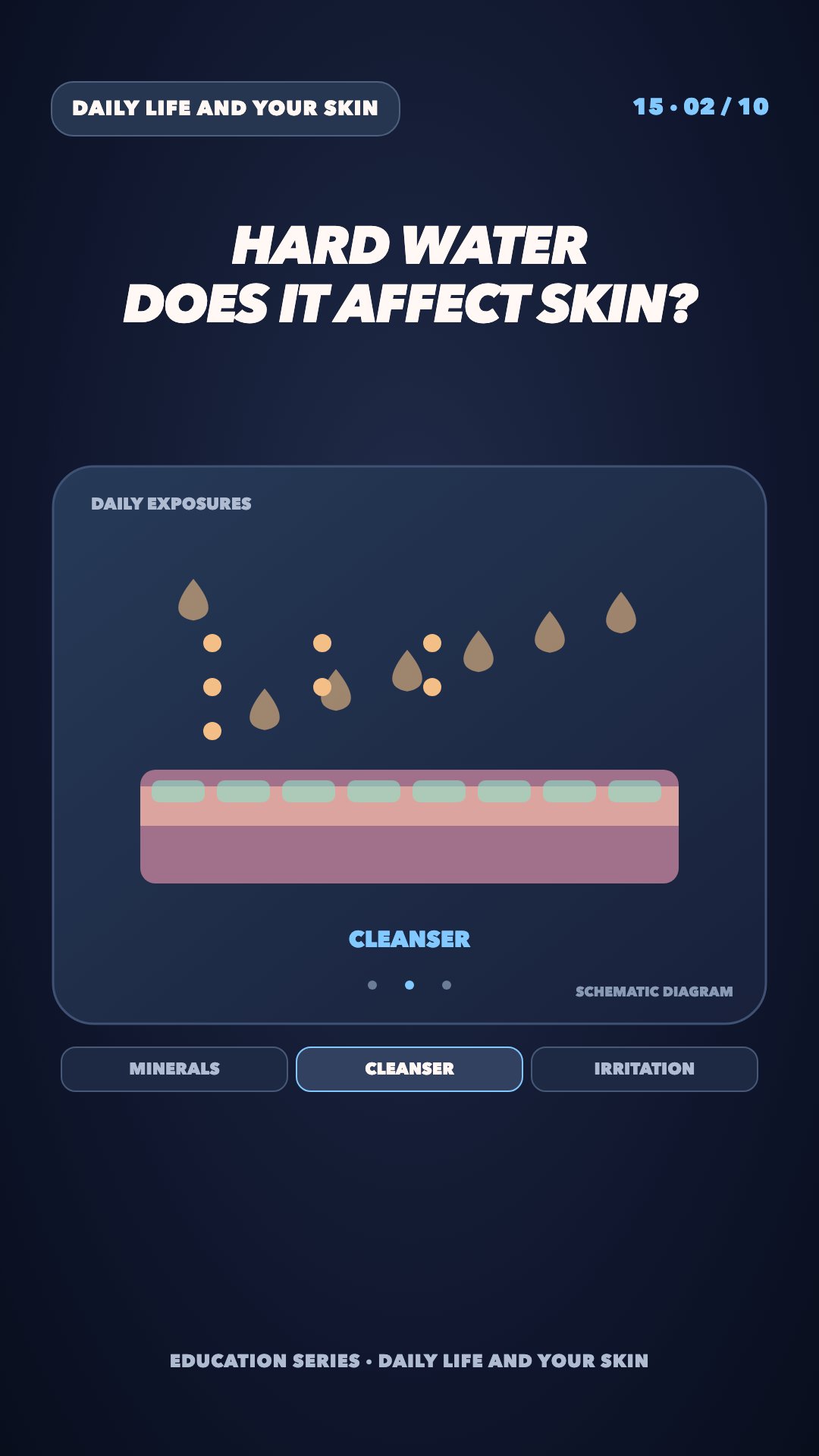
Hard water contains more minerals such as calcium and magnesium. Research has examined whether water hardness changes how much of some cleansers remains on the skin. This may be associated with irritation in some people. But hard water does not explain every feeling of tightness. The cleanser, water temperature, washing time and the skin's initial condition also matter.

Daily Care03

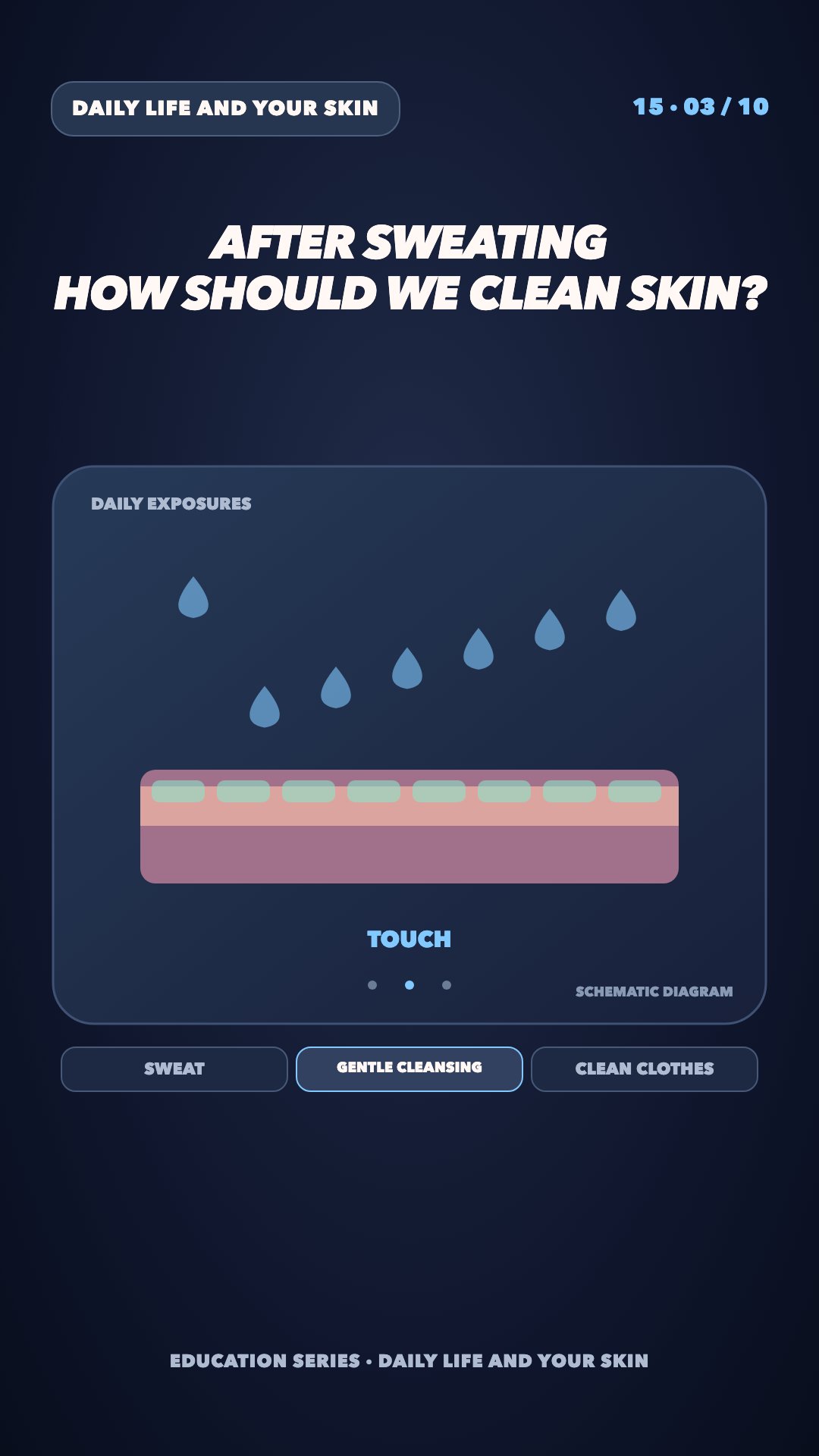
How should you clean skin after sweating?

Daily Life and Skin

English narration and captions

English transcript and sources

After exercise, sweat, friction and product residue may all be present on the skin. Gently cleansing rather than scrubbing, changing out of sweaty clothes and using a clean towel are more suitable steps. Sweating alone does not mean you are dirty. Repeated contact and tight clothing also matter, especially in areas prone to acne.

Daily Care04

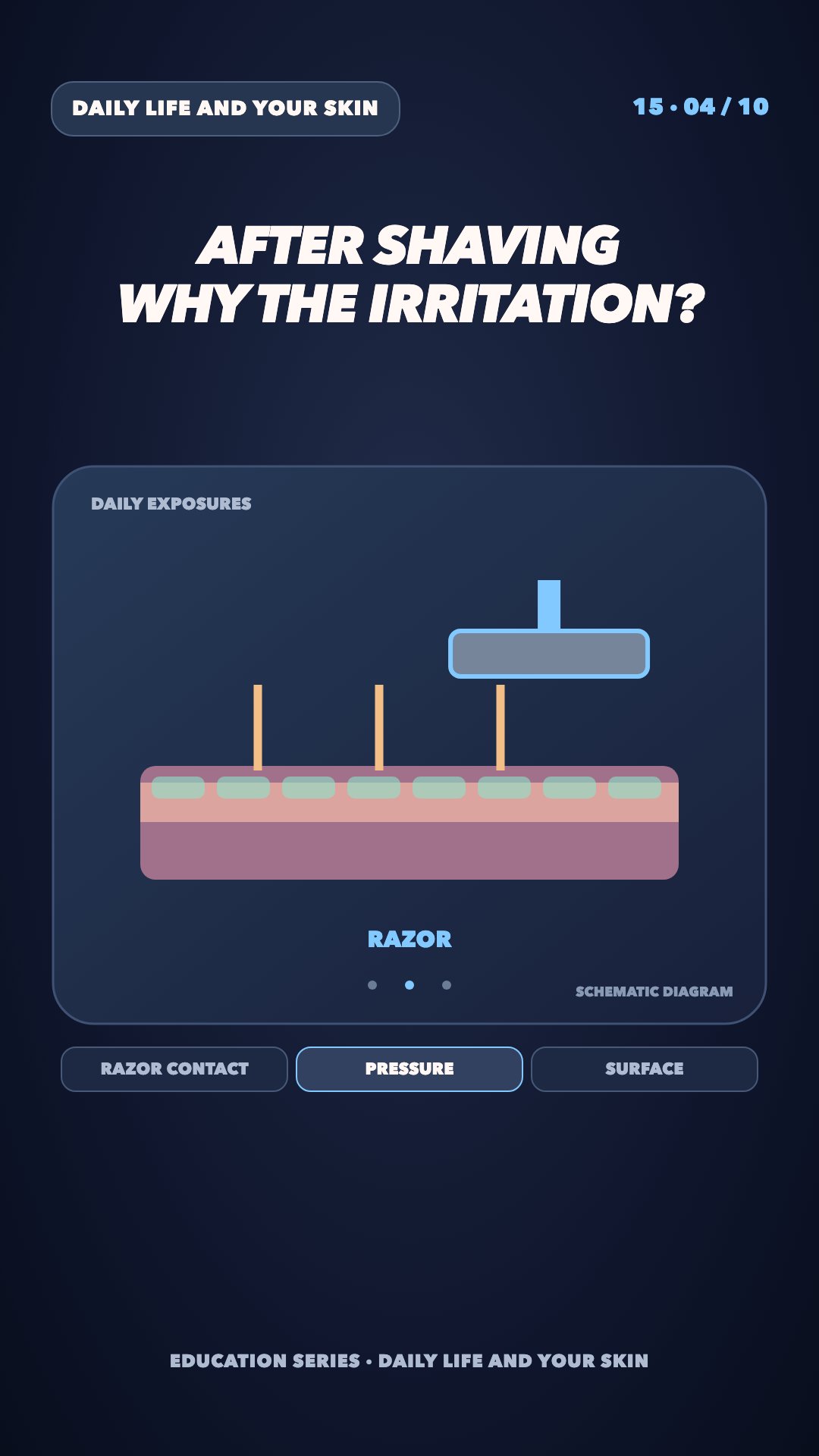
Why does irritation occur after shaving?

Daily Life and Skin

English narration and captions

English transcript and sources

A razor touches the surface of the skin as well as the hair. Repeated strokes, pressure and poor technique can cause burning or redness. That appearance is not always an infection. Softening the hair and using a gentle technique can help reduce irritation. Persistent bumps, however, may have other causes.

Daily Care05

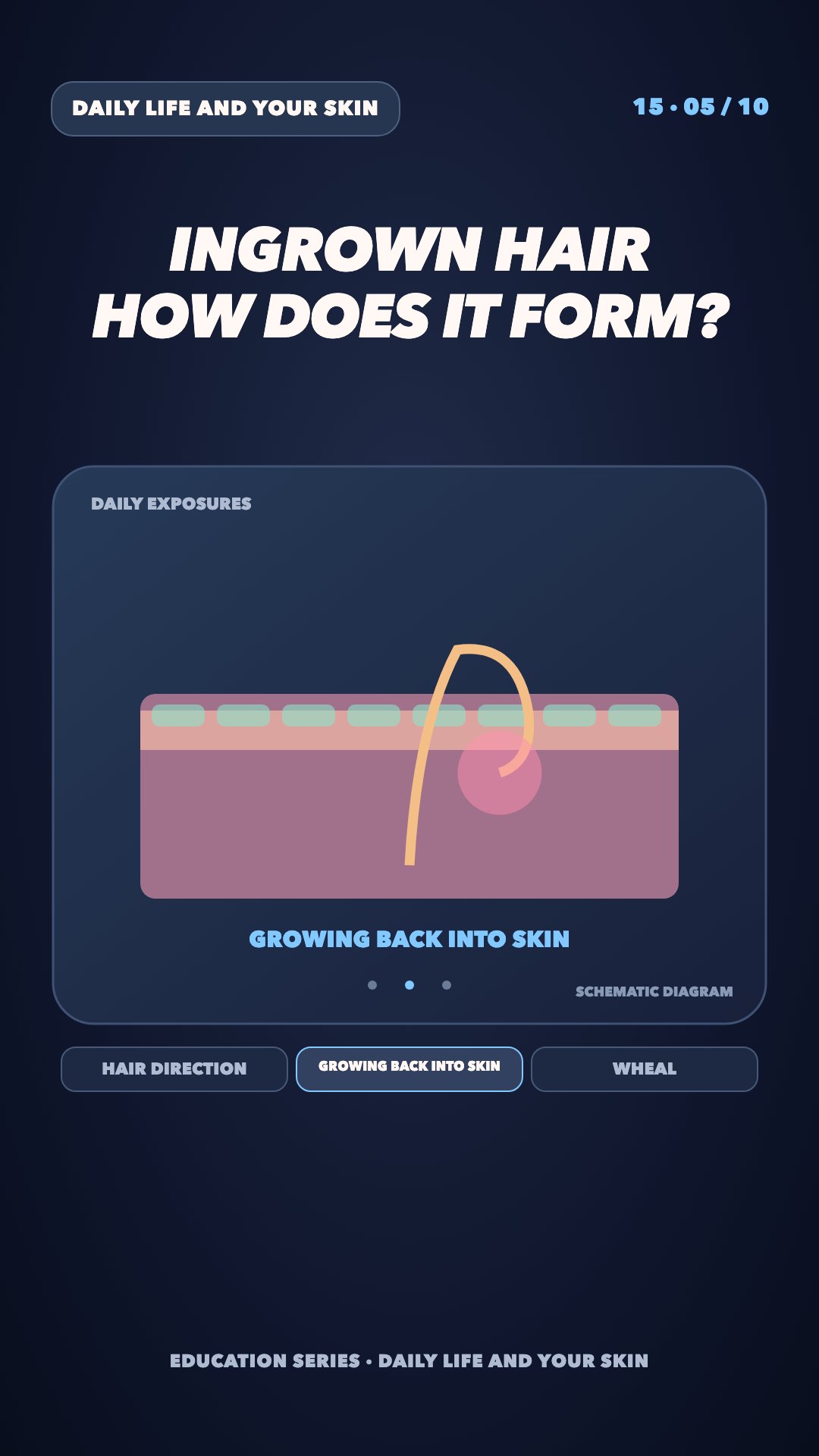
How do ingrown hairs develop?

Daily Life and Skin

English narration and captions

English transcript and sources

A cut or regrowing hair can turn back into the skin instead of growing outward. This may form an inflamed bump around it, particularly with curly hair. An ingrown hair is not simply dirt trapped in a pore. Digging it out with a needle can increase irritation. If the problem recurs, both the hair-removal method and the diagnosis should be reviewed.

Daily Care06

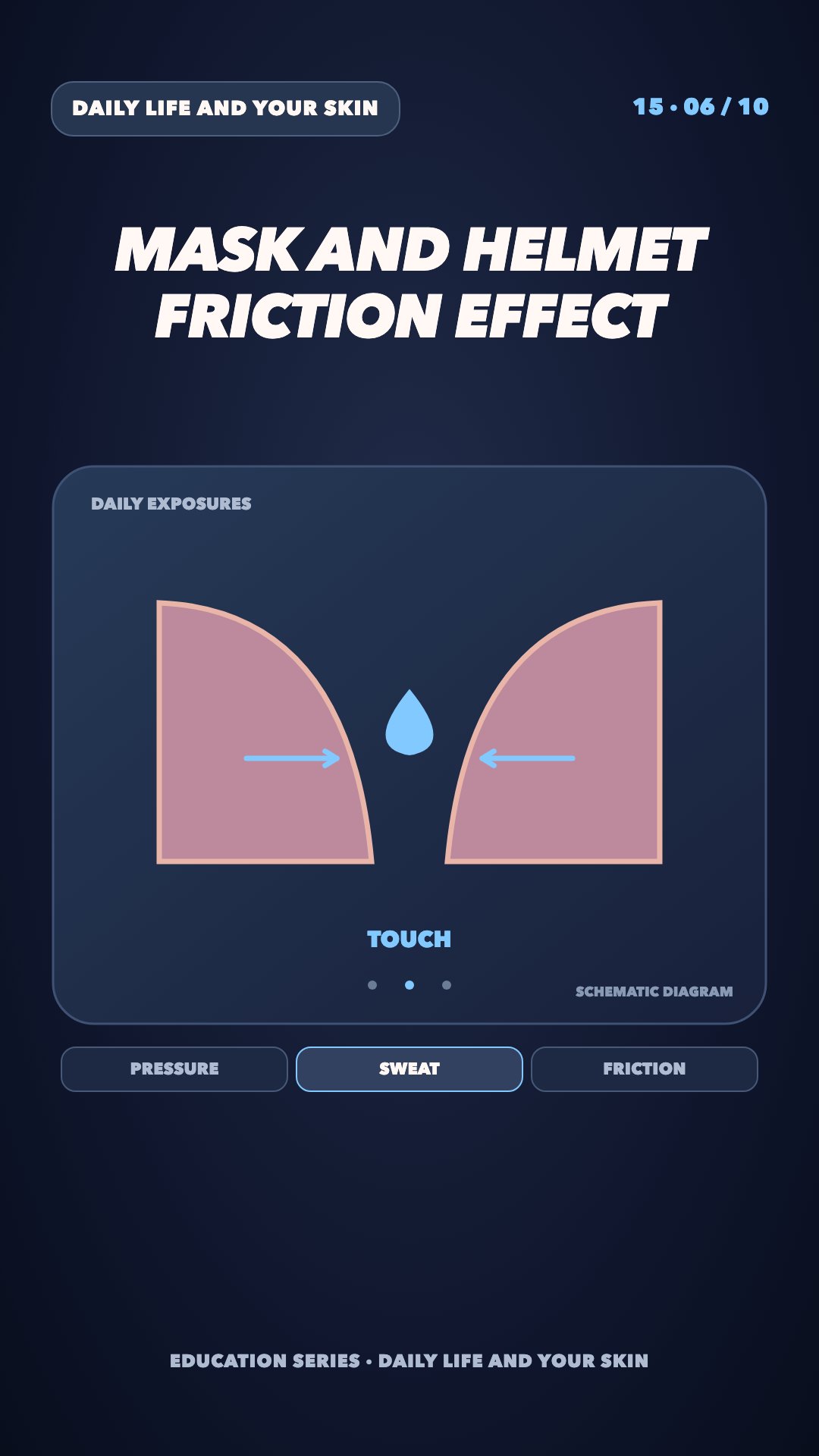
What does friction under a mask or helmet do?

Daily Life and Skin

English narration and captions

English transcript and sources

Under a mask or helmet, skin is exposed to pressure and friction. With added sweat and heat, some people develop irritation or acne-like bumps. This does not mean every piece of protective equipment has the same effect. Fit, cleanliness and time in contact matter. With a persistent rash, changing products alone may not be enough.

Daily Care07

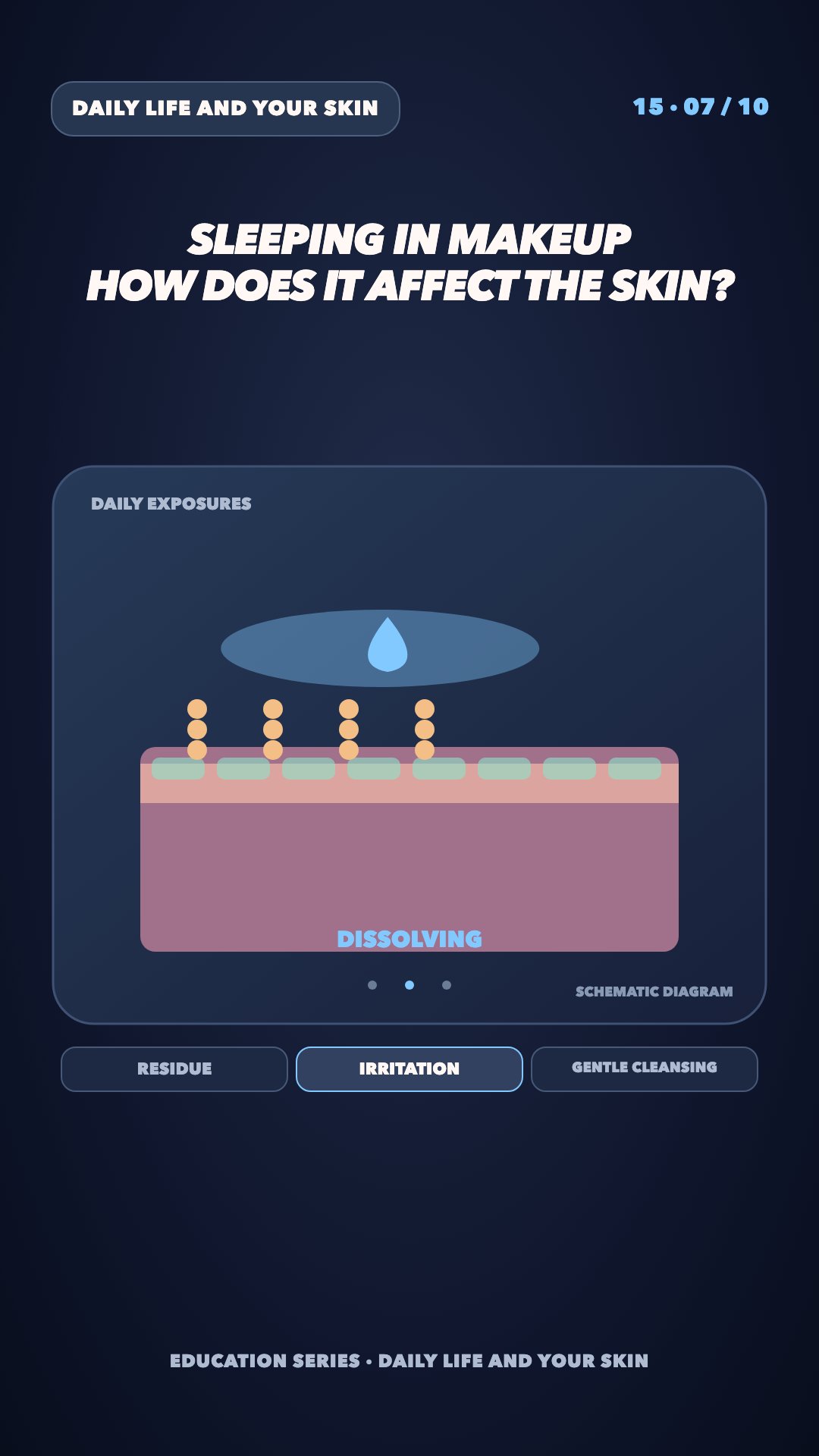
What can sleeping in makeup do to skin?

Daily Life and Skin

English narration and captions

English transcript and sources

Leaving makeup on the skin overnight may contribute to clogged pores or irritation in some people. Residue around the eyes can be particularly uncomfortable. There is no need to scrub the skin hard to remove it. Gentle cleansing and suitable rinsing are basic steps. But it would be inaccurate to treat one night as the definite cause of every skin problem.

Daily Care08

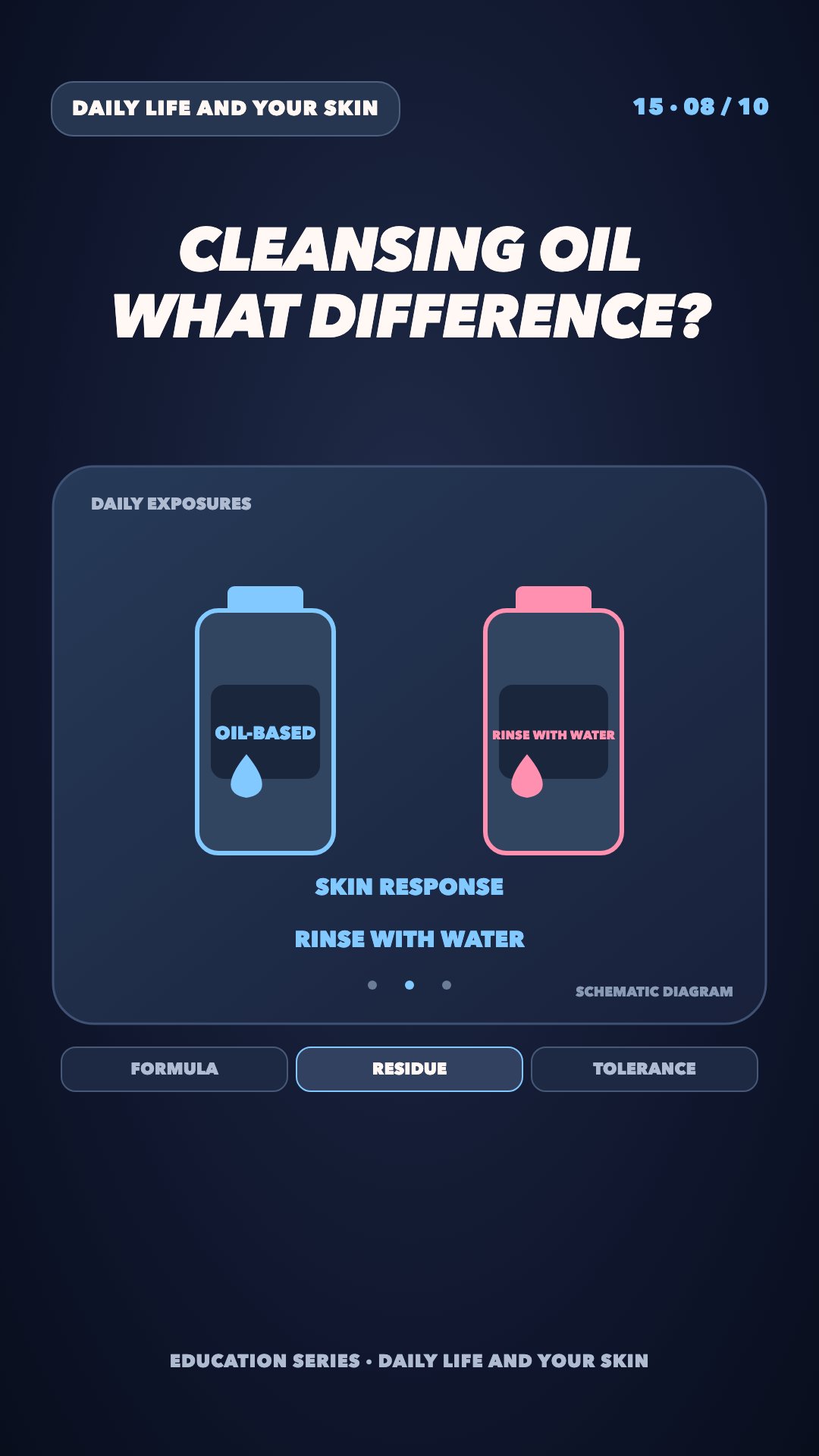
How is cleansing oil different from a face wash?

Daily Life and Skin

English narration and captions

English transcript and sources

Cleansing products use different carriers and cleansing ingredients. Oil-based products can remove oil-soluble residue such as makeup; other formulas are designed to rinse with water. Double cleansing is not essential for everyone. The aim is to remove residue without unnecessary irritation and to follow the product's directions.

Daily Care09

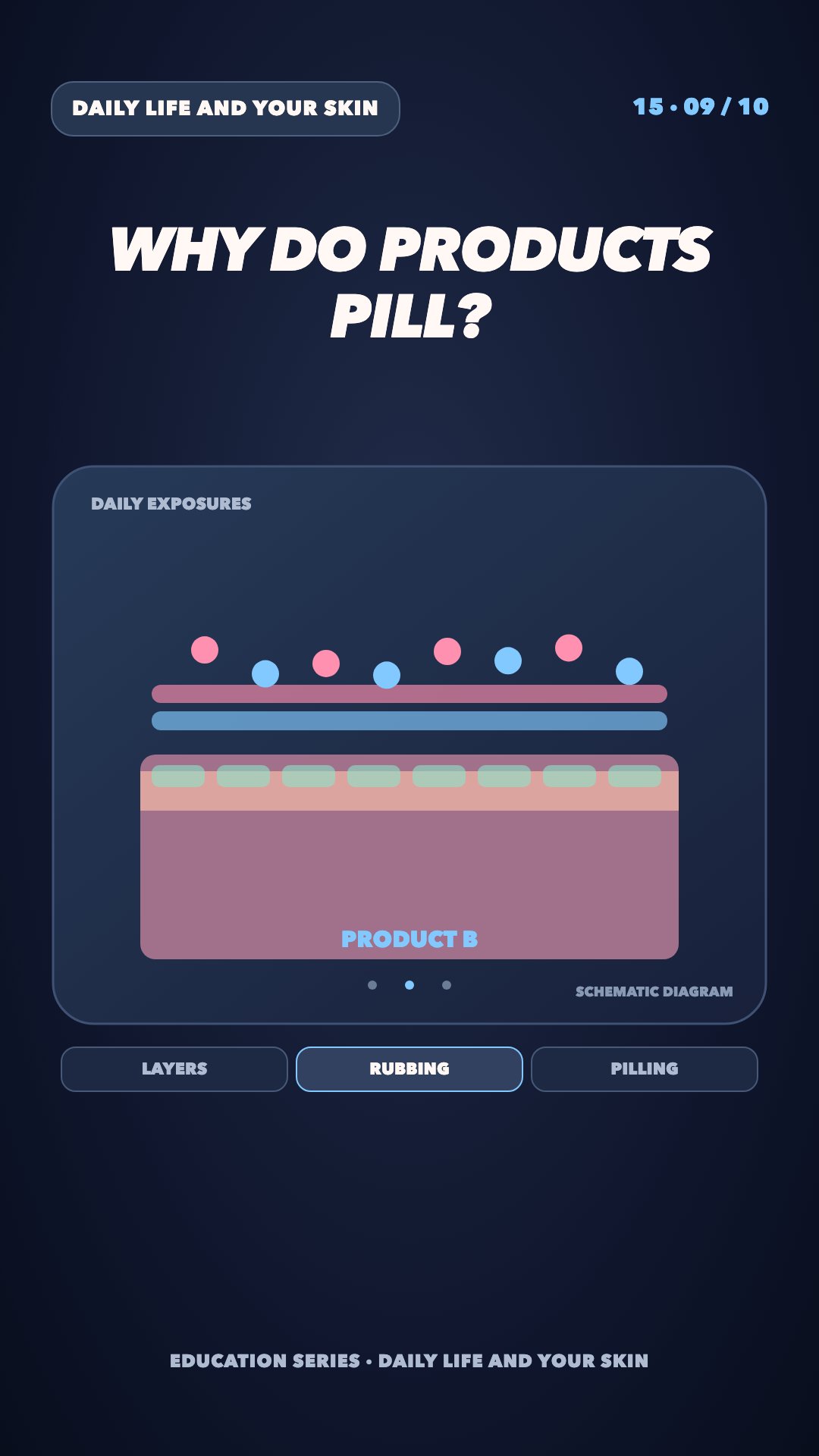
Why do sunscreen and makeup pill?

Daily Life and Skin

English narration and captions

English transcript and sources

Small flakes or clumps that appear when you layer products may be related to how their formulas and application interact. The amount used, rubbing and the skin surface can change the result. Pilling alone does not prove a product is fake or ineffective. With sunscreen in particular, maintaining an even layer matters; consider the amount and application directed on the label.

Daily Care10

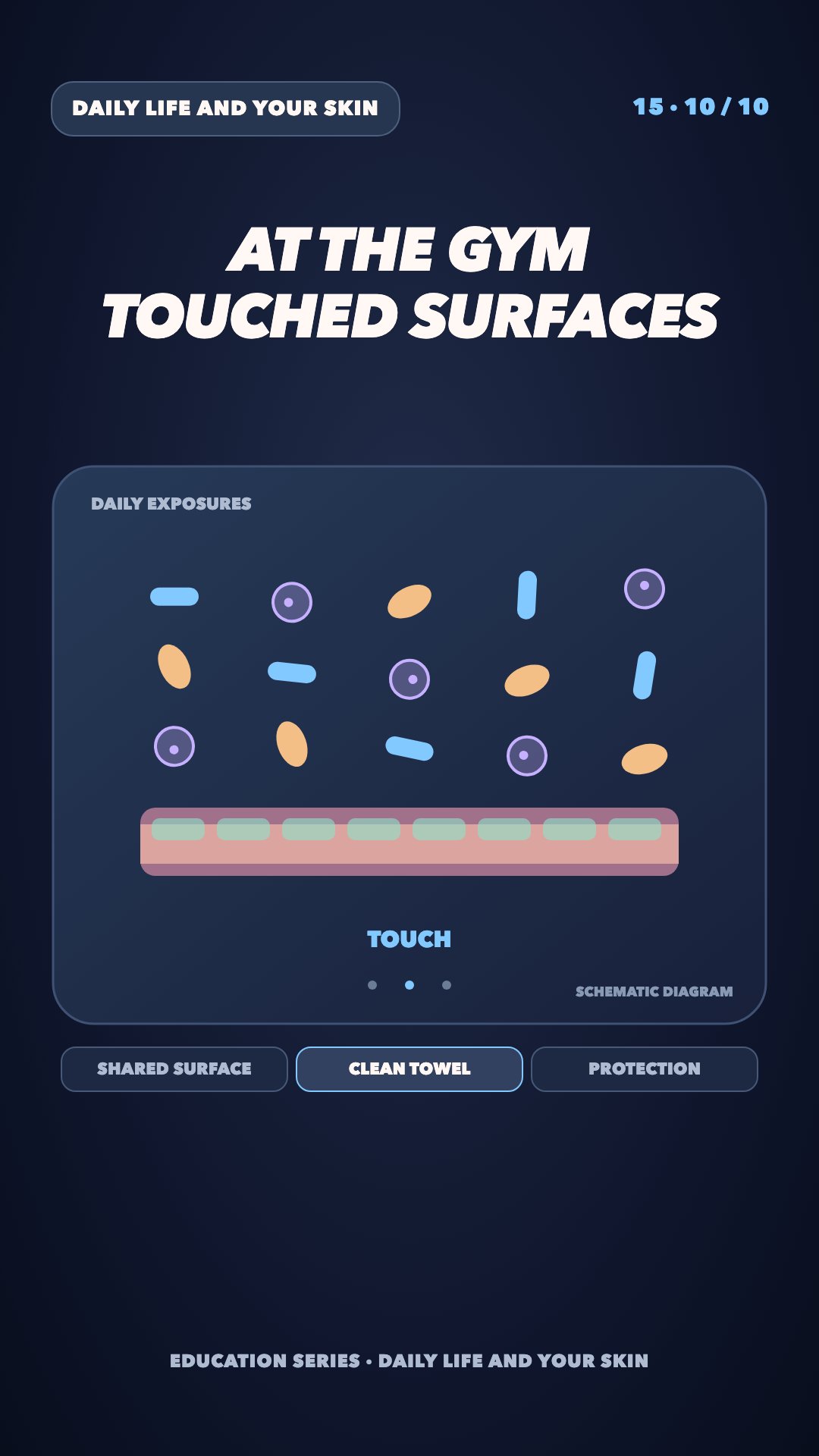
Why do surfaces your skin touches at the gym matter?

Daily Life and Skin

English narration and captions

English transcript and sources

Warm, damp areas in gyms can make it easier for some microorganisms to spread. Shared surfaces and towels therefore matter. Using a clean towel, cleaning equipment and wearing suitable footwear in communal showers can help protect you. You do not need to stop exercising; thinking about what your skin touches is a small but useful part of the routine.

Skin and Aging01

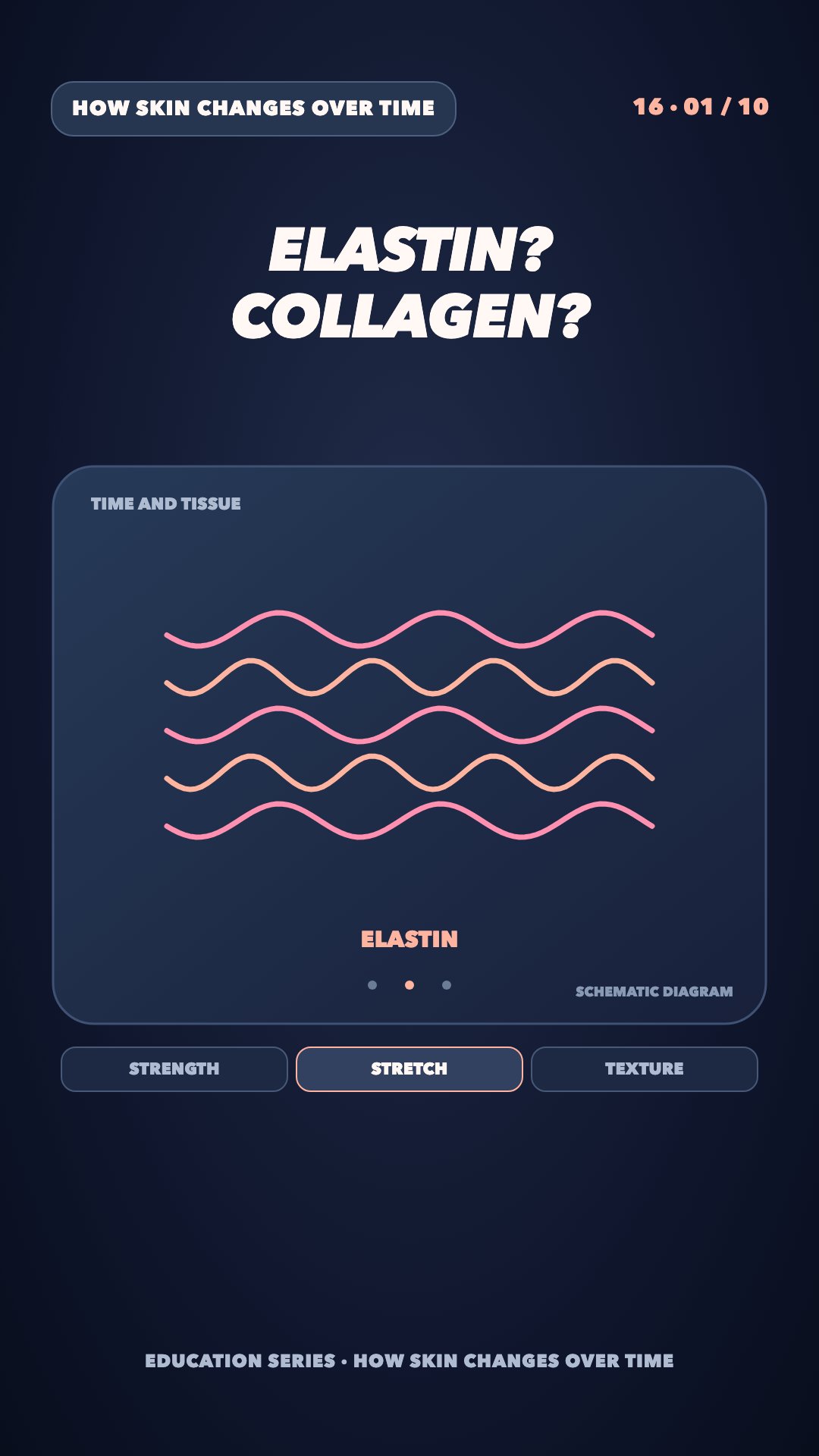
What is the difference between elastin and collagen?

How Skin Changes Over Time

English narration and captions

English transcript and sources

Collagen and elastin are components of connective tissue with different roles. Collagen contributes to tissue strength, while elastin is linked to stretching and springing back. Skin appearance is not determined by these two proteins alone. Cells, other matrix components and structures beneath the skin also play a role. Increasing one component cannot explain the entire appearance.

Skin and Aging02

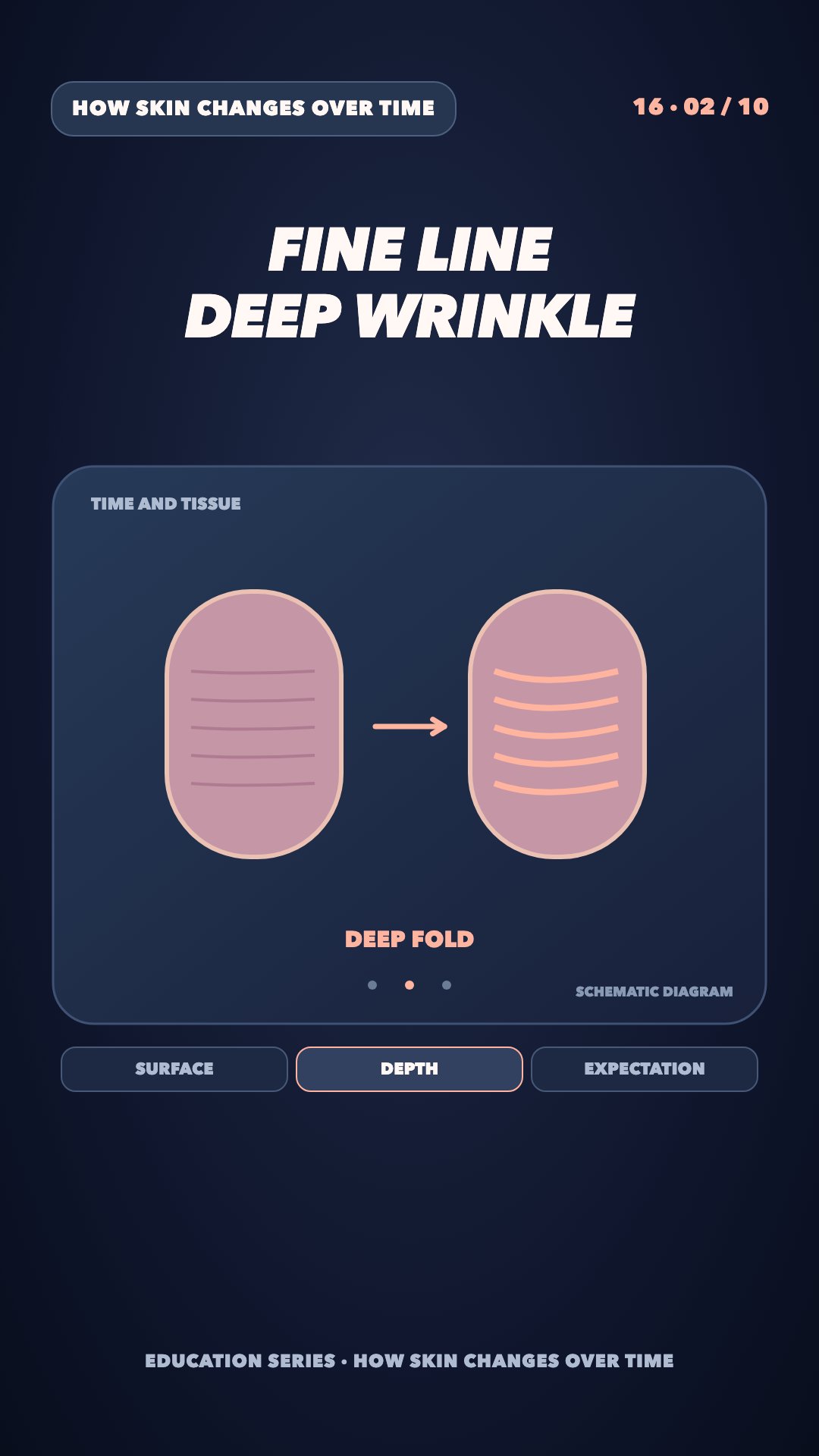
How can fine lines be distinguished from deep wrinkles?

How Skin Changes Over Time

English narration and captions

English transcript and sources

Fine surface lines and deeper folds do not look the same. Moisture, facial expression, sun exposure and tissue changes over time play roles at different levels. Moisturising may reduce the appearance of some surface lines but will not eliminate every deep fold. Setting expectations according to the type of line makes product choices more realistic.

Skin and Aging03

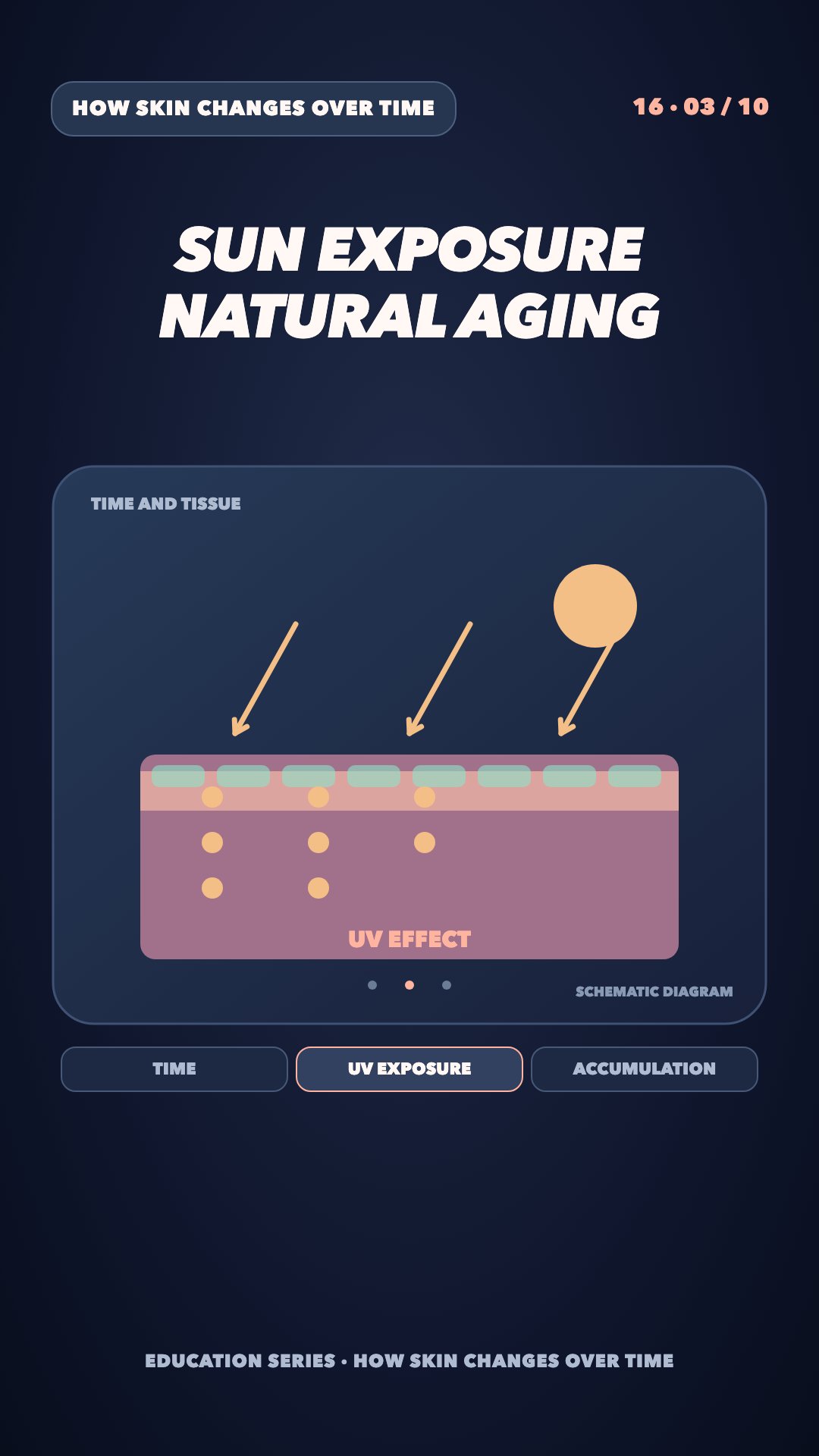
Is sun-related aging different from natural aging?

How Skin Changes Over Time

English narration and captions

English transcript and sources

Skin changes naturally over time. Ultraviolet exposure on top of that can damage connective tissue and alter pigmentation. Explaining aging only by the years on the calendar is therefore incomplete. Sun protection will not stop every change, but it reduces avoidable exposure. Natural processes and accumulated external effects can be seen together in the same skin.

Skin and Aging04

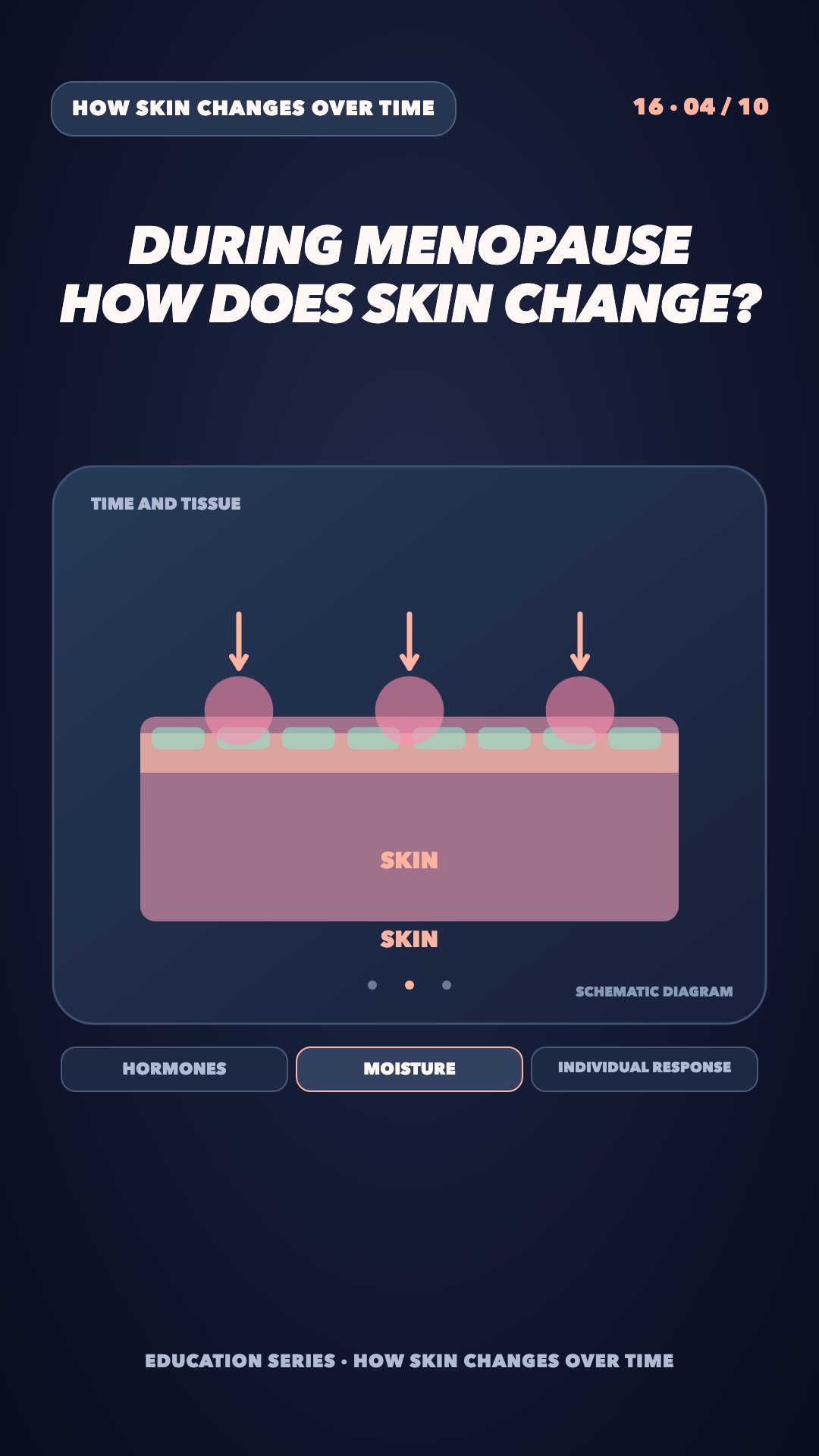
How might skin change during menopause?

How Skin Changes Over Time

English narration and captions

English transcript and sources

Hormonal changes around menopause can affect skin moisture and connective tissue. Some people notice dryness, sensitivity or changes in elasticity. Not everyone has the same symptoms, and other factors may also contribute. Gentle care and sun protection are basic steps. For marked concerns, the approach should be based on an assessment of the whole person.

Skin and Aging05

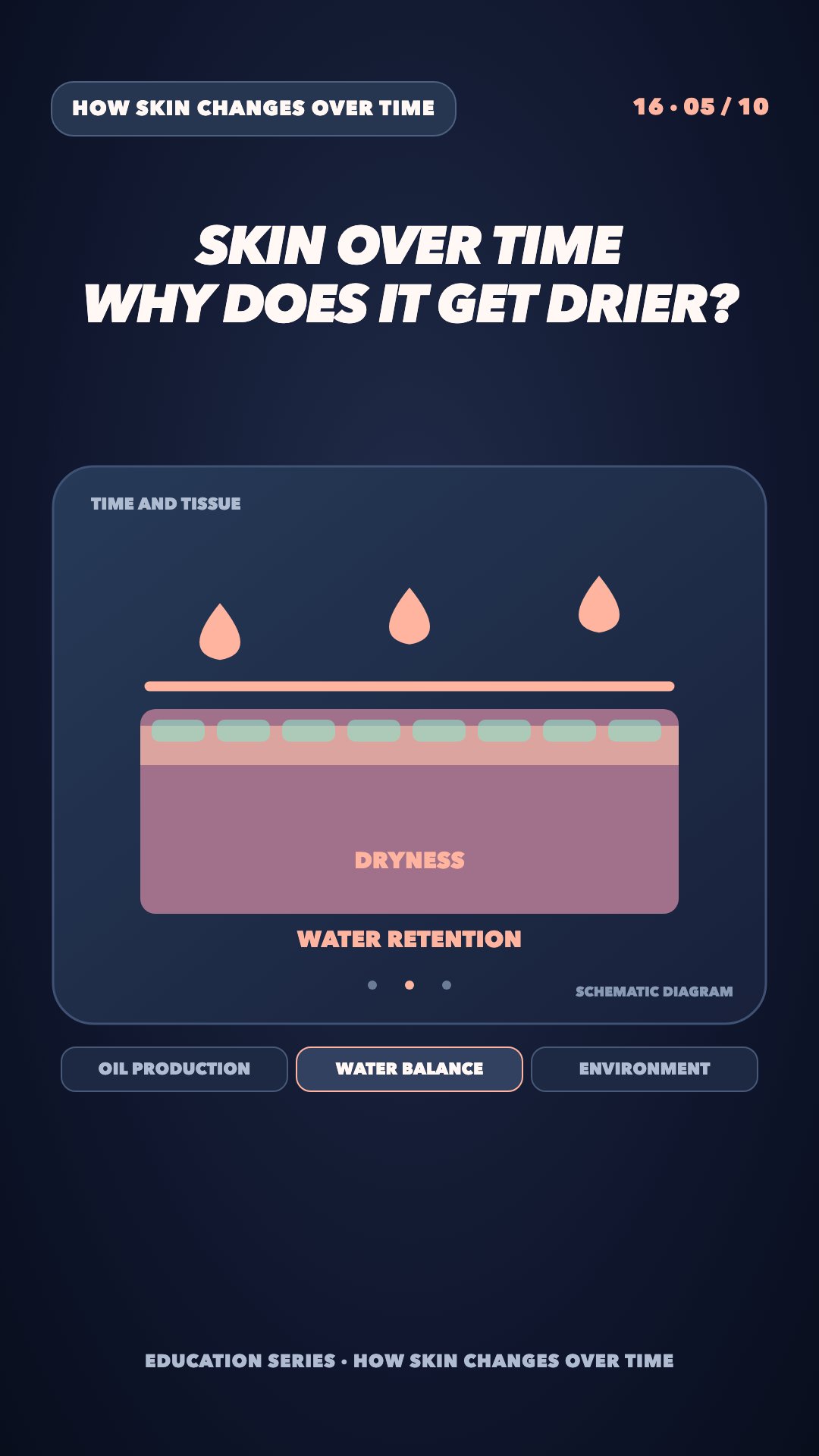
Why can skin feel drier over time?

How Skin Changes Over Time

English narration and captions

English transcript and sources

As people age, skin oil production and structures that retain water can change. Dry air, frequent washing or medicines may then make dryness more noticeable. It does not begin at the same time for everyone. A richer moisturiser may help, but persistent itching or cracking should be assessed rather than attributed only to age.

Skin and Aging06

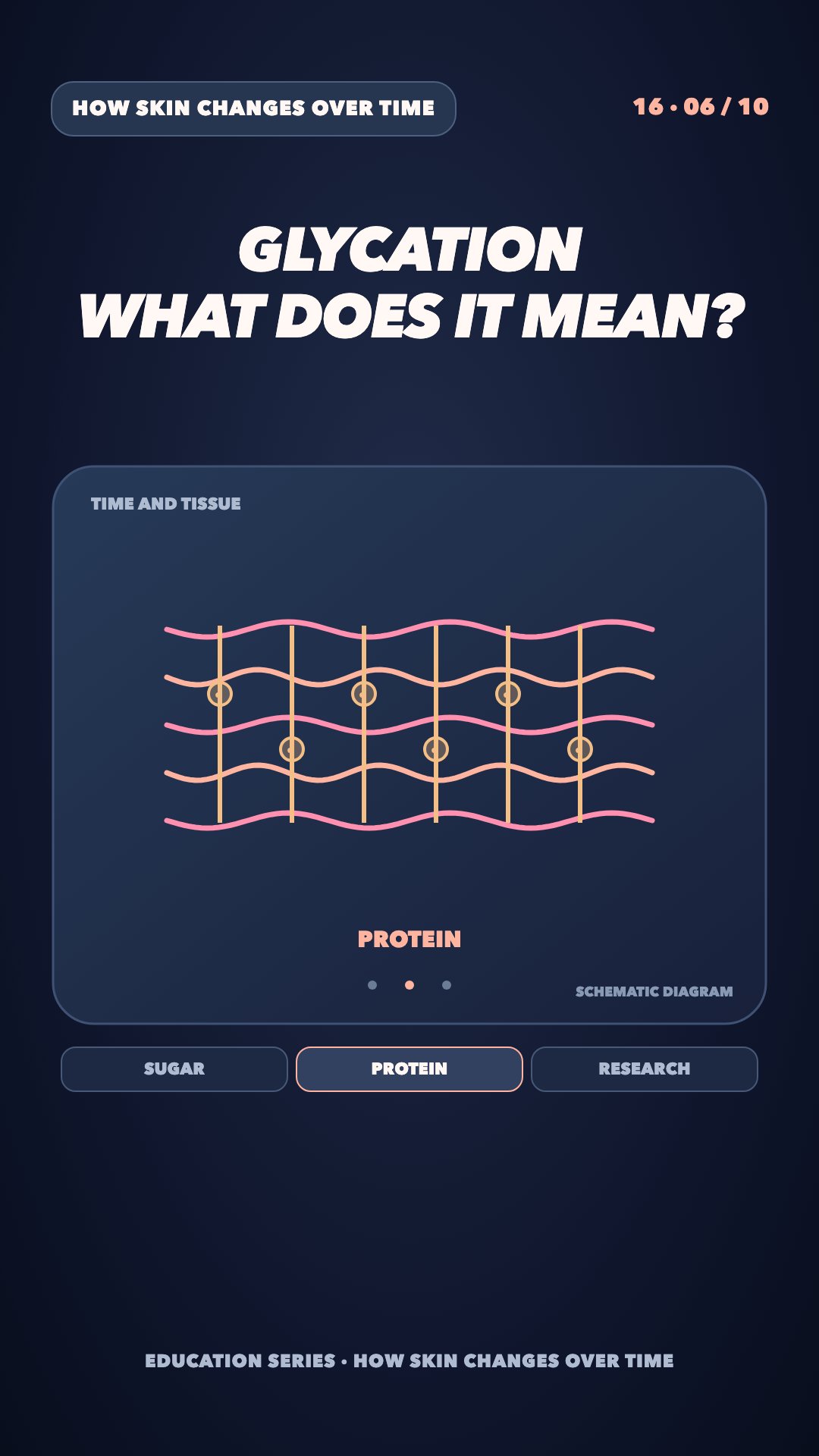
What does glycation mean in skin research?

How Skin Changes Over Time

English narration and captions

English transcript and sources

Glycation describes reactions between sugars and some proteins that do not require enzymes. Products formed over time can accumulate in long-lived structures such as collagen and affect their properties. This mechanism is studied in aging research. But understanding a research mechanism does not prove that a cream or supplement can definitely reverse it in human skin.

Skin and Aging07

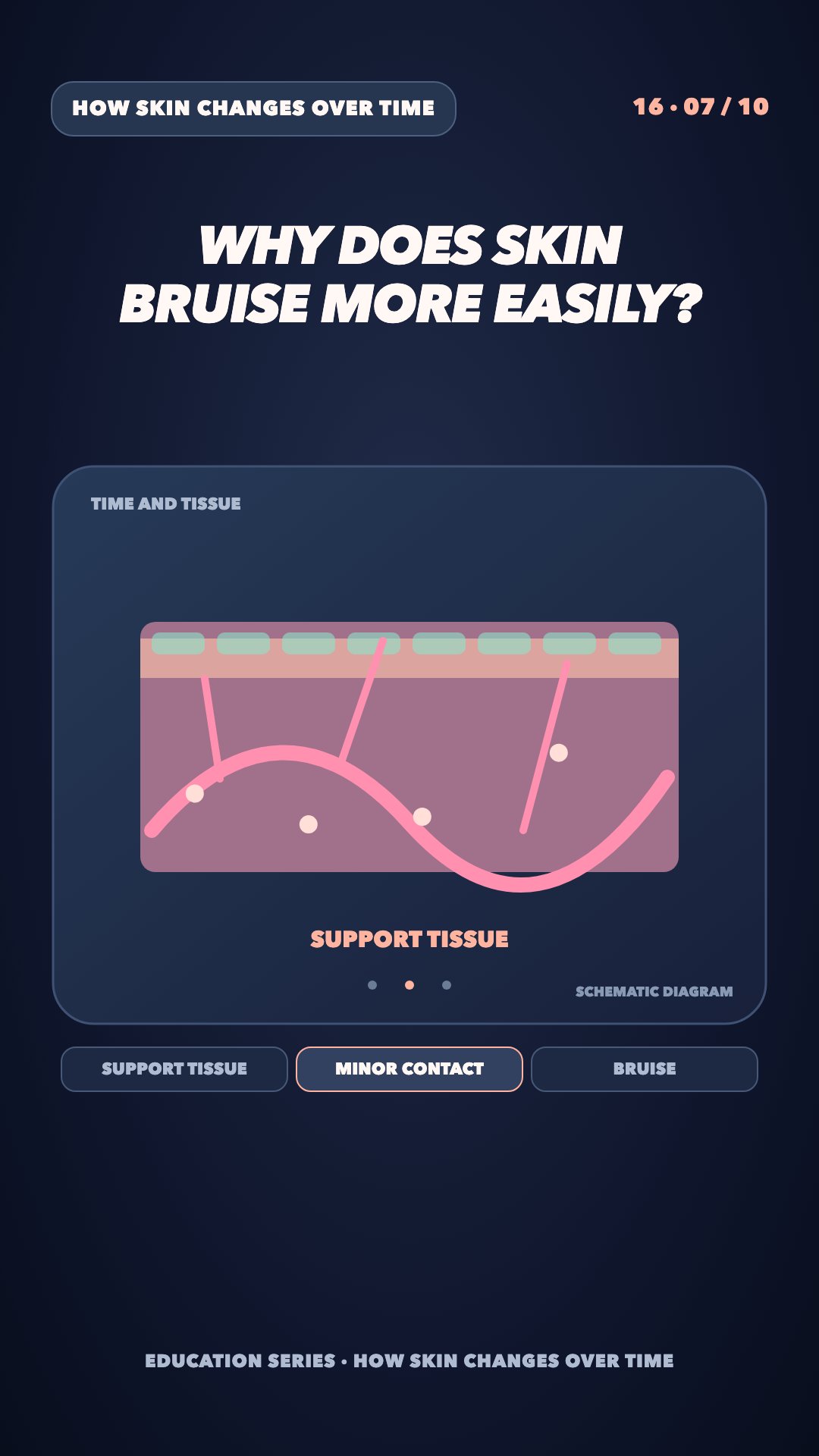
Why can skin bruise more easily with age?

How Skin Changes Over Time

English narration and captions

English transcript and sources

Age and long-term sun exposure can make the skin and supporting tissue around blood vessels more fragile. Even minor contact can then cause bruising in some people. Medicines and other illnesses can also affect the outcome. New, spontaneous or widespread bruising should be assessed rather than blamed only on aging.

Skin and Aging08

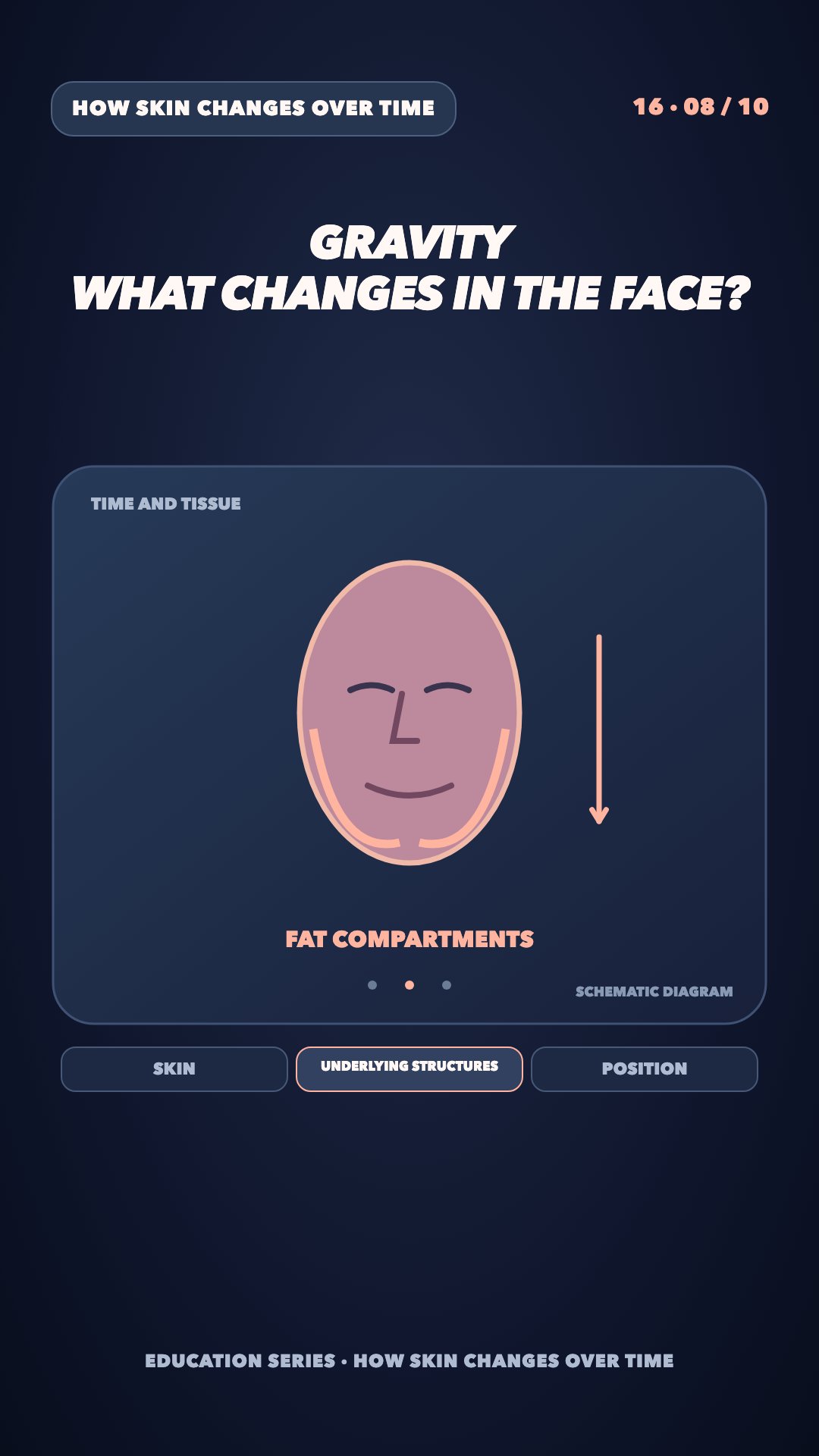
How does gravity affect facial appearance?

How Skin Changes Over Time

English narration and captions

English transcript and sources

Facial appearance is not made up of skin alone. Connective tissue, fat compartments, muscles and bone structure shape it together. Over time, changes in these structures and the effect of gravity can alter how tissues sit. Treating sagging as only a surface issue is therefore incomplete. A cream cannot be expected to counter every structural change.

Skin and Aging09

Why do hands look different with age?

How Skin Changes Over Time

English narration and captions

English transcript and sources

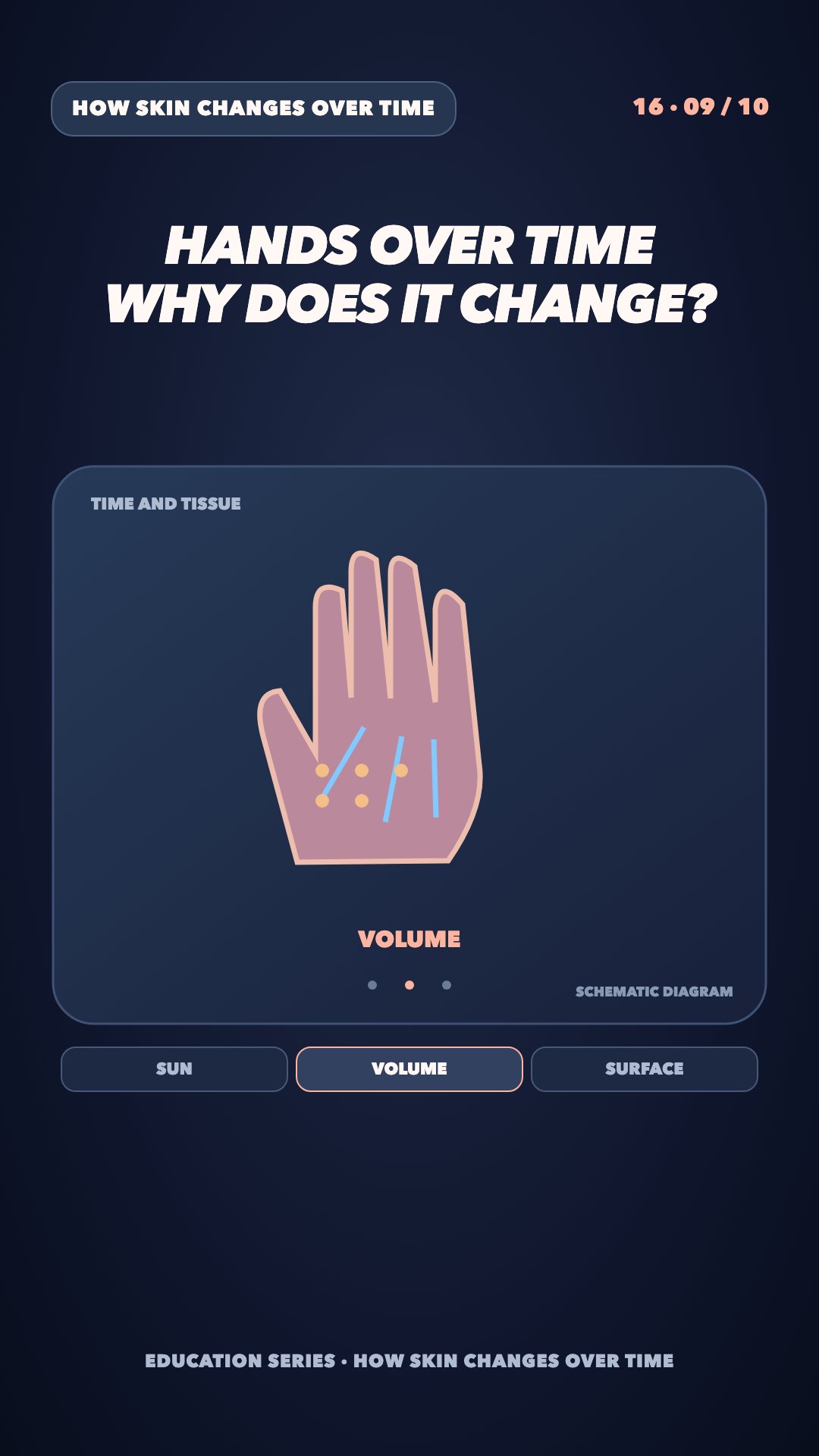
Hands encounter sunlight and daily contact over many years. Spots and lines may appear over time, while changes in volume beneath the skin can make veins and tendons more visible. This appearance does not have a single cause. Sun protection and gentle care provide daily support. A new spot should not automatically be called an age spot simply because it is on a hand.

Skin and Aging10

Why do two people of the same age have different skin?

How Skin Changes Over Time

English narration and captions

English transcript and sources

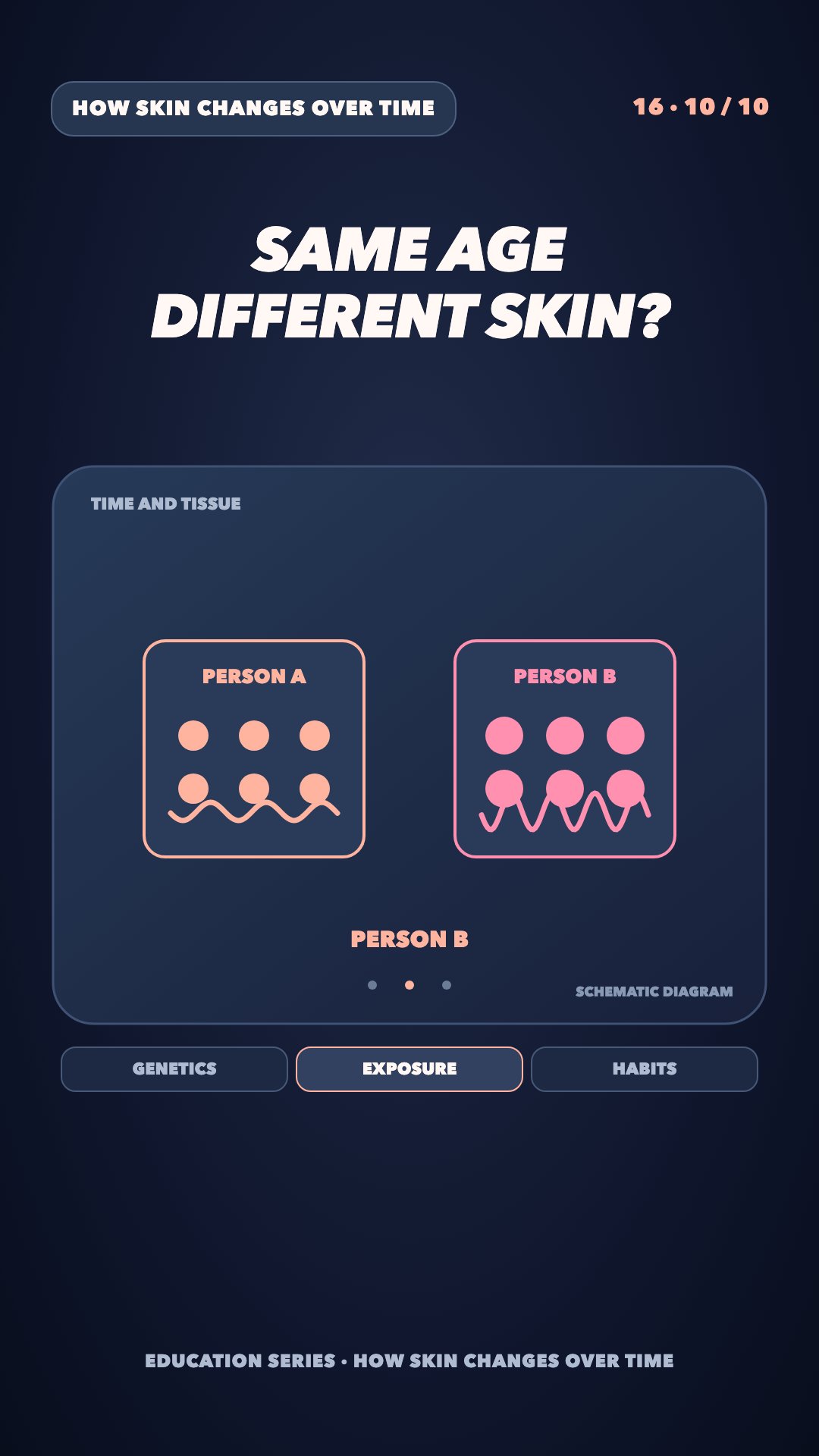
Calendar age is only one part of how skin looks. Inherited traits, sun exposure, smoking, illnesses and daily habits accumulate to produce different outcomes. Lighting in photographs can exaggerate the difference too. Comparing two people's skin using a single age number is therefore not enough. Past exposure and individual characteristics both matter.

Device Science01

How does laser light differ from ordinary light?

The Science Behind Devices

English narration and captions

English transcript and sources

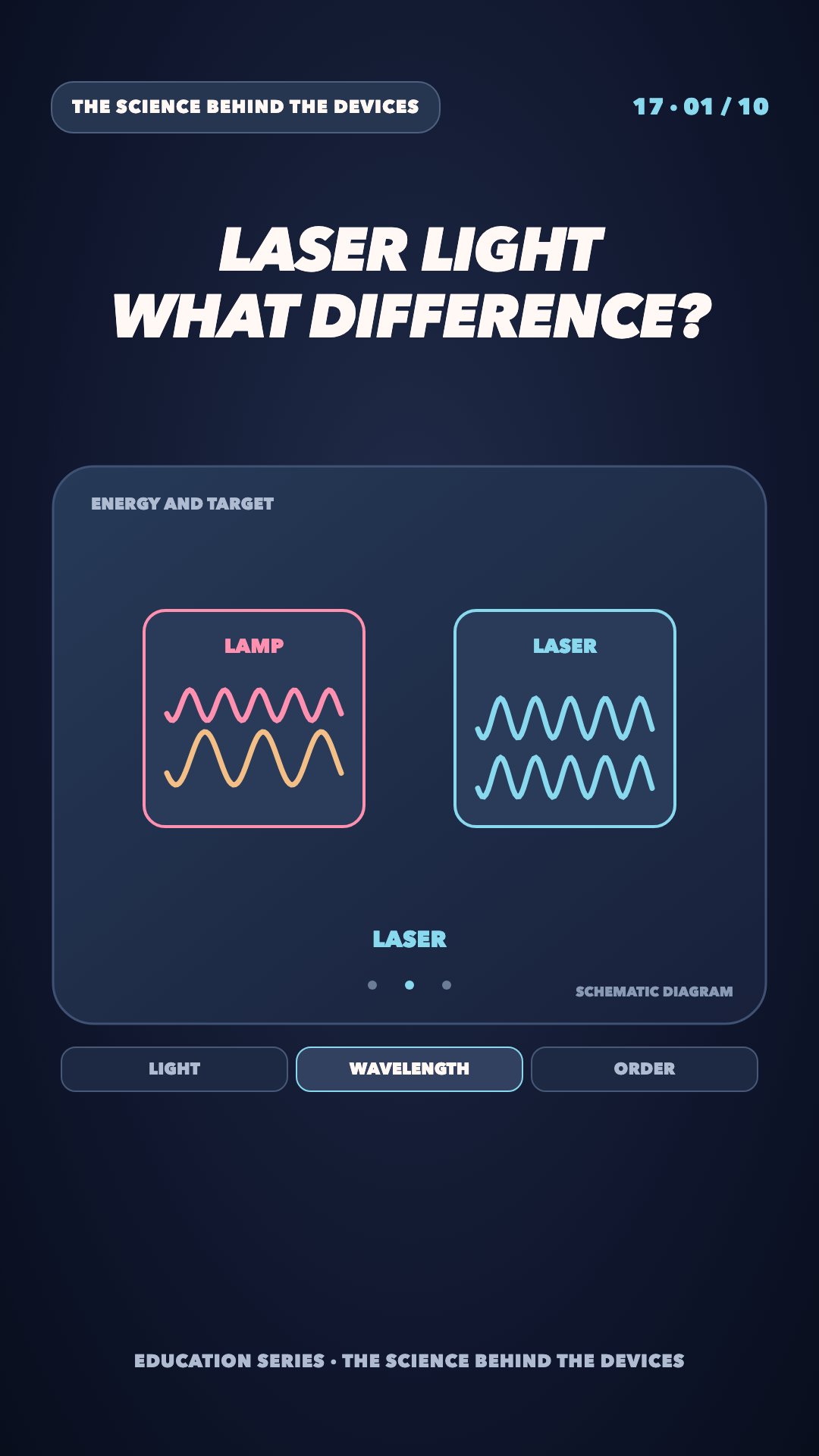
A laser produces concentrated light with particular properties. Unlike the broad light distribution of an ordinary lamp, it can produce a more orderly beam focused on a particular wavelength. In dermatology, this is used to interact with targets in tissue. But the name 'laser' alone does not explain a procedure; the device type and settings matter too.

Device Science02

Why does a laser's wavelength matter?

The Science Behind Devices

English narration and captions

English transcript and sources

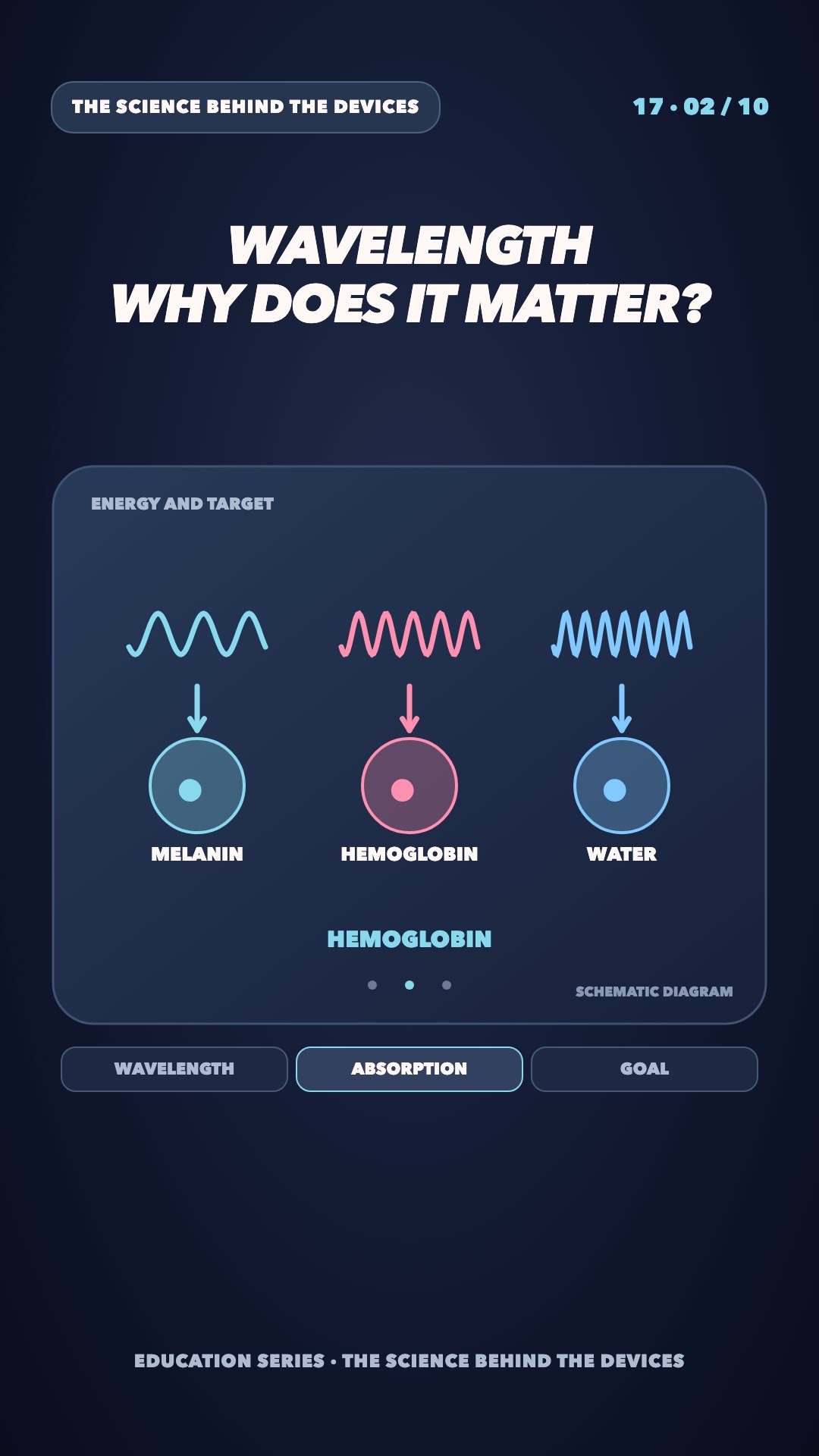
Not every tissue component absorbs every wavelength to the same degree. Melanin, haemoglobin and water interact differently with different light properties. A laser's wavelength therefore affects which target it may be used for. But it is not enough on its own; energy, pulse duration and skin characteristics also change the outcome and risk.

Device Science03

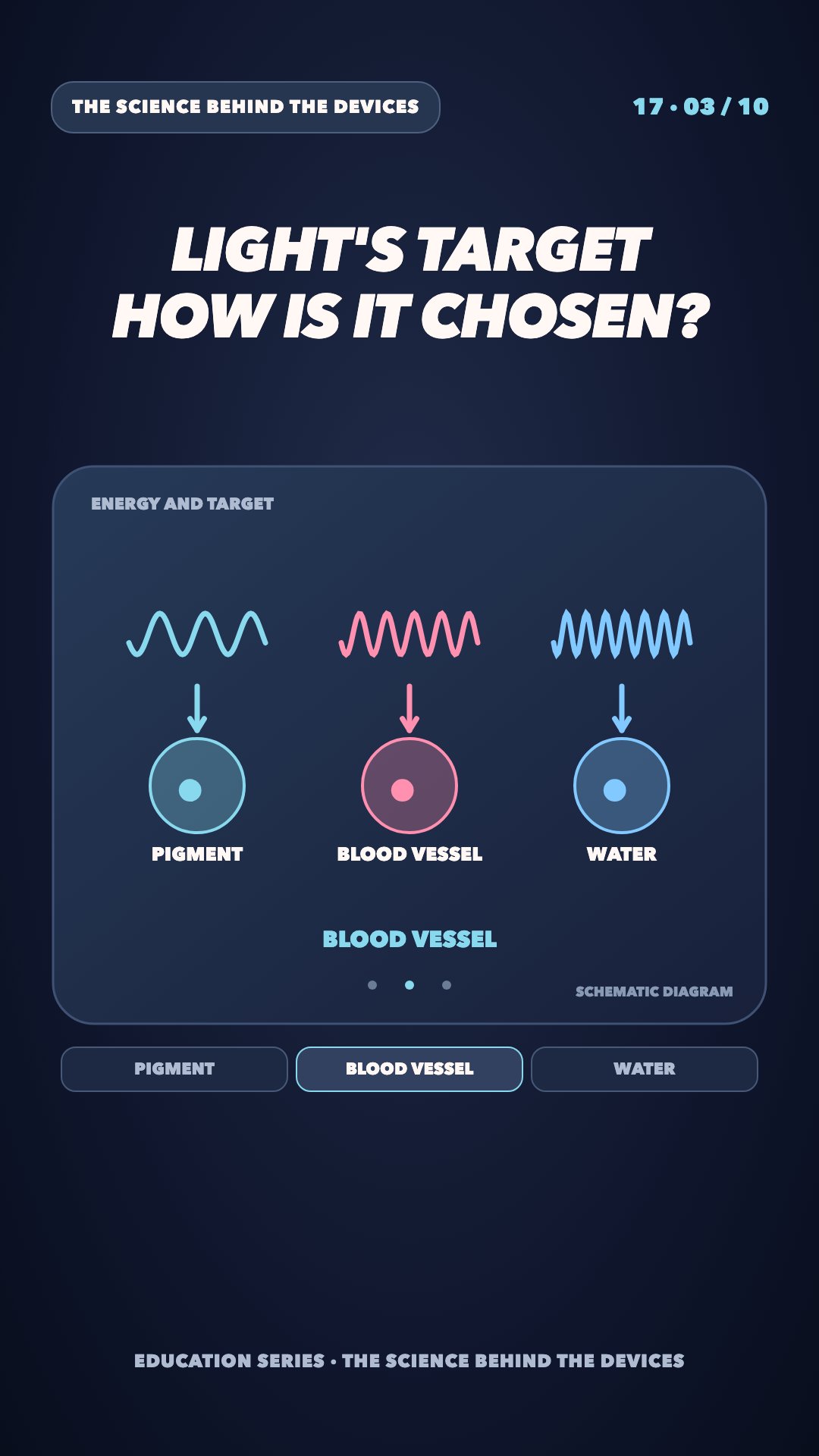
What does a device direct light toward?

The Science Behind Devices

English narration and captions

English transcript and sources

In laser treatments, the target may be pigment, haemoglobin in a blood vessel or water in tissue. Absorption of light by these components transfers energy into the tissue. The target depends on the purpose of treatment. The same device cannot be assumed suitable for every concern; skin tone and protection of surrounding tissue also belong in the plan.

Device Science04

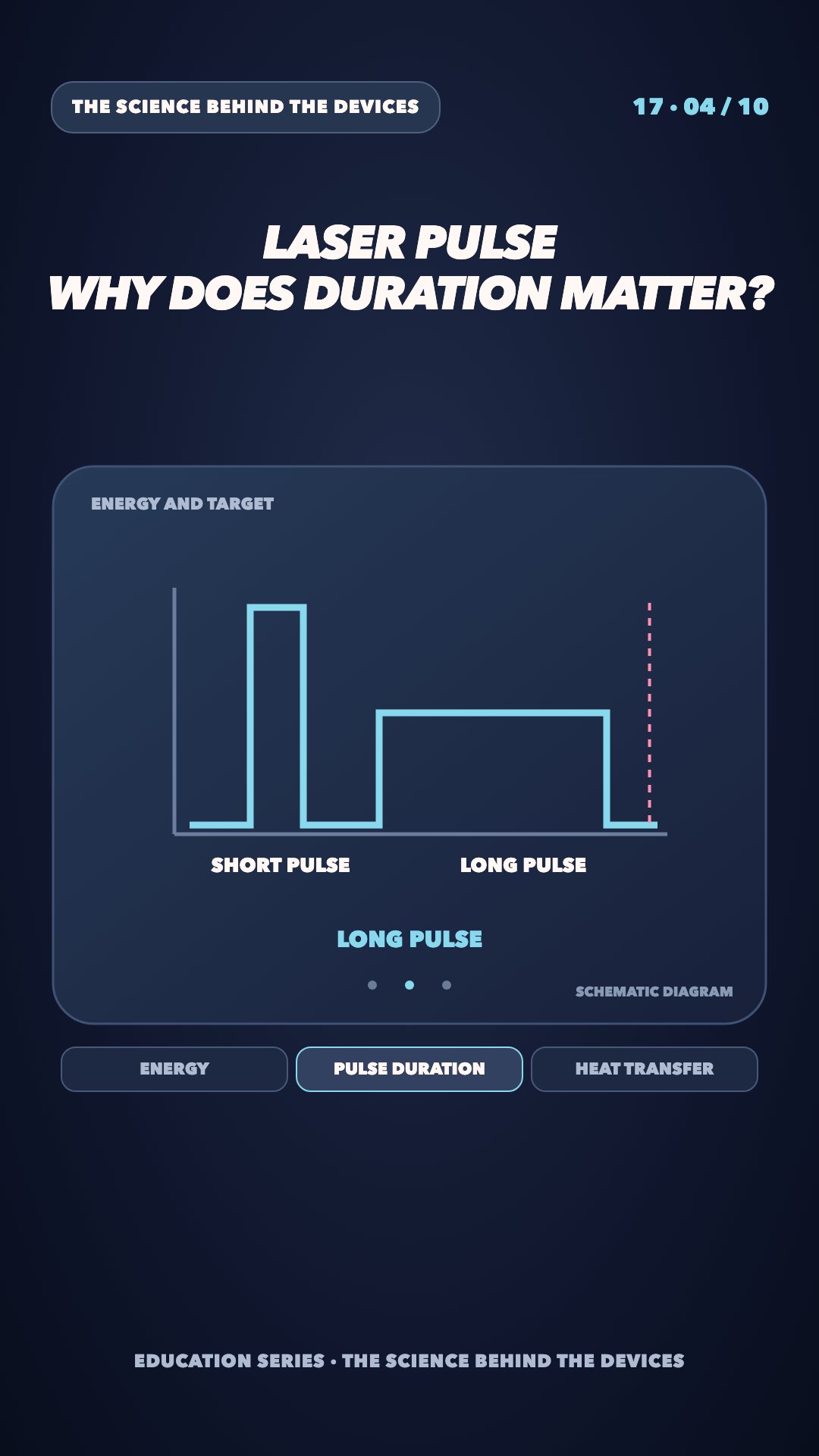
How does laser pulse duration affect the result?

The Science Behind Devices

English narration and captions

English transcript and sources

The amount of energy is not the only consideration with a laser. How quickly or slowly it is delivered affects heating of the target and energy transfer to surrounding tissue. Different targets may call for different pulse durations. One number on a device screen therefore cannot establish a treatment's safety. Wavelength, duration and energy have to be considered together.

Device Science05

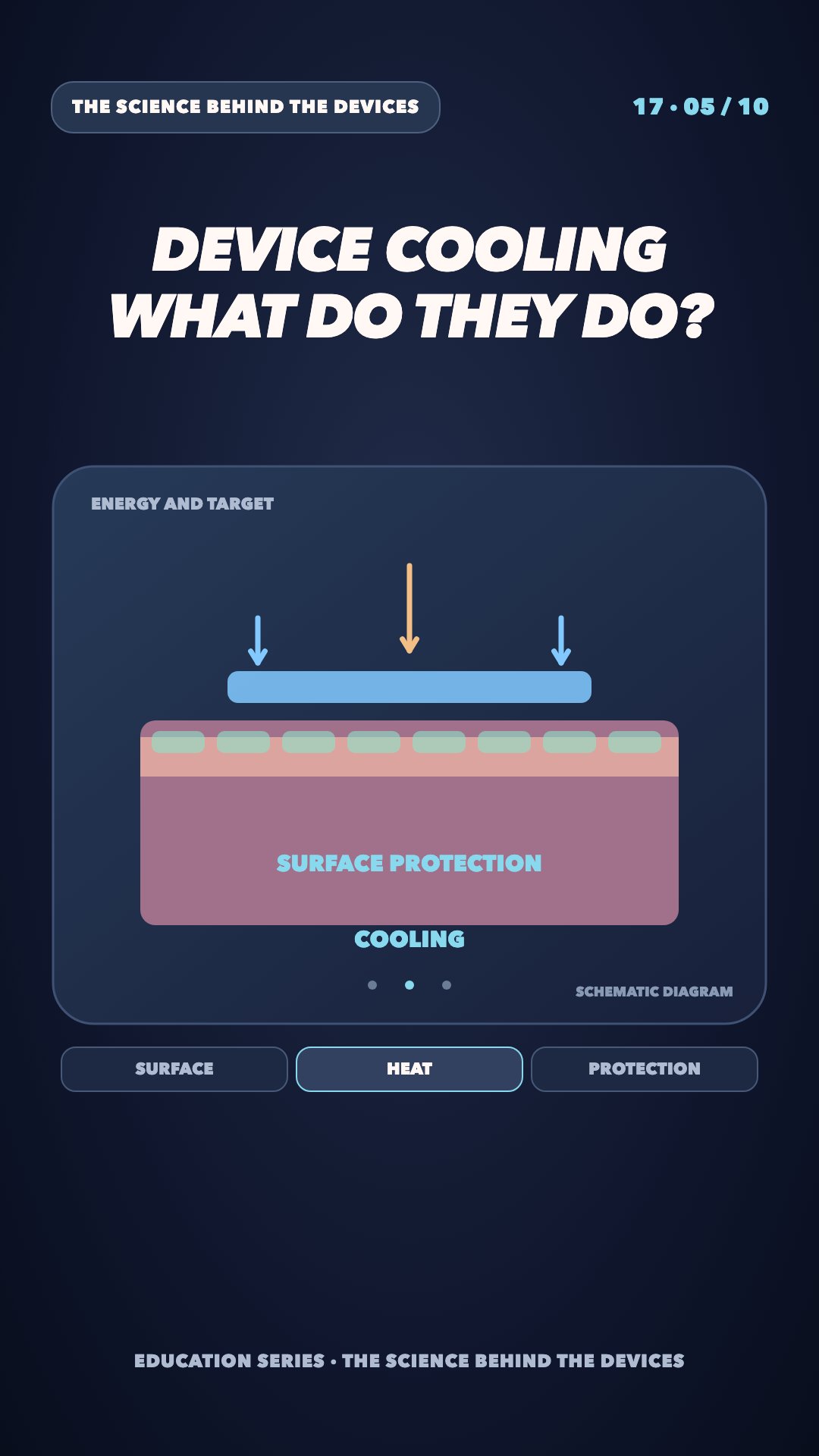
What does cooling do during device treatments?

The Science Behind Devices

English narration and captions

English transcript and sources

During some light-based treatments, cooling can help protect the skin surface and reduce discomfort. It may be delivered through contact, airflow or other systems. But the presence of cooling does not remove every risk. A suitable device, settings and skin assessment are still needed. One protective feature is not an automatic guarantee for the whole procedure.

Device Science06

What is the difference between IPL and laser?

The Science Behind Devices

English narration and captions

English transcript and sources

IPL stands for intense pulsed light. Unlike a laser, it produces a wider range of wavelengths, which filters can adjust. The two may be used for some similar purposes, but they are not the same technology. Which approach is suitable depends on the target and the skin. Neither greater power nor greater safety can be inferred from the name alone.

Device Science07

How does radiofrequency produce heat in tissue?

The Science Behind Devices

English narration and captions

English transcript and sources

In radiofrequency treatments, electrical energy interacts with the properties of tissue to produce heat. Electrode arrangement and settings affect how energy is distributed. This differs from the absorption of light in a laser treatment. Radiofrequency devices do not all work at the same depth. Burns and other risks, as well as the effects, must be assessed in relation to the device and how it is used.

Device Science08

How does focused ultrasound work?

The Science Behind Devices

English narration and captions

English transcript and sources

Ultrasound uses sound waves, not light. In focused systems, the waves are concentrated in a particular area to deliver energy. The effect depends on the device and the tissue being targeted. Treatments sharing the same name do not all produce the same result. Depth, dose and the practitioner's assessment matter; a technological principle is not a guarantee of an individual's outcome.

Device Science09

What happens in tissue during microneedling?

The Science Behind Devices

English narration and captions

English transcript and sources

Microneedling creates controlled tiny punctures in the skin with small needles. A tissue repair response may follow. The device's depth and purpose of treatment matter, and risks include bleeding, infection and pigmentation changes. Channels made by needles do not automatically make it safe to deliver any product into the skin.

Device Science10

How does tattoo removal laser target pigment?

The Science Behind Devices

English narration and captions

English transcript and sources

In tattoo removal, a laser uses a suitable wavelength to target pigment particles. The energy helps break them down, and the fragments then enter the body's clearing processes over time. Different colours do not respond equally to the same light, so all colours are not expected to disappear in one session. Results and risks vary with the tattoo and the technology used.

Wounds and Scars01

What happens first when skin is injured?

The Wound Healing Journey

English narration and captions

English transcript and sources

When skin is injured, the body first works to limit bleeding. Blood vessel responses, platelets and the clotting system take part in this initial stage. The structure that forms also provides a foundation for later repair. Healing is not one step; it consists of overlapping phases. Closure of the surface and complete tissue recovery do not happen at the same moment.

Wounds and Scars02

What happens during the inflammatory stage of healing?

The Wound Healing Journey

English narration and captions

English transcript and sources

Early in wound healing, immune cells arrive at the site. Clearing damaged material and sending repair signals are part of this stage. This inflammatory response does not, by itself, mean infection. However, increasing pain, spreading redness or fever call for a different assessment. It is important not to confuse normal repair with infection simply because both involve inflammation.

Wounds and Scars03

Which cells work as new tissue forms?

The Wound Healing Journey

English narration and captions

English transcript and sources

As a wound closes, several groups of cells work together. Fibroblasts produce connective tissue components; blood vessel cells help form new routes for circulation, and surface cells move to cover the opening. These processes are connected. Blood flow, wound conditions and overall health affect them. Repair cannot be explained simply by a scab forming on top.

Wounds and Scars04

Why does a scar change for months?

The Wound Healing Journey

English narration and captions

English transcript and sources

Once a wound's surface closes, remodelling continues underneath. As collagen structure and tissue organisation change over time, a scar may look flatter, softer or paler. This can take months, and the pace differs between people. The early appearance is not a definite picture of the final result. Time since the injury matters when assessing a scar.

Wounds and Scars05

How is a keloid different from a raised scar?

The Wound Healing Journey

English narration and captions

English transcript and sources

Not every raised scar is a keloid. A hypertrophic scar usually stays within the boundaries of the original wound. A keloid can grow beyond those boundaries and tends to persist. Location, time and individual predisposition matter. Making this distinction is a basic step in discussing treatment options and expected results.

Wounds and Scars06

How does skin tension near a wound affect its scar?

The Wound Healing Journey

English narration and captions

English transcript and sources

When the edges of a healing wound are pulled continuously, mechanical load on the tissue increases. In some areas, that tension can contribute to a wider or thicker scar. Wound direction and movement also matter. The method of stitching and closure is therefore planned according to the area. The final appearance does not depend only on the cream used.

Wounds and Scars07

How can picking a scab affect healing?

The Wound Healing Journey

English narration and captions

English transcript and sources

Pulling off a scab from a healing area can injure the delicate surface underneath again. Renewed bleeding and irritation may delay recovery. Wound care aims to maintain suitable conditions, not to keep interfering with the wound. Cleaning and dressing recommendations vary by wound type. Picking at a deep or apparently infected wound at home is particularly unsuitable.

Wounds and Scars08

What are silicone gels and sheets used for?

The Wound Healing Journey

English narration and captions

English transcript and sources

Silicone gels and sheets are options used in the care of some raised scars. They may be considered to reduce the scar's appearance and discomfort, but results are not the same for everyone. They should not be applied indiscriminately to an open wound or scab. Their use is generally planned after the surface has healed. Product form, regular use and scar type affect expectations.

Wounds and Scars09

Why can stitch marks look different?

The Wound Healing Journey

English narration and captions

English transcript and sources

A scar after stitches depends on more than the type of thread. Wound depth, tension at the edges, location and healing conditions all play a role. The closure method is chosen with those features in mind. The same technique may look different in two people. Both the nature of the original wound and its changes over time matter when assessing the final scar.

Wounds and Scars10

Why might an old scar never disappear completely?

The Wound Healing Journey

English narration and captions

English transcript and sources

A scar is repair tissue formed after an earlier injury. It may not fully restore all the features of the original skin. Its appearance can change with time and may be reduced with some methods, but complete disappearance cannot be guaranteed. Scar colour, height and structure call for different approaches. Realistic expectations begin with understanding the type of scar.

Hair Health01

What layers make up a hair strand?

Inside a Hair Strand

English narration and captions

English transcript and sources

A hair strand is not a single solid thread. The cuticle is outermost, with the cortex beneath; a medulla may be present in the centre of some hairs. The cortex contributes to the strand's main structural properties and colour. The outer layer protects its surface. Understanding hair care requires distinguishing the living root from the structure of the strand outside the skin.

Hair Health02

Why does the hair's outer layer matter?

Inside a Hair Strand

English narration and captions

English transcript and sources

The hair cuticle forms the strand's outer surface from thin overlapping structures. This surface and its oily components help protect against friction and chemical effects. When it is damaged, the strand may feel rougher or more fragile. Shine is not determined only by colour; the surface's arrangement also affects how light reflects from the hair.

Hair Health03

What is hair porosity?

Inside a Hair Strand

English narration and captions

English transcript and sources

Hair porosity is a term used to describe how a strand interacts with water and products. Surface structure and damage can affect how substances enter and are retained in the strand. Chemically treated hair may behave differently in this respect. But a single float test at home cannot reliably classify the hair's entire structure. Its care history and actual behaviour matter too.

Hair Health04

Why does wet hair behave differently?

Inside a Hair Strand

English narration and captions

English transcript and sources

Water changes a hair strand's physical behaviour. Combing and pulling while wet can make breakage more likely in some hair. Curl pattern and structure matter too, however, and very curly hair may need a different approach to detangling. Instead of applying one rule to everyone, detangle gently and reduce unnecessary pulling. Being wet does not mean hair can stretch without limit.

Hair Health05

How does hair dye change hair structure?

Inside a Hair Strand

English narration and captions

English transcript and sources

Hair dyes do not all work the same way. Some deposit colour on the surface, while permanent systems involve chemical processes that reach inside the strand. These processes may affect the outer layer and the strand's mechanical properties. The effect depends on the formula and how often it is used. A change in hair colour and possible strand damage are separate issues to consider together in hair care.

Hair Health06

What can high heat change in a hair strand?

Inside a Hair Strand

English narration and captions

English transcript and sources

Excessive heat during styling can strain a hair strand's structure and surface. Repeated use may be associated with breakage, dullness or a rough feeling. Contact time and the hair's previous treatments matter as well as temperature. More heat does not automatically mean better styling. Reducing heat exposure helps protect the strand.

Hair Health07

How is dry scalp different from dandruff?

Inside a Hair Strand

English narration and captions

English transcript and sources

Flaking on the scalp does not have a single cause. It can be related to dryness, but flaking also occurs with dandruff and seborrhoeic dermatitis. Oiliness, redness and itching change the assessment. It is difficult to make a definite diagnosis from the colour of flakes alone. With persistent symptoms, the scalp needs to be considered separately from the hair strand.

Hair Health08

Why can alopecia areata cause patchy hair loss?

Inside a Hair Strand

English narration and captions

English transcript and sources

Alopecia areata is a condition involving the immune system's interaction with hair follicles. It may cause round or oval patches of hair loss on the scalp, and other body hair may also be affected. Despite what its Turkish name might suggest, it is not necessarily a fungal infection and it is not contagious. Not every patch of hair loss is alopecia areata. Proper assessment helps distinguish similar-looking causes.

Hair Health09

What does hormone sensitivity in hair follicles mean?

Inside a Hair Strand

English narration and captions

English transcript and sources

Some hair follicles are more sensitive to the effects of androgens because of inherited traits. Over time, their growth cycle and strand thickness may change; this is called miniaturisation. Blood hormone levels alone do not explain it. Follicle sensitivity and the pattern of hair loss matter too. Not all follicles respond alike in the same hormonal environment.

Hair Health10

Why is the donor area important in hair transplantation?

Inside a Hair Strand

English narration and captions

English transcript and sources

Hair transplantation does not create new follicles; it moves existing ones from one area to another. Donor-area density and follicle characteristics are therefore central to planning. The supply is limited, and overharvesting can affect appearance. Protecting the area left behind matters as much as the area receiving grafts. The outcome is not judged only by the number of transplanted follicles.

Cosmetics Guide01

What might applying ice to the face change?

Social Media Claims

English narration and captions

English transcript and sources

Cold contact can temporarily change the blood vessel response and the appearance of swelling. This does not mean pores permanently shrink or the face changes shape. Holding ice directly against the skin for too long can cause cold injury. Arbitrary use may be unsuitable, especially on sensitive skin or after a procedure. A short-lived appearance change should be distinguished from a lasting effect.

Cosmetics Guide02

Why might the face look different after a massage?

Social Media Claims

English narration and captions

English transcript and sources

Skin colour or the appearance of swelling may change briefly after a massage. Changes related to touch, circulation and fluid distribution are being studied. But a photograph taken immediately afterward does not prove lasting facial reshaping. Pressure and technique also affect the result. Feeling relaxed after a treatment and showing a long-term structural effect require separate assessments.

Cosmetics Guide03

What can you expect from gua sha?

Social Media Claims

English narration and captions

English transcript and sources

There are small studies of gua sha and facial rollers. Changes in some measurements do not mean lasting facial slimming for everyone. Sample size, a control group and follow-up time matter when interpreting results. Heavy pressure can cause irritation or bruising. When assessing a method, look at what the research actually measured rather than a viral video.

Cosmetics Guide04

What does “detox” on a skincare product mean?

Social Media Claims

English narration and captions

English transcript and sources

The word 'detox' on a skincare product is not proof that it removes toxins from the body. To understand such a claim, ask which substance is removed, by what route and in what amount. Cleaning dirt and oil from the surface is not equivalent to detoxifying the whole body. A broad word on a label should not be read as a measured result.

Cosmetics Guide05

Is a collagen cream the same as producing collagen in skin?

Social Media Claims

English narration and captions

English transcript and sources

A cream containing collagen does not show that its collagen is deposited directly in the dermis. It may affect surface moisture and feel, and the ingredient's form and formula matter. The skin's own collagen production is a different biological process. 'Contains collagen' and 'proven to increase collagen production in human skin' do not convey the same information.

Cosmetics Guide06

How should research on collagen supplements be read?

Social Media Claims

English narration and captions

English transcript and sources

Studies of collagen supplements measure outcomes such as moisture and elasticity. Some reviews find benefits, but results may vary with study quality and funding. Participant numbers, control groups and the product used matter. A positive result from one study does not mean every supplement has the same effect in everyone. The details of the research say more than its headline.

Cosmetics Guide07

What does “stem cell” mean in cosmetics?

Social Media Claims

English narration and captions

English transcript and sources

In cosmetics, the term 'stem cell' sometimes refers to extracts obtained from plant cell cultures. This does not mean that a cream rebuilds skin using human stem cells. The properties of the extracted substances and the product's human data need separate assessment. Using the same term in different contexts can be confusing. Asking what the ingredient actually is is the first step in understanding the claim.

Cosmetics Guide08

What questions should you ask about exosome treatments?

Social Media Claims

English narration and captions

English transcript and sources

Exosomes are small vesicles released by cells. Hearing this name in connection with a treatment does not, by itself, establish that a product is safe and effective. Its source, sterility, route of administration and authorisation for that use should be questioned. The quality of human studies also matters. Treating different products as though they were all the same can hide their uncertainties and risks.
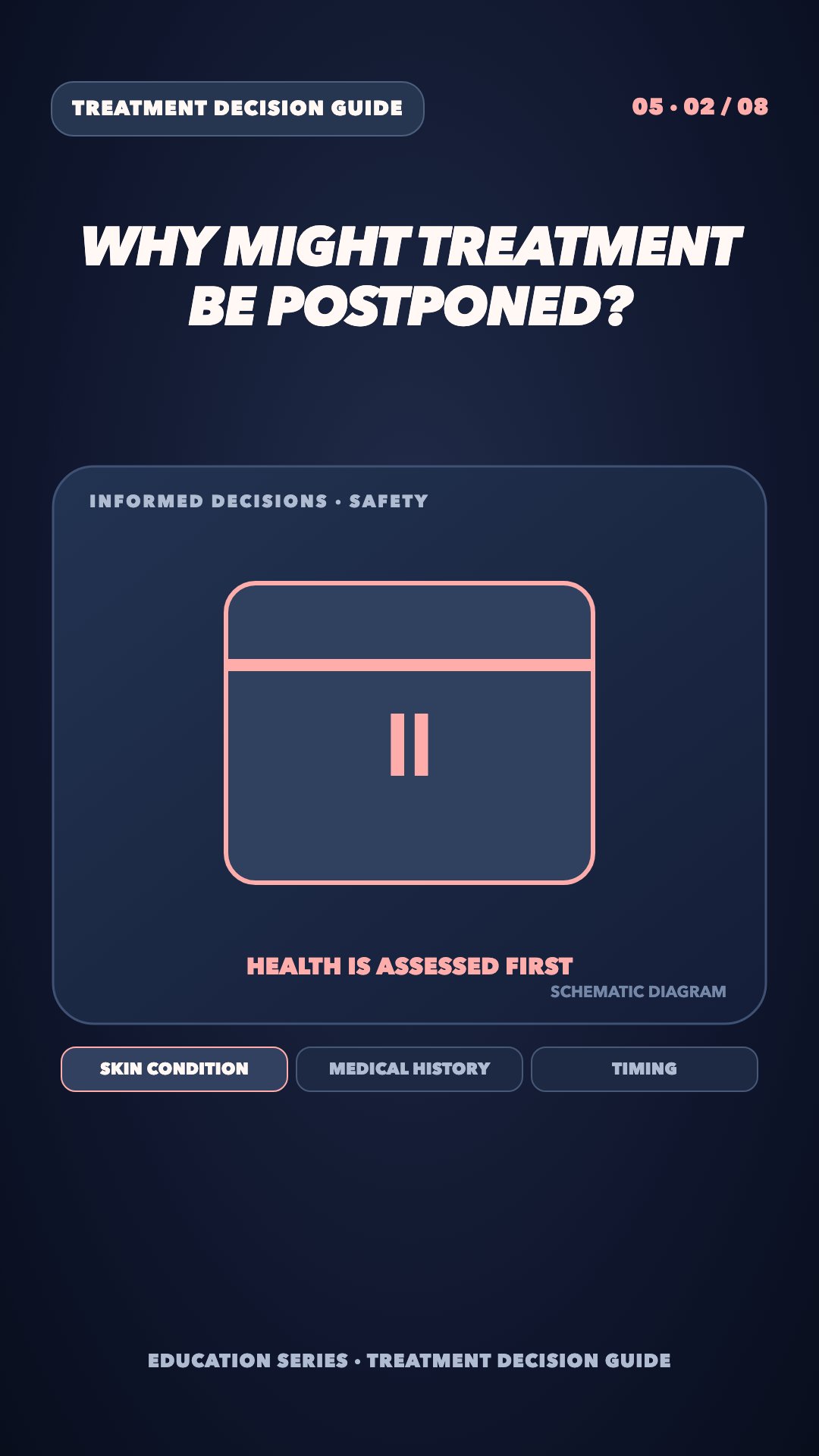
Cosmetics Guide09

What does a product's before and after image prove?

Social Media Claims

English narration and captions

English transcript and sources

Before and after photographs can show a change, but cannot prove its cause on their own. Lighting, angle, makeup and the time of capture can alter appearance. Other methods used in the meantime also matter. Separating out a product's effect requires consistent measurement and a suitable comparison. One striking photograph should not be read as a guarantee of results for everyone.

Cosmetics Guide10

What does “clinically tested” tell us?

Social Media Claims

English narration and captions

English transcript and sources

The phrase 'clinically tested' says that a test was conducted; by itself it does not say how much benefit was found. Ask how many people took part, what was measured, whether there was a comparison group and what the result was. Passing an irritation test is not the same as demonstrating a particular effect. Without knowing what the test involved, broad conclusions cannot be drawn.

Skin Science40

Why is cellulite about more than fat?

Inside the Skin

English narration and captions

English transcript and sources

Cellulite cannot be explained simply by excess fat beneath the skin. Fibrous bands connecting the skin to deeper tissue pull downward in some places, while fat tissue may bulge upward between them. This arrangement contributes to the dimpled and uneven surface. People who are slim or exercise regularly can also have cellulite; it is usually harmless and common. Reducing the amount of fat therefore does not necessarily eliminate its appearance.

Skin Science39

Why does rosacea redness flare up?

Inside the Skin

English narration and captions

English transcript and sources

Why can a hot drink suddenly increase redness on some faces? Rosacea is a chronic skin condition that can involve recurring facial flushing, sensitivity and sometimes acne-like bumps. The response of superficial blood vessels and processes related to inflammation may contribute to symptoms; its exact cause is not fully understood. Sun, heat or certain foods may trigger flares, depending on the person. But not all facial redness is rosacea; distinguishing similar-looking conditions is the first step toward an appropriate approach.

Skin Treatments38

Why does fractional laser treat tiny areas?

Inside the Skin

English narration and captions

English transcript and sources

Why does a laser target many small areas rather than the entire skin surface? Fractional lasers create microscopic treatment zones while leaving tissue between them untreated. Controlled heat stimulates repair and collagen remodelling in those zones. The preserved tissue helps healing, and the appearance of some scars and texture irregularities may improve over time. The depth of the effect and recovery time vary with the device; redness, colour changes and, rarely, scarring may occur.

Skin Treatments37

What does LED light change in the skin?

Inside the Skin

English narration and captions

English transcript and sources

Not every red light directed at the skin has the same biological effect. LED treatments aim to affect light-sensitive structures in the skin using particular wavelengths. Blue light may activate certain molecules produced by bacteria associated with acne, while red light is being studied for its effects on cellular responses and inflammation. Results depend on the device and how it is used; light colour alone does not tell the whole story. The same effect should not be expected for every type of acne, and these methods should not be viewed as a guaranteed solution on their own.

Skin Treatments36

How do retinoids work in the skin?

Inside the Skin

English narration and captions

English transcript and sources

Peeling alone does not show that a product is working better. Retinoids are substances related to vitamin A; they affect how cells renew and mature. By reducing the build-up of cells at hair follicle openings, they may help limit some forms of acne. Some also affect collagen-related processes and may improve the appearance of fine lines over time; retinol and prescription retinoids do not have the same strength. Results take time, irritation may occur, and these products are not used during pregnancy.

Hair and Scalp35

Why can hair shed months after stress?

Inside the Skin

English narration and captions

English transcript and sources

Hair shed today may be linked to an event months earlier. Hair follicles follow a cycle of growth, transition and rest. After a feverish illness, childbirth or intense stress, more follicles may enter the resting phase; increased shedding is usually noticed several months later. In this condition, called telogen effluvium, follicles are often not lost permanently, and recovery takes time. But attributing all shedding to stress can cause other reasons to be overlooked.

Skin Science34

Why are stretch marks more than a surface change?

Inside the Skin

English narration and captions

English transcript and sources

A stretch mark is more than a fine line on the skin's surface. When skin stretches or shrinks quickly, damage may develop in the collagen and elastin structures that support it. Hormones and genetic susceptibility can also contribute to the marks that appear after repair. New stretch marks may look red or purple; they can fade and become paler over time. Fading colour does not mean the underlying tissue has fully returned to its former state; treatments may reduce their appearance but cannot guarantee complete removal.

Skin Science33

What causes dark circles under the eyes?

Inside the Skin

English narration and captions

English transcript and sources

Some under-eye darkness may be a shadow rather than true pigmentation. Increased pigment, visible blood vessels beneath thin skin and anatomical hollows can create a similar appearance in this area. Pigment changes the skin's colour, while a hollow casts a shadow depending on the light. More than one cause can be present in the same person; lack of sleep is not the only explanation. Looking at colour alone cannot establish the cause, and the same treatment should not be expected to work for everyone.

Skin Science32

Why do acne scars look different?

Inside the Skin

English narration and captions

English transcript and sources

Why can two acne scars on the same face respond differently to the same treatment? When inflammation affects the skin's supporting tissue, depressed scars can develop if too little collagen forms during healing. Some are narrow and deep, some have sharp edges, and others are wide and wavy. Scars that look similar on the surface can have different tissue structures underneath, so the approach depends on the type of scar. A flat change in colour after acne is not necessarily a depressed scar.

Skin Science31

Why are blackheads black?

Inside the Skin

English narration and captions

English transcript and sources

A blackhead being black does not mean the skin is dirty. When oil and dead cells collect at the opening of a hair follicle, they can form a small plug. If the opening is exposed to the surface, the material interacts with oxygen in the air and becomes dark. If the opening stays closed, a white or skin-coloured bump may appear instead. Scrubbing blackheads hard does not address their cause; it may increase irritation, and squeezing can leave marks on the skin.

PRP30

How does hair PRP work?

Explore the Treatments

English narration and captions

English transcript

Scalp PRP uses platelet-rich plasma prepared from a person's own blood on the scalp. Growth factors carried by platelets are intended to support cellular signals around hair follicles and the growth phase. Some studies suggest it may contribute to hair density in certain people, particularly with hereditary hair thinning. Response depends on the cause of hair loss and the condition of the follicles. It is not effective for every type of hair loss. Pain during treatment and tenderness or bruising afterward may occur; how long results last varies from person to person.

PRP29

What is facial PRP?

Explore the Treatments

English narration and captions

English transcript

Facial PRP uses platelet-rich plasma separated from a person's own blood on the skin. Platelets contain growth factors involved in repair signals between cells. The aim is for these signals to support collagen-producing cells and influence skin tissue. Although it is being studied for fine lines and skin quality, results vary with the preparation method and the individual. Evidence for a rejuvenating effect remains limited. Using a person's own blood does not eliminate the risks of bruising or infection.

Thread Lifts28

How does a brow thread lift work?

Explore the Treatments

English narration and captions

English transcript

A brow thread lift aims to raise tissue around the brow to a limited degree with the support of medical threads. The threads' mechanical pull affects brow position, and the collagen response during healing may add support. It may be used for mild brow drooping, but the result depends on skin elasticity and facial anatomy. It does not remove excess skin from the upper eyelid. The effect is temporary, and perfect symmetry between the two sides cannot be guaranteed. Bruising, infection and skin irregularities may develop.

Thread Lifts27

What is a regional thread lift?

Explore the Treatments

English narration and captions

English transcript

A thread lift aims to give loosened facial tissue mechanical support using specialised medical threads. The threads lift tissue to a limited degree, while the healing response around them may stimulate collagen production. It is generally considered for supporting contours in selected facial areas with mild sagging. The degree of effect depends on tissue structure, the thread used and the technique. It is not a substitute for a surgical facelift. Results are temporary; bruising, infection, skin pulling or unevenness may occur.

Body Contouring26

What is injection lipolysis?

Explore the Treatments

English narration and captions

English transcript

Injection lipolysis involves delivering substances into tissue to reduce a limited fat deposit. Its mechanism depends on the active ingredient in the product. Deoxycholic acid, for example, is not an enzyme; it disrupts cell membranes, causing fat cells to break down. In the United States, approval for deoxycholic acid is limited to fat beneath the chin. This is not a weight loss method. Risks such as swelling, persistent firmness and tissue damage mean products cannot be treated as interchangeable.

Mesotherapy25

How does a pigmentation treatment plan work?

Explore the Treatments

English narration and captions

English transcript

A pigmentation treatment plan starts by identifying the cause of a change in colour, then combining suitable methods. Sun spots, melasma and darkening after inflammation are different conditions. Some products reduce pigment production, while selected procedures help remove pigmented cells. Sun protection helps limit new pigment formation and darkening of existing spots. Not every spot is treated in the same way. Melasma in particular may recur, and irritation can worsen darkening, so treatment is planned according to skin type.

Mesotherapy24

What is hair mesotherapy?

Explore the Treatments

English narration and captions

English transcript

Hair mesotherapy involves small injections of various active substances into the scalp. The aim is to deliver a selected ingredient to the tissue around the hair follicles and support the growth cycle. Depending on the substance, treatment may target hormonal effects or growth signals in the follicles. Suitability depends on the cause of hair loss and the evidence for the product used. It has not been shown to work for every type of hair loss. Research methods vary, and pain, inflammation or increased shedding with some treatments may occur.

Mesotherapy23

What is skin mesotherapy?

Explore the Treatments

English narration and captions

English transcript

Skin mesotherapy describes a method of delivering selected substances into the skin through small injections. Different ingredients may be used to support skin quality on the face, neck and décolletage. For example, products containing hyaluronic acid aim to increase moisture retention by binding water. Vitamin mixtures and hyaluronic acid products cannot be assumed to have the same effects. Evidence varies by ingredient and is limited for many mixtures. Risks include bruising, allergic reactions and infection.

Fillers22

What is a whole-face filler approach?

Explore the Treatments

English narration and captions

English transcript

A whole-face filler approach plans treatment by considering different facial areas in relation to one another. The aim is to assess the balance between areas while addressing volume loss and facial proportions together. Hyaluronic acid fillers have a water-holding gel structure that supports soft tissue volume. The areas considered depend on the person's anatomy and needs. This approach does not eliminate marked sagging. Bruising and swelling can occur; serious complications such as vascular occlusion are rare but possible.

Fillers21

What is jawline filler?

Explore the Treatments

English narration and captions

English transcript

Jawline filler aims to define the lower face by adding volume support. Hyaluronic acid gels hold water and create fullness in the tissue where they are placed. This support may reduce the appearance of some volume deficits and contour irregularities along the jawline. Planning takes both bone structure and skin laxity into account. It does not eliminate marked sagging. Swelling and bruising can occur; serious complications such as vascular occlusion are rare but possible.

Fillers20

What are midface and temple fillers?

Explore the Treatments

English narration and captions

English transcript

Why can hollows in the face sometimes create a tired appearance? Midface and temple filler aims to support lost volume in these areas. Usually, a hyaluronic acid gel adds volume to the cheek and temple tissues and may change the transitions between facial areas. Results depend on the cause of the hollowing and existing anatomy; adding volume does not correct every type of sagging. Swelling and unevenness can occur, and the blood vessel anatomy of the temple makes rare but serious vascular and vision complications possible.

Fillers19

What is chin filler?

Explore the Treatments

English narration and captions

English transcript

Why can a small change in chin volume affect the profile? Chin filler is a volume-adding treatment intended to change the projection and shape of the chin. A commonly used hyaluronic acid gel supports the soft tissue and may make the chin appear more defined. The effect depends on the existing bone and soft tissue anatomy; it does not change the position of the jawbone or correct the bite. Results are temporary, and swelling, asymmetry or, rarely, vascular occlusion may occur.

Fillers18

What can a nose filler change?

Explore the Treatments

English narration and captions

English transcript

How can nasal filler change a profile without making the nose smaller? The procedure usually uses a hyaluronic acid filler to add volume to the nasal contour. Filling small depressions can make bumps along the nasal bridge appear less prominent and change the profile line. Filler does not narrow the nose or correct major structural or breathing problems. The effect is temporary; because nasal blood vessels connect with those around the eyes, serious risks include vascular occlusion, tissue loss and permanent vision loss.

Fillers17

What does dissolving filler involve?

Explore the Treatments

English narration and captions

English transcript

Can every type of filler be dissolved in the same way if someone dislikes the result? Dissolving filler involves using an enzyme called hyaluronidase to break down hyaluronic acid fillers. The enzyme breaks the hyaluronic acid chains in the filler, helping reduce its volume effect. Results vary with the type, amount and placement of filler; more than one assessment or treatment may be needed. Fillers made from other substances, such as calcium hydroxyapatite, cannot be dissolved this way, and the enzyme can rarely cause a serious allergic reaction.
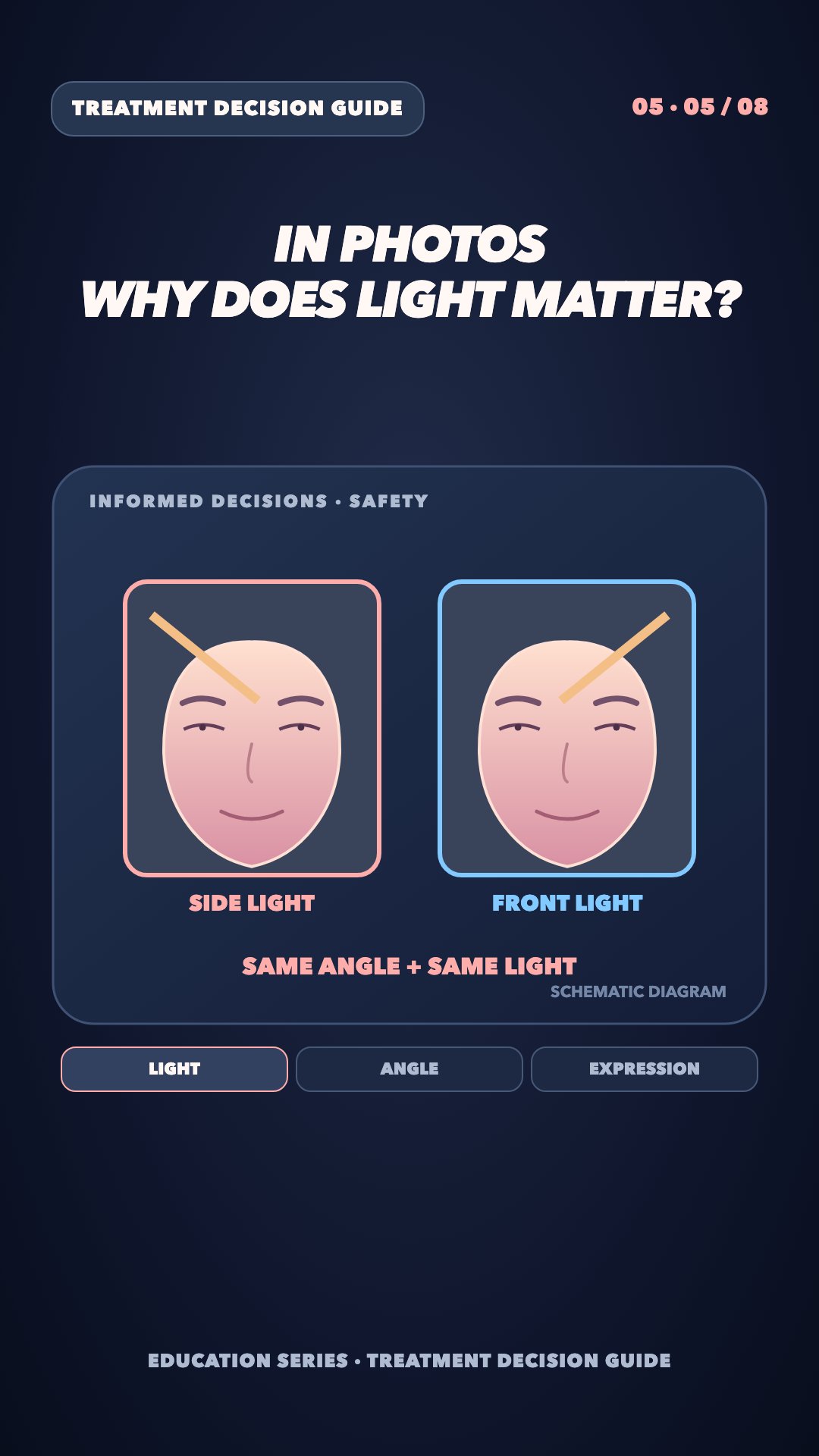
Fillers16

How do lip fillers work?

Explore the Treatments

English narration and captions

English transcript

Is lip filler used only to make the lips larger? Lip filler, most commonly a hyaluronic acid gel, is used to change lip volume and definition. The gel holds water and occupies space in the tissue, adding fullness; it may also reduce the appearance of certain asymmetries. Swelling in the first few days is not the settled result, and appearance changes over time. The effect is temporary; bruising, unevenness and, rarely, a blocked blood vessel that compromises the tissue's blood supply can occur.
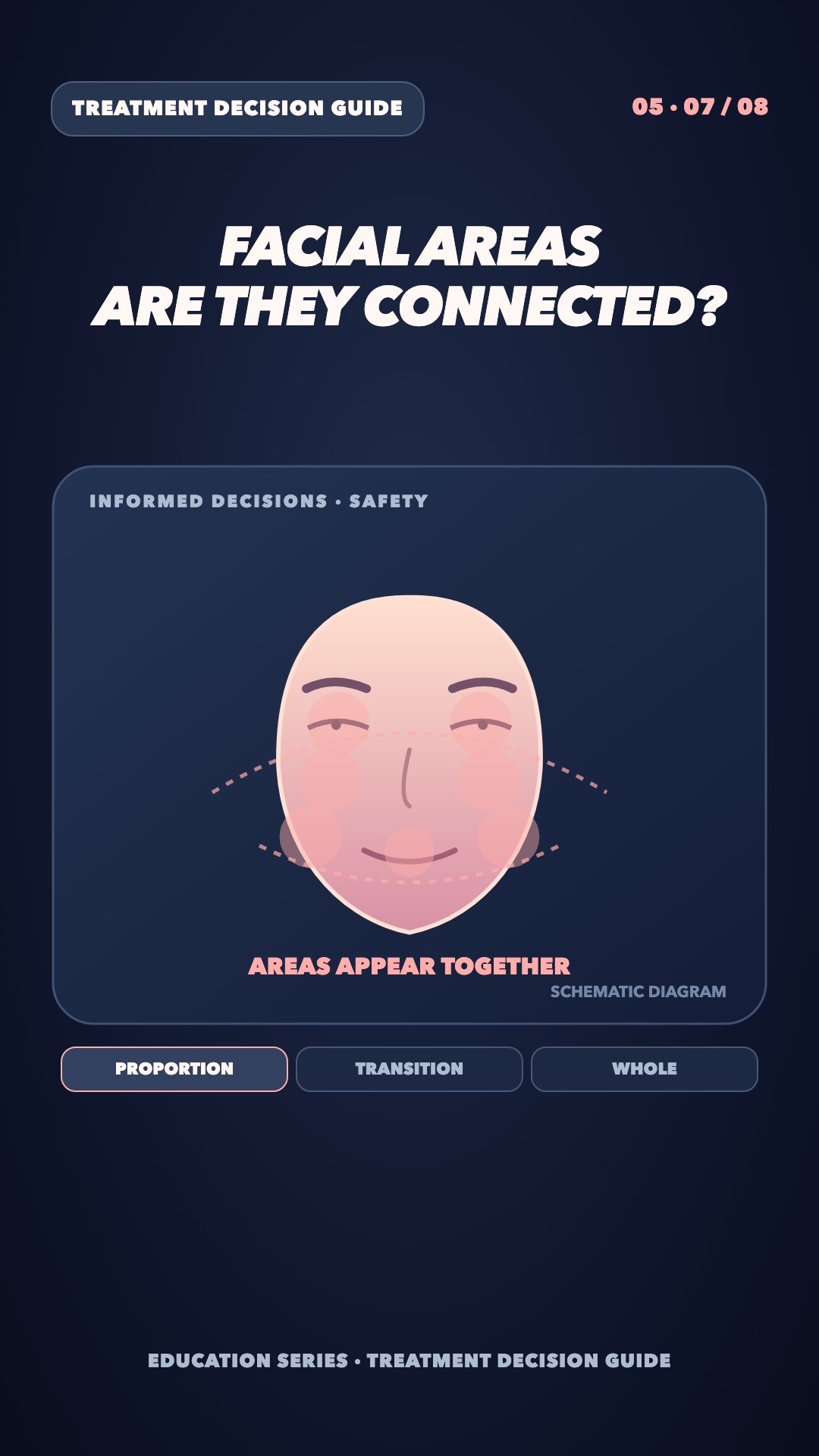

Fillers15

What is a biostimulatory filler?

Explore the Treatments

English narration and captions

English transcript

Why do the effects of some fillers become more apparent over several weeks? Biostimulatory filler is a general term for injectable products intended to stimulate the tissue's own collagen production. Substances such as calcium hydroxyapatite or poly-L-lactic acid support a response from collagen-producing cells. Depending on the product, there may also be an initial volume effect; collagen-related changes develop over time. Results depend on the substance and tissue, and swelling or, sometimes, firm nodules beneath the skin may occur.
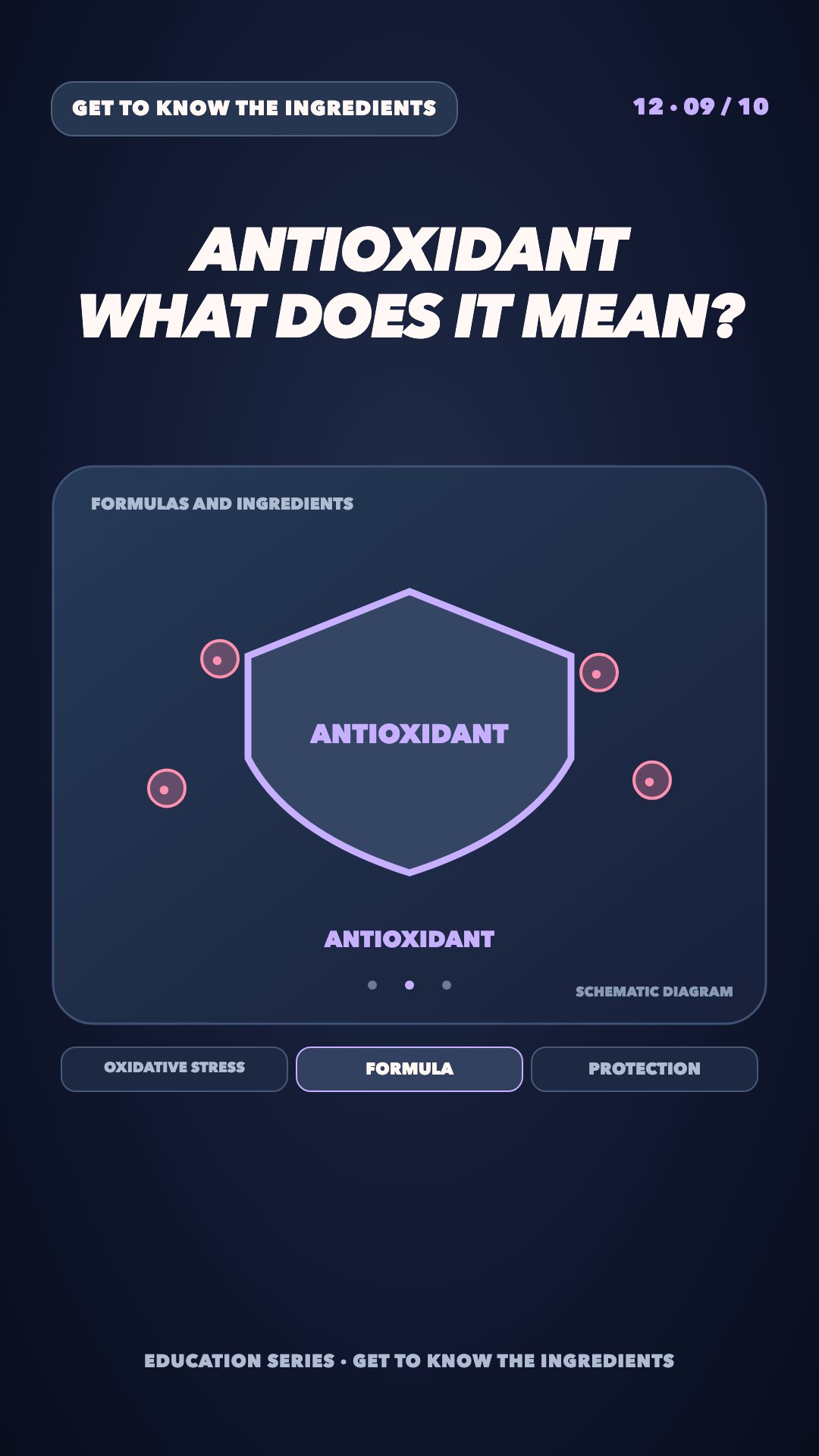

Botulinum Toxin14

How does Botox for sweating work?

Explore the Treatments

English narration and captions

English transcript

What signal tells the sweat glands in the armpits to work? Botulinum toxin treatment for sweating temporarily reduces sweat production in an area with excessive sweating. It blocks the chemical message from the nerves that stimulate sweat glands, so the glands produce less sweat. The effect develops over days and can last for months, but the sweat glands are not permanently destroyed. Pain or bruising can occur at the injection site; the cause of newly developed widespread sweating should be assessed separately.

Botulinum Toxin13

What is masseter Botox?

Explore the Treatments

English narration and captions

English transcript

Have you noticed the muscle that hardens on either side of your jaw when you clench your teeth? Masseter botulinum toxin treatment temporarily reduces the contraction strength of this muscle, which helps close the jaw. By reducing the signal sent from nerves to the muscle, botulinum toxin may ease muscle-related pain in some people. An enlarged muscle may become smaller over time, but the treatment does not address every cause of teeth clenching. Chewing weakness or an uneven smile may occur; effects and suitability vary by person.

Botulinum Toxin12

How does migraine Botox work?

Explore the Treatments

English narration and captions

English transcript

Does botulinum toxin affect migraine only by relaxing muscles? Botulinum toxin is used to help prevent chronic migraine attacks in certain adults. By reducing the release of some chemical messengers from nerve endings involved in pain transmission, it may ease heightened sensitivity in pain pathways. The aim is to reduce the frequency and severity of attacks; the effect varies from person to person. It is not suitable for every type of headache, and temporary neck pain or drooping of an eyelid may occur.

Botulinum Toxin11

How does neck Botox work?

Explore the Treatments

English narration and captions

English transcript

The vertical lines that become more noticeable when the neck is tensed may not be caused by the skin alone. Neck botulinum toxin treatment aims to reduce prominent bands of the platysma muscle beneath the skin. It temporarily reduces the contraction signal sent from nerves to the muscle, which may lessen its downward pull and the visibility of the bands. It does not remove excess skin, so its effect on advanced sagging is limited. Results are temporary, and risks can include neck weakness and difficulty swallowing.

Videos are for general information. Visuals are schematic explanations. English narration, captions and transcripts are provided. Editorial policy ↗