From our previous website’s article collection. Dates, prices and treatment information reflect the original publication period.
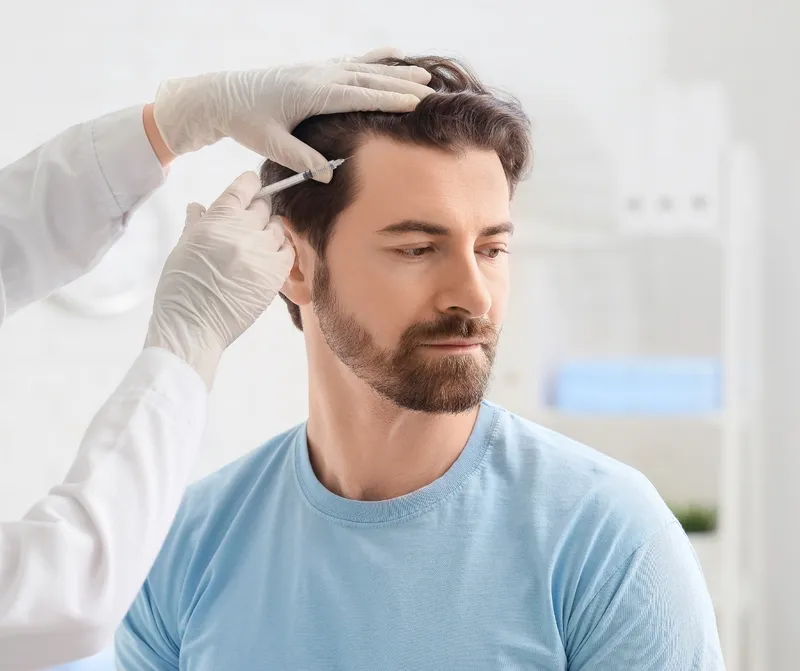
Quick Answer: Hyperhidrosis occurs approximately twice as frequently in men as in women. Underarm Botox treatment for men is administered at 100–150 IU per side (higher than the female dose). Onset is within 3–5 days and the effect lasts 6–8 months. Before the procedure, a Minor's test is performed to map the sweating zone; the treatment itself takes only 15–20 minutes and patients can return to work the same day.Sweat stains under the arms, wet handshakes, and persistent forehead dripping are not merely cosmetic concerns — they are a medical condition that profoundly affects social life, professional performance, and self-confidence. Hyperhidrosis affects approximately 3% of the general population, yet its prevalence in men is roughly twice that seen in women. At Abel Beauty Izmit, sweat Botox treatment is delivered according to evidence-based protocols.
Hyperhidrosis Prevalence in Men and the Role of Androgens
The primary reasons men tend to sweat more than women are:
- Androgen effect: Testosterone increases eccrine sweat gland activity. Per-gland sweat production in men is approximately 40% higher than in women.
- Body mass: Greater muscle mass generates more metabolic heat, increasing the thermoregulatory sweating load.
- Sympathetic nervous system sensitivity: Sympathetic activation in response to stress (emotional sweating) is more pronounced in men.
According to the International Hyperhidrosis Society (IHHS), the most frequently affected areas in men rank as follows: underarms 51%, palms 25%, forehead/scalp 20%, groin/perineum 12%.
Diagnosis and Classification of Hyperhidrosis
In patients presenting with excessive sweating, it must first be established whether the condition is primary or secondary hyperhidrosis:
- Primary (focal) hyperhidrosis: Sweating confined to specific areas, bilateral, symmetric, and absent during sleep. A family history of similar symptoms is seen in 25–50% of cases. This group responds best to Botox treatment.
- Secondary hyperhidrosis: Generalised sweating secondary to a systemic condition (thyroid disease, diabetes, lymphoma, medication side effects). The underlying cause must be treated first.
Diagnostic criteria: excessive sweating for more than 6 months plus two or more of the following features: bilateral and symmetric, impairs daily activities, occurs at least once a week, onset before age 25, positive family history, absent during sleep.
Minor's Test: Mapping the Sweating Zone
The Minor's test is performed before Botox application to objectively identify the area to be treated. The procedure is carried out as follows:
- The underarm area is completely dried and cleansed.
- Povidone-iodine solution is applied to the area and allowed to dry.
- Corn starch powder (or potato starch) is evenly distributed over the surface.
- The patient waits in a warm environment for 5–10 minutes or is asked to perform light exercise.
- Areas that sweat darken to a black-purple colour; dry areas remain colourless.
The result is photographed to create an injection map. This map prevents Botox from being applied to unnecessary areas and improves efficacy.
Male Underarm Botox Protocol: Dosage and Technique
Sweat Botox works by injecting botulinum toxin type A (onabotulinumtoxinA or abobotulinumtoxinA) into the cholinergic synaptic sites that stimulate eccrine sweat glands. Acetylcholine release is blocked, rendering the sweat gland unable to respond to stimulation.
| Parameter | Male Protocol | Female Protocol |
|---|---|---|
| Botox (Allergan) dose | 100–150 IU/side | 50–100 IU/side |
| Dysport (Ipsen) dose | 300–450 IU/side | 150–300 IU/side |
| Injection point spacing | 1–1.5 cm | 1–1.5 cm |
| Procedure duration | 15–20 min/area | 15–20 min/area |
| Anaesthesia | EMLA cream 45–60 min before | EMLA cream 45–60 min before |
Onset and Duration of Effect
Sweat Botox follows a different kinetic profile compared to facial Botox:
- Initial effect: A marked reduction in sweating occurs 3–5 days after the procedure.
- Full effect: Maximum response is achieved at 10–14 days.
- Duration: In the underarm area, the effect is generally 6–8 months — twice that of facial Botox (3–4 months). This difference is explained by the distinct reinnervation kinetics of sweat glands versus facial muscles.
- Hands and feet: Duration may be slightly shorter (4–6 months); dosage is also higher.
- Forehead: More careful planning is required — excessive dosing can lead to muscle weakness.
Impact of Sweat Botox on Quality of Life
Hyperhidrosis is not merely a physical discomfort — it has social and psychological dimensions. Clinical research reports that following sweat Botox treatment, men experience:
- A 68% reduction in social anxiety
- Marked improvements in professional performance and self-confidence scores
- Greater freedom in clothing choices (transition to coloured fabrics and lightweight materials)
- Reduced anxiety around handshakes and physical contact
(Based on DLQI scores; JAAD 2024.)
Pre-Procedure Shaving Requirement
Preparation for underarm sweat Botox:
- Shaving: The underarm area should be shaved 24–48 hours before the procedure. Long hair complicates both area preparation and the Minor's test.
- Deodorant: Deodorant and antiperspirant use must be stopped at least 24 hours before the procedure.
- Clothing: Wear clothing that allows the arms to be raised comfortably.
- Exercise: Avoid intense exercise on the day of the procedure — heat triggers sweating and affects Minor's test results.
Protocol Variations by Treatment Area
| Area | Male Dose (Botox) | Special Considerations | Duration |
|---|---|---|---|
| Underarms | 100–150 IU/side | Minor's test mandatory | 6–8 months |
| Palms | 100–150 IU/hand | Painful — nerve block recommended | 4–6 months |
| Soles of feet | 100–200 IU/foot | Most painful area — anaesthesia essential | 4–6 months |
| Forehead/face | 25–50 IU/area | Risk of muscle weakness — low dose required | 4–6 months |
Combined Use with Deodorant
Sweat Botox and deodorant/antiperspirant are not mutually exclusive. However, the following points are important when using them in combination:
- Deodorant use may continue once Botox begins to take effect (10–14 days after treatment).
- During the active effect period (6–8 months), antiperspirant use can complement the Botox effect.
- All underarm products must be stopped for 24 hours before the procedure.
- Aluminium-based antiperspirants do not reduce Botox efficacy; the two methods act via different mechanisms (chemical channel blockade vs. cholinergic blockade).
Maintenance Sessions and Long-Term Planning
With regular Botox treatments, some patients experience a reduced dose requirement over the years. This is attributed to partial atrophy of sweat glands under chronic cholinergic blockade, making long-term treatment increasingly efficient.
At Abel Beauty Izmit, the recommended maintenance schedule for sweat Botox is 1–2 sessions per year (early April–May and September). For men who engage in intensive sport or are frequently exposed to heat in summer, a late-April application provides optimal timing.
Complications and Contraindications
Sweat Botox is an extremely safe procedure; however, it is not performed in the following situations:
- Neuromuscular diseases (myasthenia gravis, ALS)
- Botulinum toxin allergy
- Active local infection
- Pregnancy and breastfeeding
- Patients taking aminoglycoside antibiotics (risk of potentiation)
Local complications: Transient pain, redness, and minimal oedema at the injection site are normal. Rare (<1%) transient finger weakness has been reported with palmar application.
Abel Beauty Sweat Botox: Izmit and Kocaeli
At Abel Beauty, sweat Botox treatment is administered with a personalised injection map guided by the Minor's test. The procedure takes 15–20 minutes, and patients can return to all social and professional activities on the same day. Visit our contact page to book a dedicated appointment at our Izmit centre.
This article is for informational purposes only. Please consult a qualified physician for treatment decisions.